
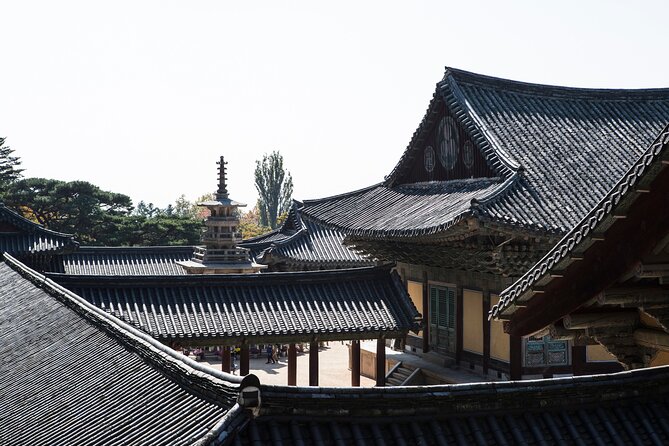
Reviewed · UNESCO HERITAGE TOURS
Korail Day Trip to Gyeongju’s Unesco World Heritage Sites from Seoul
One train ride, four UNESCO stops. This Gyeongju day trip is built around KTX speed and a private guide, so you can focus on the sights instead of the stress.
I like the high-impact lineup. Bulguksa sets the mood with Silla Buddhist power, and Cheonmachong Tomb adds the wow factor with its wooden coffin and huge artifact haul.
The main drawback is timing. It is a 9 to 10 hour day with no meals included, so plan snacks or a quick bite and don’t expect a long lunch break.
In This Review
- Key things I’d pay attention to
- Why Gyeongju UNESCO works as a day trip from Seoul
- Price and logistics: what $594.81 really covers
- KTX to Gyeongju, then straight into the Silla world
- Stop 1: Bulguksa Temple, where Silla devotion comes with a backstory
- Stop 2: Daereungwon Tomb Complex and Cheonmachong Tomb’s mind-bending details
- Gyeongju National Museum: use the free context to make the outdoor stops stick
- Cheomseongdae observatory: the 7th century skywatcher stop that surprises people
- Small-group private pacing: what it feels like with a cap of 2
- Who this trip suits best (and who should skip it)
- Should you book this Korail Gyeongju UNESCO day trip?
- FAQ
- Where does the tour pick up and drop off?
- How long is the day trip?
- Is this tour private, and how many people are in each booking?
- Which UNESCO World Heritage sites are included?
- Are admission tickets included for the stops?
- Are meals included?
- Are KTX tickets included, and do you get picked up in Seoul?
- What happens if the weather is bad?
- Is this tour refundable?
Key things I’d pay attention to
- KTX is the spine of the day: you get the fast Seoul to Gyeongju transfer, with your pre-booked ticket plan handled for you.
- Private transport, meet at SinGyeongju: pickup and drop-off are at SinGyeongju Station, not Seoul Station.
- A true small-group tour: minimum 2 people, maximum 2 people, so it feels like your own agenda.
- UNESCO sites in a single circuit: Bulguksa, Daereungwon Tomb Complex, Gyeongju National Museum, Cheomseongdae.
- Admissions are mostly handled: Bulguksa and the tomb complex include admission tickets, and the museum and Cheomseongdae are free.
Why Gyeongju UNESCO works as a day trip from Seoul
Gyeongju is one of those places where you can burn an entire trip just trying to understand what you are looking at. This tour helps because it stacks major UNESCO World Heritage sites in one day, with a guide to connect the dots.
The big advantage is time control. You get the long-haul part done quickly by KTX, then the day turns into a sequence of stops with clear durations. That matters because Gyeongju is not a “see a little, wander forever” destination. It rewards focus.
I also like that the schedule includes both outdoor monuments and indoor context. Bulguksa and the Silla tomb mounds hit emotionally and visually, then the museum gives you the background that makes the ruins more meaningful. Finally, Cheomseongdae brings in the science angle, reminding you that Silla culture was not just temples and tombs.
One more practical win: since you have private transport, you are not juggling local transit, transfers, and walking back-and-forth between sights.
More UNESCO Heritage Tours in Gyeongju
- Gyeongju UNESCO sites Private tour with licensed tour guide
★ 5.0 · 275 reviews - Private Gyeongju Tour – Explore Gyeongju UNESCO Sites
★ 5.0 · 272 reviews - Gyeongju: UNESCO Highlights Tour with Guide and Ticket
★ 4.9 · 166 reviews
Price and logistics: what $594.81 really covers
The headline price is $594.81 per person, and it can sound steep until you break down what is included. You are paying for a private guide and driver, private transportation, and pickup and drop-off at SinGyeongju Station. Admission tickets are included for Bulguksa and Daereungwon Tomb Complex, and the other two stops (Gyeongju National Museum and Cheomseongdae) are free.
What you should watch closely:
- Meals are not included.
- Pickup and drop-off at Seoul Station are not included.
- KTX train tickets are listed as not included, even though the tour concept uses pre-booked round-trip KTX tickets.
That last point is the one to confirm before you pay. If your booking includes the KTX fare, great. If not, you will still need to arrange the KTX separately for the Seoul to Gyeongju legs.
Also, this is a mobile ticket experience, and the day is scheduled with specific stop times. That usually means less flexibility than a self-guided day, but in exchange you get a well-run route that fits into a single day.
KTX to Gyeongju, then straight into the Silla world
The core idea is simple: trade Seoul’s chaos for a fast bullet train ride, then let someone else handle the local moving parts. The KTX segment is about 2 hours, and the tour is designed so you do not waste your day waiting around.
Logistically, you’ll want to be ready for the “split responsibility” style:
- The tour handles your arrival-side comfort, with pickup at SinGyeongju Station.
- The tour does not list Seoul Station pickup or drop-off.
- KTX tickets may be either handled in your overall purchase or required separately, depending on your exact booking terms.
Once you meet your driver at SinGyeongju, you are on private transport to the first stop. That reduces the language barrier and the navigation load, especially if you are short on time or you just want your day to run on rails.
A small-group private tour also changes the feel. You can ask questions, adjust pacing, and get context without competing with a crowd. For a UNESCO-heavy day like this, that makes a real difference.
Stop 1: Bulguksa Temple, where Silla devotion comes with a backstory
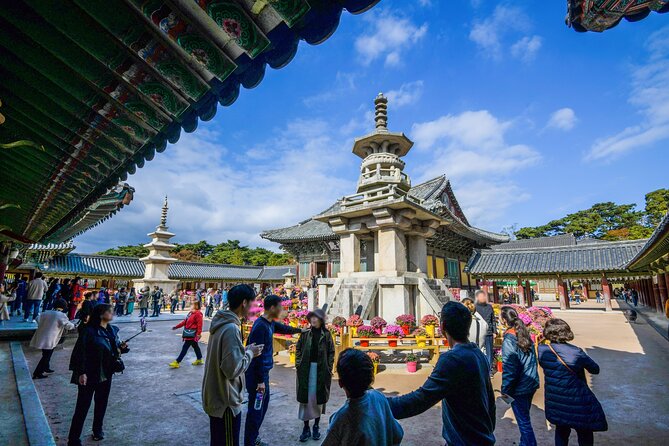
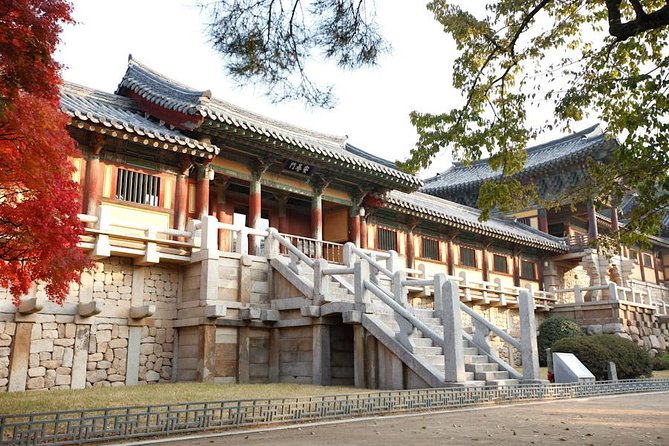
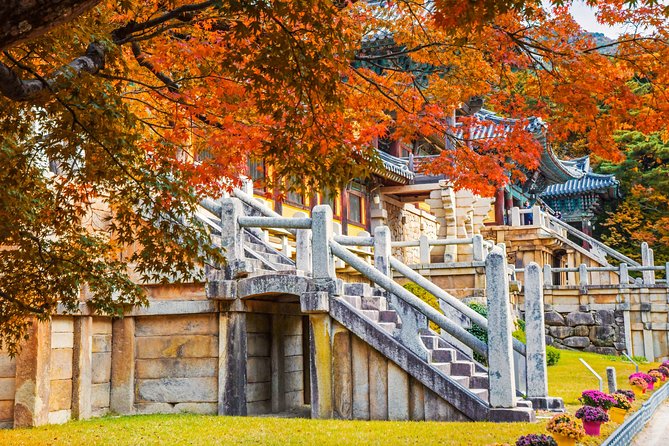
Bulguksa Temple is a signature Silla-era Buddhist site, and the tour gives you about 1 hour here. The story starts with the founding date: built in 528 during the reign period of King Beop-Heung, originally to wish for peace and prosperity.
Then history gets more complicated, like it often does with heritage sites.
- It was later rebuilt in 751 by Kim Dae-Seong.
- During the Imjin War (1592 to 1598), the temple caught fire.
- After that, it suffered further damage and became a target for robbers.
That sequence matters because it changes how you see the place. You are not just admiring a pretty temple. You are looking at a site shaped by cycles of rebuilding, loss, and survival. A good guide helps you keep those eras straight, so the visit feels like a story rather than a checklist.
Practical tip: wear comfortable shoes. Even if the time is “only” an hour, temple grounds often involve uneven surfaces and some walking. If you are taking photos, give yourself a few minutes early so you are not rushing later.
Admissions for Bulguksa are included, which is one less ticketing task before you get started.
Same trip, a different corner of the country:
- Gyeongju: UNESCO Heritage Tour Including Bulguksa Temple
★ 4.8 · 104 reviews - Gyeongju UNESCO World Heritage Sites and History Full-Day Tour with Lunch
★ 5.0 · 104 reviews - Gyeongju: Private Car Tour with a Licensed Tour Guide
★ 5.0 · 85 reviews - Full day Private Gyeongju UNESCO Heritage Tour : a glimpse into Silla
★ 5.0 · 60 reviews
Stop 2: Daereungwon Tomb Complex and Cheonmachong Tomb’s mind-bending details
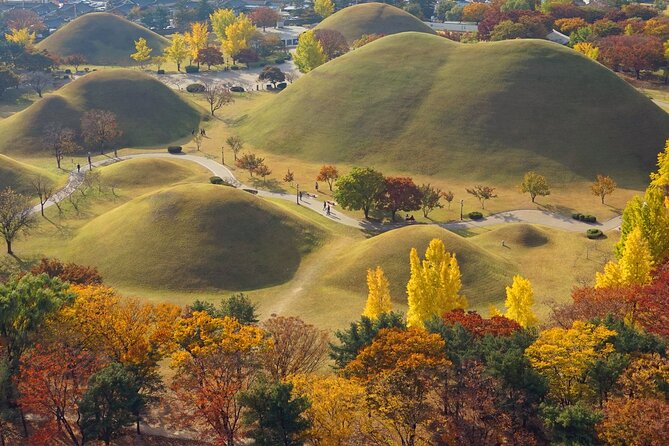
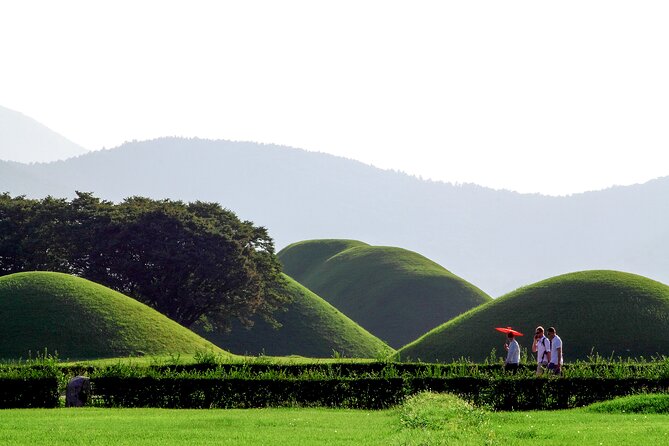
Daereungwon Tomb Complex is where the day turns from religious architecture to elite burial culture. You get about 1 hour, and admission is included.
The highlight is Cheonmachong Tomb (Ancient Tomb No. 155), excavated in 1973. The tomb structure is described with real specificity, and those details are exactly what make it fascinating:
- A wooden coffin sits inside an underground chamber.
- The chamber is mounded with boulders and earth.
- The mound is 12.7 meters high and about 50 meters in diameter.
- Rocks used in the mound were collected from streams.
Then there is the scale inside:
- The wooden chamber measures 6.5 meters long and 2.1 meters wide, reaching 2.1 meters high.
- The wooden coffin is centered within the chamber.
- A total of 11,526 artifacts were discovered.
One artifact detail stands out: Cheonmado, described as Korea’s first artwork excavated from an ancient tomb. Even if you only catch part of the story in the moment, knowing that specific “first” can make the whole site feel more urgent and real.
A balanced way to approach this stop: go in expecting some information heavy moments. Tomb sites are not always visually dramatic from every angle, so the guide’s interpretation helps you understand what you are looking at and why it mattered for Silla elites.
Gyeongju National Museum: use the free context to make the outdoor stops stick
After the tombs, you move indoors to Gyeongju National Museum for about 1 hour. This stop is free, and I really like this placement. Outdoor heritage can feel abstract without a reference point, and a museum visit gives you that anchor.
The museum went through renovation, and the galleries and exhibition halls are described as updated. That usually translates into clearer visitor flow and better viewing conditions, which matters when you have limited time.
The museum also emphasizes community learning and identity, which signals that it is not just storing artifacts. You are seeing a living cultural institution trying to connect the past to people now.
How to get the most in 60 minutes: don’t try to read everything. Pick a few key displays and focus on what the objects show about the Silla world, then return mentally to the tomb complex. When you do that, the tomb mound details do not float away as random measurements. They become part of a bigger picture.
Admission here is free, which adds value to a day that otherwise includes paid entries on two stops.
Cheomseongdae observatory: the 7th century skywatcher stop that surprises people
Cheomseongdae is one of those heritage sites that can feel small on the map, but the story behind it is big. You only get 30 minutes, and admission is free, so this is a quick hit.
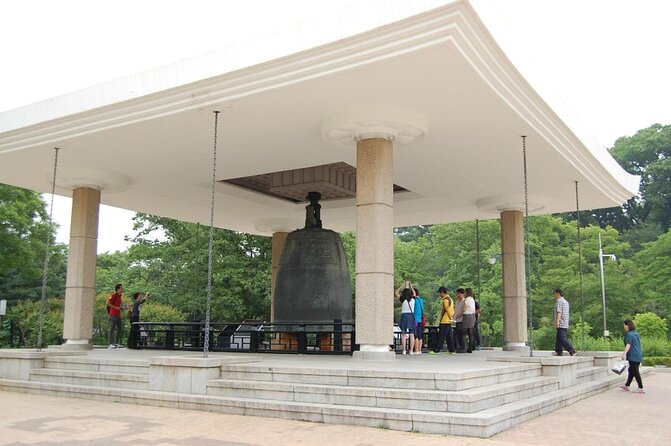
Cheomseongdae is an astronomical observatory in Gyeongju, built in the 7th century during the Silla kingdom era. It is described as the oldest surviving astronomical observatory in Asia, and possibly even in the world.
It was designated the country’s 31st national treasure on December 20, 1962. The design is also connected to earlier observatories:
- It was modeled on Baekje’s Jeomseongdae, which now exists only in historical records.
- It influenced the construction of Japan’s Senseidai observatory in 675.
- It also influenced a Duke Zhou observatory in China in 723.
That cross-regional thread is what I find most valuable here. This stop is not just about local history. It is about how ideas traveled.
Since you have a short window, come ready to absorb the explanation quickly. If you are taking photos, do it after you listen to the guide, not before. The context makes the structure much more interesting.
Small-group private pacing: what it feels like with a cap of 2
This is a private tour, limited to a maximum of 2 people per booking, with a minimum of 2 people required. That makes the experience feel personal, not crowded, and it tends to help with the UNESCO-style questions people naturally ask.
The tour also specifies a moderate physical fitness level. That is a polite way of saying you should be comfortable with walking around temple grounds and tomb areas, plus stairs or uneven footing that often comes with heritage sites.
Because meals are not included, plan your energy. One review highlight actually pointed out the idea of skipping lunch to keep the day moving. You don’t have to follow that exactly, but the message is useful: the schedule is built for momentum, so don’t let a slow meal derail your pace.
If you need to eat, do it efficiently. Think quick, practical, and close by rather than a long sit-down. The tour includes transportation between stops, and the time slots are tight enough that you’ll feel it if you lose time.
Who this trip suits best (and who should skip it)
This tour makes sense if you:
- Want an efficient UNESCO overview without planning every ticket and route on your own.
- Like having a guide explain what you are seeing, especially for tombs and historical temples.
- Are traveling as a couple or small group and prefer private pacing over coach crowds.
- Have limited time in Korea and want a day that feels like it covers real ground.
It is less ideal if you:
- Are traveling solo, since the minimum is 2 people per booking.
- Need long meal breaks or a relaxed, open-ended day. This is structured.
- Haven’t confirmed what is included for the KTX fare in your specific booking, since the listed tour notes say KTX tickets are not included.
Also, keep an eye on the operating window, listed as 9:30 AM to 6:30 PM for 2025. Since the day runs about 9 to 10 hours, the timing works best when the schedule lines up with your travel plans.
Should you book this Korail Gyeongju UNESCO day trip?
If you want a well-run UNESCO day without spending your time figuring things out, this is a strong choice. The value is in the combination: KTX for the fast transfer, private transport for local movement, and guided context for sites that can otherwise feel like a blur of monuments.
Before you click confirm, do two checks:
- Confirm what your booking covers for KTX train tickets, since they are listed as not included even while the concept uses pre-booked round-trip KTX.
- Plan for meals. Bring snacks or be ready to eat on your own, because the tour does not include meals.
One more reality check: the tour is described as non-refundable and not changeable for any reason. If your travel dates are shaky, that is a risk to weigh.
If your schedule is solid and you want a high-meaning, high-structure day in Gyeongju, booking is an easy yes.
FAQ
Where does the tour pick up and drop off?
Pickup and drop-off are at SinGyeongju Station. The tour starts there and ends back at the same meeting point.
How long is the day trip?
The duration is about 9 to 10 hours.
Is this tour private, and how many people are in each booking?
It is a private tour. Each booking requires a minimum of 2 people and has a maximum of 2 people.
Which UNESCO World Heritage sites are included?
The stops are Bulguksa Temple, Daereungwon Tomb Complex (including Cheonmachong Tomb), Gyeongju National Museum, and Cheomseongdae Observatory.
Are admission tickets included for the stops?
Bulguksa Temple and Daereungwon Tomb Complex include admission tickets. Gyeongju National Museum and Cheomseongdae Observatory are listed as free. The tour also notes a moderate physical fitness level.
Are meals included?
No. Meals are not included.
Are KTX tickets included, and do you get picked up in Seoul?
KTX train tickets are listed as not included. Pickup and drop-off at Seoul Station are also not included.
What happens if the weather is bad?
If canceled due to poor weather, you will be given an option of an alternative site.
Is this tour refundable?
No. It is non-refundable and cannot be changed for any reason.
More Historical Tours in Gyeongju
- From Busan: Gyeongju UNESCO World Heritage Guided Day Tour
★ 4.8 · 1,250 reviews - Gyeongju UNESCO World Heritage Guided Day Tour from Busan
★ 5.0 · 660 reviews - Seoul: Evening Dark History, Folklore & Ghost Story Walking Tour
★ 5.0 · 593 reviews - Old Korea Thousand History Tour of Gyeongju from Busan
★ 5.0 · 518 reviews
Recently reviewed in Gyeongju
- Gyeongju UNESCO sites Private tour with licensed tour guide★ 5.0 · 275 reviews
- Guided Car Tour in Geyongju with a Local Guide★ 5.0 · 38 reviews
- Gyeongju: Private Car Charter Taxi Tour★ 5.0 · 37 reviews
- From Daegu: Gyeongju UNESCO Tour 7 Highlights with Bulguksa★ 4.6 · 5 reviews
- Busan: Gyeongju UNESCO Legacy Tour with National Museum★ 5.0 · 17 reviews
- From Busan: Gyeongju Small Group Photo Tour & Hotel Pick-up★ 5.0 · 3 reviews
- Busan + Gyeongju One Day Tour from Busan★ 5.0 · 3 reviews
- Busan: 7 Highlights Gyeongju City One Day Tour★ 4.9 · 10 reviews
UNESCO Heritage Tours, compared.
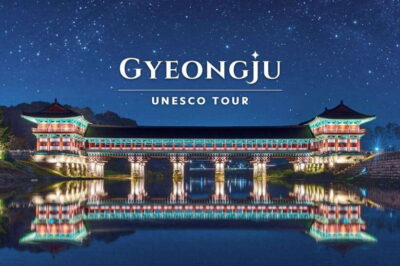
Gyeongju UNESCO World Heritage Guided Day Tour
Read our review →

East Jeju Essentials – Seongsan Ilchulbong (UNESCO) & Haenyeo
Read our review →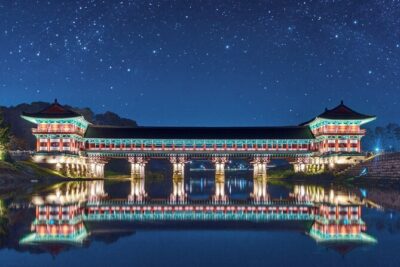
Gyeongju UNESCO World Heritage Guided Day Tour from Busan
Read our review →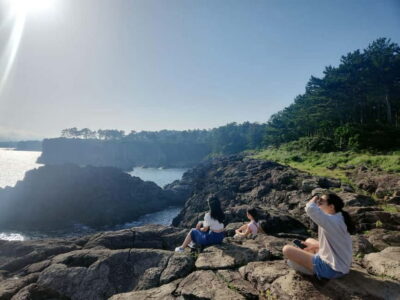
Gyeongju UNESCO sites Private tour with licensed tour guide
Read our review →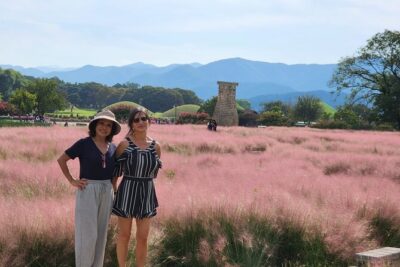
Private Gyeongju Tour – Explore Gyeongju UNESCO Sites
Read our review →
Browse the lists this tour appears in