
Reviewed · TEMPLE TOURS
Gyeongju: UNESCO Heritage Tour Including Bulguksa Temple
Gyeongju packs a lot of wow in one day. This full-day Gyeongju UNESCO heritage tour is a smart hit list of Silla-era power, from the burial mounds at Daereungwon to the quiet genius of Bulguksa and Seokguram. I like that you get door-to-door pickup plus an air-conditioned van, so you spend less time solving transit and more time looking at stone bridges, pagodas, and a granite Buddha. One thing to consider, though: with so many stops in 8 hours, the pace can feel full, especially if you start later or the day gets crowded.
The group runs with an English live guide, and the day includes lunch, bottled water, and all entrance fees. In real-world terms, that means fewer decisions on the ground, and more time for the explanations that make Silla history click. Guides like Sue and Steve have been praised for clear storytelling and good crowd handling, while drivers like Joe are noted for helping with photos and keeping everyone moving.
In This Review
- Key Highlights I’d Prioritize
- Door-to-door Gyeongju: why this 8-hour plan works
- Gyochon Hanok Village and the Gyeongju Choi Clan house
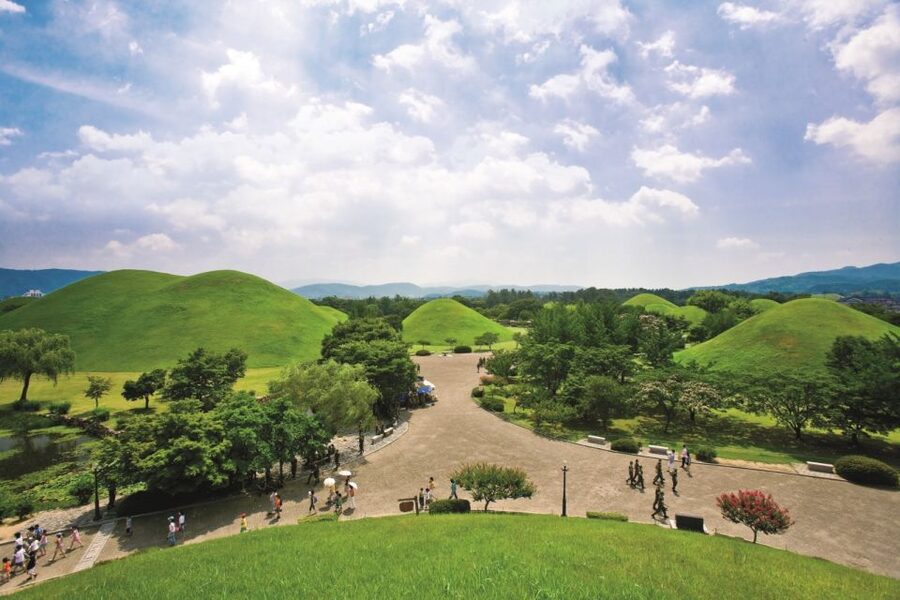
- Daereungwon Tomb Complex: Silla royalty under grassy mounds
- Cheomseongdae Observatory: Queen Seondeok and stone astronomy
- Bulguksa Temple: Dabotap and Seokgatap in a UNESCO setting
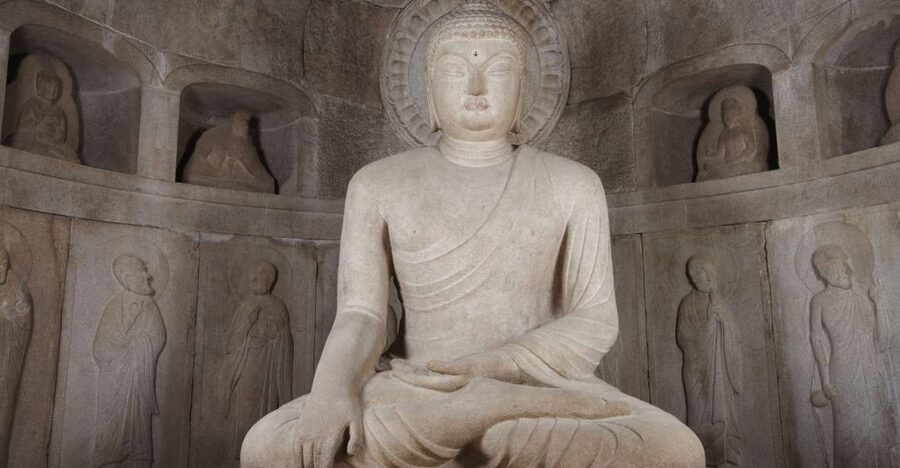
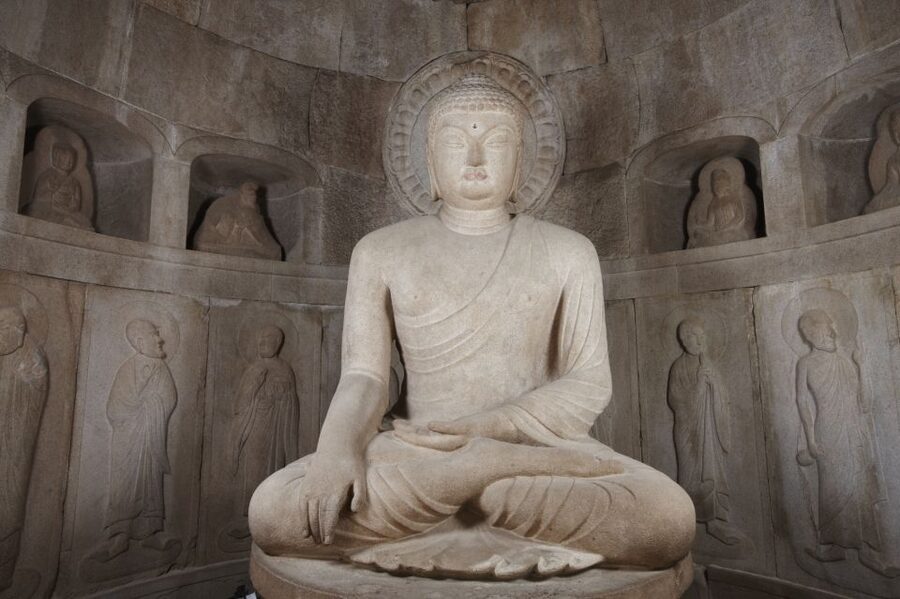
- Seokguram Grotto: Tohamsan Mountain’s granite Buddha
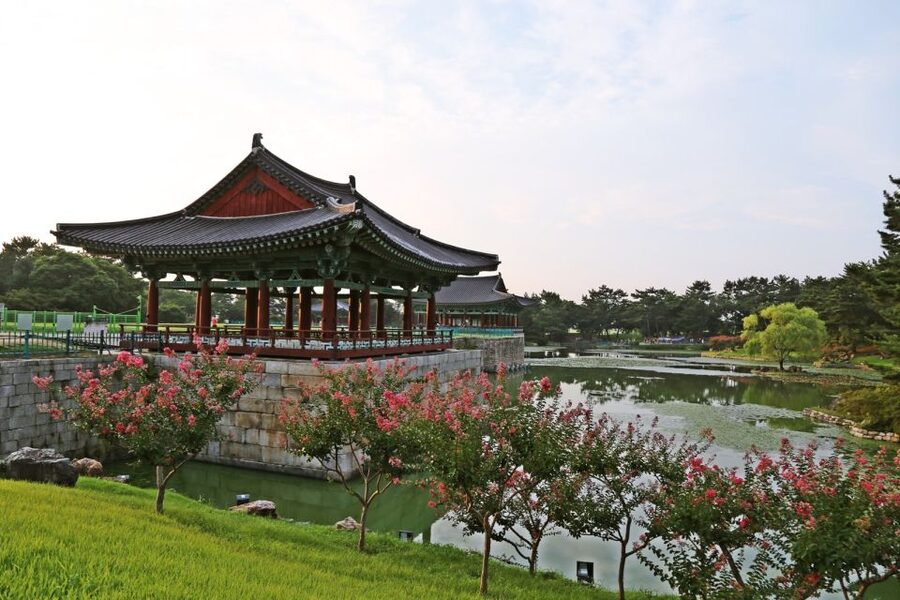
- Wolji Pond and Donggung Palace Site: a calm ending with dusk vibes
- Lunch, timing, and what you actually get for $189
- Who this UNESCO Gyeongju day is best for
- Should you book this Gyeongju UNESCO Heritage Tour?
- FAQ
- How long is the Gyeongju UNESCO Heritage Tour?
- Where does pickup and drop-off happen?
- Is there an English-speaking guide?
- What meals are included?
- Which major sites will we visit?
- Are entrance fees included?
- What is the cancellation policy?
Key Highlights I’d Prioritize
- Bulguksa Temple with Dabotap and Seokgatap: two signature pagodas inside a UNESCO setting of stone bridges and calm courtyards.
- Seokguram Grotto on Tohamsan Mountain: a granite Buddha statue with carved guardian figures, reached by a mountain climb.
- Daereungwon Tomb Complex: Silla royal burial mounds, including Cheonmachong (the tomb tied to the famous ancient horse painting) and Hwangnamdaechong.
- Cheomseongdae Observatory: the oldest existing astronomical observatory in Asia, built during Queen Seondeok’s reign.
- Gyochon Traditional Village: preserved hanok streets and a visit to the House of the Gyeongju Choi Clan.
- Wolji Pond at Donggung Palace Site: a palace garden view, especially lovely near dusk.
Door-to-door Gyeongju: why this 8-hour plan works
If you have limited time in Busan or you want a clean one-day answer for Gyeongju, this kind of organized day is a practical move. You get pickup from your hotel or a chosen location in Busan or Gyeongju, then you roll out together in an air-conditioned van with a guide. That matters because Gyeongju sites are spread out, and public transit between them can turn into a time sink.
This tour is built as an order of locations that makes sense thematically, not just geographically. You move from everyday-looking heritage (hanok village life), to royal burial culture (Daereungwon), to Silla science and astronomy (Cheomseongdae), then to UNESCO spiritual architecture (Bulguksa), and finally to one of Korea’s most famous Buddhist art sites (Seokguram). It’s the kind of day where you finish with a clearer picture of how the Silla kingdom thought, built, worshipped, and honored the dead.
The pace is the main tradeoff. You have guided time at each stop, including a 1-hour slot each for Bulguksa, Seokguram, Daereungwon, and Gyochon, plus shorter guided time at Cheomseongdae. If you’re the kind of traveler who loves slow wandering, you’ll want to keep expectations flexible and use breaks wisely.
More UNESCO Heritage Tours in Gyeongju
- Gyeongju UNESCO sites Private tour with licensed tour guide
★ 5.0 · 275 reviews - Private Gyeongju Tour – Explore Gyeongju UNESCO Sites
★ 5.0 · 272 reviews - Gyeongju: UNESCO Highlights Tour with Guide and Ticket
★ 4.9 · 166 reviews
Gyochon Hanok Village and the Gyeongju Choi Clan house
You start with Gyochon Village, a traditional hanok village where the architecture and street feel are the point. Think of it as your warm-up. Before you hit royal tombs and temple stonework, you get a sense of how heritage living spaces were designed, and how that preserved look helps you understand the setting of Silla-era culture in everyday form.
A key stop here is the House of the Gyeongju Choi Clan. You’re not just looking at a pretty facade. You’re getting a glimpse into how noble families’ spaces were organized and how craftsmanship shows up in the details. Guides often do a good job connecting these hanok elements to what you’ll see later, because the same sense of order and design language runs through different types of Silla heritage.
There’s also a food and drink angle that can add a fun, local twist. When available, you may get a chance to try Gyeongju Gyodong Beopju, a traditional liquor unique to the region. If you’re into food experiments, it’s a nice way to add sensory memory to the day beyond temples and monuments. If you’re not, you can still enjoy the village without making it a focus.
Tip: Wear comfortable shoes. Even though this is “one hour,” hanok lanes can still mean uneven ground and lots of small turns.
Daereungwon Tomb Complex: Silla royalty under grassy mounds
Daereungwon Tomb Complex is where the Silla story gets serious in a hurry. Instead of buildings you can enter, you get burial mounds spread across the landscape with a quiet, open feeling. That openness helps. It turns history into something you can see in space, not just in text.
Two named highlights really help you orient yourself:
- Cheonmachong, the tomb tied to the famous ancient horse painting finding.
- Hwangnamdaechong, one of the largest and most elegant tombs of the era.
Both of these are more than trivia. They give you concrete entry points for thinking about Silla beliefs and status. The fact that a specific artwork and the scale of a tomb are remembered together tells you the culture treated monumental burial sites as major statements.
This is also a good place to ask questions. A strong English guide can connect what you see on the ground to why these tombs mattered and how the Silla elite wanted to be remembered. In past days, guides such as Sue or Steve have been praised for making that kind of explanation easy to follow, and that’s the difference between “I saw a tomb” and “I get why it mattered.”
Possible drawback: This is outdoors. If the weather is hot, keep your water handy and use any shaded moments during the walk.
Cheomseongdae Observatory: Queen Seondeok and stone astronomy
Next comes Cheomseongdae, the oldest existing astronomical observatory in Asia. This is one of those sites where you get the rare thrill of seeing science and power fuse into a single monument.
What makes it memorable is the context: it was built during the reign of Queen Seondeok. You’re looking at a structure built for measuring time and observing the sky, which is a big clue that astronomy was treated as serious state knowledge, not a casual pastime.
Even if you’re not a “space nerd,” the tower’s shape and stone construction carry the story. It’s compact, iconic, and easy to photograph, so you get that satisfaction of seeing a major landmark without needing a long hike or a long wait.
The guided time here is shorter, so it’s not the moment for a long detour. But it’s a great stop for travelers who like historical sites with a bit of problem-solving energy.
More Temple Tours in Gyeongju:
- Seoul: Palace, Temple and Market Guided Foodie Tour at Night
★ 4.9 · 750 reviews - Seoul: Mt Seorak + Naksansa Temple or Nami Island Group Tour
★ 4.7 · 422 reviews - Best Things to Do – Half Day Seoul Trip (Seoul Palace & Temple)
★ 5.0 · 190 reviews - Mount Seorak and Naksansa Temple One Day Tour from Seoul
★ 4.5 · 167 reviews
Bulguksa Temple: Dabotap and Seokgatap in a UNESCO setting
Now you hit the tour’s spiritual and architectural centerpiece: Bulguksa Temple, a UNESCO World Heritage Site celebrated for its beauty and Buddhist significance. If you only have one temple day in Gyeongju, this is the one to anchor it to.
Here’s what you’ll notice when you arrive:
- Stone bridges and engineered pathways that guide your movement.
- Quiet courtyards that slow your pace naturally.
- Signature pagodas, including Dabotap and Seokgatap.
These two pagodas are the kind of landmarks you recognize even if you haven’t studied the site before. They help you “read” the temple grounds. Instead of walking through a blur of buildings, you’re following a layout with visual anchors.
The guide component really matters at Bulguksa. The architecture works on multiple levels, and a good guide helps you see what is symbolic, what is artistic, and what is simply practical stonework. In past tours, guides like Sue have been praised for storytelling that makes the Silla period feel clear and human, not stuck in vague timelines.
Small reality check: Because Bulguksa is so well-known, it can get busy. The organized timing helps you keep moving and avoid long dead zones.
Seokguram Grotto: Tohamsan Mountain’s granite Buddha
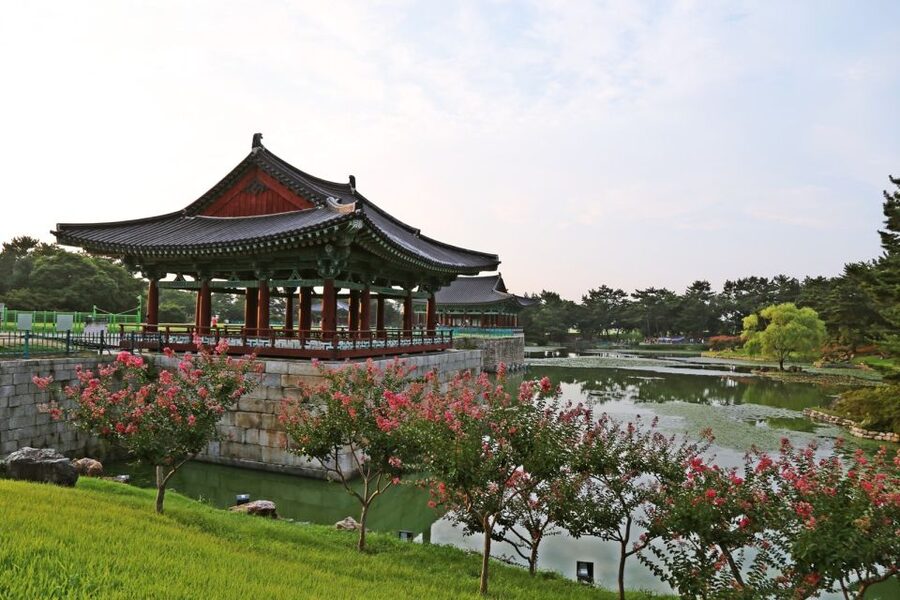
After Bulguksa, the day shifts from temple courtyards to mountain atmosphere with Seokguram Grotto. You go up Tohamsan Mountain, and that change in environment is part of the experience.
Inside Seokguram, the focus is the granite Buddha statue, surrounded by intricately carved guardians. This is the moment where you stop thinking like a tourist and start appreciating it like an artwork. The carvings are the kind of detail you can miss if you rush, so having a guide who encourages you to look is worth it.
One practical detail that makes this stop feel fun, not just solemn: you may have the chance to try snacks sold nearby after the visit. In at least one recent day, the tour included snack purchases from the vendors outside Seokguram, which adds a local flavor break right when you’re likely to be hungry.
Tip: Even if your schedule is tight, take a minute to step back and look at the overall scene, not only the main statue.
Wolji Pond and Donggung Palace Site: a calm ending with dusk vibes
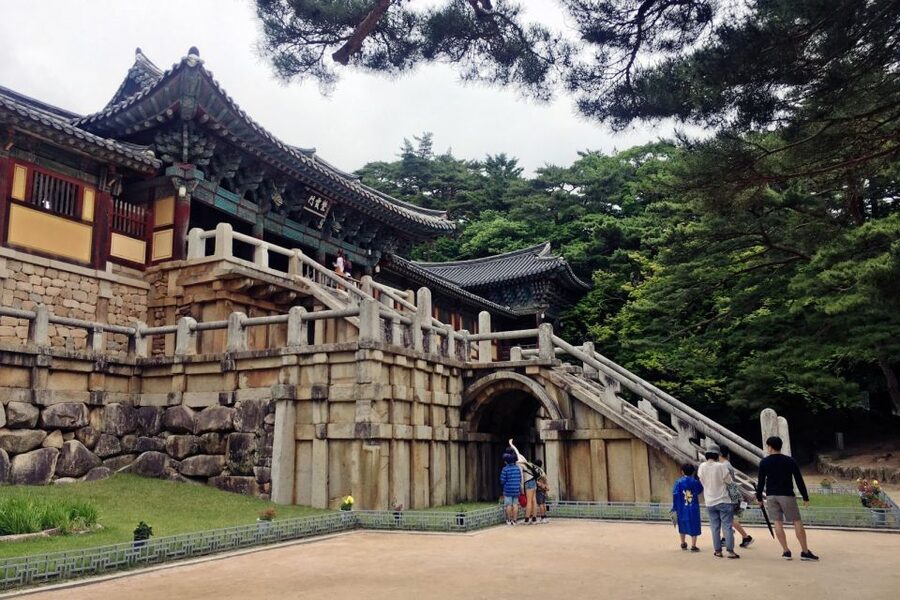
You wrap up at Wolji Pond, also tied to the Donggung Palace Site. If you’ve spent the morning staring at stone structures and tomb mounds, Wolji Pond is a gentle reset.
This palace garden was built during King Munmu’s reign, and the pond’s calm water reflects pavilions and trees. That reflection is the whole point. It turns the garden into something you can read like a mirror, which is why dusk can be such a good time for photos.
The guided time is about one hour, so you’re not stuck rushing the moment. You can enjoy the views at an unhurried pace, assuming daylight and timing cooperate.
If your day feels like it got packed earlier, this is the part where you can slow down and just absorb. The value here is not only the sight. It’s the emotional pacing. After royal monuments and intense religious sites, the garden ending helps the day feel complete.
Lunch, timing, and what you actually get for $189
At $189 per person for an 8-hour day, you’re paying for more than a list of monuments. You’re paying for a guided experience plus door-to-door transportation, lunch, bottled water, and entrance fees. That set of inclusions matters on days when you want to spend your energy looking, not negotiating logistics.
I especially like that the lunch is included. It prevents a common first-timer problem in Korea, where you spend all morning trying to find something “reasonable” between sites. With lunch handled, you can keep your rhythm and avoid late-day hanger surprises.
In past groups, the lunch has been praised, and there’s been at least one memorable meal connected to bibimbap, with a guide even sharing tips on how to eat it. Again, you should not treat that as guaranteed every time, but it shows what the lunch can feel like: not just food, but part of the day’s cultural context.
Timing is worth watching. One day can be smooth, another day can be crowded. During busier periods, such as major holidays, guides have needed to navigate crowds effectively. If you’re traveling during a peak season, be ready for a faster-moving itinerary, and treat your guide as your crowd-smart navigator.
Who this UNESCO Gyeongju day is best for
This tour is a strong match if you:
- Want a one-day Gyeongju framework that covers major Silla and UNESCO highlights.
- Prefer a guide to connect the dots between tombs, observatories, temples, and gardens.
- Are staying in Busan and don’t want to spend the day figuring out transport between distant stops.
- Like structured time, where each stop has a clear purpose and guided focus.
It’s not the best fit if you:
- Want to linger for long periods at one site to the point where you’re okay skipping others.
- Hate group pacing, even if it’s done well.
- Have very limited mobility or stamina, because you’ll be walking through multiple sites, including mountain access for Seokguram.
If you enjoy history with visuals, and you like your day to have a beginning, middle, and calm ending, this itinerary hits that pattern well.
Should you book this Gyeongju UNESCO Heritage Tour?
I’d book it if you want the highest concentration of iconic Gyeongju sights in a single day, and you value an English-speaking guide who can explain what you’re seeing in plain terms. The value comes from the whole package: pickup and drop-off, air-conditioned transport, entrance fees, lunch, and a full run from hanok village streets to UNESCO temple and grotto highlights.
I would not book it if your top priority is slow independent exploring. With an 8-hour schedule, you have guided time at each stop, and the day is designed for coverage. Still, if you go in with the right mindset, you’ll leave with the big landmarks, a clearer understanding of Silla culture, and photos that actually match the story you heard.
If you’re on the fence, here’s the simple test: do you want to spend your limited time in Gyeongju looking at sites, or managing transit and tickets? This tour is for the first choice.
FAQ
How long is the Gyeongju UNESCO Heritage Tour?
The tour duration is 8 hours.
Where does pickup and drop-off happen?
Hotel pickup and drop-off are included for Busan or Gyeongju. You can choose your pickup location in Busan or Gyeongju, and the tour ends with drop-off at your preferred location in Busan or Gyeongju.
Is there an English-speaking guide?
Yes. The tour includes a live tour guide in English.
What meals are included?
Lunch is included, and you also receive a bottle of water.
Which major sites will we visit?
You’ll visit Bulguksa Temple and Seokguram Grotto, plus Daereungwon Tomb Complex, Cheomseongdae, Gyochon Traditional Village, and Wolji Pond (Donggung Palace Site).
Are entrance fees included?
Yes. All entrance fees are included in the tour price.
What is the cancellation policy?
You can cancel up to 24 hours in advance for a full refund.
More Historical Tours in Gyeongju
- Gyeongju UNESCO World Heritage Sites and History Full-Day Tour with Lunch
★ 5.0 · 104 reviews - Full day Private Gyeongju UNESCO Heritage Tour : a glimpse into Silla
★ 5.0 · 60 reviews - Korail Day Trip to Gyeongju’s Unesco World Heritage Sites from Seoul
★ 4.5 · 3 reviews - From Busan: Gyeongju UNESCO World Heritage Guided Day Tour
★ 4.8 · 1,250 reviews
Recently reviewed in Gyeongju
- Gyeongju UNESCO sites Private tour with licensed tour guide★ 5.0 · 275 reviews
- Korail Day Trip to Gyeongju’s Unesco World Heritage Sites from Seoul★ 4.5 · 3 reviews
- Guided Car Tour in Geyongju with a Local Guide★ 5.0 · 38 reviews
- Gyeongju: Private Car Charter Taxi Tour★ 5.0 · 37 reviews
- From Daegu: Gyeongju UNESCO Tour 7 Highlights with Bulguksa★ 4.6 · 5 reviews
- Busan: Gyeongju UNESCO Legacy Tour with National Museum★ 5.0 · 17 reviews
- From Busan: Gyeongju Small Group Photo Tour & Hotel Pick-up★ 5.0 · 3 reviews
- Busan + Gyeongju One Day Tour from Busan★ 5.0 · 3 reviews
Temple Tours, compared.
Palace, Temple and Market Guided Foodie Tour at Night
Read our review →
Mt Seorak + Naksansa Temple or Nami Island Group Tour
Read our review →
Best Things to Do – Half Day Seoul Trip (Seoul Palace & Temple)
Read our review →
Mount Seorak and Naksansa Temple One Day Tour from Seoul
Read our review →
Busan Tour: Gamcheon Village & Haedong Yonggungsa Temple + Lunch
Read our review →
Full Day Busan Tour Including Haedong Yonggungsa Temple
Read our review →
Private Busan tour with gamcheon culture village and the temple (Customizable)
Read our review →
Day Tour of Suwon Hwaseong Fortress Starfield Waujeongsa Temple
Read our review →Browse the lists this tour appears in