
Reviewed · UNESCO HERITAGE TOURS
Gyeongju UNESCO World Heritage Sites and History Full-Day Tour with Lunch
Gyeongju in one packed day. This full-day outing strings together the Silla Kingdom highlights most visitors struggle to see in a single trip, including Bulguk Temple and Seokguram. You also get the in-between stops that explain how Silla rulers lived, ruled, and built their afterlife.
I really like the logistics here, especially the pickup and round-trip van that keeps you from thinking about intercity transport all day. The guide work can be excellent too, with names like Steve, Chris, Jina, and Sue showing up as clear crowd favorites in past groups, and lunch gets handled with care (including vegetarian needs).
One thing to consider is the day is busy. You will do a good amount of walking, and popular spots can feel crowded, so you need to be ready for a fast, structured pace.
In This Review
- Key highlights at a glance
- Gyeongju’s UNESCO hits, packed into one day
- Pickup, van comfort, and how the pace really feels
- Cheomseongdae Observatory: watching the sky like Silla rulers
- Wolji Pond and Donggung Palace: the royal water scene
- Gyochon Traditional Village: hanok life, with realistic expectations
- Daereungwon Tomb Complex: Silla power spelled in stone
- Seokguram Grotto: a stone temple that demands attention
- Bulguksa Temple: where the UNESCO story lands
- Lunch that actually fits the day, including dietary needs
- Price and value: what you pay for, and what you avoid
- When this tour is the best match
- Where you might want to adjust expectations
- Should you book this full-day Gyeongju tour?
- FAQ
- What is the duration of the Gyeongju UNESCO full-day tour?
- Is lunch included?
- Are entrance fees included for the main stops?
- Do I get pickup and drop-off?
- What time does the tour start?
- Is there a vegetarian option?
- How big is the group?
- Do I need a mobile ticket?
- Is Cheomseongdae free to enter on this tour?
Key highlights at a glance
- Bulguk Temple and Seokguram, two UNESCO-listed heavy hitters in one day
- Cheomseongdae Observatory, Asia’s oldest existing astronomical observatory
- Wolji Pond and Donggung Palace, royal water scenery tied to specific Silla reigns
- Daereungwon Tomb Complex, Silla power told through the tombs of kings and nobles
- Gyochon Traditional Village, a hanok stop that adds texture beyond temples and stone
- Lunch and entrance fees included, so your budget does not get surprise add-ons
Gyeongju’s UNESCO hits, packed into one day
Gyeongju is the kind of place where everything important feels spread out. This tour fixes that problem with a tight circuit that focuses on UNESCO sites and the Silla stories that connect them.
The biggest wins are the two UNESCO anchors. Seokguram brings you to a stone temple scene on the mountain, while Bulguksa delivers the famous Buddhist architecture and stone artistry visitors travel across Korea to see.
It is also the kind of day where you leave with a clearer picture of how Silla worked. You see not just monuments, but the clues to daily life, royal planning, and the big political idea of the afterlife.
More UNESCO Heritage Tours in Gyeongju
- Gyeongju UNESCO sites Private tour with licensed tour guide
★ 5.0 · 275 reviews - Private Gyeongju Tour – Explore Gyeongju UNESCO Sites
★ 5.0 · 272 reviews - Gyeongju: UNESCO Highlights Tour with Guide and Ticket
★ 4.9 · 166 reviews
Pickup, van comfort, and how the pace really feels
This tour starts at 8:00 am and runs about 8 hours. You get an air-conditioned minivan plus pickup and drop-off, which matters in Gyeongju because the best sites are not all clustered in one walkable neighborhood.
In practice, the pace is structured. You are moving from stop to stop, and time at each place is long enough to see the main features, but not so long that you can disappear into slow browsing. If you like photo breaks every few minutes, you will still manage, but you will also feel that it is a guided day.
One practical note from the experience theme here: wear comfortable shoes. Even when distances are short, you can face uneven ground and steps, especially at temple and grotto areas. If you go in with comfy footwear and patience, it feels smooth.
Cheomseongdae Observatory: watching the sky like Silla rulers
Your first stop, Cheomseongdae, is famous for a reason. It is described as the oldest existing astronomical observatory in Asia, built during the reign of Queen Seon-deok (632 to 647).
What I like about this stop is that it shifts the story away from only temples and tombs. Cheomseongdae shows Silla invested in star watching for weather forecasting, which is a reminder that rulers ran their world with science, not only ceremony.
Admission is listed as free for this stop. That makes it an easy win even if you arrive tired. You can still take in the shape, the age, and the context without paying extra to appreciate it.
Wolji Pond and Donggung Palace: the royal water scene
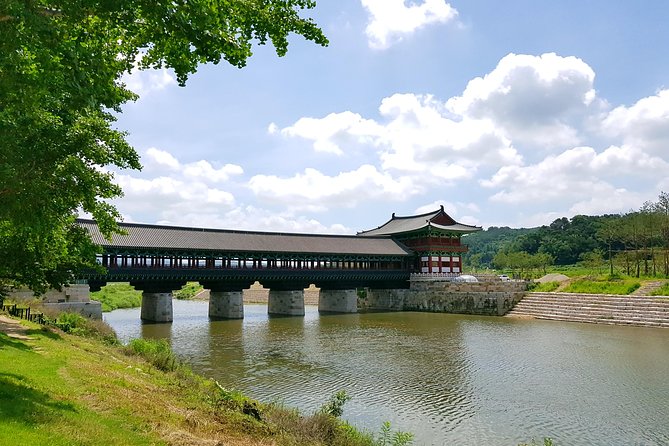
Next comes Donggung Palace and Wolji Pond, a pairing that works well because the pond is the visual centerpiece. Records connect Wolji Pond’s creation to the 14th year of King Munmu (r. 661 to 681), and the story frames it as part of palace life.
This stop is great for understanding how Silla rulers shaped landscapes for status. Even details like the mention of creating small mountains inside the palace setting point to how deliberate the scenery was, not just decorative.
Admission is included here, so you can focus on the walk, the viewpoints, and the background explanation without checking prices. It is also a good break from climbing, since the area is easier to navigate than temple routes.
Same trip, a different corner of the country:
- Gyeongju: UNESCO Heritage Tour Including Bulguksa Temple
★ 4.8 · 104 reviews - Gyeongju: Private Car Tour with a Licensed Tour Guide
★ 5.0 · 85 reviews - Full day Private Gyeongju UNESCO Heritage Tour : a glimpse into Silla
★ 5.0 · 60 reviews - Guided Car Tour in Geyongju with a Local Guide
★ 5.0 · 38 reviews
Gyochon Traditional Village: hanok life, with realistic expectations
Gyeongju Gyochon Traditional Village is a hanok village stop that aims to show everyday life of the Choi clan. You get a look at the House of the Gyeongju Choi Clan, described as an Important Folklore Cultural Asset.
I think this stop works best when you treat it as a window into culture, not as a theme park. Some guests find it lively, while others feel the village has limited open structures at the time of visit. Either way, it helps round out the day so you are not only seeing stone art and tombs.
Admission is listed as free, so you can afford to spend your time casually. If you want the full feel of hanok architecture, look closely at how the buildings are laid out and how the spaces are meant to function.
Daereungwon Tomb Complex: Silla power spelled in stone
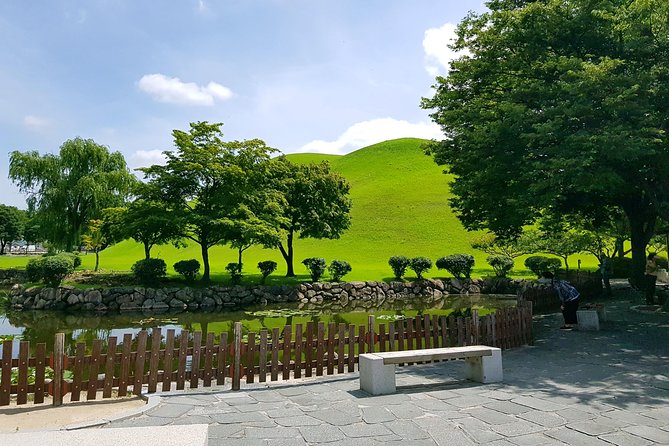
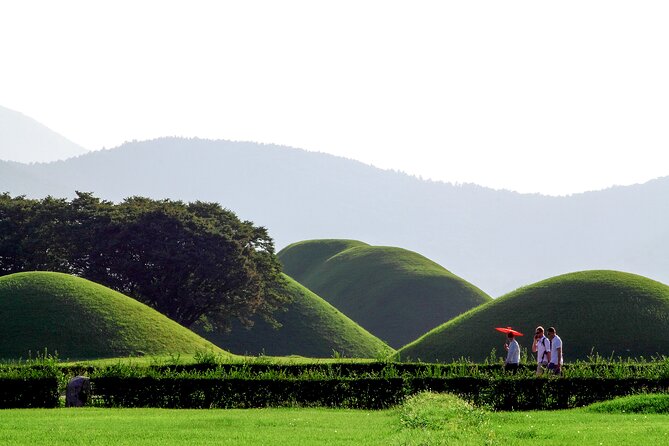
Then you hit Daereungwon Tomb Complex, also linked with the Cheonmachong Tomb. This is one of those places where the scale quietly tells you a lot, since you see tombs of kings and nobles spread through the area.
The tour highlights that there are twenty-three large tombs here. Even if you do not memorize names, you start to understand that Silla burial culture was a major statement of authority and hierarchy.
Admission is included, and the stop gives you enough time to see the core tomb complex and get the narrative context. For me, this is where the UNESCO sites start to feel less random. You see the same civilization shaping power, art, and belief in multiple forms.
Seokguram Grotto: a stone temple that demands attention
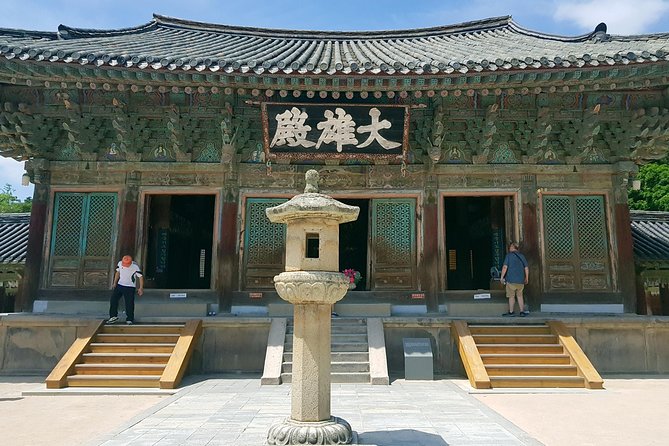
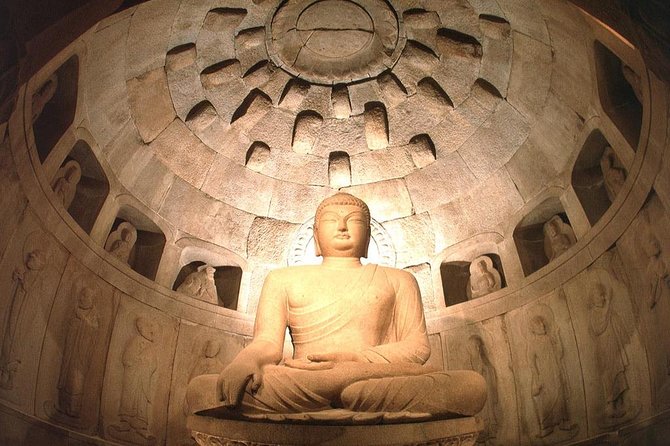
Seokguram is the representative stone temple on Tohamsan Mountain, and it is tied to UNESCO significance as National Treasure No. 24, with the official name given as Seokguram Seokgul.
What makes this stop special is the setting. Even before you focus on details, you feel that you are stepping into a different world. It is a temple, but it also functions like a crafted sacred destination, built in a way that elevates the experience with the mountain location.
Admission is included, and your time is about an hour. That can be just right if you like to see the main features without feeling rushed. If you dislike stairs or uneven paths, this is the stop where you will most want to keep your footing careful.
Also, one practical expectation: photography rules can be strict in some areas of grotto and temple interiors, so do what your guide advises so you do not lose time at the wrong moment.
Bulguksa Temple: where the UNESCO story lands
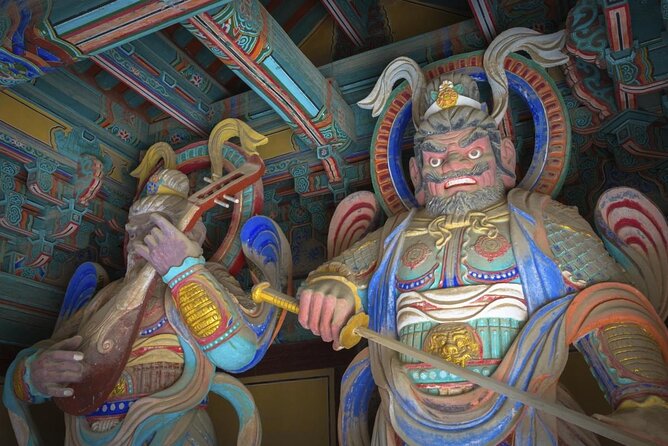
Finally, Bulguksa Temple delivers the big finale. It is called a representative relic of Gyeongju and noted as a UNESCO World Cultural Asset since 1995.
This stop is all about Buddhist art and the feel of crafted stone. The tour description emphasizes the beauty of the temple itself and the artistic touch of the stone relics, and that is exactly what most visitors come for.
Admission is included, and you get around an hour. That hour can feel full because Bulguksa is a place you want to look at. I like approaching it with the mindset that every stone element is part of a larger design story.
If you are the kind of person who enjoys architecture, you will get more out of it if you pause for a few minutes instead of rushing from one landmark to the next.
Lunch that actually fits the day, including dietary needs
Lunch is included, and it is a lot more important on this tour than people think. With a packed schedule, you do not want a quick bite that leaves you hungry during the temple finale.
The experience also makes room for dietary needs. The details specifically mention a vegetarian option you should request when booking. Past groups have also reported smooth handling of gluten-free needs, which is a big deal on a day that runs long.
My practical tip: treat lunch as your energy reset. If it is hot, drink water before you feel thirsty. Guides can handle most adjustments, but food pacing is on you.
Price and value: what you pay for, and what you avoid
At $189.99 per person, this is not the cheapest way to see Gyeongju. But it is also not just a bus ticket and a brochure stop.
You are paying for:
- Round-trip transport by air-conditioned minivan with pickup and drop-off
- Entrance fees included for the main stops listed
- A guide who helps connect the dots between observatory, pond, village, tombs, grotto, and temple
- Lunch included, plus dietary accommodation when arranged
Independently, you would need to solve transport between sites and pay for entrances one by one. The trick is Seokguram and the temple route take time and planning, and without local transport knowledge you can end up losing the very hours you want to spend sightseeing.
One caution about value: if you already are staying in Gyeongju, your day might effectively run shorter because you do not need the full travel loop. That is not a dealbreaker, but it does mean you should compare the price to how much driving and time you personally need.
When this tour is the best match
This tour is a strong fit when you:
- Have one full day and want the UNESCO highlights without logistical stress
- Do not want to rent a car or coordinate taxis across multiple distant sites
- Prefer a guided day that links monuments to Silla political and cultural context
- Want lunch and entry fees handled so you can focus on seeing
It is also a good option if you care about comfort on hot days. People have praised the way guides and drivers handled extreme heat, including keeping the schedule moving while still getting everyone to the right places.
Where you might want to adjust expectations
A few things can shape your experience.
First, this is a structured day. If you want a slow, reflective pace, you might feel the schedule is tight. You will see the main features, but you probably will not linger for long.
Second, some stops can vary in how satisfying they feel depending on conditions and what is open at the time you visit. For example, the traditional village stop can feel more limited if fewer structures are available to explore, even though the concept is solid.
Third, popular places can be crowded on peak travel dates. One guide may adjust the plan if Cheomseongdae is extremely packed, so keep some flexibility in mind when you travel during holidays.
Should you book this full-day Gyeongju tour?
Book it if you want the highest concentration of Silla and UNESCO sights in one day, with pickup, entrance fees, and lunch handled. It is especially smart if you are coming from Busan and do not want to stitch together your own transport plan.
Skip or pair it with extra time if you crave a museum-style day with more artifact viewing, or if you want a gentler pace with longer breaks. In that case, you might do this tour for the big monuments, then add separate time on your own for deeper context.
If you go in ready for a full day of walking and looking, this tour does exactly what it promises: it gets you to the places that define Gyeongju’s Silla story, without the hassle.
FAQ
What is the duration of the Gyeongju UNESCO full-day tour?
The tour runs about 8 hours.
Is lunch included?
Yes. Lunch is included in the tour.
Are entrance fees included for the main stops?
Yes. Entrance fees are included for the sites on the tour.
Do I get pickup and drop-off?
Yes. Pickup and drop-off are included, and the tour uses an air-conditioned minivan.
What time does the tour start?
The start time is 8:00 am.
Is there a vegetarian option?
Yes. A vegetarian option is available, and you should advise at the time of booking.
How big is the group?
The tour has a maximum of 40 travelers.
Do I need a mobile ticket?
Yes. You receive a mobile ticket.
Is Cheomseongdae free to enter on this tour?
Cheomseongdae is listed with a free admission ticket.
More Historical Tours in Gyeongju
- Korail Day Trip to Gyeongju’s Unesco World Heritage Sites from Seoul
★ 4.5 · 3 reviews - From Busan: Gyeongju UNESCO World Heritage Guided Day Tour
★ 4.8 · 1,250 reviews - Gyeongju UNESCO World Heritage Guided Day Tour from Busan
★ 5.0 · 660 reviews - Seoul: Evening Dark History, Folklore & Ghost Story Walking Tour
★ 5.0 · 593 reviews
Recently reviewed in Gyeongju
- Gyeongju UNESCO sites Private tour with licensed tour guide★ 5.0 · 275 reviews
- Guided Car Tour in Geyongju with a Local Guide★ 5.0 · 38 reviews
- Korail Day Trip to Gyeongju’s Unesco World Heritage Sites from Seoul★ 4.5 · 3 reviews
- Gyeongju: Private Car Charter Taxi Tour★ 5.0 · 37 reviews
- From Daegu: Gyeongju UNESCO Tour 7 Highlights with Bulguksa★ 4.6 · 5 reviews
- Busan: Gyeongju UNESCO Legacy Tour with National Museum★ 5.0 · 17 reviews
- From Busan: Gyeongju Small Group Photo Tour & Hotel Pick-up★ 5.0 · 3 reviews
- Busan + Gyeongju One Day Tour from Busan★ 5.0 · 3 reviews
UNESCO Heritage Tours, compared.
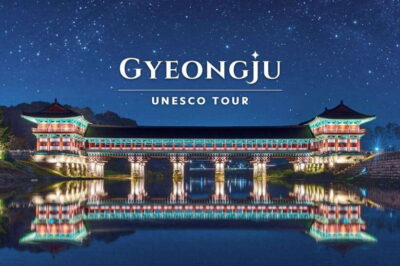
Gyeongju UNESCO World Heritage Guided Day Tour
Read our review →

East Jeju Essentials – Seongsan Ilchulbong (UNESCO) & Haenyeo
Read our review →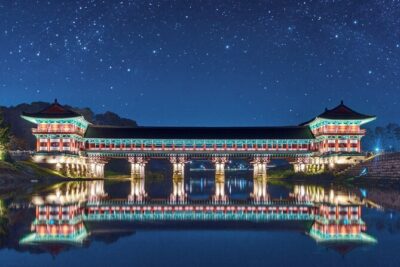
Gyeongju UNESCO World Heritage Guided Day Tour from Busan
Read our review →
Gyeongju UNESCO sites Private tour with licensed tour guide
Read our review →
Private Gyeongju Tour – Explore Gyeongju UNESCO Sites
Read our review →
Browse the lists this tour appears in