
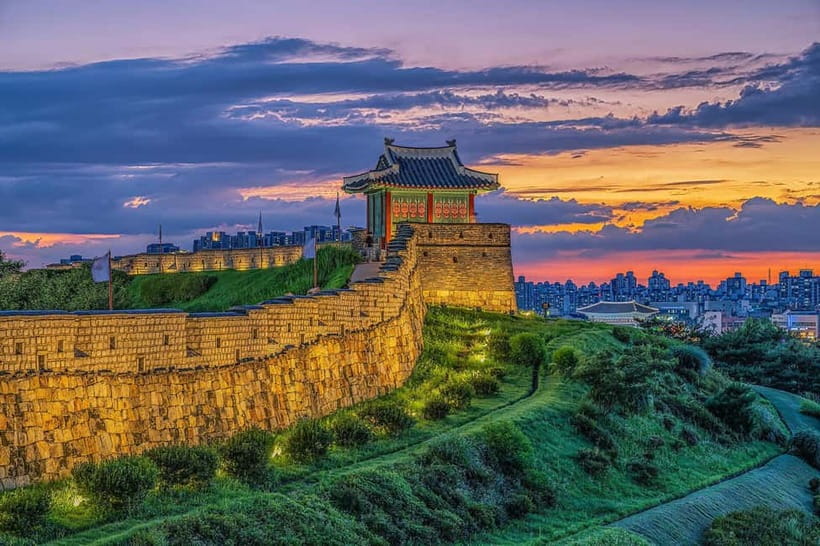
Reviewed · UNESCO HERITAGE TOURS
From Busan: Gyeongju UNESCO World Heritage Guided Day Tour
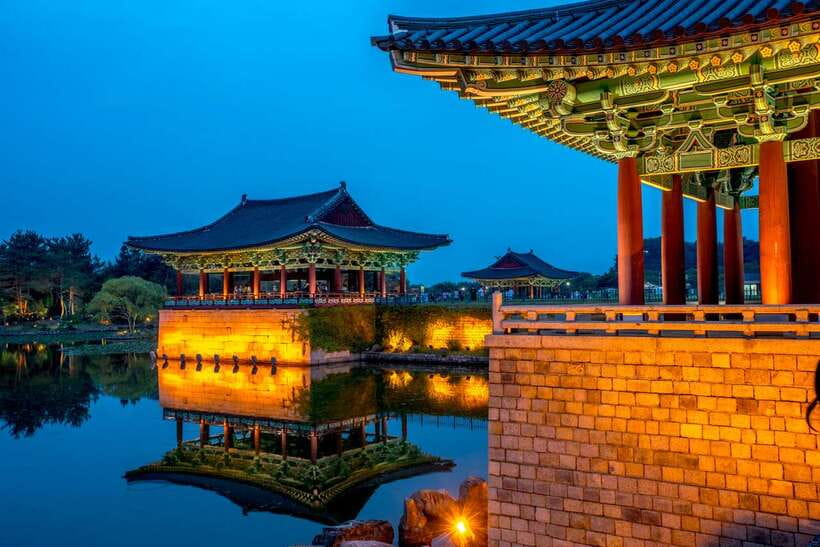
Gyeongju at night feels like a time machine. This Busan-to-Gyeongju day trip strings together Silla Kingdom highlights with the kind of guided context that helps the sites make sense fast, plus transport that removes the stress of getting there and back. I also like that guides such as Bobby Kim, Song, Olivia, and Jun-a are repeatedly praised for clear explanations and thoughtful photo stops.
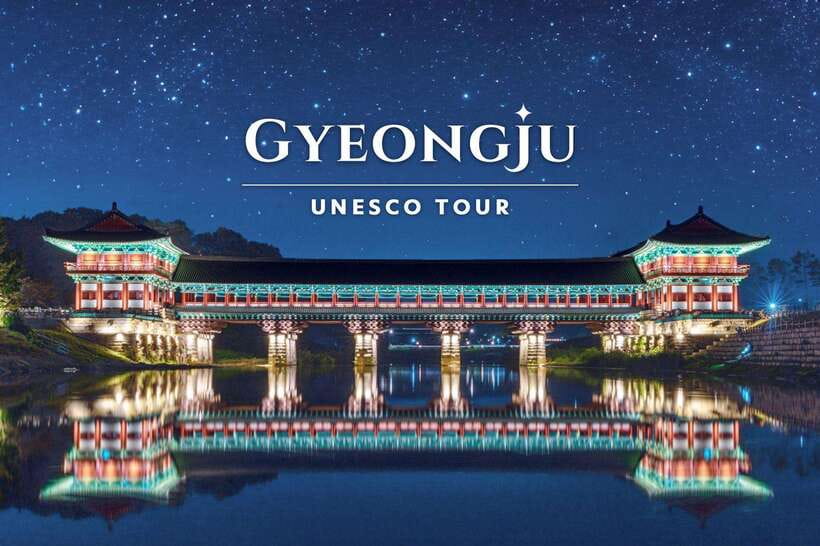
My favorite part is the night atmosphere at Donggung Palace and Wolji Pond (for the packages that include it), where Woljeong Bridge lights up and the pond’s reflections turn into the day’s most memorable scene. One drawback to plan for: it is a long day, and you will do plenty of walking, so comfortable shoes matter.
In This Review
- Key Things I’d Prioritize on This Busan to Gyeongju Tour
- Why Gyeongju Feels Bigger Than a Day Trip
- Pick A, B, or C: Night Views or Museum Focus
- Getting There From Busan Without the Headache
- Bulguksa Temple: The Day’s Architectural Payoff
- Yangdong Village vs Gyochon Traditional Village
- Daereungwon Tomb Complex and Hwangnidan-gil: Where the Silla Story Gets Specific
- Woljeong Bridge at Illumination Time
- Donggung Palace and Wolji Pond: The Evening Reflection Moment
- Package C Ends at Gyeongju National Museum
- Food, Pace, and What to Bring So You Actually Enjoy the Day
- Who This Tour Fits Best (And Who Should Think Twice)
- Price and Value: Why $52 Can Actually Make Sense
- Should You Book This Busan-to-Gyeongju UNESCO Day Tour?
- FAQ
- How long is the Busan to Gyeongju day tour?
- What’s included in the tour price?
- Are meals included?
- What language options do you get?
- What should I bring?
- Do infants need to pay?
- Where do I meet the group and where do I get dropped off?
Key Things I’d Prioritize on This Busan to Gyeongju Tour
- Choose your package based on night views versus museum time
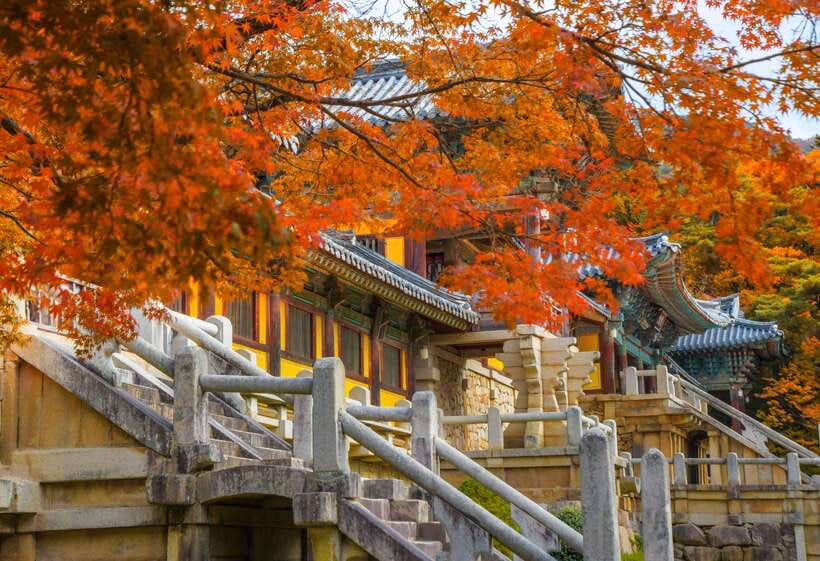
- Bulguksa Temple first sets the tone with dramatic stone terraces and wooden detail
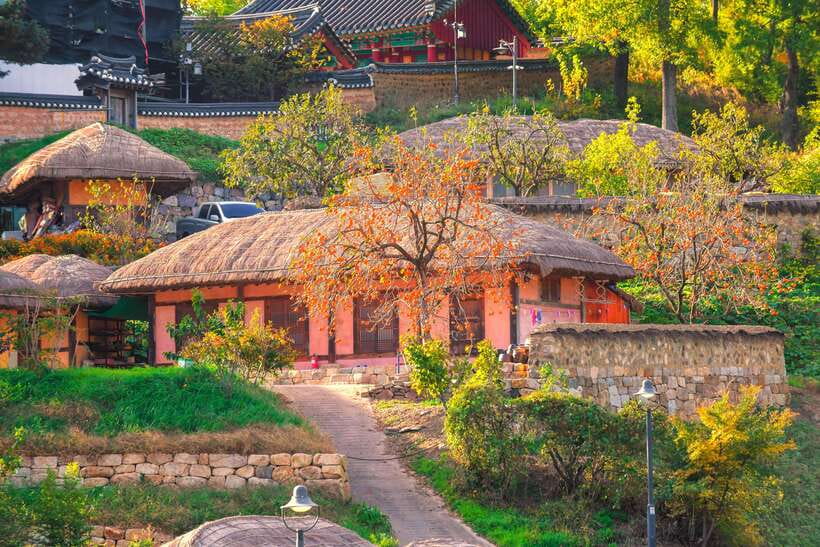
- Village history is the real cultural contrast between Yangdong and Gyochon
- Daereungwon Tomb Complex makes Silla feel real instead of textbook names
- Woljeong Bridge is the easiest photo win of the day at illumination time
Why Gyeongju Feels Bigger Than a Day Trip
Gyeongju has a special kind of weight. It was the old capital of the Silla Kingdom, and even when you are standing in a quiet courtyard or along a stone path, you can feel how central this place once was.
What makes this tour a smart way to visit is that it keeps you moving through the right “anchors” of the city. You get sacred architecture, royal tombs, lived-in traditional neighborhoods, and the evening palace-pond setting that people remember long after the trip.
I also like the human side of it: the tour runs with English and Chinese-speaking staff, plus Korean, so you are not stuck with silence at the exact moments when the stories matter.
More Historical Tours in Busan
- Gyeongju UNESCO World Heritage Guided Day Tour from Busan
★ 5.0 · 660 reviews - Old Korea Thousand History Tour of Gyeongju from Busan
★ 5.0 · 518 reviews - Busan history and market food tour with local chef
★ 5.0 · 58 reviews
Pick A, B, or C: Night Views or Museum Focus
This tour comes in three package styles, and your choice changes the final mood of the day.
Package A: Gyeongju UNESCO Tour
You’ll combine Bulguksa, Yangdong Village, Daereungwon, Hwangnidan-gil, Woljeong Bridge, and then finish with Donggung Palace and Wolji Pond (with entry included). Yangdong is especially good if you want Joseon-era cultural flavor alongside the older Silla sites.
Package B: Echoes of Silla Tour
Same backbone for the early stops, but you swap in Gyochon Traditional Village instead of Yangdong. Like Package A, you still end at Woljeong Bridge for photos and then Donggung Palace and Wolji Pond for that evening reflection scene (with entry included). If you like family names, ancestral houses, and local continuity, this one fits well.
Package C: Gyeongju Museum Tour
This option starts at Bulguksa, then covers Hwangnidan-gil and key Silla landmarks tied to the region’s history, and finishes with Gyeongju National Museum (with free time there). This is the pick if you want artifacts and explanations to land before the day ends, rather than relying mainly on outdoor night atmosphere.
If you are the type who plans your photos, I’d treat Packages A and B as your “golden hour plus night” choice. If you want a calmer ending indoors, Package C is your best bet.
Getting There From Busan Without the Headache
The ride from Busan to Gyeongju is about 100 minutes by bus/coach. You also get multiple starting points, including options around major hubs like Haeundae Station and Seomyeon Station (and also KTX Busan Station). That matters because it turns this into a real day trip, not a complicated logistics puzzle.
In practice, the bus part is where this tour earns its value. You skip arranging transfers, mapping routes, and figuring out ticket lines on your own. You show up, the driver does the driving, and the guide handles the flow between sites.
One caution: it is still a full-day schedule. Even with smooth transport, you should expect a pace that assumes you can handle several walking segments with only short breaks.
Bulguksa Temple: The Day’s Architectural Payoff
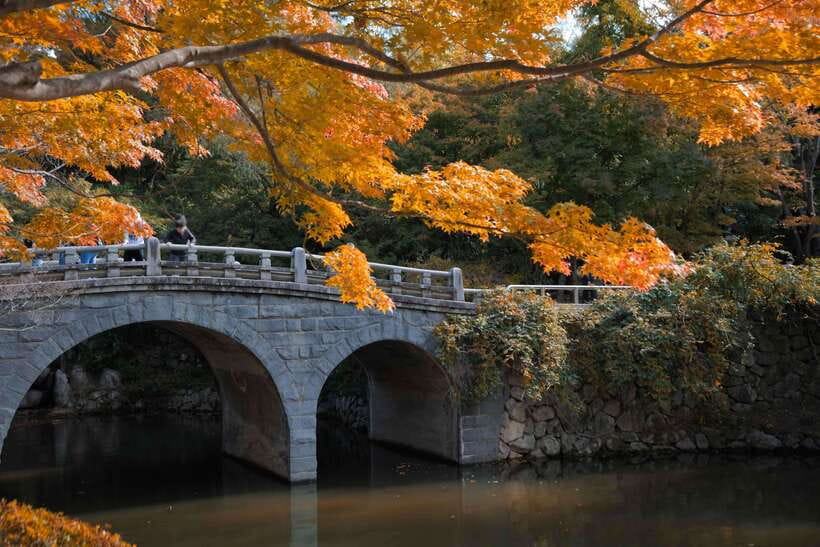
You start with Bulguksa Temple, with a guided visit of about 70 minutes. Bulguksa is known for its wooden buildings set on raised stone terraces, and once you arrive, that layout becomes the story. The stone levels force you to look up, the wooden structure pulls your eyes along details, and the whole place feels intentionally staged for reverence.
Here’s what you should do to get more out of the visit. Don’t rush the terraces. Pause, look back toward the entry approach, then slowly work your way through the sightlines. If your guide points out specific design elements, actually follow the instruction. Those small cues are what turn a pretty temple into a meaningful one.
The guided portion helps too, because Bulguksa is not just one building. It is a complex, and the flow through it is what lets you understand why it’s treated as a heavyweight in Korean Buddhist heritage.
More UNESCO Heritage Tours in Busan
- UNESCO Tongdosa Temple + Gourmet Eonyang Style Bulgogi Lunch
★ 5.0 · 7 reviews - Full Day Private car tour to UNESCO Gyeongju&Yangdong village
★ 5.0 · 5 reviews - One Day Private tour to World Heritage GyeongJu from Busan
★ 4.5 · 3 reviews - Korean UNESCO World Heritage Tour including Gyeongju, Andong and Daegu(2N3D)
★ 5.0 · 3 reviews
Yangdong Village vs Gyochon Traditional Village
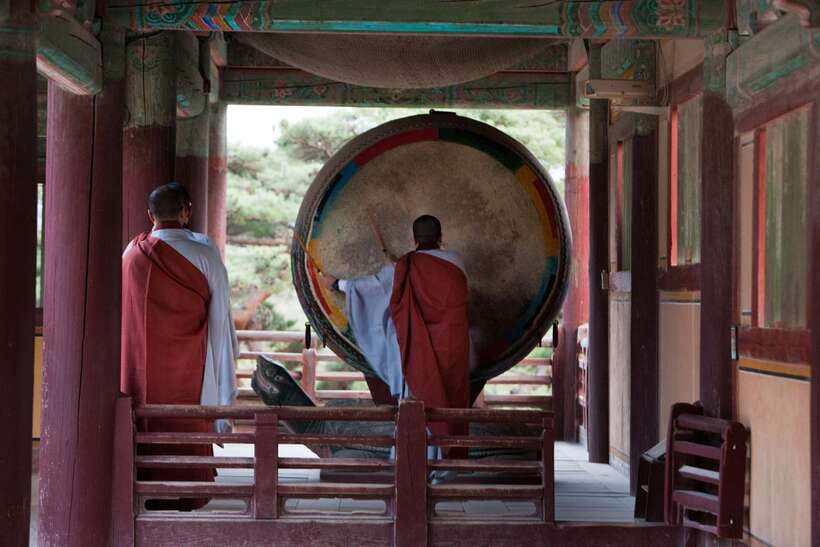
After Bulguksa, your package choice shapes the next heritage stop.
If you’re on Package A (Yangdong Village):
You visit Yangdong Folk Village for about 1.5 hours. The big draw here is living tradition through historic hanok homes within a UNESCO-listed setting. You are not just viewing houses from outside. With a guided approach, you learn what to look for and how to read the layout like it has a reason.
If you’re on Package B (Gyochon Traditional Village):
You spend around 100 minutes at Gyeongju Gyochon Traditional Village. This one is tied to ancestral homes of the Gyeongju Choi clan, so it feels more like heritage through family presence. If you like stories about how communities stayed stable over time, this stop usually lands well.
Either way, this is where the tour becomes more than “look at old stuff.” You get a sense of how culture lived day to day: where people gathered, how homes were built, and how the past stayed connected to daily life.
Daereungwon Tomb Complex and Hwangnidan-gil: Where the Silla Story Gets Specific
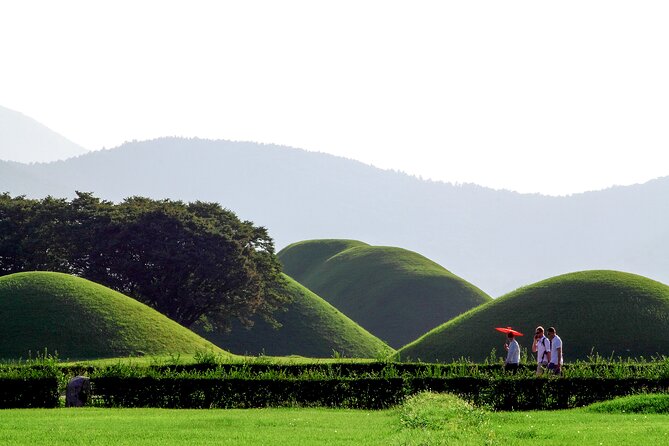
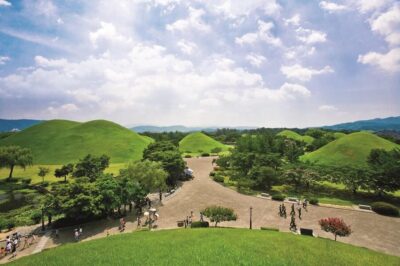
Next comes Daereungwon Royal Tomb, guided for about 75 minutes. This is a key Silla site, and it’s one of those places where the details are only obvious once someone explains what you are looking at.
Then you head to Hwangnidan-gil, with about 30 minutes of free time. This street is a smart contrast stop. You are leaving the monumental past and moving into present-day Gyeongju, where cafes, boutiques, and street food vendors line the area.
This part is valuable because it gives you breathing room without breaking the day rhythm. Use it for a snack and a slow walk. If you want souvenirs that don’t feel like random imports, this is often where small local shops pop up.
Woljeong Bridge at Illumination Time
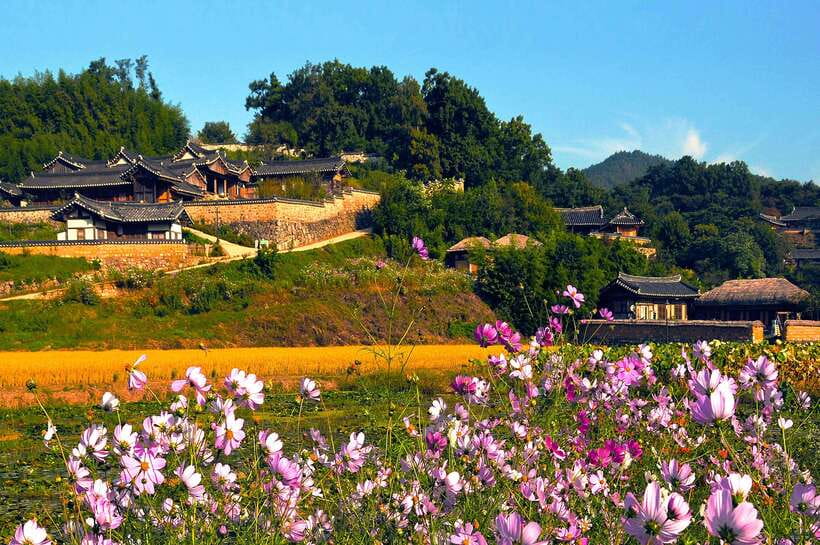
Woljeong Bridge is one of the most photogenic spots on the route. You get a photo stop with guided time of about 20 minutes.
If you are lucky with timing, you catch the bridge illuminated, and that lighting matters. It makes the bridge feel cinematic, not just scenic. Plus, you are positioned as a group, so you get quick help from the guide on where the best shots tend to happen.
One practical tip: wear the shoes you want for photos too. You might shift positions more than you expect because you will want different angles of the bridge and the river view.
This is also a good moment to check in with your group plan. Short photo pauses can grow if people are slow deciding, so commit early: pick your spot, take a burst of photos, then let the group flow.
Donggung Palace and Wolji Pond: The Evening Reflection Moment
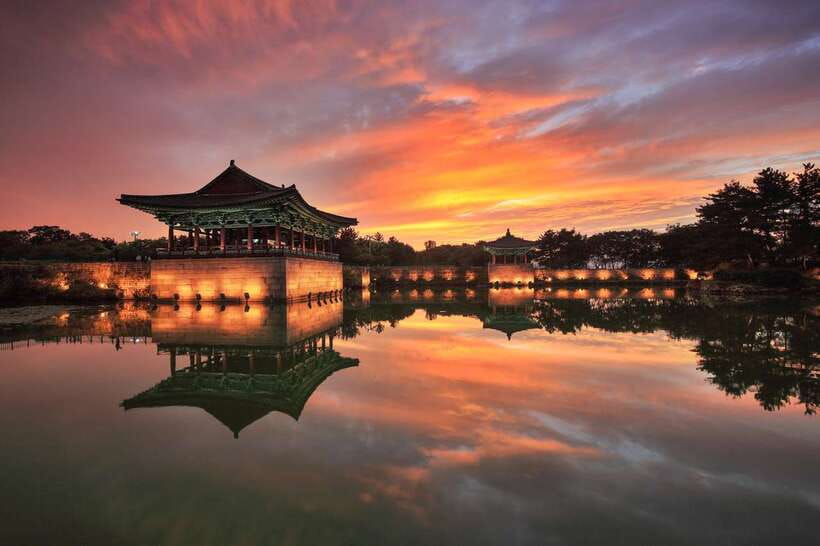
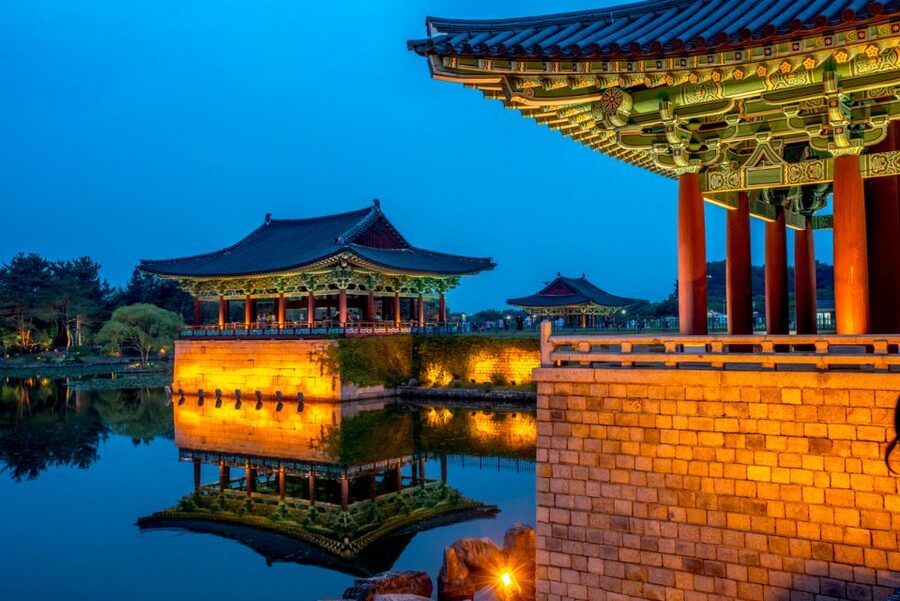
For Packages A and B, the day ends with Donggung Palace and Wolji Pond for about 1 hour, including entry. This is the part that makes the tour feel special at night.
The pond reflection is the headline. When the sky dims and lights start to show up, the whole scene changes. The palace complex setting adds context, so you are not just standing at a pretty pond. You are seeing the kind of environment Silla royals once used as part of their palace life.
This stop is one of those “slow down on purpose” experiences. Don’t sprint through it. Let your eyes adjust, stand at the pond edge long enough to see how reflections vary with crowd movement, and take a few photos from more than one spot.
And yes, the guides are often helpful with photos here, with people sharing that the staff takes pics and recommends photo points. If you are traveling with a camera-shy friend or you’re solo, that matters.
Package C Ends at Gyeongju National Museum
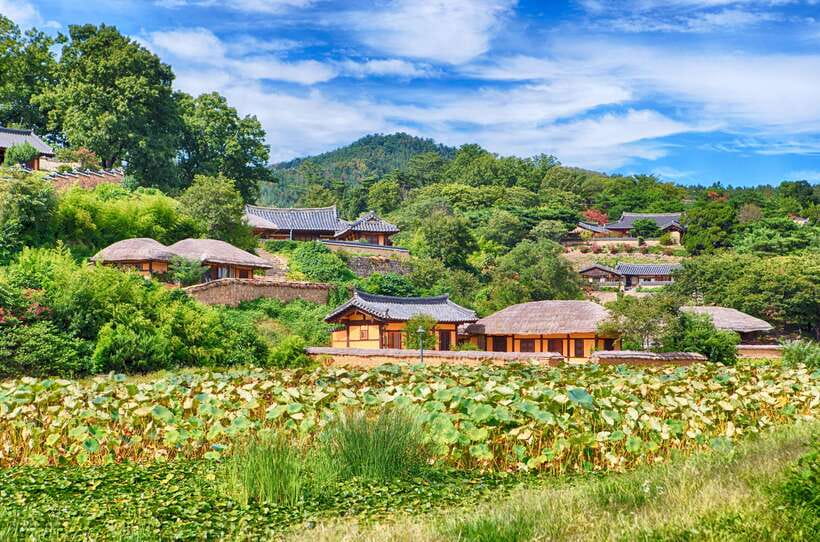
If you chose Package C, your final stop becomes Gyeongju National Museum, with about 1 hour of free time and sightseeing.
Museums are where the story stops being atmospheric and becomes tangible. Instead of relying on outdoor structures alone, you get access to Silla artifacts, including golden crowns and Buddhist relics, which helps connect what you saw earlier to objects that survived the centuries.
This is a great option if you like learning in a more structured way. You might find that you understand the temple and tomb imagery better after seeing related items in one indoor setting.
It is also the most weather-proof ending of the three options. If the evening is rainy or cold, museum time can feel like a relief.
Food, Pace, and What to Bring So You Actually Enjoy the Day
Meals are not included, so plan for lunch and possible snacks. The tour does include guided and sightseeing time across several major sites, and there are only short pockets for food and wandering.
The pace is manageable when you go in with realistic expectations. It’s 8 to 12 hours depending on your package and conditions, so you want energy at the start and a snack plan for the middle.
Bring comfortable shoes. Most of this day is walking plus standing, and even if each stop is not long, the total adds up. A simple day bag with water, a small umbrella, and a charger can make the later photo stops easier too.
Also note that the schedule can shift with weather and traffic. That is normal, but if you hate surprises, keep your expectations flexible.
Who This Tour Fits Best (And Who Should Think Twice)
This is a strong choice if you want a guided, no-stress way to see multiple UNESCO-level highlights without arranging buses and tickets yourself. It is also ideal if you enjoy Korean history but do not want to read your way through it alone.
You will probably love this tour if you:
- want the combination of sacred sites and royal Silla storytelling
- enjoy photos, especially during the Woljeong Bridge and pond time
- prefer a guide who explains meaning, not just a checklist of locations
Think twice if you:
- get tired from long walking days
- strongly need meals included
- plan to take a lot of slow, independent detours (the structure is tight, and the day is packed)
The good news is that guides such as Bobby Kim, Olivia, Song, and Jun-a are repeatedly praised for managing the group and keeping the timing smooth. That kind of organization matters when you have limited daylight and several stops in one day.
Price and Value: Why $52 Can Actually Make Sense
At $52 per person, the headline question is simple: what are you buying?
You are paying for transportation from Busan, a professional guide, and guided time across major sites like Bulguksa, royal tomb areas, Hwangnidan-gil, and either Donggung and Wolji or museum time. Some entry fees also land with the tour depending on the package, including Donggung and Wolji for Packages A and B, plus certain village and tomb entry fees for Package A.
Is it the cheapest way to see Gyeongju? No. But it is often the best value if you factor in the costs of getting there, the time saved, and the benefit of an organized explanation at each stop.
If you are on a short visit to Busan, this tour can be one of the most efficient ways to stretch your time into a full UNESCO-style day.
Should You Book This Busan-to-Gyeongju UNESCO Day Tour?
I’d book it if you want a structured day that hits the best-known Gyeongju landmarks, with guided context and a satisfying evening payoff for Packages A and B. The moonlit setting at Donggung Palace and Wolji Pond plus the illuminated Woljeong Bridge is exactly the kind of experience that a self-guided trip often makes harder to time.
I would not book it if you want a slow, flexible day with lots of unscheduled wandering, or if you really cannot handle a long schedule with walking.
If you match the profile, this is a high-value way to connect the dots between Korea’s Buddhist heritage, Silla royal power, and the living culture that still shapes Gyeongju today.
FAQ
How long is the Busan to Gyeongju day tour?
It runs about 8 to 12 hours depending on conditions and the package you choose.
What’s included in the tour price?
Transportation is included, along with English and Chinese-speaking staff. Entry fees are included for some sights depending on the package, such as Yangdong Village (Package A only) and Donggung and Wolji (Packages A and B).
Are meals included?
No, meals are not included.
What language options do you get?
Staff and guides speak English, Chinese, and Korean.
What should I bring?
Wear comfortable shoes. The day includes several walking and sightseeing sections.
Do infants need to pay?
This tour is free for infants aged 0 to 2 if they do not occupy a seat.
Where do I meet the group and where do I get dropped off?
Meeting point can vary by the option you book. There are multiple pickup and drop-off locations around Busan, including areas like Haeundae Station and Seomyeon Station, with KTX Busan Station also listed.
Recently reviewed in Busan
- West Busan Small Group Photo Tour (Max 7)★ 5.0 · 11 reviews
- Real Busan Walking Experience★ 5.0 · 27 reviews
- Visit Busan night market and enjoy the night view of Busan harbor★ 5.0 · 6 reviews
- Busan Highlights Shore Tour – Cruise Return Assured★ 4.5 · 34 reviews
- Suncheon one day tour from Seoul, Busan or Suncheon★ 5.0 · 3 reviews
- Busan Beomeosa Temple & Hongbeopsa Temple with temple lunch★ 5.0 · 11 reviews
- 1 Day Private Busan Guided Tour★ 4.5 · 3 reviews
- Private Custom Tour With a Local Guide in Busan★ 4.5 · 12 reviews
UNESCO Heritage Tours, compared.

East Jeju Essentials – Seongsan Ilchulbong (UNESCO) & Haenyeo
Read our review →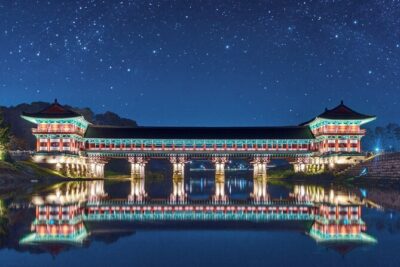
Gyeongju UNESCO World Heritage Guided Day Tour from Busan
Read our review →
Gyeongju UNESCO sites Private tour with licensed tour guide
Read our review →
Private Gyeongju Tour – Explore Gyeongju UNESCO Sites
Read our review →
Browse the lists this tour appears in