
Reviewed · UNESCO HERITAGE TOURS
Gyeongju: UNESCO Highlights Tour with Guide and Ticket
Gyeongju feels like a time machine. This 8.5-hour UNESCO highlights tour strings together royal Silla tombs, two standout UNESCO sights, and a museum stop with an English-speaking guide. I love that Cheonmachong includes entry so you can see inside a rare Silla royal tomb, and I love how the guide connects what you see outdoors to what you’ll see under glass later. One heads-up, you should expect a lot of walking, stairs, and slopes, so plan around comfort, not just convenience.
In the best versions of this day, guides such as Dongmin Goh or Sam help you beat crowds at key stops and answer questions with zero fluff. If you hate thinking ahead, the only real snag is that lunch is not included, so you’ll need to go with whatever your guide recommends on the day.
In This Review
- Key Things I Would Prioritize
- One Day to Master Gyeongju’s Silla and UNESCO Stops
- Meeting at Daereungwon, Then Straight Into Early Silla Royal Tombs
- Cheonmachong: The Rare Silla Tomb Interior You Can Actually Enter
- Great Hwangnam Tomb: The Photo You Actually Understand
- Seokguram Grotto: Silla Buddhist Art in a Stone Atmosphere
- Bulguksa Temple: Where Silla Buddhism Feels Like a System
- Lunch Is On Your Own, So Use the Time Well
- Gyeongju National Museum: The Golden Crown and Tomb Relics Under Glass
- Woljeonggyo Bridge, Restored in 2018, With a Unified Silla Story
- Gyochon Traditional Village: The Choi Family House and the Values Behind It
- Cheomseongdae: Counting Stones Like an Ancient Astronomer
- Pace, Shoes, and Who This Tour Fits Best
- Price and Value: About $58 for Tickets, Guide, and Transport
- Should You Book This Tour?
- FAQ
- How long is the tour?
- Where does the tour start and end?
- What is included in the price?
- Is lunch included?
- Can children join this tour?
- Is the tour wheelchair friendly or stroller friendly?
- What should I bring?
- Is anything not allowed during the tour?
- How many people are needed for the tour to run?
Key Things I Would Prioritize
- Cheonmachong entry is included, which is the big difference between looking at a tomb from the outside versus actually stepping inside the story.
- Seokguram Grotto and Bulguksa Temple are both UNESCO anchors, so you get a true highlight loop in one day.
- The museum visit matches the tombs you toured, including items excavated from Cheonmachong and the Great Hwangnam Tomb.
- Photo planning is part of the job, with guides known for pointing out the best angles at each site.
- Expect real footwork, with reports of around 12,000 steps even with vehicle transfers between major points.
- You start and finish at Daereungwon, so your day has a clean, simple home base.
One Day to Master Gyeongju’s Silla and UNESCO Stops
This tour is designed for people who want the Gyeongju essentials in a single, structured day. You get a morning bus loop plus an afternoon walking stretch, which means fewer logistics headaches and more time focused on the sites.
What makes it work is the flow. You start with early Silla royal tombs, you move into UNESCO Buddhist masterpieces, then you finish with more historical layers plus a classic Gyeongju photo circuit.
And yes, it is busy. But when the guide is on form, it feels like you’re moving through a timeline, not a checklist.
More UNESCO Heritage Tours in Gyeongju
- Gyeongju UNESCO sites Private tour with licensed tour guide
★ 5.0 · 275 reviews - Private Gyeongju Tour – Explore Gyeongju UNESCO Sites
★ 5.0 · 272 reviews - Gyeongju UNESCO World Heritage Sites and History Full-Day Tour with Lunch
★ 5.0 · 104 reviews
Meeting at Daereungwon, Then Straight Into Early Silla Royal Tombs
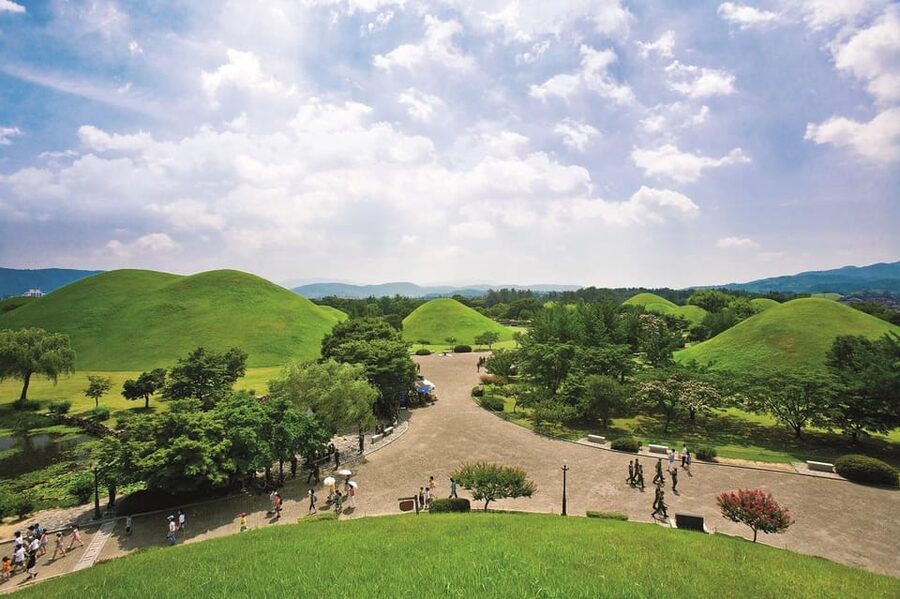
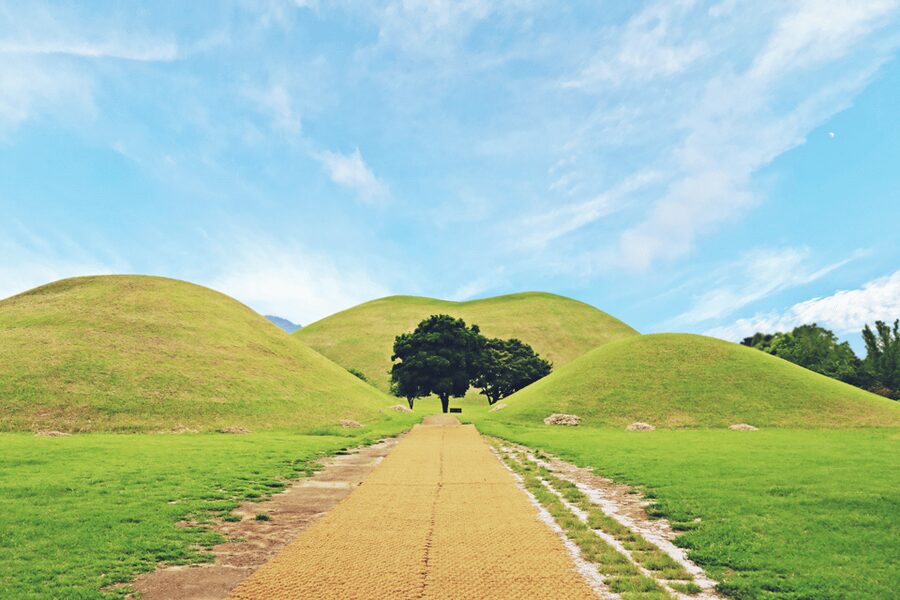
You meet in front of the back gate of the Daereungwon Tomb Complex. From there, the day kicks off with the early Silla tombs, which is a smart way to start because the whole route later makes more sense after you understand what you are looking at.
The first big target is the tomb area around Daereungwon, where you can get context for Silla burial culture. It sets the tone for the rest of the tour, especially once you reach the one site where you can actually go inside.
Cheonmachong: The Rare Silla Tomb Interior You Can Actually Enter
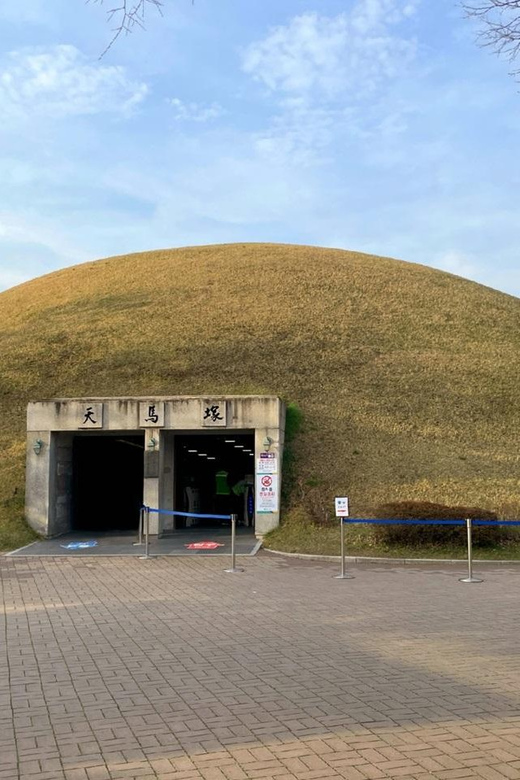
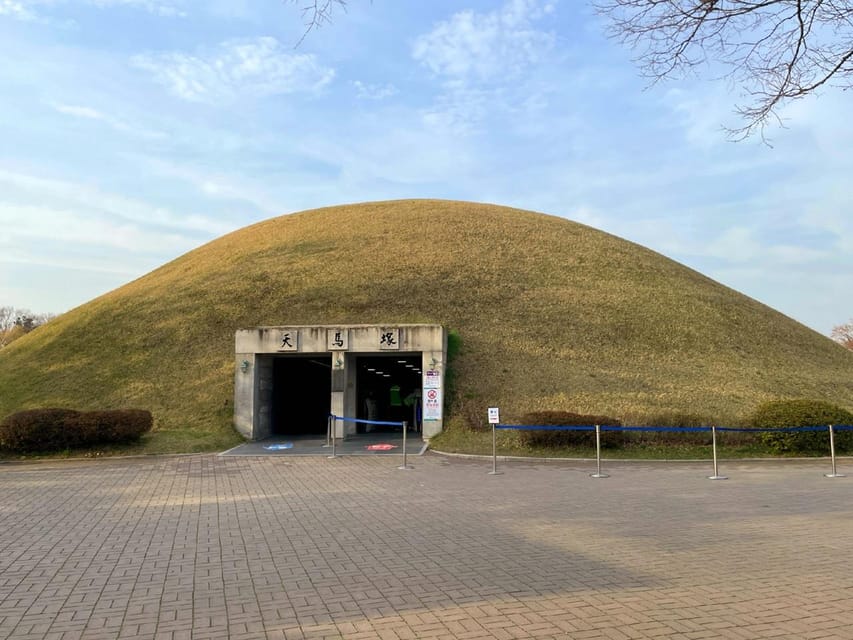
Cheonmachong is the standout for me because the tour includes admission, and that matters. This is one of the few Silla royal tombs where you can see the inside, which makes the history feel physical, not just interpretive panels.
There’s also a specific detail that your guide will connect to what you’re seeing. Cheonmachong was originally treated as a testing site connected to the excavation of the Great Hwangnam Tomb. Later, it earned its name, Cheonmachong, the Tomb of the Heavenly Horse, after a birch bark saddle flap, also described as a mud-guard, was unearthed depicting a flying horse.
When you walk through and listen, that kind of detail turns a site into a narrative. It’s the kind of thing you miss if you show up alone and read only the basics.
Great Hwangnam Tomb: The Photo You Actually Understand
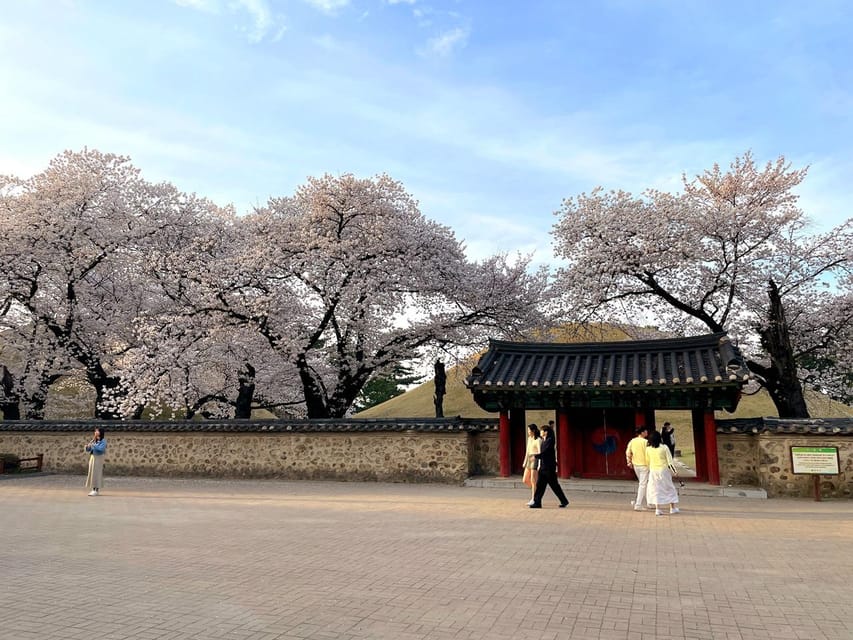
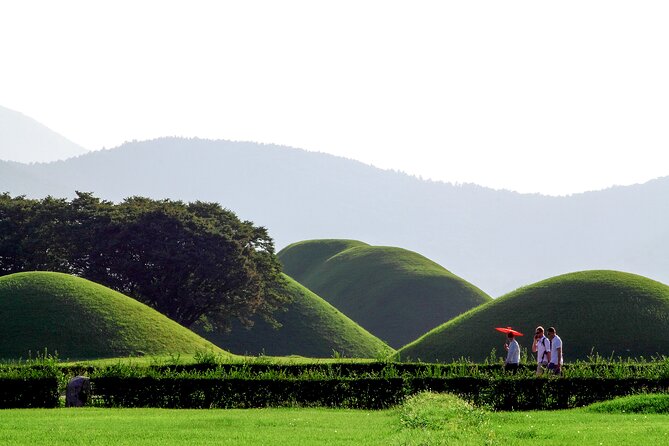
After Cheonmachong, you head to the Great Hwangnam Tomb, described as the largest tomb in Gyeongju. The tour includes time to take that signature photo with the tomb in the background, but the real value is the context you get first.
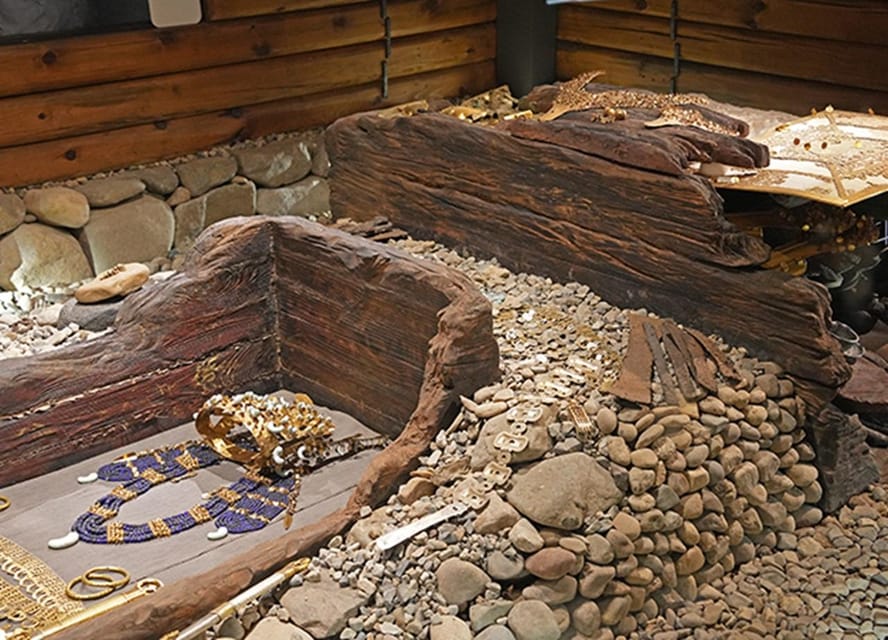
That’s because the relics connected to these tombs show up later in the Gyeongju National Museum. By the time you get there, you’re not just seeing artifacts, you’re matching them to places you already stood near.
Same trip, a different corner of the country:
- Gyeongju: UNESCO Heritage Tour Including Bulguksa Temple
★ 4.8 · 104 reviews - Gyeongju: Private Car Tour with a Licensed Tour Guide
★ 5.0 · 85 reviews - Full day Private Gyeongju UNESCO Heritage Tour : a glimpse into Silla
★ 5.0 · 60 reviews - Guided Car Tour in Geyongju with a Local Guide
★ 5.0 · 38 reviews
Seokguram Grotto: Silla Buddhist Art in a Stone Atmosphere
Next up are the UNESCO stops. First is Seokguram Grotto, known as one of the greatest masterpieces of Silla Buddhist art.
Inside, you’re meant to pay attention to scale and expression. The main Buddha inside the grotto is immense, and the faces of the statues are described as gentle, with a mysterious cave atmosphere that hangs over everything. I like this stop because it hits your senses before it hits your brain.
Also, the day is timed so you’re not stuck waiting around forever. You move through with purpose, and the guide helps you look at the details without turning it into a lecture marathon.
Bulguksa Temple: Where Silla Buddhism Feels Like a System
Then you go to Bulguksa Temple, described as the core of Silla Buddhist culture. This is the kind of place even non-art people tend to respect, because it feels complete as a spiritual and cultural space.
The tour frames it around the beauty of seven national treasures at Bulguksa Temple. Your guide also tends to connect the temple’s meaning to why Bulguksa became such a recognizable symbol of Gyeongju.
Practical note: this is still a walking day with steps. So treat it like a sightseeing hike with cultural rewards, not a flat museum stroll.
Lunch Is On Your Own, So Use the Time Well
Lunch is not included, and meals are on your own. The good news is you’re in an area where you can typically find something simple, local, and filling.
The smart move is to let your guide set the pattern. In past tours, guides have steered groups toward restaurants that work well for the day’s pace, and some have even accommodated specific dietary needs like gluten-free and veggie or pescatarian options. You won’t always get those exact options, but asking is fair.
If you want a smooth afternoon, keep lunch light and practical, then save energy for the walking stretch.
Gyeongju National Museum: The Golden Crown and Tomb Relics Under Glass
After lunch, you head to the Gyeongju National Museum. This stop is a big part of why the day feels coherent rather than random.
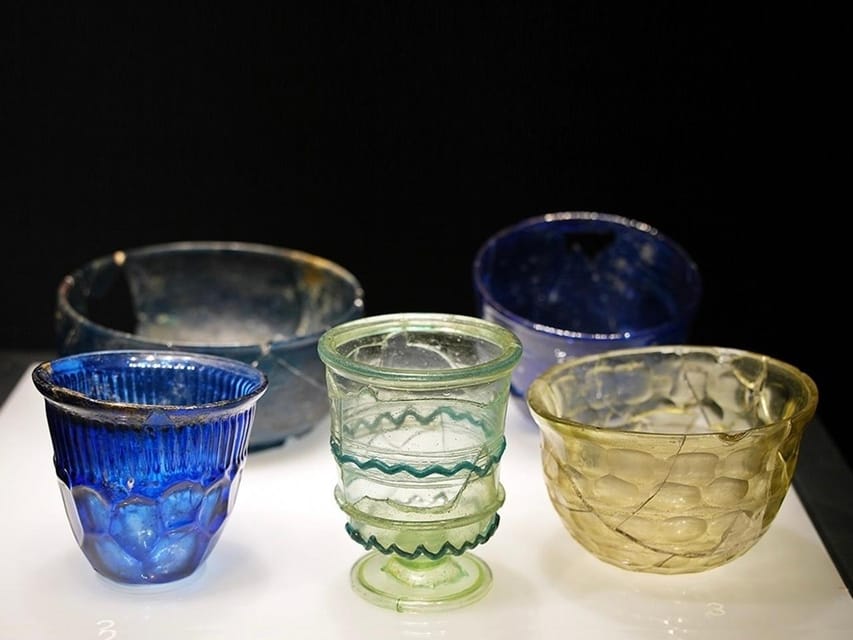
This is where you see the Golden Crown excavated from Cheonmachong, plus relics excavated from the Great Hwangnam Tomb. Standing in front of those objects after visiting the burial sites outside is a strong payoff.
Even if you’re not a museum person, I think this is worth it because it translates what you saw into something you can study slowly. Outside you get scale and setting. Inside, you get the evidence.
Woljeonggyo Bridge, Restored in 2018, With a Unified Silla Story
Once the museum piece clicks into place, the tour shifts into the scenic city-side highlights.
You’ll visit Woljeonggyo Bridge, recorded as built during the Unified Silla Dynasty. The tour also includes the historical twist: the bridge was lost during the Joseon Dynasty and was restored in 2018.
That restoration detail is more than trivia. It gives the bridge a living quality, like history doesn’t sit quietly in the past. You’ll get time to photograph it with the bridge as your backdrop, and the guide will usually suggest angles that help you avoid awkward crowds.
Gyochon Traditional Village: The Choi Family House and the Values Behind It
Next is Gyochon Traditional Village, where you’ll find the old house of the Gyeongju Choi Clan. In Korea, this is linked to the idea of Gyeongju Choi wealth and status, but the tour emphasizes the social responsibility angle, noblesse oblige, tied to the Choi family.
You’ll look around the simple and frugal old house and learn about the six principles of the Choi family. I like this stop because it shifts from royal power and Buddhism into everyday ethics and identity. It’s still history, but closer to how people tried to live.
This is also one of the parts of the day where the walking feels more like a neighborhood stroll, even though the surfaces can be uneven.
Cheomseongdae: Counting Stones Like an Ancient Astronomer
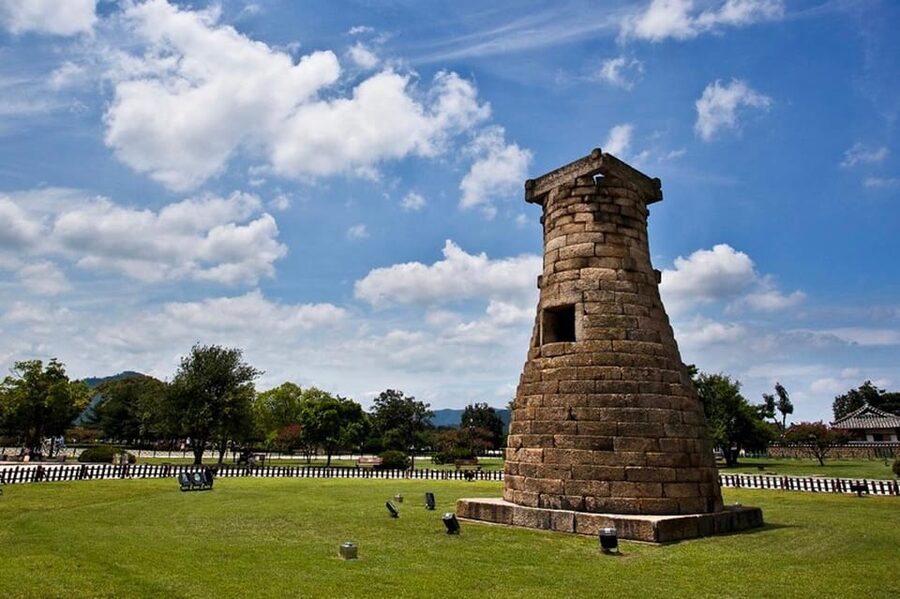
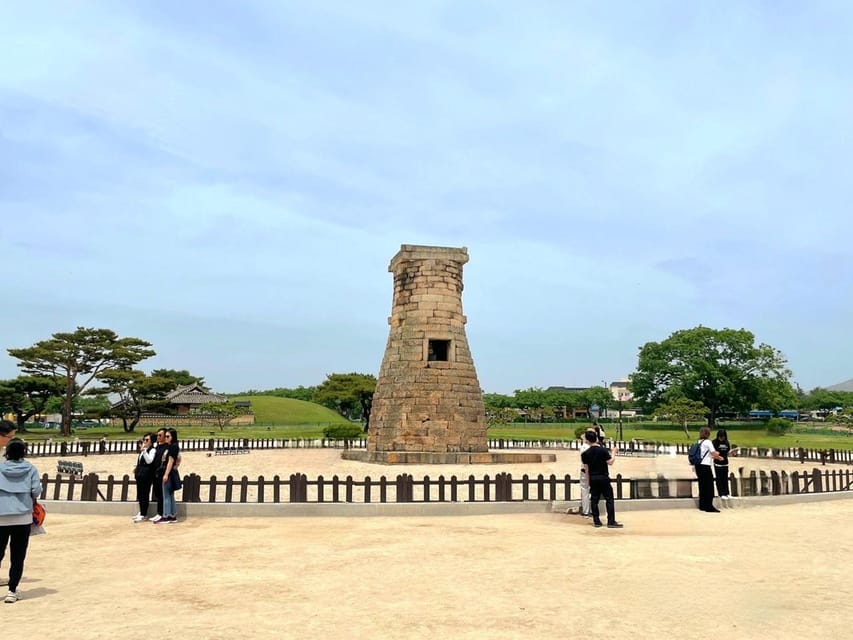
The last major cultural stop is Cheomseongdae, described as the oldest astronomical observatory in Asia. This is where the tour becomes playful in a way you can feel.
Cheomseongdae has 365 stones, representing the number of days in a year. The tour also points out that the total number of stone steps is meant to represent the number of days in a lunar month, 29 or 30 depending on how you count the levels.
You’ll literally be prompted to count them yourself. That kind of hands-on attention is exactly what makes the end of the day memorable, and it gives you something concrete to remember even after you’ve left the temples behind.
Pace, Shoes, and Who This Tour Fits Best
This is a full day, so the comfort level matters. The tour includes many walking courses and includes stairs and slopes, so comfortable shoes and clothes are strongly recommended.
It’s not suitable for children under 4, and it’s also not suitable for strollers or wheelchair users. There’s also a limit in the other direction, with guidance that it’s not suitable for people over 75. If you’re on the edge with mobility or balance, I’d treat that as a meaningful sign rather than a legal footnote.
Based on past experiences, the pace can be brisk enough that you may hit around 12,000 steps even with transport between major points. The vehicle helps, but it doesn’t turn this into a lazy day.
Price and Value: About $58 for Tickets, Guide, and Transport
At about $58 per person, the value mainly comes from three things: a licensed English-speaking guide, entrance fees, and dedicated vehicle transport. Those entrance fees matter because the itinerary includes major sites, including Cheonmachong where you can enter the tomb interior.
If you tried to assemble this yourself, you’d spend time on tickets, routing between sites, and interpretation. Here, you trade a bit of freedom for structure, and you get the context that helps you notice what’s actually important.
If you only have a day or two in Gyeongju, I think that trade is usually worth it. You’re not getting every possible site in the region, but you are getting the big UNESCO anchors plus Silla burial culture in a single loop.
Should You Book This Tour?
Book it if you want a guided route that connects Silla tombs to UNESCO Buddhist masterpieces, then ties it together with a museum visit. If you like having someone point out details, suggest photo angles, and keep the schedule moving, this day is built for you.
Pass or consider an alternative if stairs, slopes, and long walking days are a deal-breaker for you. Also, if lunch planning stresses you out, make peace with the fact that lunch is on your own and you’ll need to follow your guide’s lead for the smoothest experience.
If you want the best shot at an enjoyable day, bring good shoes, wear comfortable clothes, and come ready to walk and count stones, not just take photos.
FAQ
How long is the tour?
The tour lasts about 8.5 hours. Starting times vary based on availability.
Where does the tour start and end?
You start in front of the back gate of the Daereungwon Tomb Complex. The tour ends back at the meeting point.
What is included in the price?
The tour includes a professionally licensed English-speaking guide, entrance fees, and a dedicated vehicle.
Is lunch included?
No. Lunch and drinks are not included, and you’ll handle your own meal.
Can children join this tour?
This tour is not suitable for children under 4. It also notes it is not suitable for children under 5.
Is the tour wheelchair friendly or stroller friendly?
No. The tour is not suitable for strollers and wheelchair users because it includes a lot of stairs and slopes.
What should I bring?
Bring comfortable shoes and comfortable clothes. The itinerary includes walking and uneven terrain.
Is anything not allowed during the tour?
Alcohol and drugs are not allowed.
How many people are needed for the tour to run?
The minimum number of participants is 2.
Recently reviewed in Gyeongju
- Gyeongju UNESCO sites Private tour with licensed tour guide★ 5.0 · 275 reviews
- Guided Car Tour in Geyongju with a Local Guide★ 5.0 · 38 reviews
- Korail Day Trip to Gyeongju’s Unesco World Heritage Sites from Seoul★ 4.5 · 3 reviews
- Gyeongju: Private Car Charter Taxi Tour★ 5.0 · 37 reviews
- From Daegu: Gyeongju UNESCO Tour 7 Highlights with Bulguksa★ 4.6 · 5 reviews
- Busan: Gyeongju UNESCO Legacy Tour with National Museum★ 5.0 · 17 reviews
- From Busan: Gyeongju Small Group Photo Tour & Hotel Pick-up★ 5.0 · 3 reviews
- Busan + Gyeongju One Day Tour from Busan★ 5.0 · 3 reviews
UNESCO Heritage Tours, compared.
Gyeongju UNESCO World Heritage Guided Day Tour
Read our review →

East Jeju Essentials – Seongsan Ilchulbong (UNESCO) & Haenyeo
Read our review →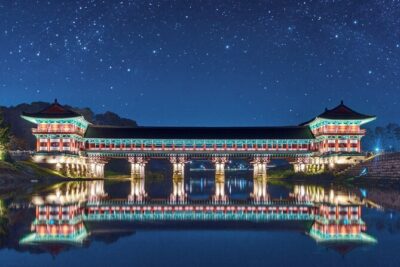
Gyeongju UNESCO World Heritage Guided Day Tour from Busan
Read our review →
Gyeongju UNESCO sites Private tour with licensed tour guide
Read our review →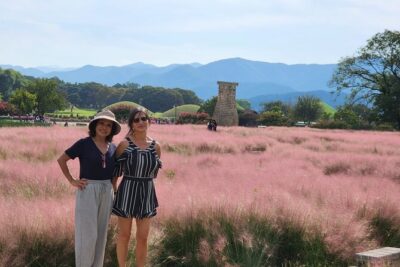
Private Gyeongju Tour – Explore Gyeongju UNESCO Sites
Read our review →
Browse the lists this tour appears in