
Reviewed · PRIVATE CAR WITH DRIVER
Gyeongju: Private Car Charter Taxi Tour
A day in Gyeongju can feel like a puzzle. This private car charter taxi tour turns it into something easy: you pick the stops, you get direct local routing, and you move between UNESCO-area highlights fast. I especially like that the ride comes with toll fees and parking charges included, so your day stays calm when you are moving on tight time.
The second big win is safety and peace of mind. The taxis are covered by insurance for medical expenses in case of a car accident, and the service is built around getting you to multiple sights in one push. The main consideration is language and timing: the English-speaking option is temporarily limited, so you may rely on simple English plus online translation support, and admission fees still need to be paid separately once you arrive.
In This Review
- Key things you will notice right away
- Why a private taxi charter works so well in Gyeongju
- Getting around with comfort, insurance, and no surprises
- Driver communication: English levels and how you stay on track
- The classic city loop: 5 hours Bulguksa, Seokguram, Donggung and Wolji, Cheomseongdae
- Add the old village and views: 6 hours with Kyochon Village and Woljeonggyo
- Full-day Gyeongju power plan: 8 hours with forest, temple history, and royal tombs
- Night tour logic: 3 hours for Gyeongju Eupseong, Woljeonggyo, Cheomseongdae, and Anapji
- Make your own route: custom plans, plus east, north, and west options
- Price and value: what you pay for, what you do not, and where fees can appear
- Who should book this taxi charter, and who should not
- Should you book this Gyeongju private car charter taxi tour?
- FAQ
- Is admission included in the taxi charter?
- How many people can fit in the sedan or van?
- What if our luggage does not fit in the vehicle?
- What language support does the driver provide?
- Are tolls and parking fees included?
- Where does pickup happen?
- Can we change the itinerary during the tour?
- Does this service provide a child seat?
Key things you will notice right away
- Private door-to-door pickup from KTX Gyeongju Station or hotels in Gyeongju City, with car plate number shared in advance
- Tolls and parking included, meaning fewer surprise moments mid-day
- Vehicle choice matched to your group and luggage, with strict limits on what can fit
- Three common course styles (5 hours, 6 hours, 8 hours) plus a 3-hour night plan
- English support level can vary, with online help available if communication gets tricky
- You can change plans during the ride by messaging the driver and adjusting on the fly
Why a private taxi charter works so well in Gyeongju
Gyeongju is one of those places where the best sites are spread out, not stacked on one street. A private taxi charter is built for that reality. You are not hunting buses, timing transfers, or losing an hour to waiting around.
With this setup, you can stitch together a full day of classics and still keep a sensible pace. The time options are practical too: 3 to 9 hours means you can match it to a single travel day or a longer stay. If you want the fast highlights, the set courses do that well. If you want something specific, the custom option lets you steer.
The other thing I like is that it feels more like “local logistics plus guidance” than a rigid tour bus schedule. You can stop briefly, linger where you care, and swap destinations when you decide you want more time somewhere else.
More Private Taxi Tours in Gyeongju:
- Jeju English Private Taxi Tour(1day, 2days, 3days & 1 to 12pax)
★ 5.0 · 118 reviews - Jeju Island Private Taxi Tour : 2 Full days
★ 5.0 · 106 reviews - Jeju Island Private Taxi Tour : UNESCO Day Tour
★ 4.5 · 82 reviews
Getting around with comfort, insurance, and no surprises
You have choices for vehicle type. A Sedan taxi fits up to 4 people (recommended for 1 to 3 with 2 pieces of 24-inch luggage). A Van taxi supports 5 to 7 people (recommended for 1 to 6 with 6 pieces of 24-inch luggage).
That luggage detail matters more than people expect. If your bags exceed what the vehicle can carry and they do not fit, the ride may not proceed and the amount is not refunded. So it is worth measuring your bags or planning to pack efficiently.
Value-wise, the “no hidden costs” part is meaningful. Included in the price are fuel, toll fees, parking fees, and car insurance. You still pay admission fees once you reach attractions, and meals are not included, but you will not be hit with random driving costs mid-ride.
On top of that, the taxis are insured for medical expenses in the event of an accident. That does not remove all risk from travel, but it does reduce the stress factor when you are riding in a private car for several hours.
Driver communication: English levels and how you stay on track
Here is the honest picture: English support depends on the driver option. You can get a driver who uses simple English plus online English support. There is also an English-speaking driver option, with an explanation of world heritage history in English, but that option is temporarily deactivated and available upon request with extra fees.
Practically, this means you should not plan on a full on-site lecture at every stop unless you specifically request the English history option. You can still get help navigating, understanding what you are seeing, and deciding what is worth your minutes, especially with online translation support if you run into confusion.
I also like that the operator coordinates through WhatsApp. They contact you within 24 hours once you book, and you need a phone number available on WhatsApp. That helps keep pickup smooth, and it gives you a channel to ask for changes.
A small detail that can save time: you will receive the car plate number in advance, and if you want a drop-off location different from pickup, you need to provide the address.
The classic city loop: 5 hours Bulguksa, Seokguram, Donggung and Wolji, Cheomseongdae
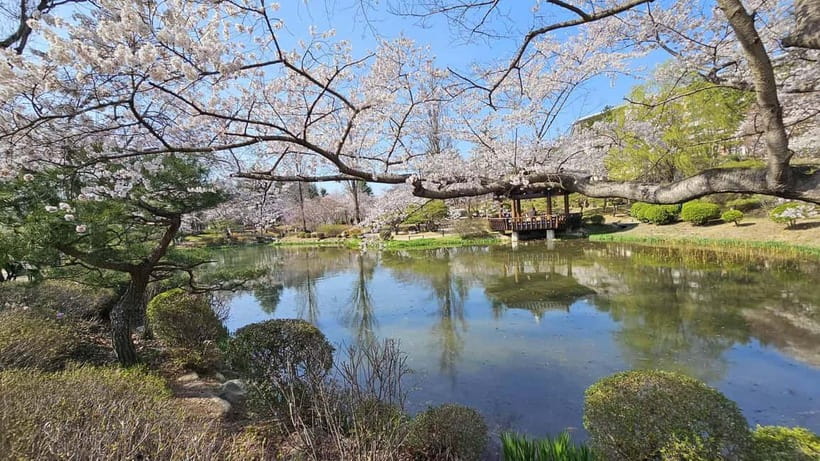
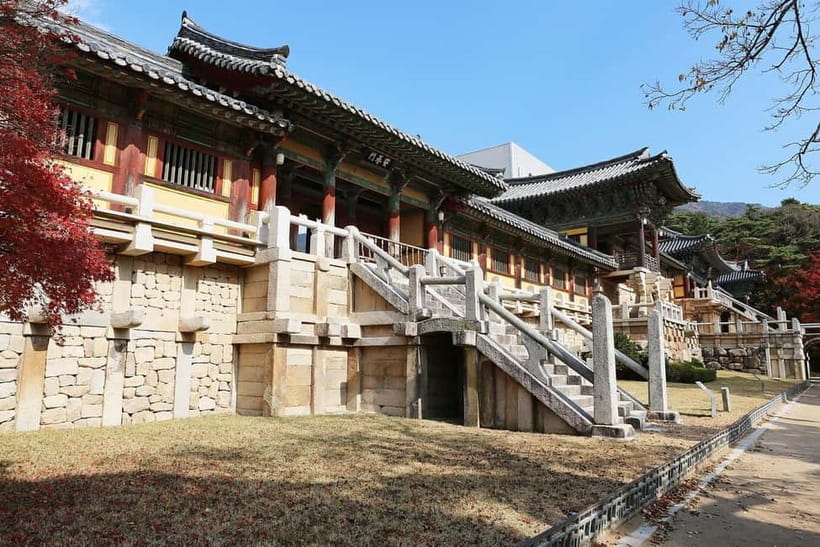
If you have a single day and you want the big names, the 5-hour course is designed for momentum. The core route is Bulguksa Temple, Seokguram Grotto, Donggung and Wolji, and Cheomseongdae.
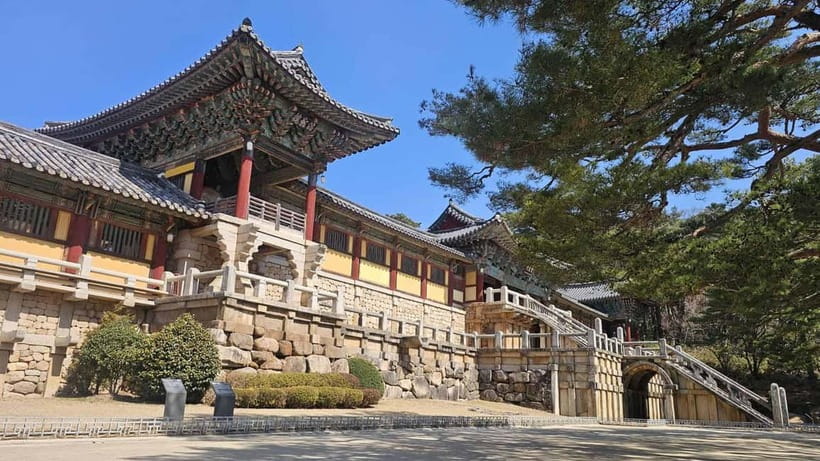
Start with Bulguksa Temple. This is the kind of place where even a short visit feels ceremonial, because the setting and stone details pull your attention. Expect that time inside will depend on how long you want to walk and look, since admission fees are separate.
Then you move to Seokguram Grotto. The drive matters here. Seokguram is not right next door, so you are trading comfort for efficiency, and the taxi approach keeps that trade clean.
After that comes Donggung and Wolji. This is one of Gyeongju’s signature palace sites, and it is especially nice when you want to shift from temple time to landscape and water-related atmosphere. If you are a photo person, this area often rewards quick stops because the angles are strong.
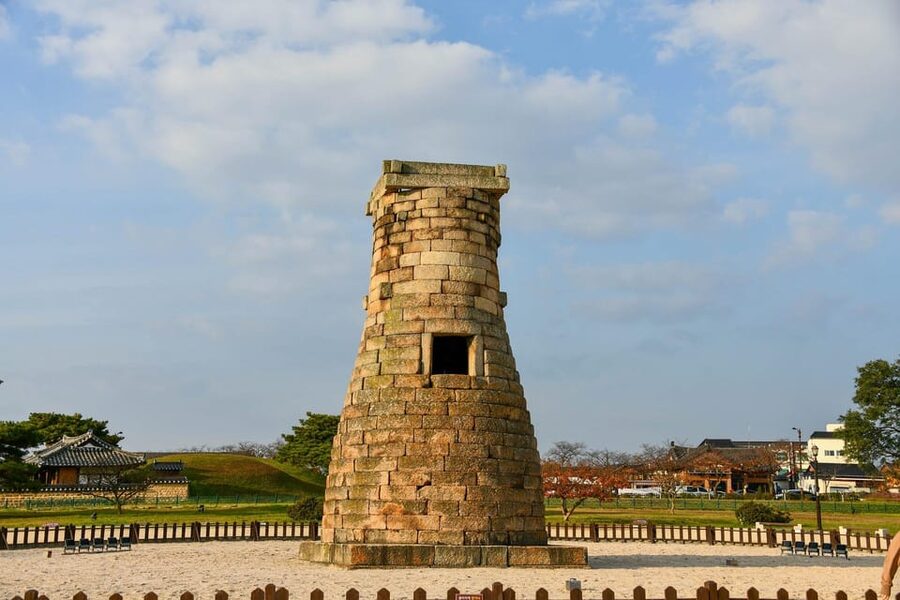
Finally, Cheomseongdae is a compact capstone. It is an ideal last stop because you can do it efficiently, then move on with no stress. The main drawback of the 5-hour loop is that it can feel rushed if you love one site enough to want a long, slow walk everywhere. If that is you, consider the 6-hour or 8-hour plan.
A few more Gyeongju days worth comparing
- Gyeongju UNESCO sites Private tour with licensed tour guide
★ 5.0 · 275 reviews - Private Gyeongju Tour – Explore Gyeongju UNESCO Sites
★ 5.0 · 272 reviews - Gyeongju: UNESCO Highlights Tour with Guide and Ticket
★ 4.9 · 166 reviews - Gyeongju: UNESCO Heritage Tour Including Bulguksa Temple
★ 4.8 · 104 reviews
Add the old village and views: 6 hours with Kyochon Village and Woljeonggyo
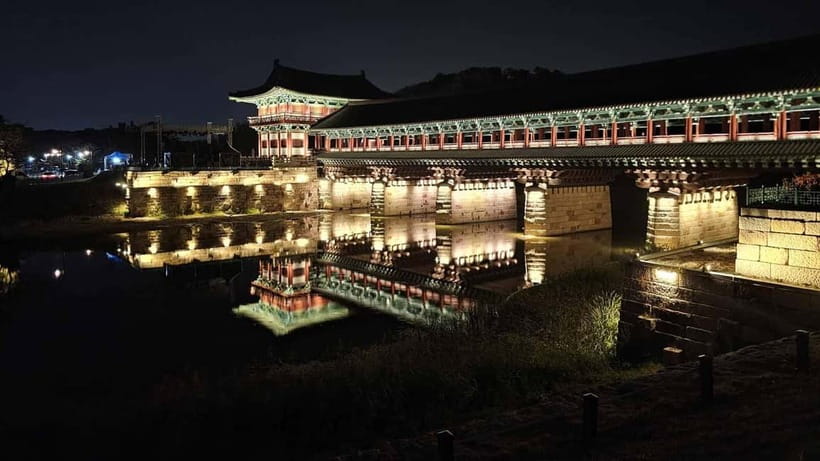
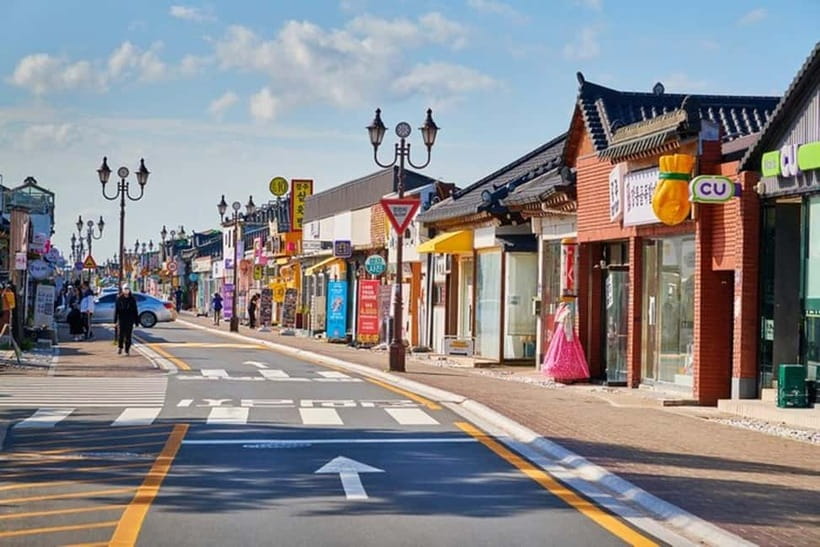
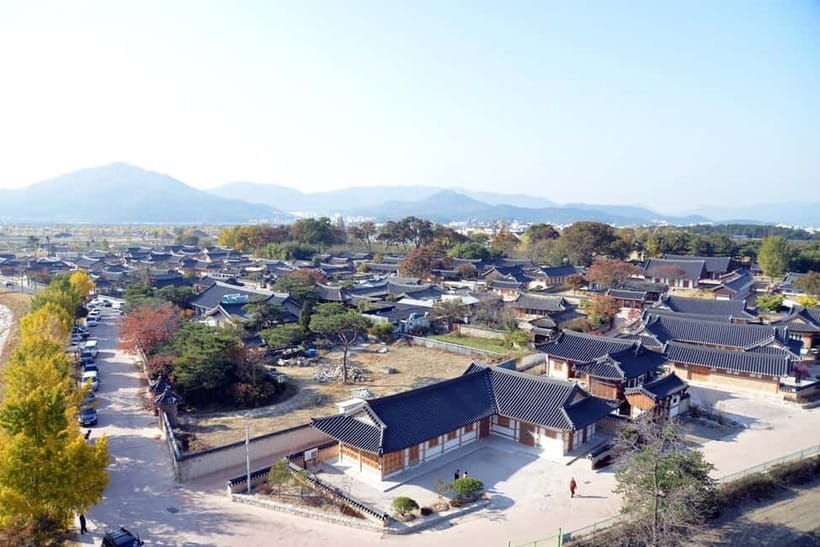
The 6-hour course keeps Bulguksa and Seokguram and adds Kyochon Village, Woljeonggyo, and Hwangridan-gil. It is a smart step up if you want a more complete feel for old Gyeongju, not just UNESCO headline stops.
Kyochon Village is the culture stop where you shift from big monuments to everyday historic atmosphere. Even if you only browse for a short time, you get the sense of what the area looks like when you are not just passing through.
Woljeonggyo is a scenic bridge area. You are usually going there for views and a breather between major sights. It works well in a taxi plan because you can stop just long enough to enjoy the scene without losing your next appointment.
Hwangridan-gil is the evening-walk energy street. Even in daytime, it gives you a place to wander and pause. If you want to add a coffee or a light snack, you can do it here since the driver can suggest dining options if you share preferences. Meals are on you, but the suggestions help you avoid decision fatigue.
The tradeoff is time pressure. You are adding three extra stops on top of Bulguksa and Seokguram. If you travel as a group that takes long photo breaks, this course still works, but you will want to keep stops short where you can.
Full-day Gyeongju power plan: 8 hours with forest, temple history, and royal tombs
The 8-hour course is the one I would pick if you want breathing room without giving up key sites. It strings together Bulguksa, Seokguram, Cheonnyeon Forest Garden, Bunhwangsa Temple, Temple History and Culture Museum, Donggung and Wolji, Kyochon Village, Cheomseongdae, and Daereungwon and Cheonmachong, finishing with Hwangridan-gil.
Cheonnyeon Forest Garden is a different tone. It breaks up the day so the monuments do not blur together. If your feet need a reset, this is where you get it.
Bunhwangsa Temple is another major religious site, and it helps you move beyond the first two UNESCO names. It is also a good stop if you want more temple variety, not just one style of stone and scale.
The Temple History and Culture Museum is a practical stop. Museums can feel optional when you are short on time, but here it gives you context so the architecture and artifacts start making more sense. If you prefer to read less and look more, you can keep it lighter, but it is still useful.
Daereungwon and Cheonmachong adds the royal tomb element. This is a meaningful shift because it expands your understanding of Gyeongju beyond temples and star-shaped landmarks. It also gives you an open-air feel late in the day, which can be easier on your pacing than fitting everything into strict indoor time.
Ending with Hwangridan-gil is a smooth close. You finish with a walkable, easy-to-miss unless you are already in the right mood street. The main drawback of an 8-hour plan is simple: it is a lot. You will likely want comfortable shoes and you will benefit from choosing which stop you will go deep on.
Night tour logic: 3 hours for Gyeongju Eupseong, Woljeonggyo, Cheomseongdae, and Anapji
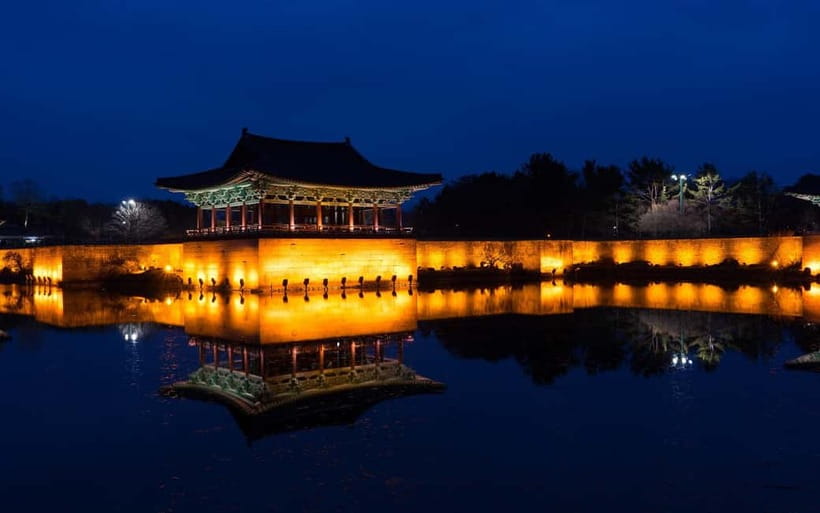
If daytime feels too packed, the night tour is a different kind of efficient. The 3-hour plan includes Gyeongju Eupseong, Woljeonggyo, Cheomseongdae, and Donggung and Wolji, also known as Anapji.
This course is built for atmosphere. Eupseong and Woljeonggyo give you a sense of city shape and water-adjacent views after dark. Then Cheomseongdae brings you back to a clear, iconic silhouette that photographs well at night.
Anapji is the big payoff. When lights reflect and the water draws your eye, you understand why people time Gyeongju after sunset. It is also a course where you can enjoy the mood without needing a long reading session.
Since it is only 3 hours, the night plan is perfect if you are already doing another day of sites or you are arriving later. The only real consideration is that you may not want to cram too many extra requests into the short window.
Make your own route: custom plans, plus east, north, and west options
One of the best parts of a private charter is that you can shape the day around your interests. After booking, you can send your own itinerary, or message the driver if you want changes while you are in Gyeongju.
You can also request other regional options, including east coast, north area, or west area courses. These are available with the 8-hour tour option only. That restriction is worth noting because it affects what you can realistically fit in on a shorter day.
A practical way to use the custom power is to pick your must-dos first, then build around them with buffer time. If your group has different interests, this approach works better than any fixed plan because the driver can suggest what fits smoothly.
You can also ask for dining guidance. If you inform the driver about preferences, dietary restrictions, or even name a restaurant or cafe you want, they can suggest a suitable dining option. Just remember the meal cost is not included.
If you are traveling with limited time, custom planning can turn a good day into a great one. The driver help is also useful for pacing, especially when you want to spend more time in a specific village or slow down where the atmosphere is best.
Price and value: what you pay for, what you do not, and where fees can appear
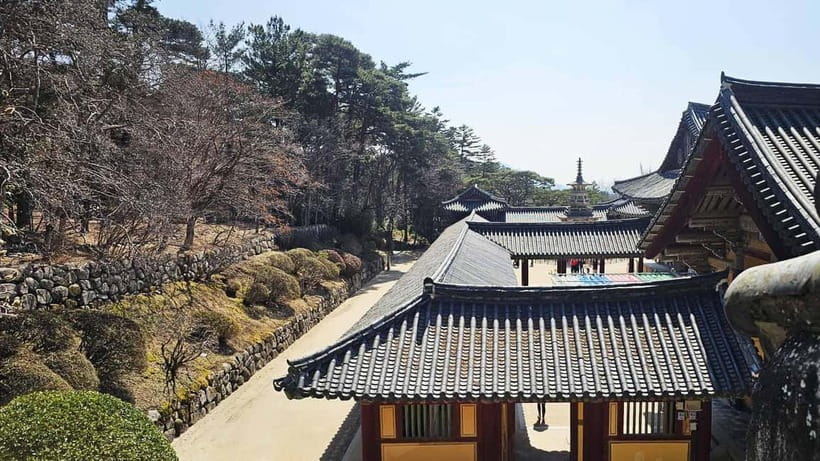
The starting price is listed at $124 per group up to 4 people for 3 to 9 hours. For that, you are paying for a private vehicle, the driver, fuel, tolls, parking, and car insurance. That is a strong value structure in places like Gyeongju where taxis are often the fastest way between sites.
The “not included” items are admission fees, meals and drinks, personal expenses, and travel insurance. So if you are planning for temples, grotto entrances, or museums, budget admission separately.
You should also watch two categories that can add cost. First, an English-speaking driver option with English history explanation is temporarily deactivated and is available upon request with extra fees. Second, any meal you choose is paid by you.
If you want to extend time, the rates for extra hours are given. Sedan taxi adds KRW 30,000 per hour, and a van taxi can be KRW 50,000 per hour. Those are important if your day is evolving, for example if you decide halfway through to slow down.
Last, vehicle and luggage rules are not flexible. If your luggage exceeds the allowed limit or cannot fit, the tour may not proceed and the amount will not be refunded. If you are traveling with more than 4 people, you may need two sedans or a van based on your group size and luggage needs.
Who should book this taxi charter, and who should not
This tour style is ideal for people who want maximum sight coverage with minimal friction. If you have limited time in Gyeongju, a private taxi plan is one of the best ways to hit temples, UNESCO-area sites, historic streets, and viewpoints without wasting time.
It also suits groups who think differently about pacing. Couples can enjoy a tight classic loop. Small families can keep everyone together and avoid splitting up for transport. Friends on a one-day mission can tailor the route.
On the other hand, if you need a long, detailed English guide at every site, you should plan carefully. The service includes a driver with English support, but the option for full English history explanations is not always available and may require extra fees.
Also consider your luggage reality. If you have oversized bags or you are traveling with multiple large suitcases, you need to match your vehicle type correctly or you risk complications.
Should you book this Gyeongju private car charter taxi tour?
Yes, if you want a smooth Gyeongju day with tolls and parking handled, a safe insured ride, and flexibility to adjust on the spot. It is especially worth it when you are time-limited and want to stack multiple iconic stops like Bulguksa, Seokguram, Donggung and Wolji, and Cheomseongdae.
I would hold off or plan extra thoughts if you strongly prefer a detailed English lecture at every stop, because the English-speaking history option is temporarily limited. Also book with your luggage in mind, not just your headcount.
If you are weighing a fixed group bus versus private comfort, this is the kind of tour where privacy helps you spend your time where you actually care, instead of where the schedule forces you.
FAQ
Is admission included in the taxi charter?
No. Admission fees are not included. The vehicle, driver, fuel, tolls, parking fees, and car insurance are included.
How many people can fit in the sedan or van?
A sedan taxi supports up to 4 passengers. A van taxi supports 5 to 7 passengers. The recommended luggage limits are also provided for each vehicle type.
What if our luggage does not fit in the vehicle?
If your luggage exceeds the allowed limit and cannot fit, the travel may not proceed, and the amount will not be refunded.
What language support does the driver provide?
The driver language is English. There is also simple English and online English support mentioned, and an English-speaking driver option with English history explanation may be available upon request with extra fees.
Are tolls and parking fees included?
Yes. Tolls and parking charges are included, with no hidden costs noted.
Where does pickup happen?
Pickup is included from KTX Gyeongju Station or any hotel in the Gyeongju area. Additional charges may apply for locations outside Gyeongju City area.
Can we change the itinerary during the tour?
Yes. You can send messages to change or add destinations, and the service can tailor a route to what you want to see within the time you choose.
Does this service provide a child seat?
No. This service does not provide a child seat.
Recently reviewed in Gyeongju
- Gyeongju UNESCO sites Private tour with licensed tour guide★ 5.0 · 275 reviews
- Guided Car Tour in Geyongju with a Local Guide★ 5.0 · 38 reviews
- Korail Day Trip to Gyeongju’s Unesco World Heritage Sites from Seoul★ 4.5 · 3 reviews
- From Daegu: Gyeongju UNESCO Tour 7 Highlights with Bulguksa★ 4.6 · 5 reviews
- Busan: Gyeongju UNESCO Legacy Tour with National Museum★ 5.0 · 17 reviews
- From Busan: Gyeongju Small Group Photo Tour & Hotel Pick-up★ 5.0 · 3 reviews
- Busan + Gyeongju One Day Tour from Busan★ 5.0 · 3 reviews
- Busan: 7 Highlights Gyeongju City One Day Tour★ 4.9 · 10 reviews
Private Car with Driver, compared.

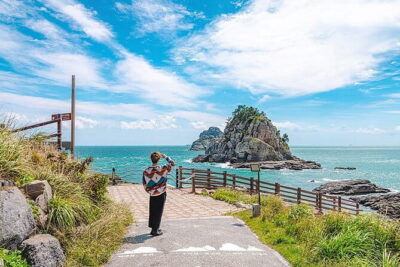
BTS Landmarks Private Car Tour in Busan with a Licensed Guide
Read our review →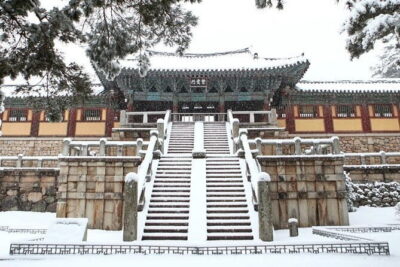
Full Day Private car tour to UNESCO Gyeongju&Yangdong village
Read our review →
Private Car Tour with Licensed Professional Guide
Read our review →
Nami Island & Nearby Attractions : Charter Van Tour With Driver
Read our review →Browse the lists this tour appears in