
Reviewed · CITY TOURS
Busan: 7 Highlights Gyeongju City One Day Tour
A day of Silla kings in one bus. What makes this Gyeongju outing stand out is how fast it gets you from Busan pickup into the key sights, then back again, plus the photo stops and food breaks that keep the day fun rather than museum-still.
I love that the route hits Korea’s big eras in a smart order, from Silla temple and royal tumuli to Joseon-era village life, without you doing logistics homework. The trade-off: it is a long walking day at temples, tomb grounds, and hanok streets, and the tour is not a fit if you have heart problems or need wheelchair access.
In This Review
- Key things I liked about this one-day Gyeongju tour
- Busan to Gyeongju, without the transport headache
- Ulsan Daewangam Suspension Bridge for sea views and quick thrills
- Bulguksa Temple and the stone pagodas you actually recognize
- Hwangnidan-gil for snacks and shopping, plus Daereungwon tumuli
- Cheomseongdae, the oldest observatory feeling in Asia
- Gyochon Traditional Village and the Choi clan hanok atmosphere
- Woljeonggyo wooden bridge for calm photos near the end
- Price and value, what $47 really buys you
- Guide quality is the difference between seeing and understanding
- Who this one-day Gyeongju tour fits best
- Should you book this Busan to Gyeongju tour?
- FAQ
- What is the price for the Busan to Gyeongju one-day tour?
- What sites are included in the tour?
- Is Daereungwon admission included in the ticket price?
- Are meals included?
- Where do I meet the group in Busan?
- What happens at the end of the tour?
- Is this tour suitable for wheelchair users?
- Are pets allowed on the tour?
- Can infants join for free?
- Will the itinerary ever change?
- What is the cancellation policy?
Key things I liked about this one-day Gyeongju tour
- You save transit time with morning pickup and return to Busan meeting points
- Seven major stops covering Silla to Joseon, with lots of photo angles
- Bulguksa + stone pagodas tied to national treasures and the 10 won coin connection
- Hwangnidan-gil gives you a culture-and-snack break, including 십원빵
- Cheomseongdae as a quick, memorable view into early astronomy
- Woljeonggyo offers calm bridge photos near the end of the day
Busan to Gyeongju, without the transport headache
This is a one-day, round-trip tour built for convenience. You meet the group at Busan meeting points in the morning, then head out with an English-speaking tour guide and driver. Transfers are included, so you are not figuring out bus routes, taxi math, or where to park in a foreign city.
Back in Busan, the tour ends at the same meeting point you started from. The description also notes return to Haeundae Station and Seomyeon Station, which is handy if you are staying around those areas. The big win here is flow: you keep moving, but you still get time at stops to look around and take pictures.
Practical note: the operator says the exact itinerary may shift due to traffic and weather, so expect slight timing changes rather than a perfectly minute-by-minute schedule.
More City Tours in Gyeongju:
- Best Seoul City Tour (Gyeongbokgung Palace,Insadong,Namsan Tower)
★ 5.0 · 1,647 reviews - Small-Group Royal Palace and Seoul City Tour (hotel pick-up)
★ 5.0 · 1,474 reviews - Seoul City Sightseeing Tour Including Gyeongbokgung Palace, N Seoul Tower, and Namsangol Hanok Village
★ 5.0 · 1,423 reviews
Ulsan Daewangam Suspension Bridge for sea views and quick thrills
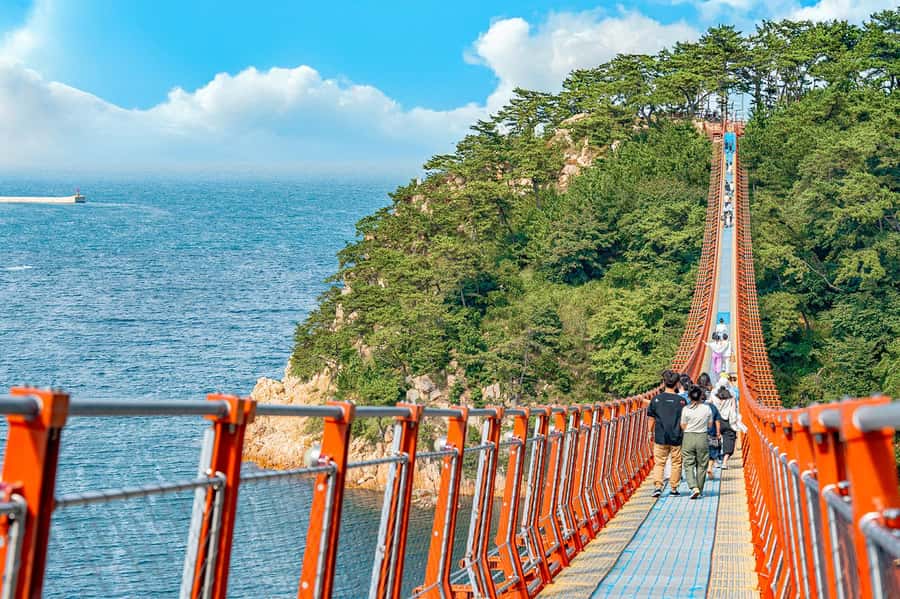
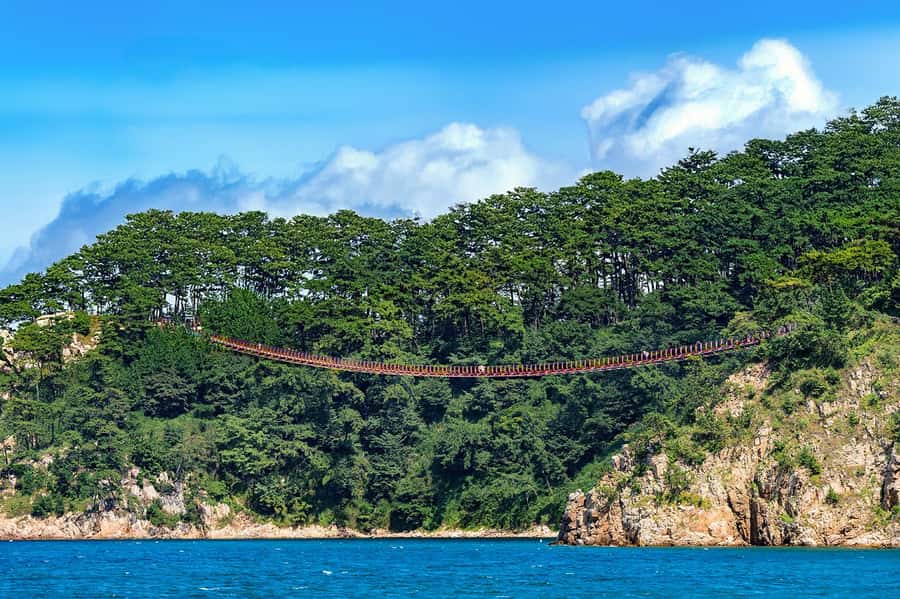
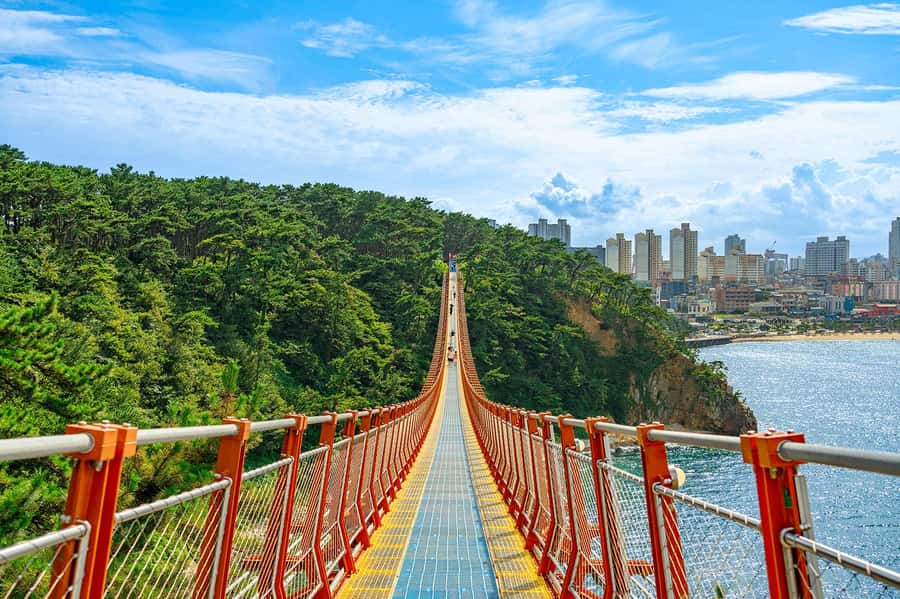
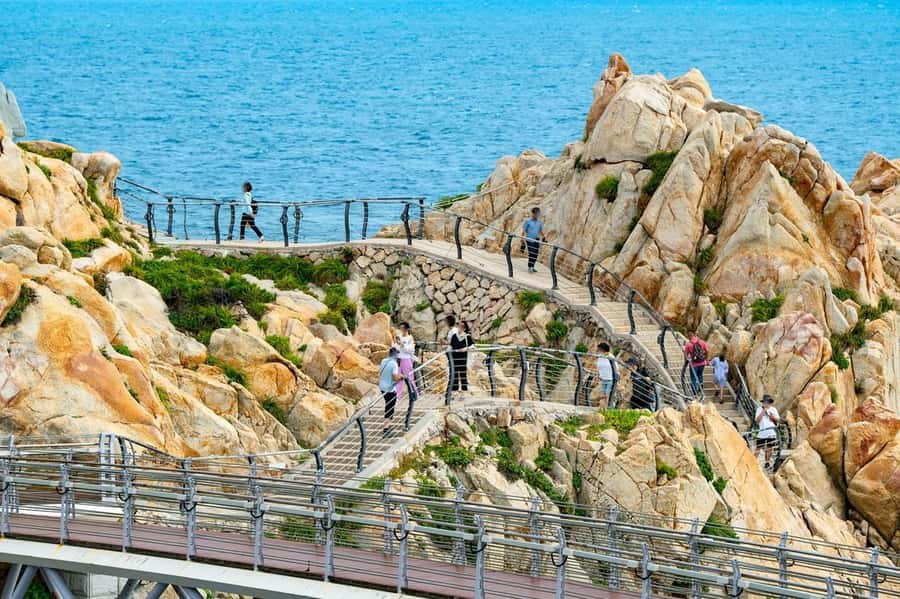
Before you get into Gyeongju’s famous heritage, you start with a coastal reset at Ulsan Daewangam Suspension Bridge. The setting is described as a bridge surrounded by rocks and sea, which means you get those dramatic ocean-and-coastline photos without needing extra planning.
One detail to watch: from Sep 15, 2025, the tour visits Ulsan Daewangam Suspension Bridge instead of Seokguram Grotto. If Seokguram is on your personal must-see list, double-check the date you are traveling and what version of the tour you are booking.
This stop is also a good way to break up the day psychologically. After sitting in a vehicle, a short stretch of fresh air and dramatic views helps you get your energy back for the temples and tomb sites later.
Bulguksa Temple and the stone pagodas you actually recognize
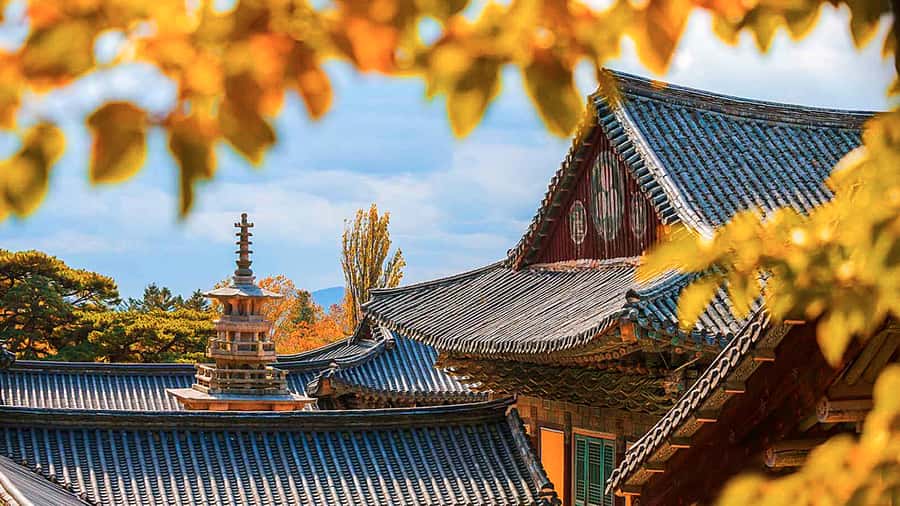
Bulguksa is one of those places where you quickly see why it is protected at the top level. You visit Bulguksa, described as a Buddhist temple on Tohamsan with six National Treasures, including the stone pagodas Dabotap and Seokgatap.
Here is what makes this stop practical for first-timers: these pagodas are so iconic that even if you have never visited, you may already feel familiar. The description specifically notes Dabotap is also on the 10 Korean won coin. That connection makes the carvings easier to interpret on-site, because you can map the image from money to real-world scale.
What to do with your time at Bulguksa: slow down for the stone details. Even if you only spend a short time on each cluster of buildings, you will get more out of the visit if you pause to look at the geometry and symmetry rather than just walking from point to point.
A possible drawback: temple grounds tend to involve uneven surfaces and stairs. Wear shoes that can handle a lot of walking, not just a nice look.
Hwangnidan-gil for snacks and shopping, plus Daereungwon tumuli
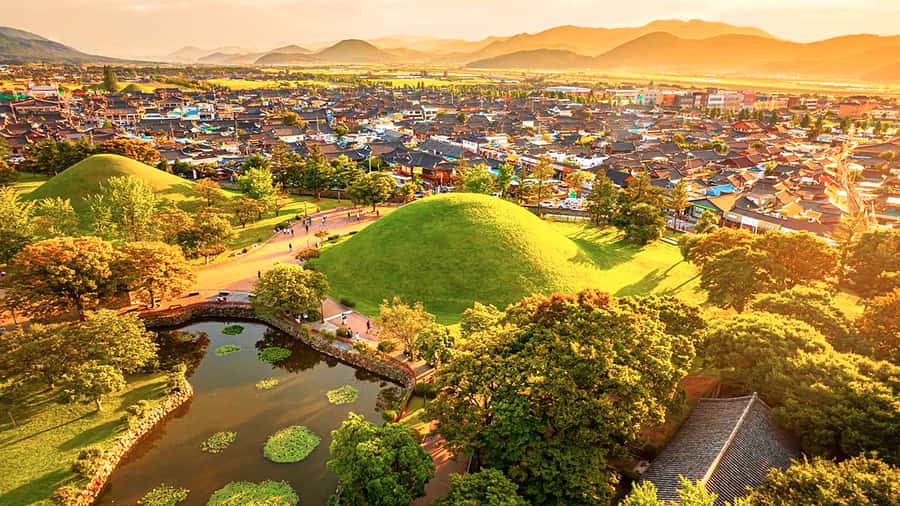
After Bulguksa, the tour shifts from sacred stonework to street-level culture at Hwangnidan-gil. This is a pedestrian-only street known for trendy shops and restaurants. The standout food cue here is 십원빵 (10 won bread), described as a cannot-miss snack.
This part of the day matters because it keeps your energy up and gives you an easy cultural snapshot. You get to experience everyday Gyeongju flavors rather than only official heritage sites. If you like taking photos of food and street scenes, this is one of the best places to do it.
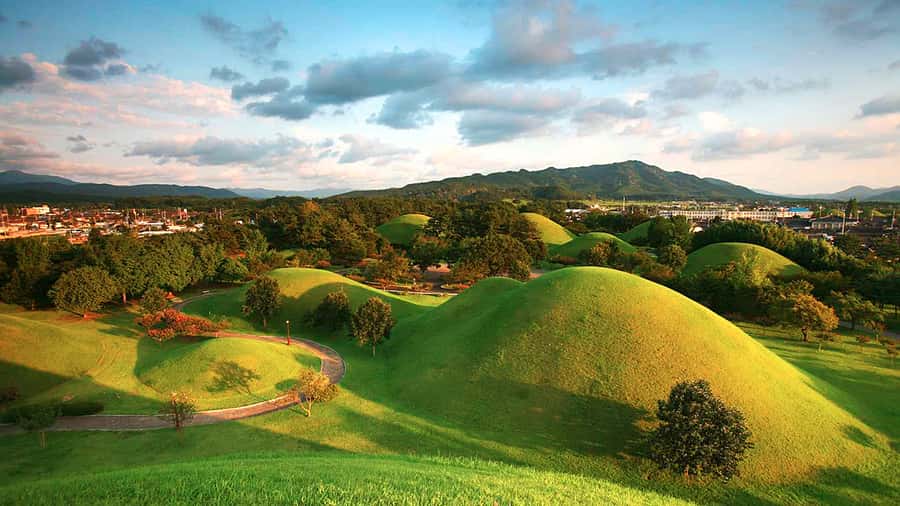
Next to Hwangnidan-gil is Daereungwon, a complex of Silla-era tumuli. The description explains there are 23 tombs of kings, queens, and nobles, and the sturdy construction helped deter plunderers. That is a key reason many relics are preserved well enough to earn National Treasure status.
One cost note: admission to Daereungwon Tomb Complex is not included. So bring a little extra cash or confirm how you will pay on the day. If you are trying to stay strictly within a budget, this is the only clearly called-out extra fee among the listed inclusions.
A few more Gyeongju days worth comparing
- Gyeongju UNESCO sites Private tour with licensed tour guide
★ 5.0 · 275 reviews - Private Gyeongju Tour – Explore Gyeongju UNESCO Sites
★ 5.0 · 272 reviews - Gyeongju: UNESCO Highlights Tour with Guide and Ticket
★ 4.9 · 166 reviews - Gyeongju: UNESCO Heritage Tour Including Bulguksa Temple
★ 4.8 · 104 reviews
Cheomseongdae, the oldest observatory feeling in Asia
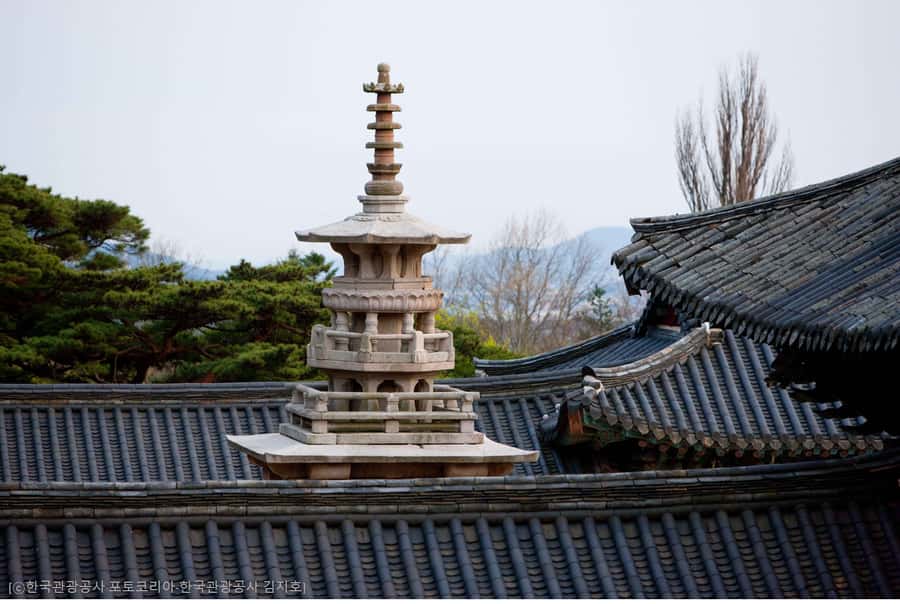
Then you head to Cheomseongdae, described as the oldest astronomical observatory in Asia. It is a shorter stop compared to temple compounds, but it is memorable because it gives you a different angle on Silla culture.
When you are there, try thinking less like a tourist and more like a person from long ago. This structure is about measurement, timing, and how people observed the sky. Even if you do not know astronomy, you can still appreciate why this place would matter.
Practical tip: treat this as a photo-and-read stop. Spend enough time to understand what you are looking at, then move on. It pairs well with the earlier Silla sites because the whole day is really about how advanced the kingdom was, not just how pretty the monuments are.
Gyochon Traditional Village and the Choi clan hanok atmosphere
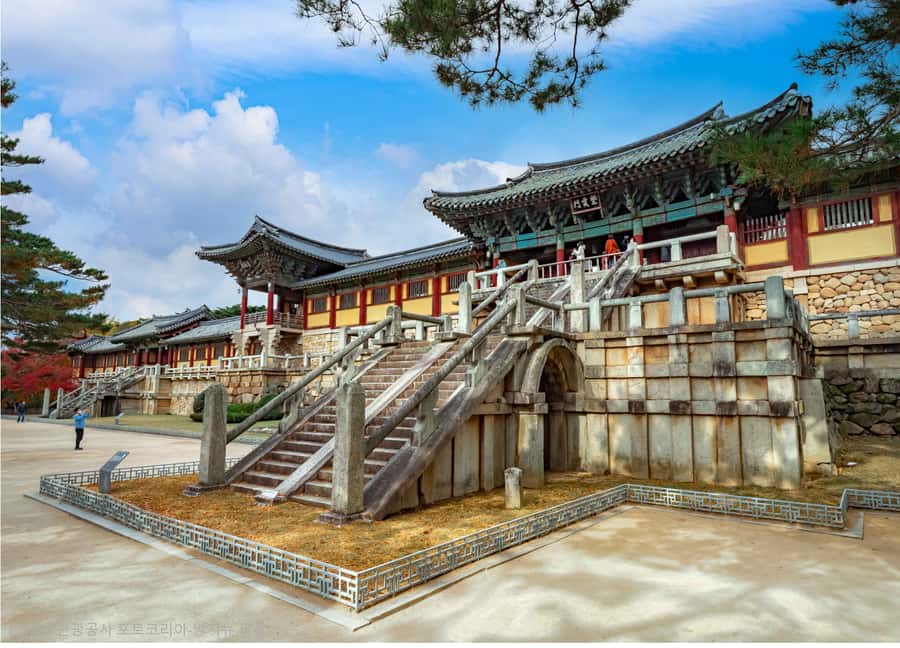
After Cheomseongdae, the tour goes to Gyochon Traditional Village, known for Joseon-era hanok houses. This is where the day shifts from stone monuments to lived-in style of heritage.
A standout detail here is the village connection to the Choi clan, described as a wealthy aristocratic family known as the Rich Choi Family. The description says over twelve generations, around 400 years, they were among the richest landowners in the region. Even if you do not go into deep genealogy, this context helps the village feel more grounded. It is not just buildings, it is a social history.
The tour also highlights a food and craft tie-in: Gyeongju Gyo-dong Beopju (traditional rice wine) is brewed and sold in this village. If you enjoy tasting local alcohol or buying small souvenirs tied to a place, this is one of the best moments in the day to do it, since you are already in the neighborhood where it is made.
What to keep in mind: traditional streets can be uneven, and hanok lanes can feel crowded. Go slow, give yourself room to step aside for photos, and you will enjoy it more.
Woljeonggyo wooden bridge for calm photos near the end
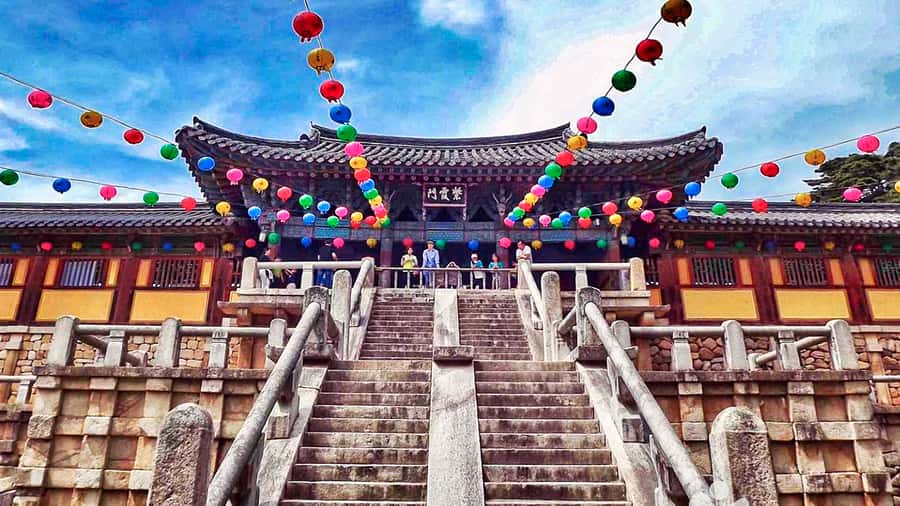
Close out your heritage loop at Woljeonggyo, next to Gyochon Traditional Village. This is a bridge built during the Unified Silla period (AD 676 to 935). It burned down during the Joseon Dynasty, then was rebuilt in 2018 and is now described as the largest wooden bridge in Korea.
This is a nice ending because it is not about reading inscriptions or walking through indoor spaces. It is about light, reflections, and the slow “stand and look” feeling. The description calls it a great place to feel serenity and take photos, and that matches how most people experience bridges: you can hold position without feeling like you are missing the next thing.
If the light is good, try different angles. Bridges often look better from a step back on the walkway than from right next to the railing.
Price and value, what $47 really buys you
At $47 per person, the biggest question is value: what is included, and what might cost extra.
Included:
- English-speaking tour guide/driver
- Round transfers between destinations
- Admission to attractions (with one important exception noted)
Not included:
- Meals and beverages
- Other private expenses
- Admission to Daereungwon Tomb Complex
- Hotel pick-up and drop-off (you use the stated Busan meeting points)
So you are paying for someone to handle transportation and admissions for most stops. For a one-day, seven-site plan starting and ending in Busan, that is a reasonable structure. The extra cost to factor in is mainly Daereungwon, plus whatever you choose to buy at Hwangnidan-gil and in Gyochon.
My practical advice: treat this tour as a heritage-day package plus your own snack budget. If you eat lightly at Hwangnidan-gil and keep other purchases small, you can control spending easily.
Guide quality is the difference between seeing and understanding
This tour lives or dies by explanation. The core offering includes an English-speaking guide, and the feedback here points to guides who make the sites easier to understand and more fun to photograph.
One guide name is mentioned: Leo. The notes describe him as open-minded, interested in participants, and someone who provided lots of information while also helping point out good photo spots and even helping take pictures. Another detail in the feedback is that some guides can handle multiple languages, including English, Chinese, and Korean.
What you should do: ask questions on the bus, especially about what you will see at Bulguksa, the meaning of the pagodas, and how Cheomseongdae connects to Silla science. When you get context, your photos improve because you start capturing details that matter.
Who this one-day Gyeongju tour fits best
This experience is best for you if you want a structured day trip from Busan with major highlights and minimal planning stress. It works especially well if you:
- like blending monuments with food stops
- want lots of photo opportunities without hunting for locations
- enjoy learning how Silla and Joseon left physical traces across a single city
It is not for everyone. The tour is listed as:
- not suitable for wheelchair users
- not suitable for people with heart problems
- not allowed pets
- baby seats are not available, and infants ages 0 to 2 are only free if they sit on laps
If you are comfortable with a full day of walking on varied terrain, you will likely enjoy it a lot. If mobility is limited, you may find the temple and tomb complex areas challenging.
Should you book this Busan to Gyeongju tour?
Book it if you want a one-day hit list that covers the essentials: Bulguksa, Cheomseongdae, Gyochon Traditional Village, and Woljeonggyo, with the added bonus of Hwangnidan-gil street culture and snacks like 십원빵. The included transfers and most admissions make it good value, especially when you consider how many sites you would otherwise have to coordinate.
Skip it, or at least reconsider, if you need wheelchair access, have heart health concerns, or you are hoping for a relaxed, slow-paced day with your own meal schedule. Also watch the date if you are specifically hoping for Seokguram, because from Sep 15, 2025 the bridge stop changes.
FAQ
What is the price for the Busan to Gyeongju one-day tour?
The price is listed as $47 per person.
What sites are included in the tour?
The tour visits seven popular spots: Ulsan Daewangam Suspension Bridge, Bulguksa, Hwangnidan-gil, Daereungwon, Cheomseongdae, Gyochon Traditional Village, and Woljeonggyo.
Is Daereungwon admission included in the ticket price?
No. Admission to Daereungwon Tomb Complex is not included.
Are meals included?
No. Meals and beverages are not included.
Where do I meet the group in Busan?
You meet at one of the Busan meeting points, and the exact meeting point may vary depending on the option booked. The tour returns you to your meeting point.
What happens at the end of the tour?
The tour ends back at the meeting point in Busan, with return noted to Haeundae Station and Seomyeon Station.
Is this tour suitable for wheelchair users?
No. The tour is not suitable for wheelchair users.
Are pets allowed on the tour?
No. Pets are not allowed.
Can infants join for free?
Infants (0 to 2) are free of charge only if they sit on laps in the vehicle. Baby seats are not available.
Will the itinerary ever change?
Yes. The operator says the exact itinerary might be slightly changed depending on traffic and weather conditions. Also, from Sep 15, 2025, Ulsan Daewangam Suspension Bridge is visited instead of Seokguram Grotto.
What is the cancellation policy?
You can cancel up to 24 hours in advance for a full refund.
Recently reviewed in Gyeongju
- Gyeongju UNESCO sites Private tour with licensed tour guide★ 5.0 · 275 reviews
- Guided Car Tour in Geyongju with a Local Guide★ 5.0 · 38 reviews
- Korail Day Trip to Gyeongju’s Unesco World Heritage Sites from Seoul★ 4.5 · 3 reviews
- Gyeongju: Private Car Charter Taxi Tour★ 5.0 · 37 reviews
- From Daegu: Gyeongju UNESCO Tour 7 Highlights with Bulguksa★ 4.6 · 5 reviews
- Busan: Gyeongju UNESCO Legacy Tour with National Museum★ 5.0 · 17 reviews
- From Busan: Gyeongju Small Group Photo Tour & Hotel Pick-up★ 5.0 · 3 reviews
- Busan + Gyeongju One Day Tour from Busan★ 5.0 · 3 reviews
City Tours, compared.
Best Seoul City Tour (Gyeongbokgung Palace,Insadong,Namsan Tower)
Read our review →
Small-Group Royal Palace and Seoul City Tour (hotel pick-up)
Read our review →
Seoul City Sightseeing Tour Including Gyeongbokgung Palace, N Seoul Tower, and Namsangol Hanok Village
Read our review →
City Hightlights, Palace Tour, and Optional Hanbok
Read our review →
Dark Side of the City and Ghost Stories Walking Tour
Read our review →
Seoul City Private Full-Day Tour Including Lunch
Read our review →
Seoul City Half Day Tour-Gyeongbok Palace Guard Changing Ceremony
Read our review →
Browse the lists this tour appears in