
Reviewed · UNESCO HERITAGE TOURS
One Day Private tour to World Heritage GyeongJu from Busan
Eight hours, one ancient capital.
This private day trip from Busan is built around Gyeongju’s UNESCO highlights and the Silla story, with UNESCO sites and private pickup that make the long day feel doable. I love how the route mixes spiritual places, royal tombs, and everyday streets, so the city doesn’t feel like a checklist.
What really makes the experience work is the pacing. I like that guides can keep things unhurried, and that flexibility matters when rain shows up, since one guide on this route has been praised for patience during heavy downpours. The only real drawback is practical: meals are not included, and two key spots charge separate admission, including Cheonmachong Tomb and Donggung Palace and Wolji Pond.
If you’re aiming for a first-time, high-value Silla overview in one day, this trip is a smart plan. Just wear shoes for walking, and be ready to spend a bit extra for the paid admissions.
In This Review
- Key Things To Know Before You Go
- A Private Day Trip That Keeps the Pace (Even When the Weather Doesn’t)
- Bulguksa Temple and Seokguram: UNESCO in One Stretch
- Daereungwon Tomb Complex and Cheonmachong’s Gold
- Cheomseongdae Observatory and Silla Science for the Curious
- Hwangnidan-gil Street and Gyeongju National Museum
- Donggung Palace and Wolji Pond to Close the Day
- Price and Value for a Group of Up to Five
- Should You Book This One-Day Private Gyeongju Tour from Busan?
- FAQ
- What is the price for this one-day tour?
- How long is the tour?
- Do you get pickup from Busan?
- Is this tour private?
- Is admission included for all stops?
- Are meals included?
- What’s included in the tour cost?
- Do I need a physical ticket?
- What if the weather is bad?
Key Things To Know Before You Go
- UNESCO heavy hitters: Bulguksa Temple and Seokguram are both UNESCO World Cultural Heritage (Dec 9, 1995).
- Private transport, not public shuffle: air-conditioned vehicle with parking, tolls, and gas handled.
- Silla tomb focus: Daereungwon Tomb Complex and Cheonmachong Tomb add real royal-power context.
- Silla science stop: Cheomseongdae Observatory is described as the oldest observatory in Asia.
- Free admissions at most major stops: many entrances are free, but two are not included.
- Flexible guide energy: Changwoo has been noted as fun, informative, and able to handle slower walking in monsoon rain.
A Private Day Trip That Keeps the Pace (Even When the Weather Doesn’t)
The biggest value here is how the day runs. You get pickup offered, you ride in an air-conditioned vehicle, and parking, tolls, and gas are included, which cuts down on the mental workload. For a one-day trip to a historic city like Gyeongju, that matters more than you’d think.
The duration is about 8 hours to 8 hours 10 minutes. That’s long enough to cover serious sights, but not long enough to feel like you’re stuck in a bus for half your vacation day. I also like that you’re traveling as a private group (up to 5), so there’s less pressure to move at someone else’s speed.
One more practical detail: the tour uses a mobile ticket. That usually means less time at ticket counters and fewer “do we have the right paper” moments.
The “consider” point is physical and scheduling reality. Temple sites and tomb parks involve uneven ground and stairs, so bring comfortable shoes and plan on some walking in open air.
More Historical Tours in Busan
- From Busan: Gyeongju UNESCO World Heritage Guided Day Tour
★ 4.8 · 1,250 reviews - Gyeongju UNESCO World Heritage Guided Day Tour from Busan
★ 5.0 · 660 reviews - Old Korea Thousand History Tour of Gyeongju from Busan
★ 5.0 · 518 reviews
Bulguksa Temple and Seokguram: UNESCO in One Stretch
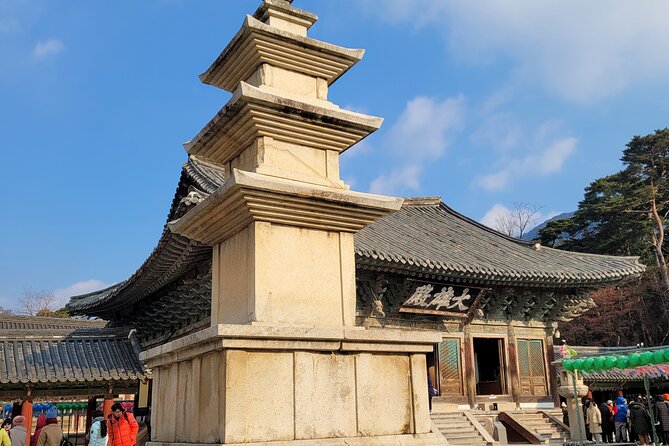
This is the heart of a Unified Silla culture day. Bulguksa Temple sits southwest of Tohamsan Mountain and is described as a Buddhist palace of sorts, where the idea of a Buddhist nation shows up as harmony and balance. It’s tied to King Gyeongdeok’s era in the temple’s historical background, with the temple established in 751 by Kim Dae-seong for his parents. For most visitors, the payoff is the way art and setting work together, with the mountain landscape as part of the experience.
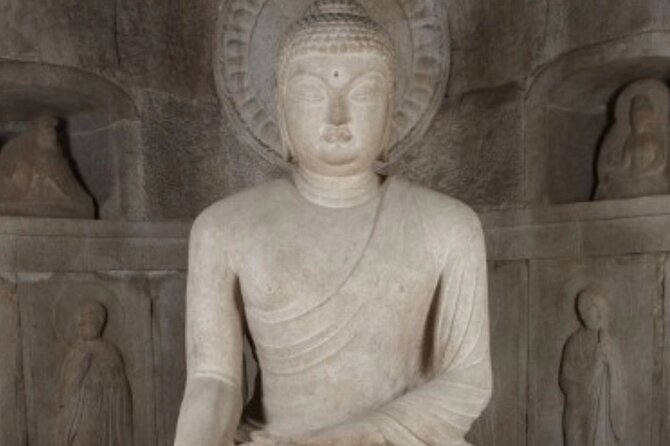
Then you go to Seokguram, a stone temple built as a domelike structure by piling stones and covering them with dirt so it looks like a cave. The story is connected to Kim Dae-seong building it for his parents from a past life before reincarnation, and it was completed under King Hyegong in 774. The unique angle here is that the site blends engineering logic and symbolic design, and you’ll feel that when you look at the delicate Buddha features described as special to Unified Silla Buddhist art.
Both Bulguksa and Seokguram are UNESCO World Cultural Heritage listed on Dec 9, 1995, and both have admission listed as free on this tour. That’s a huge value perk for a private day, since UNESCO-type sites often come with paid entry at other destinations.
A realistic drawback: these stops are spiritual and scenic, but they’re also place-based. If you’re sensitive to stairs or uneven temple paths, go slow and let your guide set the rhythm.
Daereungwon Tomb Complex and Cheonmachong’s Gold
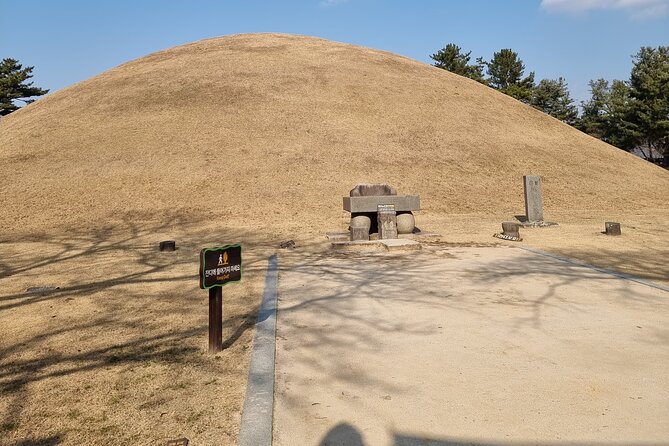
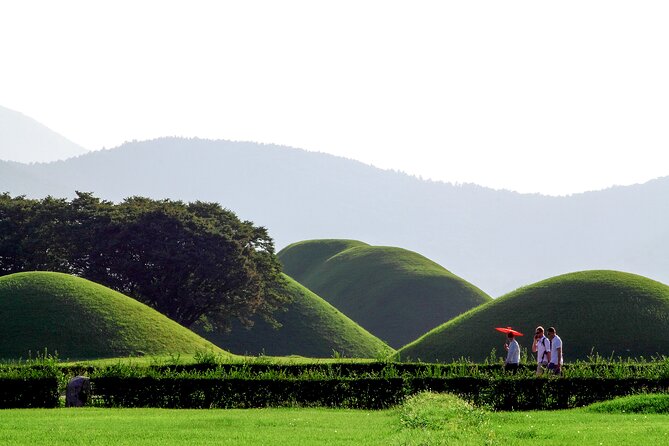
After the temples, the tone shifts from religious art to royal power and ancestry. Daereungwon Tomb Complex is the largest ancient tomb site in Gyeongju, with 30 ancient tombs including Cheonmachong (Tomb No. 155), Silla King Michu’s Tomb, and Hwangnamdaechong Tomb. It’s also noted as a park-like area, so you can enjoy a relaxing, educational walk between tombs, which helps break up the day.
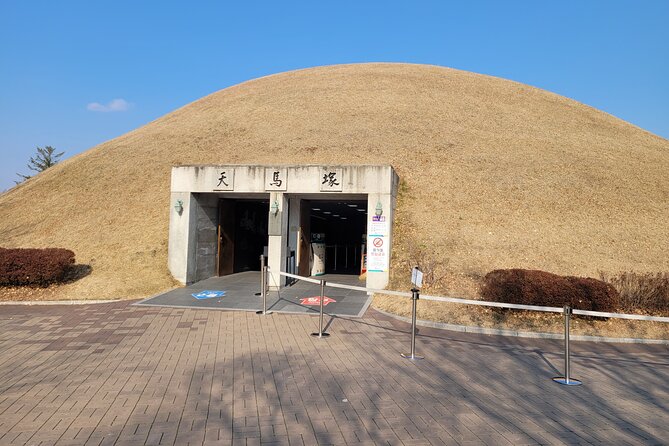
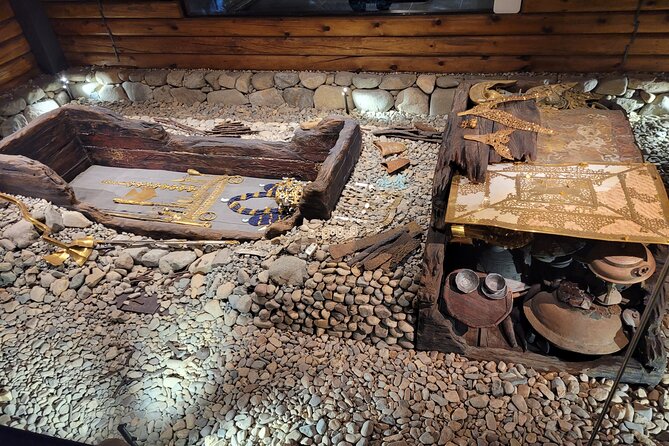
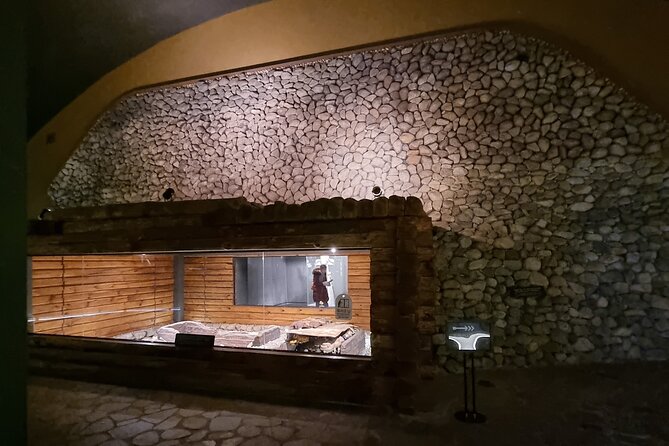
Cheonmachong Tomb is the one tomb here that is open to the general public. The name is explained as meaning heavenly horse tomb, based on a flying white horse picture painted on the saddle flap. That detail is the kind of small art clue that helps the tomb feel less abstract, because it connects a mythic image to something physical you can look at.
This is also where the “wow” factor shows up. Luxurious gold relics were excavated, including a gold crown, gold hat, bird-shaped crown, a gold belt, gold shoes, and fancy garments worn by the dead. The Cheonmachong gold crown is described as the biggest and most luxurious crown ever excavated. That’s the kind of claim that makes you stop and look twice, and it’s one reason I think this stop earns its place in a one-day plan.
Important for planning: Cheonmachong Tomb admission is not included. So if you’re counting costs, set aside extra money here. The good news is the visit itself is scheduled for about an hour, so you don’t lose your whole afternoon to ticket lines and lingering.
Cheomseongdae Observatory and Silla Science for the Curious
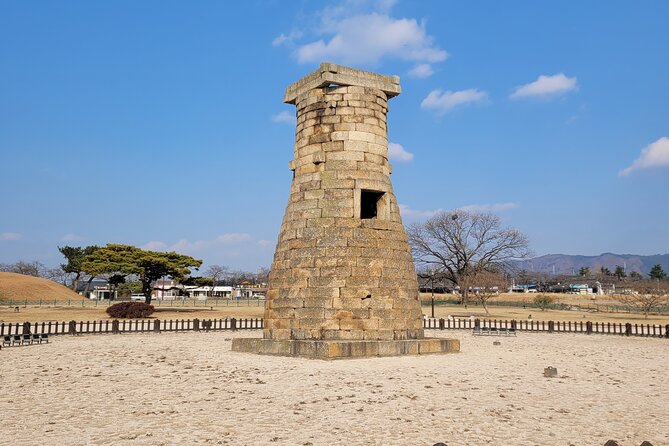
Not every day trip gives you science and architecture in the same breath. Cheomseongdae Observatory, built during Queen Seondeok’s reign, is described as the oldest observatory in Asia. Even if you only catch parts of the explanation, the structure is the story.
The description focuses on how each piece of stone has symbolic meaning. The observatory’s diameter gradually decreases from the bottom to the top, creating a smooth curve. It also has circular shapes representing the curvy, flowing image of the sky, and square impressions that give it a different geometry inside the stonework design.
The dimensions are specific: the upper diameter is 5.17 meters, the base is 5.35 meters, and the total height is 9.17 meters. I love stops like this because they give you a “measure it with your eyes” experience. You’re not just looking at something old, you’re seeing how it was built.
Cheomseongdae’s admission is listed as free here, and the visit time is about 30 minutes. That’s exactly right for a one-day route: enough time to understand the basics and get photos without turning it into an hour-long lecture.
More UNESCO Heritage Tours in Busan
- UNESCO Tongdosa Temple + Gourmet Eonyang Style Bulgogi Lunch
★ 5.0 · 7 reviews - Full Day Private car tour to UNESCO Gyeongju&Yangdong village
★ 5.0 · 5 reviews - Korean UNESCO World Heritage Tour including Gyeongju, Andong and Daegu(2N3D)
★ 5.0 · 3 reviews
Hwangnidan-gil Street and Gyeongju National Museum
After temples, tombs, and stone symbolism, it helps to shift into street life and museum context. Hwangnidan-gil is a popular stretch of about 700 meters between Naenam Intersection and the former Hwangnam primary school intersection. It’s named after Gyeongridan-gil in Seoul and is described as the #1 stop on a Gyeongju trip, with offbeat attractions like coffee shops, restaurants, photo studios, souvenir shops, murals, and photo zones.
Because meals are not included on this tour, this stop is practical. If you need a lunch break, snack, or coffee reset, you’re already in a place designed for it. I like having built-in time for that, because it prevents the classic one-day problem where everyone gets hungry at the least convenient moment.
Then you head to Gyeongju National Museum for about 1 hour 30 minutes, with admission listed as free. The museum is divided into sections by relic type, including an Archaeology Hall, an Art Hall, Donggung and Wolji Hall, and a Special Exhibition Hall, plus a children’s section. It’s also noted as having around 3,000 major pieces on display.
One specific treasure is the Sacred Bell of the Great King Seongdeok (National Treasure No. 29). If you care about craftsmanship and how rulers promoted religion and culture, this museum stop can tie the whole day together in a way photos alone can’t.
A small caution: with only 1.5 hours, you won’t see everything. Focus on the Unified Silla-themed pieces and anything connected to bells, crowns, and royal artifacts, since those mirror what you’ve just seen at the tombs and temples.
Donggung Palace and Wolji Pond to Close the Day
This final historic stop is Donggung Palace and Wolji Pond, a representative Unified Silla-era site. The description says King Munmu of Silla dug the pond, added plants, and even raised rare birds and animals inside the palace during his reign, and that Donggung and Wolji were used for entertaining nobility and royal guests. That “how people lived and hosted” angle gives you a more human sense of the kingdom beyond monuments.
The pond was originally called Wolji, meaning pond of the moon, and it was later renamed Anapji in the Joseon Dynasty as geese and ducks appeared in the ruined palace area. In this tour, the time allocation is about 1 hour.
One key budget detail: admission for Donggung Palace and Wolji Pond is listed as not included. If you want to avoid surprises, plan for that expense after the museum and before you head back.
Price and Value for a Group of Up to Five
At $499 per group (up to 5), the price works best when you’re sharing the cost. In practice, a private day trip like this becomes value-forward when you count what you’re buying: private transportation with tolls and parking handled, a full-day route to major UNESCO sites, and multiple stops where admission is free.
If you’re traveling alone or as a couple, the per-person cost can feel steep compared with public transit. If you’re a family or small group of friends, it can feel more balanced, because the pricing assumes five people are splitting one vehicle and one driver-guide setup.
Also note the timing. The tour is often booked about 18 days in advance on average, so you’ll generally want to reserve ahead, especially if you’re going during peak season or around holidays.
Should You Book This One-Day Private Gyeongju Tour from Busan?
Yes, if you want a clean first look at Gyeongju’s Silla highlights in one day, without transportation headaches. I’d especially recommend it if you like a mix of UNESCO temples, royal tombs, and a museum stop that gives the art and artifacts some context.
Skip it or rethink if you’re on a tight food budget, because meals and two admissions are not included. If you have kids or a teen, this kind of structured private pacing can be a win, and guides on this route have been described as able to keep things engaging without rushing.
FAQ
What is the price for this one-day tour?
The price is $499.00 per group, up to 5 people.
How long is the tour?
It runs about 8 hours to 8 hours 10 minutes.
Do you get pickup from Busan?
Pickup is offered.
Is this tour private?
Yes. Only your group will participate.
Is admission included for all stops?
Most major stops list admission as free, but Cheonmachong Tomb and Donggung Palace and Wolji Pond have admission tickets not included.
Are meals included?
No. Foods and drinks are not included.
What’s included in the tour cost?
Included items are bottled water, an air-conditioned vehicle, private transportation, parking fees, and toll fees and gas.
Do I need a physical ticket?
You receive a mobile ticket.
What if the weather is bad?
The experience requires good weather. If it is canceled due to poor weather, you will be offered a different date or a full refund. Free cancellation is available up to 24 hours in advance for a full refund.
Recently reviewed in Busan
- Real Busan Walking Experience★ 5.0 · 27 reviews
- West Busan Small Group Photo Tour (Max 7)★ 5.0 · 11 reviews
- Visit Busan night market and enjoy the night view of Busan harbor★ 5.0 · 6 reviews
- Busan Highlights Shore Tour – Cruise Return Assured★ 4.5 · 34 reviews
- Suncheon one day tour from Seoul, Busan or Suncheon★ 5.0 · 3 reviews
- Busan Beomeosa Temple & Hongbeopsa Temple with temple lunch★ 5.0 · 11 reviews
- 1 Day Private Busan Guided Tour★ 4.5 · 3 reviews
- Private Custom Tour With a Local Guide in Busan★ 4.5 · 12 reviews
UNESCO Heritage Tours, compared.
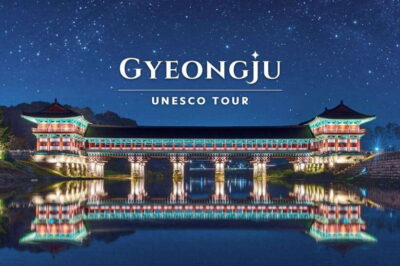
Gyeongju UNESCO World Heritage Guided Day Tour
Read our review →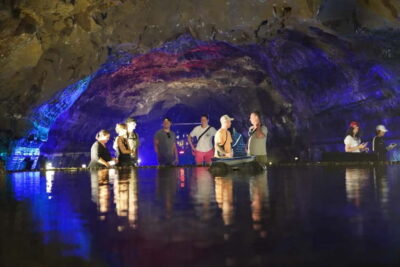

East Jeju Essentials – Seongsan Ilchulbong (UNESCO) & Haenyeo
Read our review →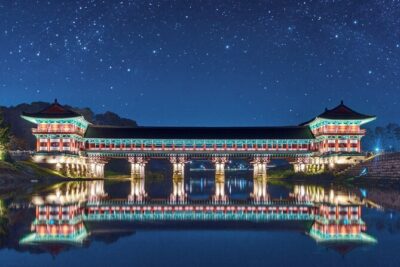
Gyeongju UNESCO World Heritage Guided Day Tour from Busan
Read our review →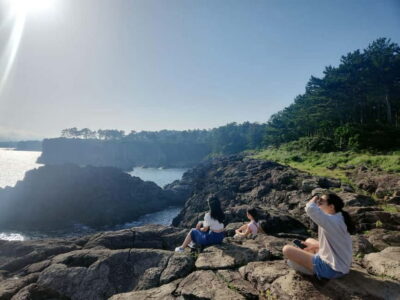
Gyeongju UNESCO sites Private tour with licensed tour guide
Read our review →
Private Gyeongju Tour – Explore Gyeongju UNESCO Sites
Read our review →
Browse the lists this tour appears in