
Reviewed · WORKSHOPS
Seoul: herbal tea class & Korean Medicine tour
Herbs, tea, and medicine, in three hours. I love the hands-on herbal tea making and the way you’re guided through real Korean medicinal herbs instead of just watching slides. The drawback to know up front is language, the museum materials may be mostly in Korean, and you might rely on translation on your phone during parts of the visit.
This is a small-group experience (up to 10 people) that works well if you want something practical, not just cultural sightseeing. You’ll start at the Seoul K-medi Center area, then move to a tea class location for the lecture and tasting, and finish back where you began.
If you’re into self-care, curious about Han medicine, and you like tours where you can ask questions, you’ll probably feel right at home.
In This Review
- Key things I’d plan around
- Getting Oriented at Seoul K-medi Center
- Oriental Medicine Museum: herbs, categories, and real-looking ingredients
- Foot spa in warmer months (March to November)
- Meridian massage in colder months (winter)
- The guided expert talk: learning the logic behind Han medicine
- Tea-making class at 72-2: learn, taste, adjust
- What you’ll drink and try
- The lecture element: theory you can actually use
- Take-home tea bottle and presented herbs
- Price and value for a 3-hour small-group class
- What to bring, and how to get the most from it
- Who this tour suits best
- Should you book the Seoul herbal tea and Korean medicine tour?
Key things I’d plan around
- Oriental Medicine Museum guided by a Han medicine expert, with a look at hundreds of medicinal ingredients
- Foot spa (summer) or meridian massage (winter) included with museum entry
- Tea class + lecture focused on Korean oriental medicine theory and self-practice
- Taste multiple herbal teas and make your own blend to take home
- Take-home bottle plus presented herbs, so you leave with more than photos
Getting Oriented at Seoul K-medi Center
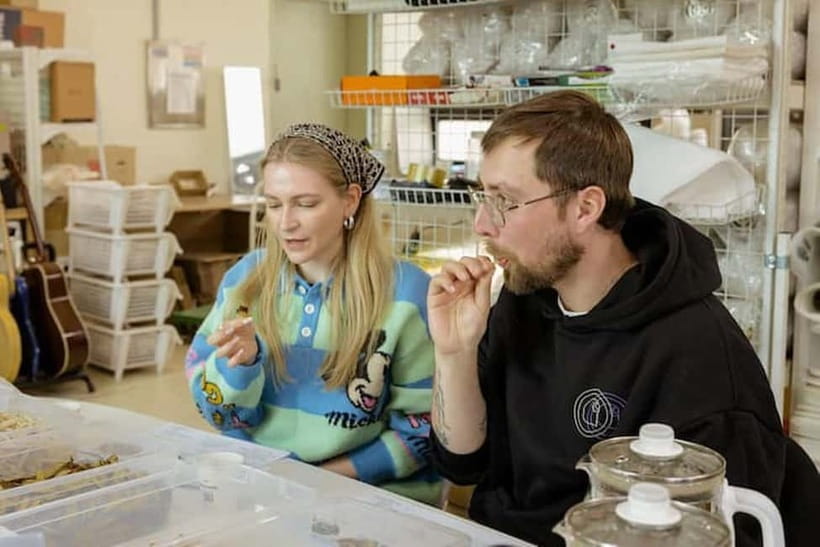
Most Korean medicine tours begin with the same question, what exactly are you going to see and do. This one answers it fast. You meet at the Seoul K-medi Center area, then you settle in with a welcome drink, herb tea, before the guided portion really starts.
The first hour is about getting your bearings and easing into the topic. You get the tea, you get the context, and you get time for shopping associated with the K-medi Center stop. That matters because herbal medicine can feel confusing if you jump in cold. Here, you start with something you can taste, warm tea, then you build the meaning from there.
The group stays small, limited to 10 participants. That size is helpful if you want real conversation during the tour, not a fast shuffle through exhibits.
A few more Seoul days worth comparing
- Best DMZ Tour Korea from Seoul (Red Suspension Bridge Optional)
★ 5.0 · 41,422 reviews - DMZ Tour: 3rd Tunnel, Option(Suspension Bridge, Boat) from Seoul
★ 5.0 · 21,373 reviews - DMZ tour south Korea from Seoul (NK experience hall, defector)
★ 5.0 · 20,599 reviews
Oriental Medicine Museum: herbs, categories, and real-looking ingredients
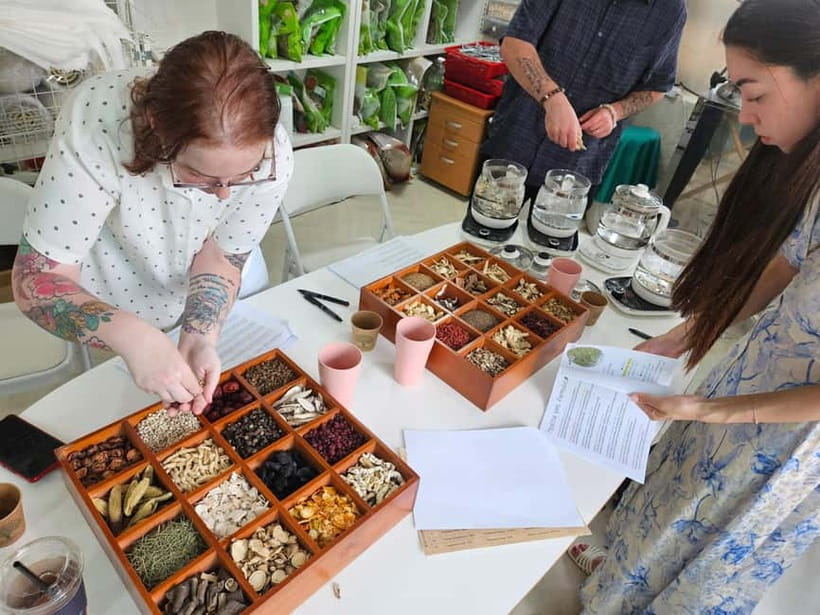
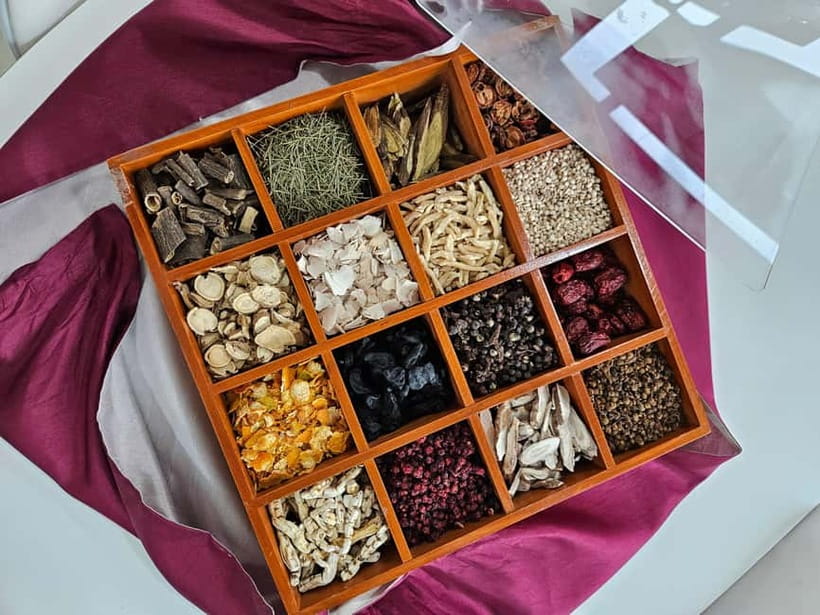
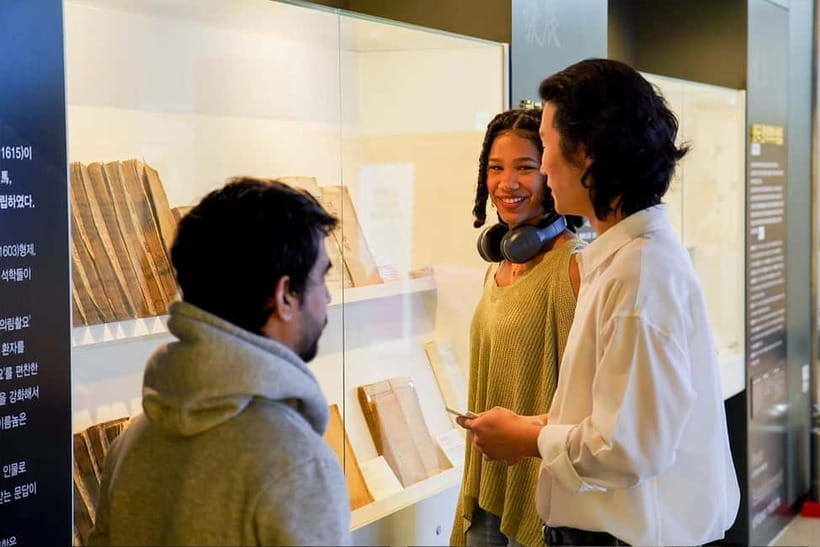
The core of the experience is the guided visit to the Oriental Medicine Museum. You’re not walking through a generic “history of medicine” display. You’re moving through a collection presented as working ingredients, with an expert guiding you through how they’re used.
Here’s what stands out immediately: the museum highlights over 350 kinds of medicine. The list isn’t just plants. You’ll hear about categories such as antler, ginseng, mineral medicine, herb roots, and animal medicine. Even if you’re a skeptic, seeing the categories grouped and explained helps you understand that Korean oriental medicine thinks in systems, not one-off remedies.
This is also where the included body-care part happens. Depending on the season, you’ll do foot spa (March to November) or a meridian massage (winter). That seasonal choice is practical, because it lets the program match what’s typical and comfortable for the time of year.
Foot spa in warmer months (March to November)
If you’re going in the warmer half of the year, plan for a soothing, hands-on reset. Foot spa is included with admission, so you’re not squeezing in extra time or paying another fee later. It also gives you a bodily reference point while you learn. Your brain learns faster when your body feels something, too.
Meridian massage in colder months (winter)
In winter, the included option is a meridian massage. The term “meridian” comes up a lot in oriental medicine, and it can sound abstract until you experience it as part of the flow of your visit. Even if you don’t fully understand the theory right away, you’ll have a reference you can connect back to the lecture later.
Same trip, a different corner of the country:
- Seoul: The Best DMZ Tour with Optional Suspension Bridge
★ 4.7 · 4,978 reviews - Signature DMZ Tour: Exclusive Defector Talk & Suspension Bridge
★ 5.0 · 4,459 reviews - Thrilling Korean DMZ 3rd Tunnel Tour from Seoul + Red Bridge Rush
★ 5.0 · 3,097 reviews - Seoul: DMZ Tour & Suspension Bridge (Option English/Spanish)
★ 4.9 · 2,628 reviews
The guided expert talk: learning the logic behind Han medicine
A big reason I like this kind of tour is that it’s not only about seeing herbs. It’s about understanding the framework that puts them together.
Your museum guide is a Han medicine expert, and the tour is designed to connect you to the logic of traditional practice. You’ll get explanations tied to what you’re seeing, not a detached lecture while you stare at glass cases.
The museum experience also includes a lot of question-friendly interaction. The format is built for small groups, so if something feels unclear, you’re not stuck waiting your turn for a guide who has 30 people to manage. You can ask what an ingredient is, how it’s categorized, or why it might be used.
One more practical point: museum exhibits may include limited English support. If you prefer to read every sign, be ready that you might have to supplement with your phone. The tour runs with an English-speaking guide, but the visuals and exhibit text can still be Korean-first.
Tea-making class at 72-2: learn, taste, adjust
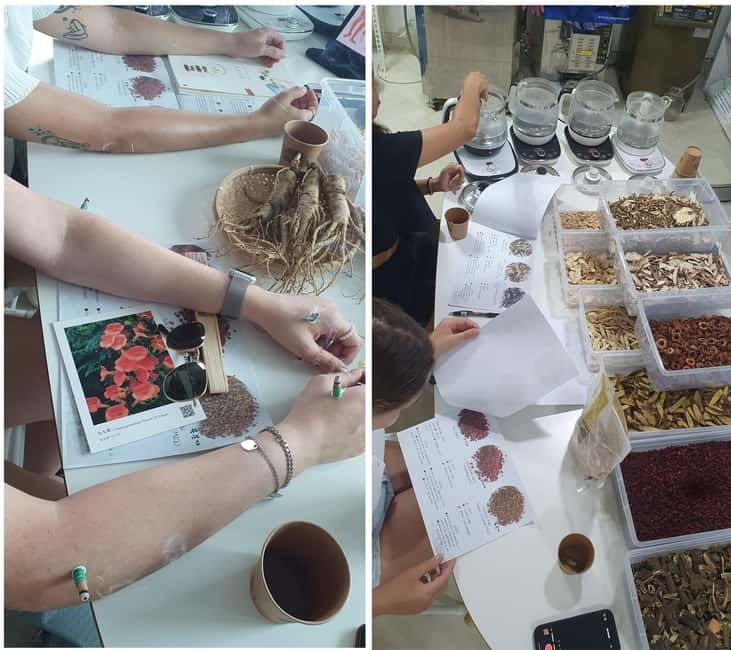
After the museum portion, you shift into the tea class. The program moves to a tea class stop at 72-2, and this is where the “do something yourself” part gets serious.
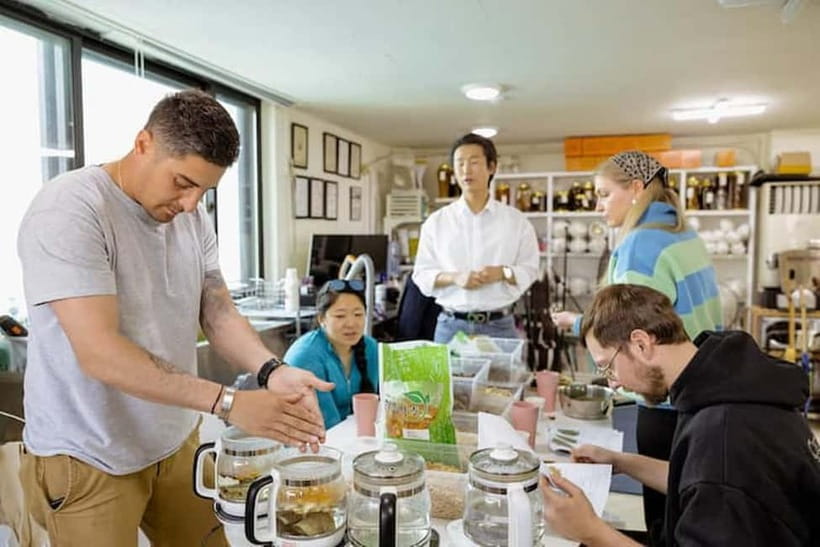
You’re given a structured class time, about two hours, that includes both theory and practice. The lecture portion introduces Han medicine and auto-therapy, which means you’ll hear how people think about maintaining balance and what you can learn to apply yourself.
Then you build your own herbal tea. This is the moment that makes the whole tour stick in your memory. Instead of leaving with only facts, you leave with a blend you made and you can repeat at home.
What you’ll drink and try
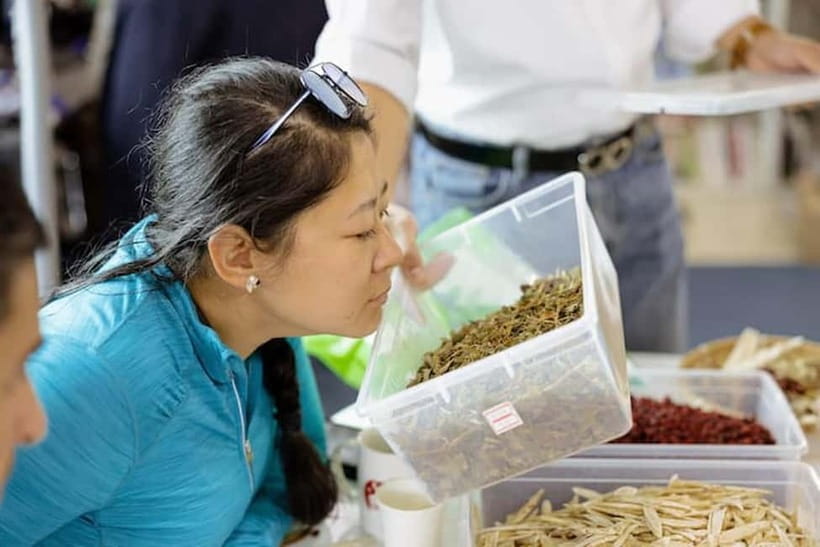
You can try many different herbal teas and drinks during the experience. That tasting matters because Korean herbal tea isn’t one flavor. Some blends are earthy, some taste more aromatic, some feel warming or lighter. When you taste a few options in the same setting, your palate starts to connect to the lecture.
Also, the program description mentions acupuncture. The exact format isn’t spelled out in the details you’re given, but it signals that the museum experience may include hands-on body-care components beyond tea. If acupuncture is offered, you’ll be in the right place for it, since the museum entry package is what includes the body treatment.
The lecture element: theory you can actually use
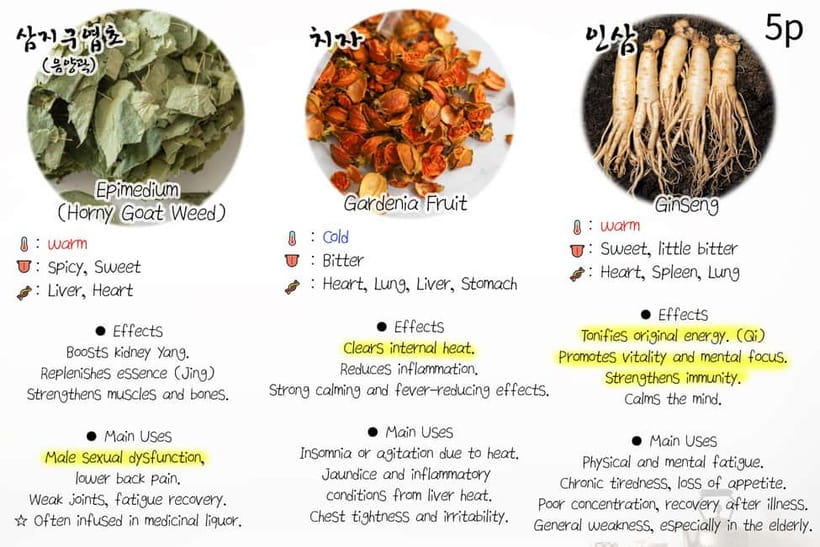
A lecture can go either way on tours. It can feel like a classroom, or it can feel like a tool. This one tries to be the second kind.
The lecture introduces Han medicine concepts and auto-therapy. Even if you don’t become a practitioner, it’s useful because it helps you interpret what you tasted earlier. When you understand how the tour frames herbal selection and use, the museum categories start to make more sense.
Here’s how I’d translate this into practical value for you: you’re learning a way to talk about health that isn’t only chemical-based. You’re not asked to replace modern medicine. You’re given a different lens for thinking about wellness, and then you get to take your herbal tea home as a tangible souvenir.
Take-home tea bottle and presented herbs
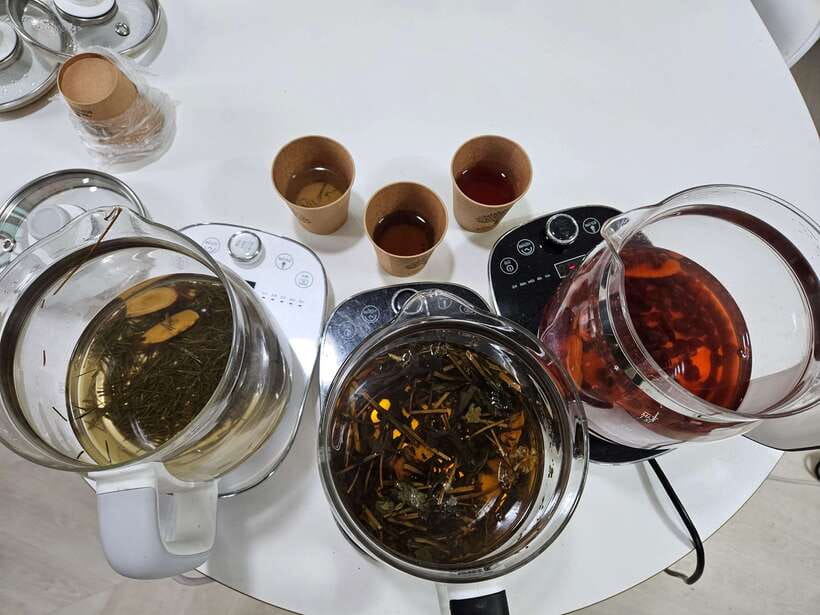
At the end, you’re not sent away empty-handed. You get a bottle to take your tea home. You also get herbs presented by the host, and the program wording suggests you’ll be shown herbs you want after the class.
That’s a small detail with big impact. When you have a bottle of what you made, you can re-create the experience later, and you can remember which herbs you liked and why.
It’s also worth knowing what is and isn’t included. The tour includes the herbs presented and the tea making ingredients for the class. But herbs you buy separately are not included in the price.
Price and value for a 3-hour small-group class
At $51 per person for about three hours, the value is mostly in the combination of items you get together:
- Museum entry with an expert guide
- Included treatment (foot spa or meridian massage) depending on season
- Welcome herbal tea and additional tea to drink during the class
- Oriental medicine lecture
- Hands-on herbal tea making
- A take-home bottle
A normal museum ticket plus a single activity can cost that much in Seoul, especially with a guided component. What makes this feel reasonable is that you’re paying for a packaged experience, not just a walk-through. The small group cap at 10 also helps. You tend to get more attention when you’re not buried in a big crowd.
What to bring, and how to get the most from it
You don’t need special gear. You do want a few mental and practical setups.
First, go with questions. The tour is structured for conversation, and the guide is there to explain what you’re seeing and tasting. If you wait until the end, you’ll miss the best part, which is connecting the lecture to the museum.
Second, bring a translation plan. Even though the guide can work in English, some museum materials may be Korean-first. Having your phone ready can save you time and help you feel confident asking what something means.
Finally, don’t rush your tasting. Herbal tea blends shift in taste and aftertaste. If you rush through it, you lose the chance to learn what you like, and that matters when you build your own blend.
Who this tour suits best
This is a strong fit if you:
- Want a hands-on herbal tea class tied to a guided medicine museum
- Prefer small-group tours where you can actually talk to the guide
- Are interested in Korean wellness traditions and learning how people use plants and ingredients
- Like experiences with a body component, either foot spa or meridian massage
It may be less satisfying if you want a purely English, sign-by-sign museum walkthrough. Some exhibits and materials may require translation, and the pace may include time where you’re expected to translate and ask questions.
Should you book the Seoul herbal tea and Korean medicine tour?
Book it if you want a short, structured experience that combines three things many travelers struggle to find together: an expert-led museum visit, a real body-care treatment in the same program, and a tea class where you make your own blend and take it home.
Skip it if your priority is a fully English museum experience with lots of written material you can read easily, because some signage support may be limited. Also skip it if you’re allergic or sensitive to herbal teas, since the program is built around tasting multiple teas.
If you’re curious, this tour is one of the more practical ways to explore Korean medicine without pretending you’ll master it in one afternoon. You’ll leave with a new perspective on health, a bottle of your own tea, and a clearer sense of how Han medicine organizes its ingredients.
Recently reviewed in Seoul
- Your Personal Seoul Photographer!★ 4.1 · 15 reviews
- You’re Invited to Our Home in Seoul: The Only Cooking Class!★ 5.0 · 8 reviews
- From Seoul: Yongpyong Ski Day Tour with Transportation★ 4.9 · 40 reviews
- Seoul: Korean & English Language Exchange Global Party★ 5.0 · 28 reviews
- Watching sports match & local food experience in Seoul★ 5.0 · 11 reviews
- WKT Combat Taekwondo & Self-defense One Day Class in Seoul★ 5.0 · 5 reviews
- Unique Native Experience : Han River Picnic, Board game, BBQ★ 5.0 · 3 reviews
- Seoul: Gangneung BTS K-Pop & K-Drama Filming Locations Tour★ 4.6 · 14 reviews
Workshops, compared.
Local Home Korean Cooking Class & Market Adventure in Seoul
Read our review →
Korean Cooking Class at a Local Home and Market Tour
Read our review →
Yongpyong Ski Resort from Seoul with Optional Lesson and Packages
Read our review →
Korean Cooking Class with Grocery Shopping at Seoul Local Market
Read our review →
Kpop Dance Class in Seoul (incl. video shooting & editing)
Read our review →
Taste of Korea, Authentic home style Cooking class
Read our review →
Busan Tailored Korean cooking class (Vegan OK)with market tour
Read our review →Browse the lists this tour appears in