
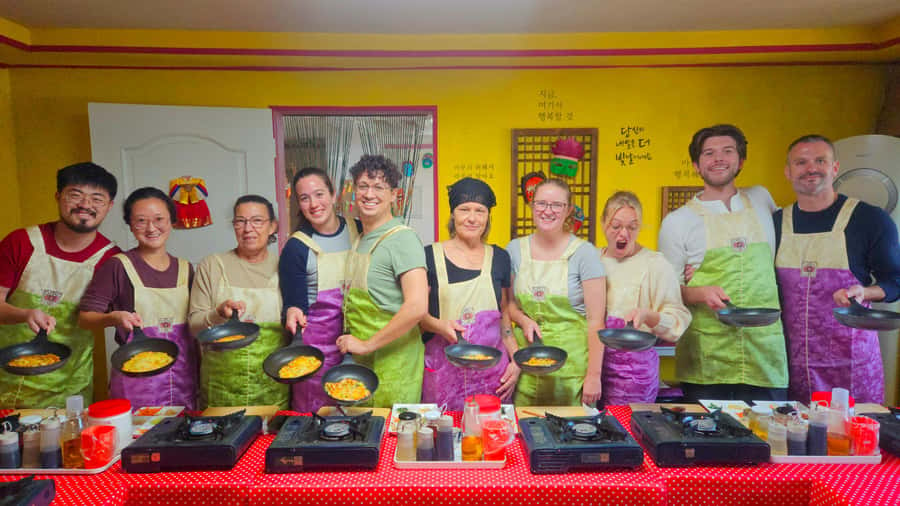
Reviewed · COOKING CLASSES
Seoul: Korean Cooking Class at a Local Home and Market Tour
Markets, market snacks, and real cooking.
This Seoul class links a local market tour with hands-on cooking in a home kitchen, not a demo kitchen. I love that you start by hunting down ingredients with your chef-guide and tasting street food along the way, and you even pick up a few Korean phrases while you settle in.
You also get a full meal that goes past the usual class plate, with a Hanjeongsik-style course and lots of sides. One possible drawback to plan for, though, is that the home has no elevator, and you handle your own way to the meeting point at Mangwon Station (exit 2, outside).
In This Review
- Key takeaways before you go
- A 3.5-hour Seoul cooking class that teaches by doing
- Starting at Mangwon Station, then heading into a local market
- Market lessons that make your shopping smarter next time
- Welcome tea, simple Korean phrases, and a quick cultural reset
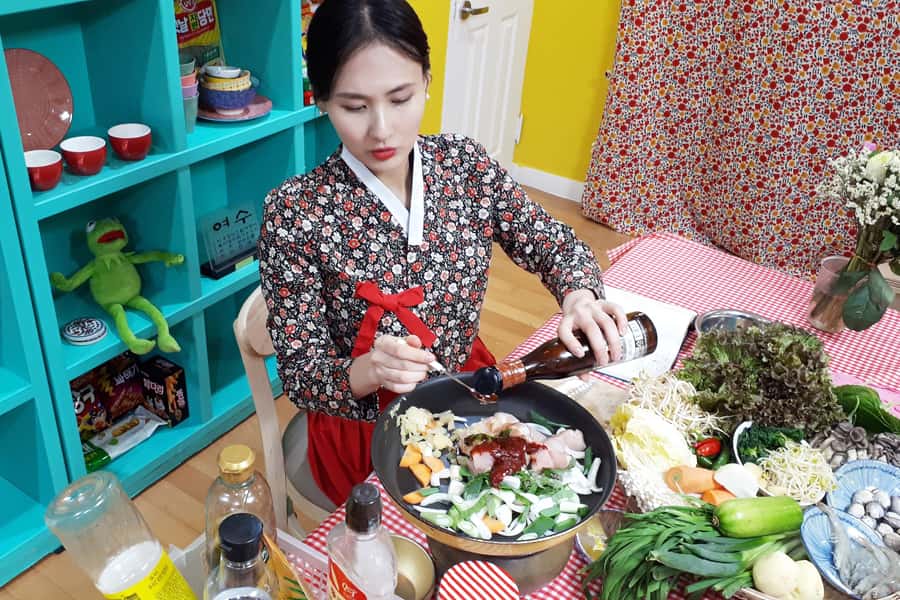
- Cooking four main dishes, hands-on style
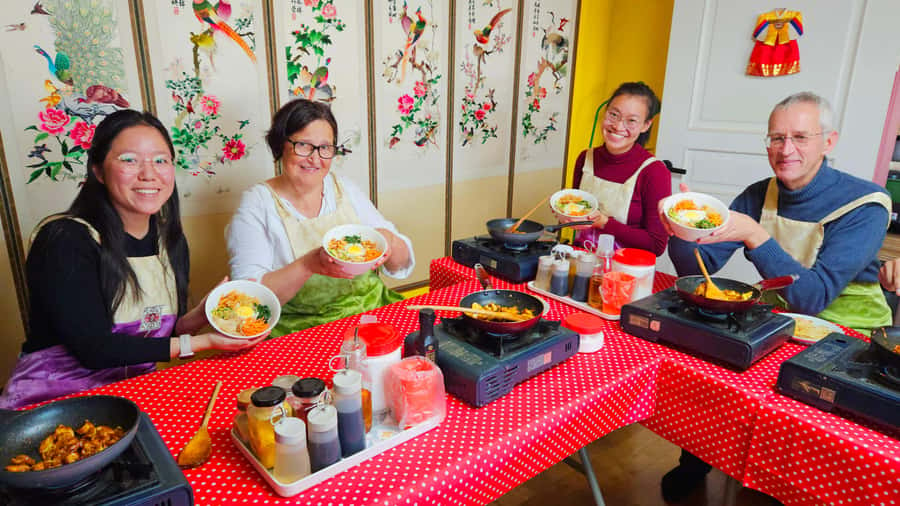
- Bibimbap, where assembly teaches balance
- Dakgalbi, a stir-fry lesson you can reuse
- Haemul-Pajeon, the pancake that teaches you to watch texture
- Doenjang-Jjigae, fermented flavor you can recognize
- Hanjeongsik at home, and why the sides matter
- Tal mask try-on and learning what tradition means in practice
- Photos, video, and recipes you can actually use
- Logistics that can make or break your day
- Price and value: what you truly get for $98
- Who this Seoul cooking class is best for
- Should you book this Korean cooking class in Seoul?
- FAQ
- Where do we meet for the cooking class?
- What dishes will we cook?
- Is hotel pickup and drop-off included?
- How big is the group?
- What’s included with the meal after cooking?
- Is the home accessible for people who use elevators or have mobility concerns?
Key takeaways before you go
- Market shopping that feels daily, with ingredient spotting and street food samples at a less-touristy market
- Hands-on cooking of 4 dishes, including bibimbap, dakgalbi, haemul-pajeon, and doenjang-jjigae
- Hanjeongsik meal service, with more than 10 side dishes, seasonal fruit, and rice wine
- Tal mask try-on, a fun cultural moment tied to Korean heritage festivals
- Small-group feel (up to 10), so you’re not lost in the crowd while you cook
A 3.5-hour Seoul cooking class that teaches by doing
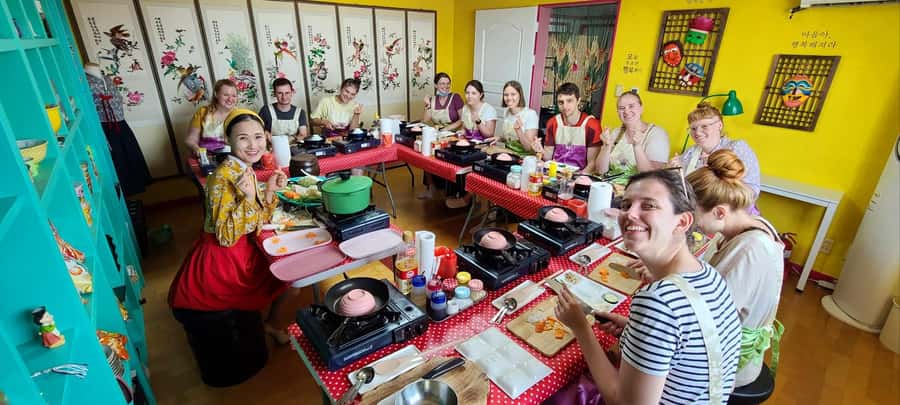
If you want Korean food you can actually recreate later, this is the kind of class that helps you understand what you’re seeing. The flow is simple: shop first, cook second, then sit down to a proper course-style meal. It’s only 3.5 hours, but it covers the big skills you need to move beyond ordering.
Price is $98 per person. That sounds steep until you break it down. You’re paying for a pro chef-guide, the ingredient and equipment costs, street-food samples, a welcome drink, your meal with multiple sides, and even photo and video service plus recipes to take home. In other words, you’re not just learning one dish and leaving, you’re getting the whole rhythm of Korean home cooking.
The biggest win is the practical stuff: how to shop for ingredients, how to prep, how to season, and how to plate and eat Korean-style. The class also tends to run like a friendly group lesson. In the reviews, hosts like Sarah and Junghee get praised for clear, fun teaching and keeping everyone included.
More Cooking Classes in Seoul:
- Local Home Korean Cooking Class & Market Adventure in Seoul
★ 5.0 · 1,024 reviews - Master Korean traditional cooking with a Kimchi chef
★ 5.0 · 385 reviews - Seoul: Korean Cooking at Seoul Cooking Club!
★ 5.0 · 311 reviews
Starting at Mangwon Station, then heading into a local market
The experience begins at Mangwon Station, exit 2, outside. That’s good news if you like easy meeting points and you’re already navigating Seoul by subway. The flip side is also clear: there’s no hotel pickup or drop-off, so you’ll want to plan your route in advance and give yourself a little buffer.
Once you meet your guide, you head to a traditional market where the goal is not sightseeing for sightseeing’s sake. You’re there to do what locals do: walk stall to stall, look at ingredients, compare options, and learn why certain items matter for Korean cooking.
Many classes stop at a quick photo and move on. Here, you get to taste street food samples as part of the market experience, which helps your brain connect ingredients to flavor right away. In other words, you’re not just collecting groceries for cooking later, you’re learning how Korean street food culture fits into the bigger picture of meals.
Market lessons that make your shopping smarter next time
I like that the market portion is focused on real shopping decisions, not a lecture. Your chef-guide helps you find ingredients required for your class dishes, and you’ll get the kind of guidance that saves you from guessing later.
What you can expect in practice:
- Walking through stalls with explanations of ingredients you might not have tried before
- Trying street food samples that connect to the flavors in your later cooking
- Learning what to look for when something like seasoning, vegetables, or seafood is involved
One review-style theme that shows up strongly is that guides point out items people would never think to buy on their own. That’s a big deal if you want to cook Korean food at home, because the hardest part is often not the technique. It’s figuring out what the ingredient actually is, how it’s used, and what to swap when you can’t find it easily.
You’ll also get a less touristy feel. People love this because it’s closer to daily life than a curated food hall.
Welcome tea, simple Korean phrases, and a quick cultural reset
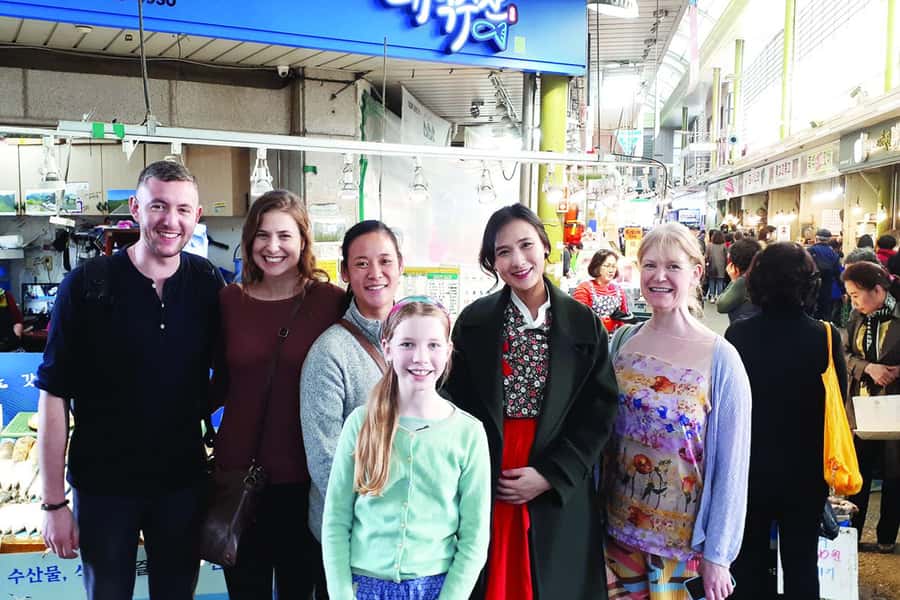
After the market, you go to the home where the class happens. Before you start cooking, there’s time for a welcome drink and a chance to learn a few Korean phrases.
I like this small pause because it makes the rest of the experience feel more like a conversation and less like a classroom. It also helps you interact naturally once you’re around the kitchen and the people hosting you. Even basic phrases can make the home setting easier to enjoy.
Hosts are also described as upbeat and inclusive, with good English, plus the ability to switch between English and Korean. That helps if you’re comfortable, but it also helps if you’re nervous about not understanding everything.
More Market Tours in Seoul:
- Seoul Street Food Market Tour
★ 5.0 · 1,226 reviews - Seoul: Night Market Food Tour with Local Guide
★ 4.9 · 943 reviews - Seoul: Palace, Temple and Market Guided Foodie Tour at Night
★ 4.9 · 750 reviews - Downtown Seoul Guided Food & Market Tour with 8+ Local Tastings
★ 5.0 · 580 reviews
Cooking four main dishes, hands-on style
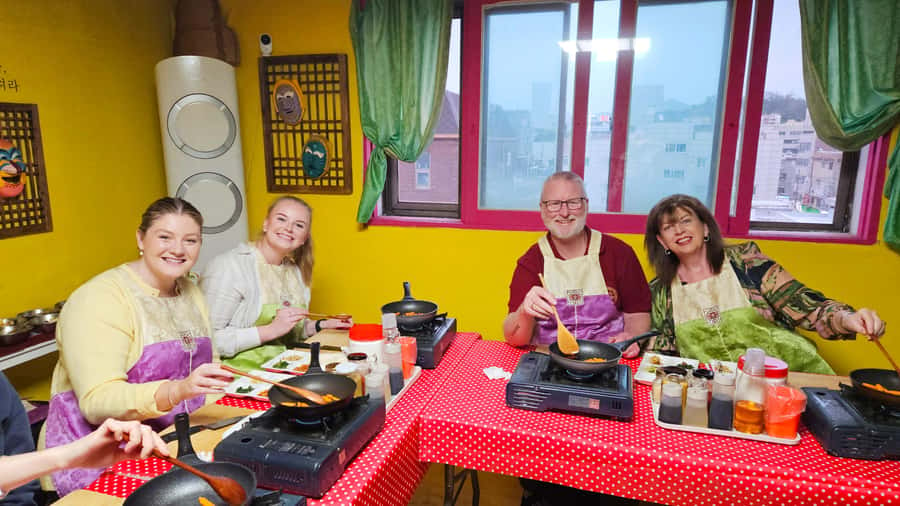
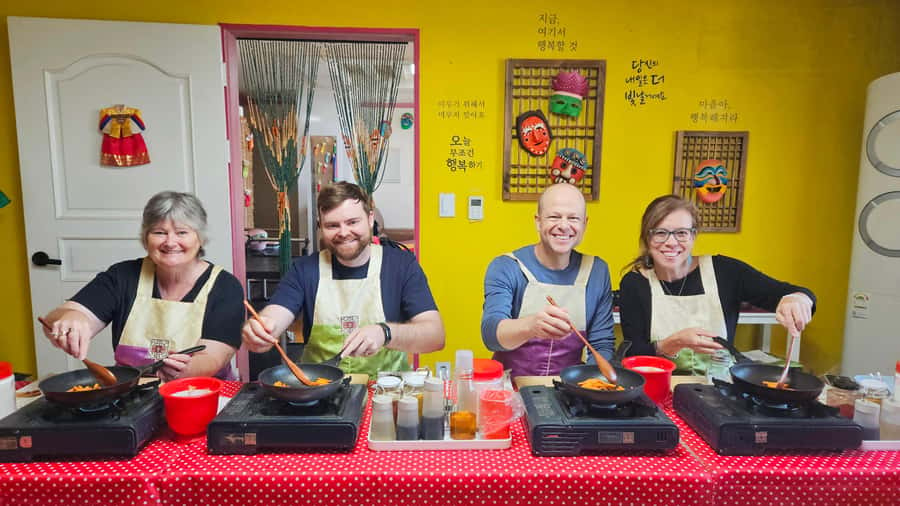
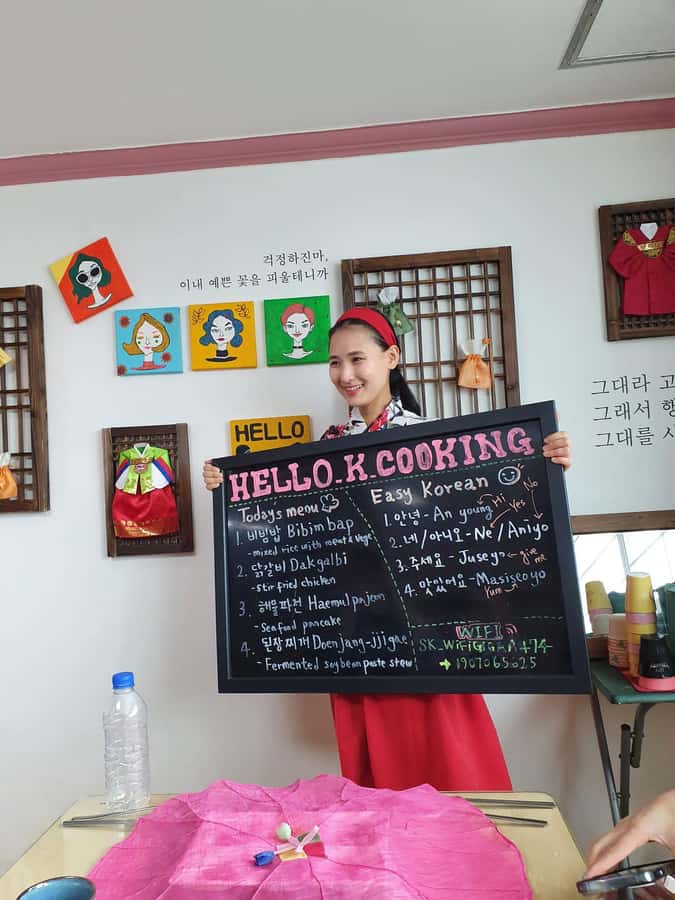
This is the core of the experience. You prepare 4 dishes with support from an experienced chef-guide. You’ll make:
- Bibimbap, mixed rice with meat and vegetables
- Dakgalbi, stir-fried chicken
- Haemul-Pajeon, seafood and green onion pancake
- Doenjang-Jjigae, fermented soybean paste stew
The teaching style seems geared toward clarity and step-by-step guidance. Reviews mention that even first-time cooks felt comfortable because instructions were broken down and everyone had space to work.
Here’s why this dish set is especially useful for you:
- You cover both hot dishes and pancake-style cooking, so you learn more than one technique
- You cook with classic Korean flavor builders like fermented soybean paste in doenjang-jjigae
- You get a rice-based dish with bibimbap, which is handy because bibimbap is easy to customize later
- You end up learning seasoning and balancing, not just repeating a recipe
Bibimbap, where assembly teaches balance
Bibimbap is more than mixing. The real lesson is how different components work together. As you prep and combine rice with vegetables and meat, you’ll start to understand how Korean meals often balance textures and flavors in one bowl.
Dakgalbi, a stir-fry lesson you can reuse
Dakgalbi is a practical skill for home kitchens. Stir-frying teaches timing and heat control. You’ll learn how ingredients cook quickly and how sauce or seasoning binds the dish.
Haemul-Pajeon, the pancake that teaches you to watch texture
Pajeon is where you learn to pay attention. Seafood and green onions need a batter that sets properly. When you flip or cook, you’re learning how Korean pancakes aim for crisp edges and a tender interior.
Doenjang-Jjigae, fermented flavor you can recognize
This stew is the one that helps you build a flavor memory. Doenjang is fermented soybean paste, and once you’ve smelled and tasted it in a warm stew context, it becomes easier to recognize later when you encounter it in restaurants.
Hanjeongsik at home, and why the sides matter
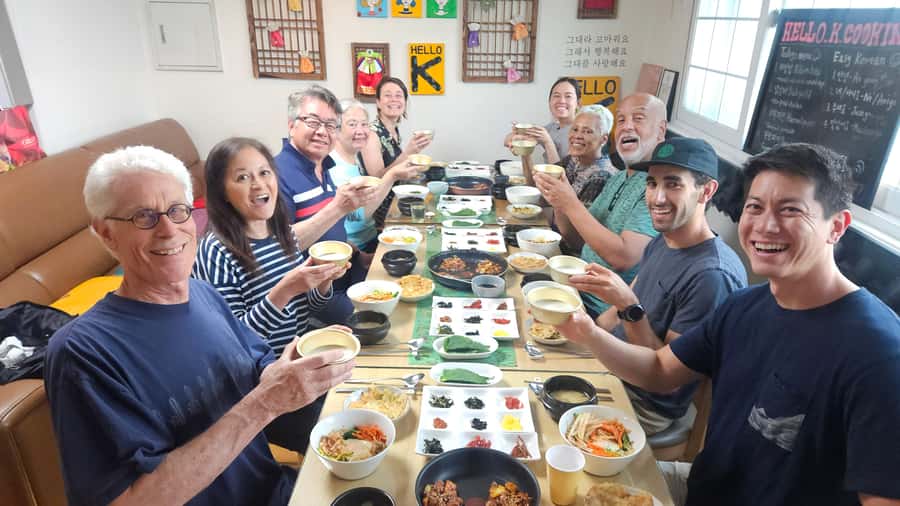
After cooking, you sit down to eat in a Hanjeongsik-style arrangement. Hanjeongsik is a course meal with more than 10 side dishes, plus seasonal fruit and rice wine. It’s a big part of what people love about this experience because you get to taste the broader range of Korean food, not just the four items you cooked.
This is where you learn something subtle but important. Korean meals often feel complete because of the sides. Even if your main dish is delicious, the banchan (side dishes) are what round out the flavors, add variety in texture, and help you experience the meal as a whole.
Expect a table that feels like a shared meal, with rice and multiple sides. You’ll be able to compare your cooking to other flavors on the table, which makes the class feel like an education, not just a party snack session.
Also, rice wine is included. If you’re curious about pairing tastes with food, this is the moment to do it calmly and at your own pace.
Tal mask try-on and learning what tradition means in practice
One of the more memorable add-ons is trying on a Tal mask. These masks show up at Korean heritage festivals, and the try-on makes the culture feel tangible.
I like experiences like this because you’re not just reading about tradition. You physically handle an object tied to local events, and you get a quick story connection to why it exists. It’s short, but it lands, especially for first-time visitors who want more than just meals.
Photos, video, and recipes you can actually use
This class includes a photo and video service, plus recipes. For people cooking at home later, recipes are what turn a great afternoon into a useful skill.
One practical detail that shows up in the feedback is that recipes may be shared through apps like WhatsApp. If you’re the type who likes having a digital recipe list on your phone while you cook, that’s a real convenience.
Also, the photo and video service is handy for kitchens that feel visually fun. If you want to remember the dishes you made, not just the taste, this is a nice extra without extra cost.
Logistics that can make or break your day
Let’s keep it real. You’re getting two parts of Seoul in one: a walking market portion and then stairs or room access at a home kitchen.
Here are the practical things to know:
- The home has no elevator, so you should be ready for stairs
- You’re responsible for getting yourself to and from Mangwon Station (exit 2, outside)
- The group is small, up to 10 people, so timing and attention matter when you move between stops
- The class runs about 3.5 hours, so wear comfortable shoes
If you’re sensitive to crowds, good shoes and a calm pace help. If you’re comfortable with walking and you’re fine with a home setting, this feels easy to enjoy.
Dietary restrictions and allergies are something to message the local host in advance. The class is designed for real cooking and meal sharing, so communicating needs early is your best move.
Price and value: what you truly get for $98
At $98 per person, you’re paying for a lot more than cooking instructions. Here’s the value math in plain terms:
- Market tour, including ingredient shopping guidance and street food samples
- Professional chef-guide teaching and ingredient and equipment costs
- Welcome tea
- A full meal after you cook, with Hanjeongsik-style sides and rice wine
- Photo and video service
- Recipes to take home
- Small group limit of 10 participants
If you’ve done cooking classes in big cities before, you know the usual pattern: one dish, a short tasting, then you leave. This one gives you four dishes plus a broad feast table after. That’s why it can feel worth it even if you’re not trying to “cook obsessively.” You end up eating well and learning how to recreate the flavors.
Who this Seoul cooking class is best for
This is a great fit if you want:
- A hands-on cooking lesson, not a passive show-and-tell
- Korean food variety in one session, especially stew, stir-fry, pancakes, and bibimbap
- A cultural experience in a real local setting, including a Tal mask try-on and a few Korean phrases
- A small group atmosphere where you can ask questions while you cook
It’s also a good choice for couples and friends who want a shared activity that ends with a satisfying meal. If you’re traveling solo, the group size helps you still feel connected to the host and the process.
Should you book this Korean cooking class in Seoul?
If you enjoy markets, you like food education, and you want a meal you can’t recreate from a cookbook alone, I’d book it. The combination of market shopping, hands-on cooking of 4 major dishes, and then a Hanjeongsik-style feast is the winning formula here.
I’d hesitate only if you strongly dislike stairs or you need hotel-style door-to-door transport, because you’ll meet at Mangwon Station and the home has no elevator. If those points are fine for you, this is one of the better “learn and eat” experiences in Seoul for building real cooking confidence.
FAQ
Where do we meet for the cooking class?
You meet your guide at Mangwon Station, exit 2 (outside). The activity ends back at the same meeting point.
What dishes will we cook?
You’ll cook 4 dishes: Bibimbap, Dakgalbi, Haemul-Pajeon, and Doenjang-Jjigae.
Is hotel pickup and drop-off included?
No, hotel pickup and drop-off are not included. You’ll need to make your own way to and from the meeting point.
How big is the group?
The group is limited to 10 participants.
What’s included with the meal after cooking?
After cooking, you’ll enjoy a Hanjeongsik-style meal with more than 10 side dishes, seasonal fruits, and rice wine.
Is the home accessible for people who use elevators or have mobility concerns?
The information provided notes there is no elevator to get up to the local home, so you should plan for stairs. Also, contact the local host for dietary restrictions and allergies.
More Shopping Tours in Seoul
- Private DMZ Tour (No Shopping): 3rd Tunnel & Suspension Bridge
★ 5.0 · 607 reviews - Seoul Night Palace & Market Food Tour with Vehicle
★ 5.0 · 275 reviews - Cook 3 Authentic Korean Dishes with Local Market Tour
★ 5.0 · 231 reviews - Korean Palace and Market Tour in Seoul Including Insadong and Gyeongbokgung Palace
★ 4.0 · 174 reviews
Recently reviewed in Seoul
- You’re Invited to Our Home in Seoul: The Only Cooking Class!★ 5.0 · 8 reviews
- Your Personal Seoul Photographer!★ 4.1 · 15 reviews
- From Seoul: Yongpyong Ski Day Tour with Transportation★ 4.9 · 40 reviews
- Seoul: Korean & English Language Exchange Global Party★ 5.0 · 28 reviews
- Watching sports match & local food experience in Seoul★ 5.0 · 11 reviews
- WKT Combat Taekwondo & Self-defense One Day Class in Seoul★ 5.0 · 5 reviews
- Unique Native Experience : Han River Picnic, Board game, BBQ★ 5.0 · 3 reviews
- Seoul: Gangneung BTS K-Pop & K-Drama Filming Locations Tour★ 4.6 · 14 reviews
Cooking Classes, compared.
Local Home Korean Cooking Class & Market Adventure in Seoul
Read our review →
Master Korean traditional cooking with a Kimchi chef
Read our review →
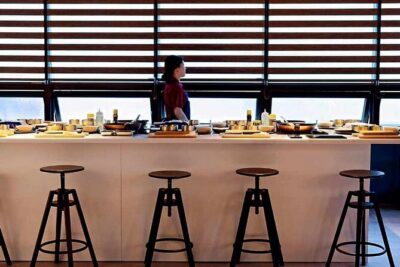
Experience Korean Cooking in Modern Hanok Kitchen
Read our review →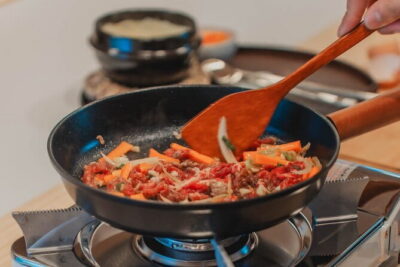
Korean Cooking Class with Grocery Shopping at Seoul Local Market
Read our review →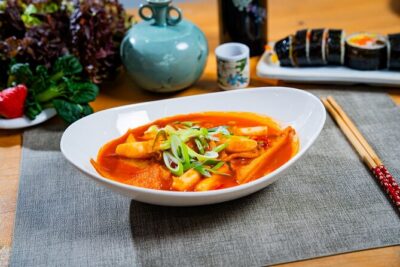
Taste of Korea, Authentic home style Cooking class
Read our review →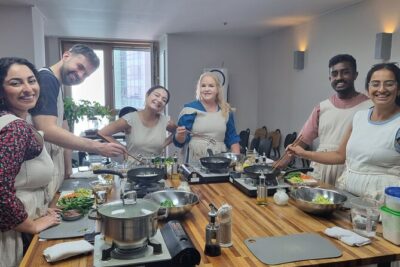
Browse the lists this tour appears in