
Reviewed · HISTORICAL TOURS
Seoul History Walking Tour
Seoul history, told one step at a time. This 3.5-hour walking tour links Joseon-era Seoul with today’s Korea, with an Australian guide steering you through the historical center in a compact group of up to 8.
I especially liked two things: you get tight, human explanations from Eric, and the route hits big story points without making you pay entrance fees at every turn. Traditional snacks and an informative memento add real value when the day is otherwise just walking and looking.
One drawback to keep in mind is that many stops are short, often around 5 to 20 minutes. Also, bottled water is not included, so you may want to plan accordingly if you get thirsty on a late afternoon walk.
In This Review
- Key highlights at a glance
- A 3.5-hour Seoul storyline, from Joseon to democracy
- Bosingak Bell Pavilion and Cheonggyecheon Stream: city rhythms explained
- Seoul City Hall, Seoul Plaza, and Jeongdong Observatory viewpoints
- Deoksugung Doldam-gil and Jungmyeongjeon Hall: romance, architecture, and forced surrender
- Ewha Museum and the Former Russian Legation: education and exile
- Admiral Yi, Sejong the Great, and Gwanghwamun Square protests
- National Museum rooftop history and the Embassy of Japan protest story
- Jogyesa Temple: bells, reflection, and a clear tour finish
- Price, included value, and how to make the most of it
- Who should book this Seoul History Walking Tour?
- Should you book it?
- FAQ
- What is the duration of the Seoul History Walking Tour?
- How much does the tour cost?
- What time does the tour start, and where does it begin?
- Where does the tour end?
- Is admission required for the stops on the tour?
- What is included in the price?
- Is bottled water included?
- What is the maximum group size?
- Is free cancellation available?
Key highlights at a glance
- A maximum of 8 people means you can ask questions and actually hear the answers
- Free entry at every stop keeps your budget predictable
- Mobile ticket makes check-in simpler
- Eric’s guiding style is repeatedly praised for clarity and responsiveness
- Traditional snacks plus an informative memento give you something back at the end
A 3.5-hour Seoul storyline, from Joseon to democracy
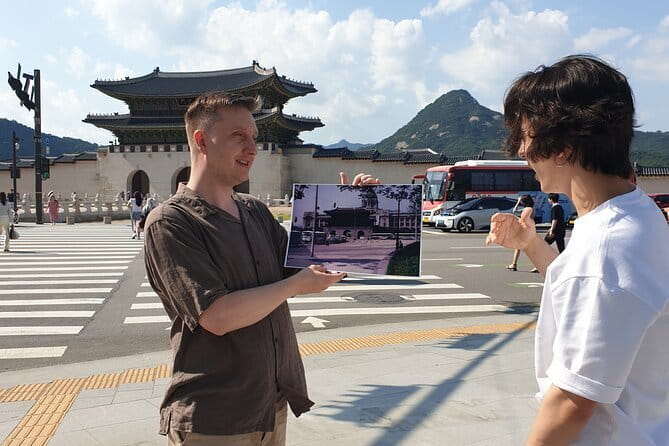
This tour is built like a guided timeline. You start at Bosingak Bell Pavilion in the Jongno area, then work your way through landmarks tied to Korea’s royal past, foreign pressure, education, resistance, and modern civic life. The pace stays friendly, but it is still a walk, so think “history stroll with stop-and-learn moments,” not museum-hopping.
If you like history that connects names to places, you will enjoy the way the tour keeps circling back to key figures and turning points. You will hear about King Sejong and Admiral Yi Sun-sin, then shift into more modern stories about Korea’s struggle for democracy against dictatorship. It is not random sightseeing, it is a sequence.
And since it runs for about 3 hours 30 minutes, it fits nicely into an afternoon plan. The start time is 2:30 pm, which also means you can often catch light that feels good for photos around major squares and palace-area viewpoints.
More Historical Tours in Seoul
- Seoul: Evening Dark History, Folklore & Ghost Story Walking Tour
★ 5.0 · 593 reviews - Hanbok Photoshoot and History Tour at Gyeongbokgung Palace
★ 5.0 · 276 reviews - From Seoul: Dae Jang Geum Park Historic K-Drama Set Tour
★ 4.9 · 143 reviews
Bosingak Bell Pavilion and Cheonggyecheon Stream: city rhythms explained
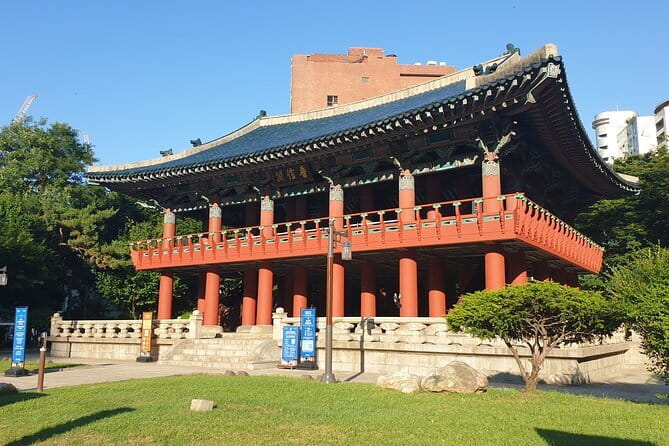
You begin at Bosingak Bell Pavilion (54 Jong-ro, Jongno District). This is a strong first stop because it sets the theme: how Seoul sounds and moves through time. The guide frames it with a specific question, why the city bells rang 28 times at night and 33 times in the morning. Even without extra reading, that kind of prompt makes you notice details instead of just walking by.
Then you head to Cheonggyecheon Stream for around 40 minutes. This one is usually the kind of place where you can slow down. The tour focuses on what the stream provided Seoul across major eras, including the Joseon Dynasty, the Korean War, and modern times. The value here is that you see one physical landmark acting like a thread through different chapters of the city’s history.
Practical tip: bring your phone camera, but also your patience. Streams and open areas are great for walking and stopping, and that extra time helps you absorb it instead of just snapping and rushing.
Seoul City Hall, Seoul Plaza, and Jeongdong Observatory viewpoints
Next up you make quick stops near Seoul City Hall and Seoul Plaza. City Hall is presented as an architectural highlight, both inside and out, and Seoul Plaza is framed as a place that reflects the hearts of modern citizens. That contrast matters. The tour is not only about kings and battles, it is also about how public spaces shape community life.
You also spend time at Jeongdong Observatory for about 10 minutes. This is a classic “how does the city look from above” pause. The guide points you to what you can see of the palace and the cityscape from that perch. Even if you know Seoul only from photos, that kind of overview helps you understand why certain streets and buildings feel connected.
If you get tired, these are good breaks. The time at each stop is short enough to avoid fatigue, but long enough for you to ask questions and still keep the timeline flowing.
Deoksugung Doldam-gil and Jungmyeongjeon Hall: romance, architecture, and forced surrender
At Deoksugung Doldam-gil, you get a very specific cultural question tied to a stone wall and a relationship superstition. Koreans say that if you walk along this wall with your spouse, you will soon be divorced. Whether you take it as a playful story or a cautionary tale, it is a good example of how history tours can include everyday beliefs without getting goofy.
Then the tour moves into heavier territory at Jungmyeongjeon Hall. Here the tour asks how Imperial Japan forced Korea to surrender independence. It is a sharp shift from a local legend to a major historical trauma. The way this is handled matters: you are not just hearing a slogan, you are seeing where it connects to the palace environment and broader national change.
This pairing is one of the tour’s strongest teaching moments. It shows you that “history” is not only dates and documents. It is also the setting where people lived, loved, protested, and survived changing regimes.
Same trip, a different corner of the country:
- Best DMZ Tour Korea from Seoul (Red Suspension Bridge Optional)
★ 5.0 · 41,422 reviews - DMZ Tour: 3rd Tunnel, Option(Suspension Bridge, Boat) from Seoul
★ 5.0 · 21,373 reviews - DMZ tour south Korea from Seoul (NK experience hall, defector)
★ 5.0 · 20,599 reviews - Seoul: The Best DMZ Tour with Optional Suspension Bridge
★ 4.7 · 4,978 reviews
Ewha Museum and the Former Russian Legation: education and exile
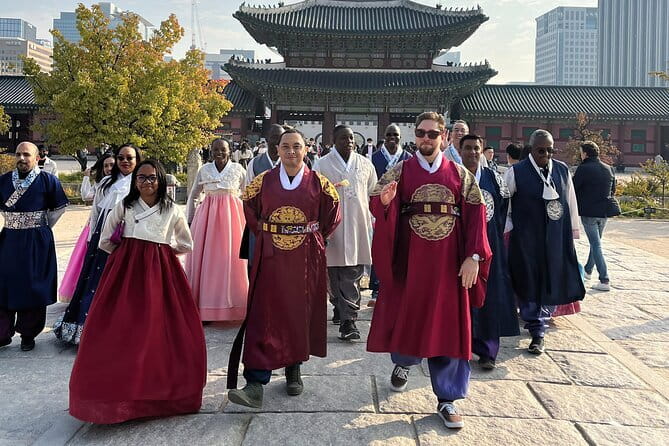
You spend time at Ewha Museum, focused on how Korea’s first school for girls changed societal views on women’s roles. That topic is powerful because it moves history from politics into daily life. You start to understand how education can shift what a society expects, and how those shifts ripple outward into later struggles and leadership.
After that, you visit the Former Russian Legation. The tour frames it around a dramatic story: why Korea’s penultimate monarch fled the palace in the middle of the night and stayed here for a year. This is the kind of detail that makes a building feel alive. Instead of “this used to exist,” you get “this building witnessed a real turning point.”
If you are the type who likes to picture history as something that happened to real people, these two stops will click. They keep the narrative moving between reform and pressure, opportunity and constraint.
Admiral Yi, Sejong the Great, and Gwanghwamun Square protests
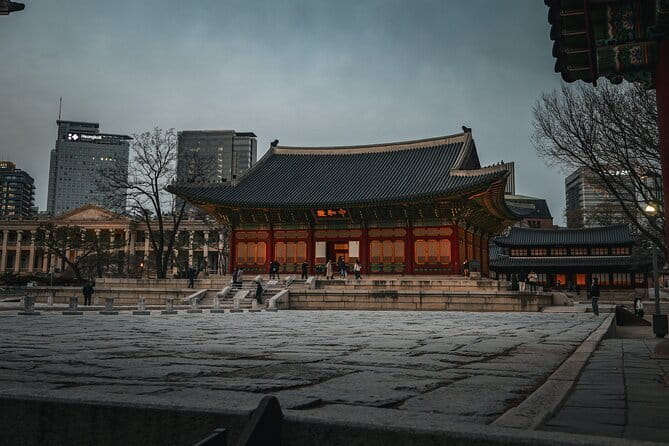
The tour then shifts into a more public, big-figure section with statues and civic spaces.
At the Statue of Admiral Yi Sun-sin, the guide connects the general to saving Korea and changing the course of world history. The tour keeps the framing bold, and it is worth paying attention here, even if you have heard the name before. A good guided stop makes you notice what is emphasized, and what questions you are being asked to think about.
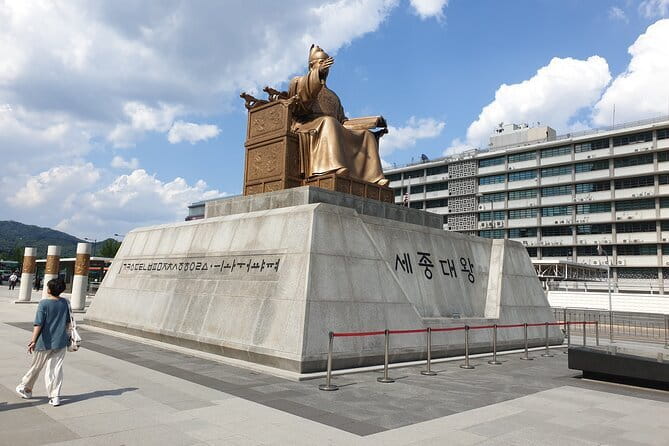
Next is the Statue of Sejong the Great. The tour asks why Sejong is considered the greatest king of the Joseon Dynasty. This is another place where the value is in the interpretation, not just the statue itself. You will leave with a clearer sense of what made Sejong’s legacy matter to the story of Korea’s development.
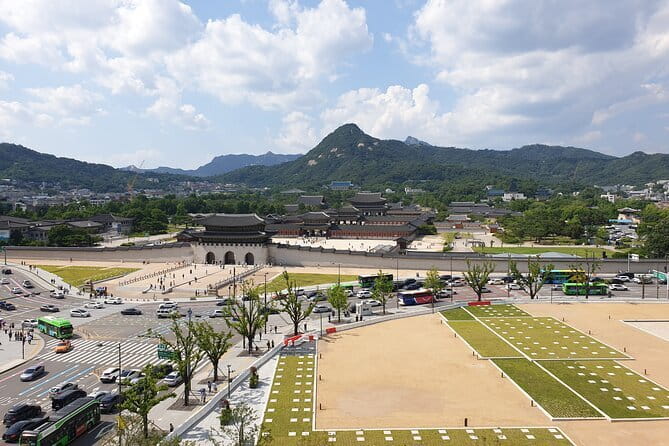
Then you reach Gwanghwamun Square for about 25 minutes. The focus here is democracy in action, with a question that basically boils down to how many protests it takes to change a democracy. Spending nearly half an hour at a major civic square is a good use of time, because you can slow down and let the guide connect the past to the present.
Practical tip: if you want the most out of the square, plan to stand still for a minute or two. It is easy to treat plazas as “transit space,” but this one is the tour’s civic anchor.
National Museum rooftop history and the Embassy of Japan protest story
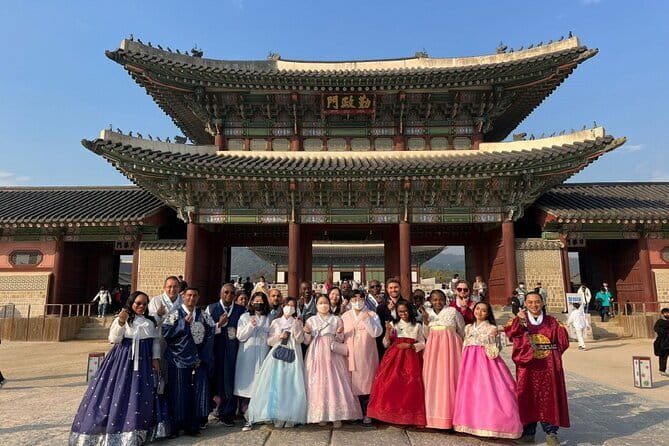
You then head to the National Museum of Korean Contemporary History for about 15 minutes, with the tour pointing you to how much history you can see from the rooftop. Even in a short time, rooftop views can do something special. They give context, helping you place what you just learned into the wider city and modern setting.
After that, you visit the Embassy of Japan area for about 10 minutes. The key question here is why this is the site of the world’s longest running protest. That framing is useful because it shifts your mindset. You are not only looking at a location, you are tracking how public pressure and historical grievances can persist over time.
One thing I appreciate about this portion of the walk is that it keeps history from feeling sealed off in the past. You are literally moving through places where history is still part of civic life.
Jogyesa Temple: bells, reflection, and a clear tour finish

The last stop is Jogyesa Temple, and the tour ends directly up the street from where it began, with the guide helping you with directions. You spend about 10 minutes here, focused on how the ringing of bells connects us with the universe.
Even for people who do not know temple etiquette in detail, the guided framing helps. You are given a way to think, so the final stop does not feel like a random scenic ending. It feels like a tone shift from political history into something more reflective.
Also, ending at a temple area is practical. You have an easy place to continue your Seoul day, whether you want more walking or a quieter pause.
Price, included value, and how to make the most of it
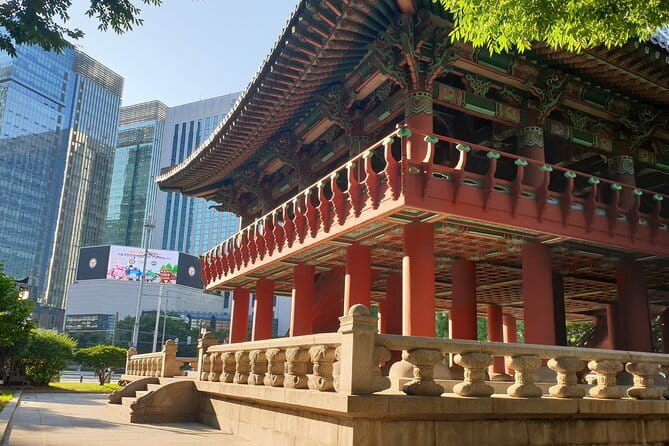
The price is $26.60 per person, and you should treat it as a bargain when you look at what you get folded in. The tour includes traditional Korean snacks and an informative memento, and it also keeps the entrance side simple since the stops on this route are listed as free to enter. You are paying mostly for the guide, the storytelling, and the coordination of an organized route.
Duration matters too. At about 3 hours 30 minutes, it is long enough to cover many locations, but not so long that you feel trapped. The small group size of up to 8 is a big part of the value. When you can ask a question and actually get a clear answer, you learn more than you would on a fast, crowded walk.
My best practical advice is plain: wear comfortable shoes, plan for steady walking, and since bottled water is not included, grab a drink before you meet. The route is timed by short stops, so you want to stay energized between them.
This is also a good tour if you like a guide with a point of view. The reviews you can read about the experience highlight Eric and his ability to answer questions. That is exactly what makes this kind of tour worth paying for.
Who should book this Seoul History Walking Tour?
Book it if you want:
- a guided way to connect royal history to modern democracy
- a small group experience where questions are welcome
- a structured route that moves between palace areas, major squares, and museum space without long downtime
You might skip it if:
- you prefer deep museum time over quick stops
- you do not like walking for close to half a day
- you need bottled water provided for you during the tour
Should you book it?
Yes, I think it is a smart pick if you are seeing Seoul for the first time or if you want a stronger handle on the bigger story behind the landmarks. The value is strong because the route is packed with meaningful stops, many of them free to enter, and you get snack support plus a memento.
If you are curious about how Seoul’s past explains its present, this tour gives you the threads. Just come with comfortable shoes, a willingness to stop and listen, and the expectation that each location is a clue in a longer timeline.
FAQ
What is the duration of the Seoul History Walking Tour?
The tour lasts about 3 hours 30 minutes.
How much does the tour cost?
The price is $26.60 per person.
What time does the tour start, and where does it begin?
It starts at 2:30 pm at Bosingak Bell Pavilion, 54 Jong-ro, Jongno District, Seoul.
Where does the tour end?
The tour ends at Jogyesa Temple, and your guide will assist with directions.
Is admission required for the stops on the tour?
The stops are listed as Admission Ticket Free.
What is included in the price?
Snacks and an informative memento of the tour are included.
Is bottled water included?
No, bottled water is not included.
What is the maximum group size?
The tour has a maximum of 8 travelers.
Is free cancellation available?
Yes, you can cancel up to 24 hours in advance for a full refund.
More Walking Tours in Seoul
- Seoul moonlight walking tour with local historian
★ 5.0 · 940 reviews - Seoul: Nighttime Hidden Gems Walking Tour
★ 5.0 · 775 reviews - Seoul: Dark Side of the City and Ghost Stories Walking Tour
★ 4.8 · 484 reviews - Gangnam Walking Tour on Youth and Society in Seoul Korea
★ 5.0 · 401 reviews
Recently reviewed in Seoul
- You’re Invited to Our Home in Seoul: The Only Cooking Class!★ 5.0 · 8 reviews
- Your Personal Seoul Photographer!★ 4.1 · 15 reviews
- From Seoul: Yongpyong Ski Day Tour with Transportation★ 4.9 · 40 reviews
- Seoul: Korean & English Language Exchange Global Party★ 5.0 · 28 reviews
- Watching sports match & local food experience in Seoul★ 5.0 · 11 reviews
- WKT Combat Taekwondo & Self-defense One Day Class in Seoul★ 5.0 · 5 reviews
- Unique Native Experience : Han River Picnic, Board game, BBQ★ 5.0 · 3 reviews
- Seoul: Gangneung BTS K-Pop & K-Drama Filming Locations Tour★ 4.6 · 14 reviews
Historical Tours, compared.
Gyeongju UNESCO World Heritage Guided Day Tour
Read our review →
Gyeongju UNESCO World Heritage Guided Day Tour from Busan
Read our review →
Evening Dark History, Folklore & Ghost Story Walking Tour
Read our review →
Old Korea Thousand History Tour of Gyeongju from Busan
Read our review →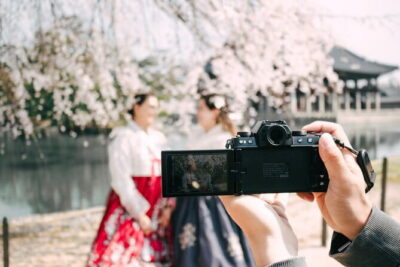
Hanbok Photoshoot and History Tour at Gyeongbokgung Palace
Read our review →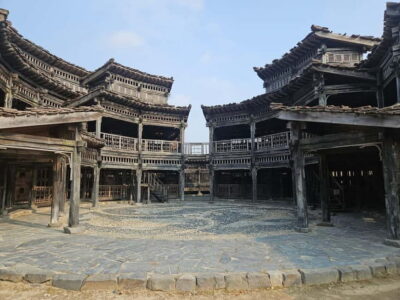
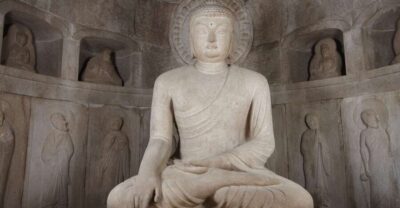
UNESCO Heritage Tour Including Bulguksa Temple
Read our review →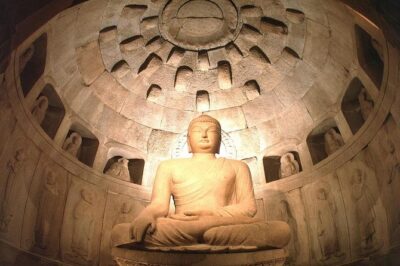
Gyeongju UNESCO World Heritage Sites and History Full-Day Tour with Lunch
Read our review →Browse the lists this tour appears in