
Reviewed · WALKING TOURS
Gangnam Walking Tour on Youth and Society in Seoul Korea
Gangnam has a darker side, too. This 2.5-hour walking tour uses everyday Gangnam locations to explain how South Korea’s economic wins can still mean heavy pressure for young people. You’ll hear the social backstory through a local perspective, with time to ask questions as you go.
I especially like the small group size (max 15), because it keeps the tone personal and you can actually talk. I also love that the stops are specific to youth and society themes, including a love hotel area, a famous cram school, and the lookism world around Sinsa-dong.
One possible drawback: this is not a sightseeing-only walk. It covers weighty topics, and you should be ready for a steady pace through city streets, not a slow stroll past postcard views.
In This Review
- Key highlights you will care about
- Why Gangnam is the perfect classroom for youth pressure
- Price and logistics: what $31.98 really buys you
- Meeting point to finale: start in Yeoksam, end by the river
- Stop 1: 강남역사거리 (Gangnam Station area) and housing pressure
- Stop 2: 호텔시애틀 (Hotel Seattle) and love motel culture
- Stop 3: Gangnam Daeseong Cram School and the education race
- Stop 4: Sinsa-dong (Gangnam-gu) and plastic surgery, plus lookism
- Stop 5: Hangang Park Playground and the edge of modern life
- How June and Jessica turn street corners into real explanations
- What this tour does well, and where it may not match your style
- Practical tips so you get the most from a serious walking tour
- Should you book this Gangnam youth and society walk?
- FAQ
- How long is the Gangnam Walking Tour on Youth and Society?
- What is the price per person?
- How big is the group?
- What does the tour include and not include?
- Are there admission fees for the stops?
- Where do I meet and where do I finish?
- Is a mobile ticket provided?
- What happens if the weather is bad?
- What is the cancellation policy?
Key highlights you will care about
- Small-group feel (up to 15 people), so your questions are more than just polite nods.
- Youth-and-society focus in real neighborhoods rather than classic tourist stops.
- Stop sequence is built for context, moving from development pressures to love culture to education and beauty.
- Guides like June and Jessica are praised for honest, story-driven explanations with strong English.
- Ends at Apgujeong Station and the Han River Park area, so you can keep wandering afterward.
- Mobile ticket delivery makes day-of logistics simpler.
Why Gangnam is the perfect classroom for youth pressure
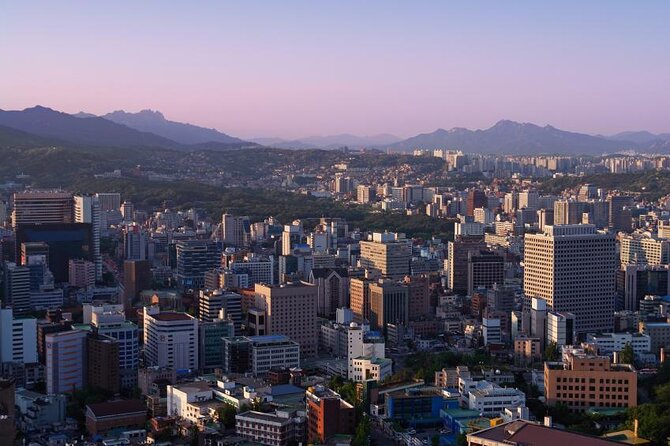
Gangnam is often treated like a symbol. In real life, it is also a set of daily routines, storefronts, and local choices that reflect big national trends. This tour leans into that idea: if you want to understand how young Koreans handle pressure tied to education, beauty standards, dating expectations, and social status, Gangnam gives you the visible clues.
The tour also tries to connect “high achievement” with the costs that can come along with it. You are not getting a lecture that floats above the city. Instead, you walk through places where those pressures show up in everyday life, then you get context to make sense of it.
More Walking Tours in Seoul:
- Seoul moonlight walking tour with local historian
★ 5.0 · 940 reviews - Seoul: Nighttime Hidden Gems Walking Tour
★ 5.0 · 775 reviews - Seoul: Evening Dark History, Folklore & Ghost Story Walking Tour
★ 5.0 · 593 reviews
Price and logistics: what $31.98 really buys you
At about $31.98 per person for roughly 2 hours 30 minutes, you are paying for guided interpretation of social topics plus access to the specific stop areas. The tour includes gratuities, and the guided stops themselves list free admission.
The one extra cost to plan for is transportation during the walk. The tour notes a subway ride one time during the tour, and the 1800 won transit fee is not included. For most people, that is minor, but it matters if you like to keep daily spending super tight.
Practical take: this is good value if you want more meaning than what a map-only walk gives you. You are essentially paying for a local guide to translate what you are seeing into how Korean youth experience society.
Meeting point to finale: start in Yeoksam, end by the river
The tour starts at 820-10 Yeoksam-dong, Gangnam District, Seoul, with a 10:30 am start time. You finish near Apgujeong Station Exit 4, and the tour ends at the Han River Park area.
That end point is handy. Once you wrap up, you are already in a place where you can keep your evening plan flexible, whether that means grabbing food nearby or continuing a riverside stroll on your own.
You also get a mobile ticket, which is one less thing to manage at busy check-in spots. Just make sure your phone battery stays healthy.
Stop 1: 강남역사거리 (Gangnam Station area) and housing pressure
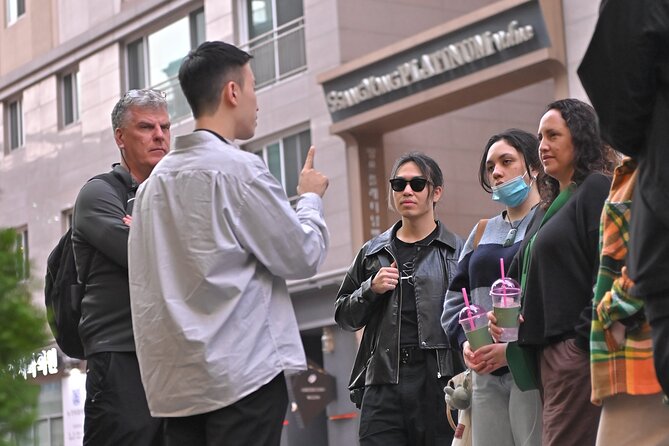
Your first stop is 강남역사거리, which the tour frames as a hub tied to Gangnam’s development and wealth. It is a fast start, about 15 minutes, and the “free admission” part matters less here and more for the way the guide uses the setting.
The key idea at this stop is housing problems and development history. Gangnam grew into a global shorthand for status and success, but that growth also created pressure around living costs and expectations. This is a good moment to get the tour’s theme in your head, because it sets up later stops about education and self-image.
If you like tours that begin with a big-picture setting and then zoom in, this first stop does that.
A few more Seoul days worth comparing
- Best DMZ Tour Korea from Seoul (Red Suspension Bridge Optional)
★ 5.0 · 41,422 reviews - DMZ Tour: 3rd Tunnel, Option(Suspension Bridge, Boat) from Seoul
★ 5.0 · 21,373 reviews - DMZ tour south Korea from Seoul (NK experience hall, defector)
★ 5.0 · 20,599 reviews - Seoul: The Best DMZ Tour with Optional Suspension Bridge
★ 4.7 · 4,978 reviews
Stop 2: 호텔시애틀 (Hotel Seattle) and love motel culture
Next you head to 호텔시애틀, described as a love hotel district. This stop is short, about 10 minutes, but the topic is heavy on purpose: the tour uses love culture to explain how dating and relationships can look different in a society with strong social norms and practical constraints.
Love motels are often treated like taboo curiosity. Here, they are treated like a window into the private life realities that young people navigate. The idea is not to shock you. It is to show how youth relationships can be shaped by social rules, privacy needs, and expectations.
If you are uncomfortable with sexual-adjacent topics, be aware this is not a fade-to-black type of discussion. The tone is educational, and you should come prepared for a blunt, real-world conversation.
Stop 3: Gangnam Daeseong Cram School and the education race
Then you reach Gangnam Daeseong Cram School for about 20 minutes. This is one of the best-known private education institutions in the area, and the guide connects it to education culture and even birthrate-related pressures.
That connection matters. When school success is treated as a key to the future, it affects more than grades. It can influence how families plan, what young adults prioritize, and how people think about long-term life decisions. The tour uses a real cram-school setting to make that feel concrete.
Drawback to consider: if you hoped for more dramatic visuals and less talk, this is still an explanation-heavy stop. The value is in how the guide connects the institution to the stresses young people face.
Stop 4: Sinsa-dong (Gangnam-gu) and plastic surgery, plus lookism

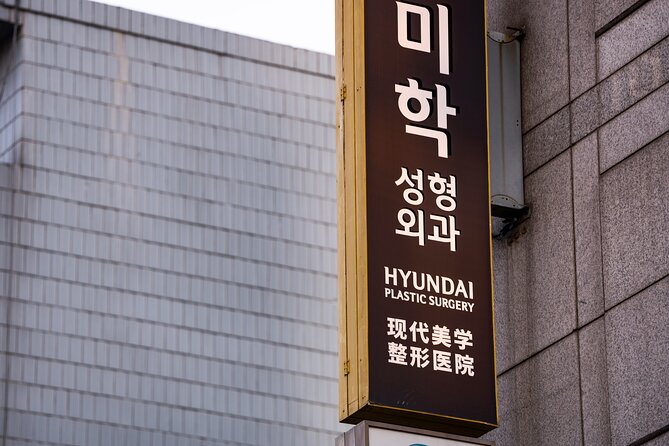
Sinsa-dong is the next 20-minute stop, and the tour points you to an area known for plastic surgery culture. The theme here is clear: beauty standards, lookism, and the social pressure to meet certain ideals.
This is where the tour can hit hardest for some people, especially if you already feel tired of beauty-obsession topics from social media. But the guide’s role is important. Instead of just describing clinics or trends, the tour aims to explain why these pressures exist and how young people are influenced by them.
I like that the tour does not treat beauty industry as a surface-level trend. It frames it as a social system that young people respond to, sometimes out of fear, sometimes out of practicality, and sometimes because expectations are everywhere.
Stop 5: Hangang Park Playground and the edge of modern life
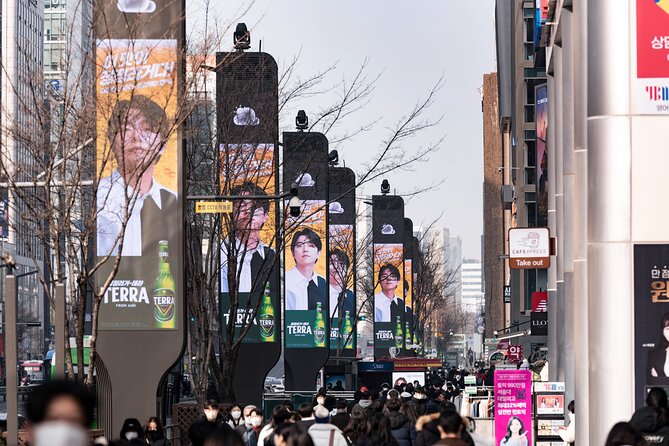
The final stop is Hangang Park Playground by the Han River, for about 20 minutes. The tour describes the Han River as a place representing both development and suicide, and the guide brings in history around that contrast.
This is not a “cute riverside photo” stop. It is a reminder that modern success stories do not erase mental health struggles, social isolation, or the pressure that can build under achievement culture. The guide uses the setting to talk about how people cope, and why those coping stories matter.
If you are sensitive to mental health topics, go in with care. I found it helps to remember why this stop is included: the tour is trying to show the full cost of social pressure, not just the shiny brand version of Korea.
How June and Jessica turn street corners into real explanations
Two guide names show up again and again in the feedback: June and Jessica. The common thread is how they connect what you see on the street to what is happening under the surface in youth culture.
What I think makes the biggest difference is the storytelling plus the ability to answer questions. When you can ask directly, you get clarification instead of guessing. That is especially useful for topics that can sound simplified if you only hear them from pop culture.
June is praised for strong history context, while Jessica is repeatedly described as friendly and patient, with the tour content staying organized and on track even when the weather is not ideal. Either way, the guide is doing the translation work that most visitors would not manage alone.
What this tour does well, and where it may not match your style
This experience is built for people who want more than a list of landmarks. You are walking through Gangnam with a set of themes: development pressures, love culture, education competition, beauty standards, and the darker side of modern life near the river.
It is also ideal if you like a tour where the guide uses everyday settings, not just museums and palaces. You get a sense of how people live, not just how things used to be.
Where it may not fit: if you only want classic tourist photo stops, this will feel like the wrong product. One part of the experience is also the pace. It is a walking tour for about 2.5 hours, and you should wear shoes that can handle city pavement.
Practical tips so you get the most from a serious walking tour
- Wear comfortable shoes. The tour is long enough that foot fatigue can ruin your attention, and the content is not light.
- Bring a small water bottle. Even with breaks, you are outdoors for long stretches.
- If you have questions about Korean youth culture, education, dating, or beauty standards, write them down. The tour is built to let you ask along the way.
- Keep your expectations aligned: this is about social realities in Gangnam, not a K-drama-themed stroll through recognizable sets.
Also, the tour requires good weather. If it is pouring or conditions are poor, the operator may adjust plans.
Should you book this Gangnam youth and society walk?
If your goal is to understand modern South Korea through real neighborhoods, I think this tour is a strong yes. The price is reasonable for a guided, theme-driven walk, and the stop selection is built around youth pressures that many visitors never see explained clearly.
I would book it if you enjoy thoughtful conversations, you do not mind serious topics, and you want to leave with context that makes Gangnam feel less like a brand and more like a lived reality.
Skip it if you want a gentle, purely scenic tour or if you are not up for discussions tied to education pressure, beauty culture, dating realities, or the difficult mental health themes connected to the Han River.
FAQ
How long is the Gangnam Walking Tour on Youth and Society?
It runs for about 2 hours 30 minutes (approx.).
What is the price per person?
The price is listed as $31.98 per person.
How big is the group?
The tour has a maximum of 15 travelers.
What does the tour include and not include?
Gratuities are included. Transportation costs are not included, and the tour notes a subway ride one time during the tour with a fee of 1800 won.
Are there admission fees for the stops?
The listed stops show admission as free.
Where do I meet and where do I finish?
Start: 820-10 Yeoksam-dong, Gangnam District, Seoul, at 10:30 am. End: the Han River Park area near Apgujeong Station Exit 4.
Is a mobile ticket provided?
Yes, the tour uses a mobile ticket.
What happens if the weather is bad?
The experience requires good weather. If it is canceled due to poor weather, you will be offered a different date or a full refund.
What is the cancellation policy?
Free cancellation is available up to 24 hours in advance for a full refund. Cancellation within 24 hours of the start time is not refunded.
Recently reviewed in Seoul
- You’re Invited to Our Home in Seoul: The Only Cooking Class!★ 5.0 · 8 reviews
- Your Personal Seoul Photographer!★ 4.1 · 15 reviews
- From Seoul: Yongpyong Ski Day Tour with Transportation★ 4.9 · 40 reviews
- Seoul: Korean & English Language Exchange Global Party★ 5.0 · 28 reviews
- Watching sports match & local food experience in Seoul★ 5.0 · 11 reviews
- WKT Combat Taekwondo & Self-defense One Day Class in Seoul★ 5.0 · 5 reviews
- Unique Native Experience : Han River Picnic, Board game, BBQ★ 5.0 · 3 reviews
- Seoul: Gangneung BTS K-Pop & K-Drama Filming Locations Tour★ 4.6 · 14 reviews
Walking Tours, compared.
Seoul moonlight walking tour with local historian
Read our review →
Evening Dark History, Folklore & Ghost Story Walking Tour
Read our review →
Dark Side of the City and Ghost Stories Walking Tour
Read our review →
Gyeongbok Palace and Bukchon Hanok Walking Tour
Read our review →
Best Walking Tour to Gyeongbok Palace Bukchon Hanok Village
Read our review →
Highlights & Hidden Gems With Locals: Best of Seoul Private Walking Tour
Read our review →
Street photoshoot and Seoul Hidden gem History Walking Tour
Read our review →Browse the lists this tour appears in