
Reviewed · PALACE TOURS
Best Walking Tour to Gyeongbok Palace Bukchon Hanok Village
Seoul becomes a timeline on foot. This 3-hour walking tour threads together royal Korea and everyday neighborhoods, starting at Gyeongbokgung and finishing in Insadong. You get a friendly, professional guide, a close look at palace architecture, and the classic Joseon stories that help it all make sense fast.
I love that entrance fees are included, so you can focus on what you are seeing instead of hunting tickets. I also like the pace for a first visit, with the changing of the guard at Gyeongbokgung and then a walk into Bukchon Hanok Village for those inside-the-hanok moments.
One consideration: the outing includes walking on uneven ground and uphill stretches in Bukchon, so it is not a fit if steps or slopes are a problem for you.
In This Review
- Key highlights to look for
- Why Gyeongbokgung plus Bukchon is the best first mix
- Price and value: what $88 buys you in real terms
- Meet-up, walk pace, and how to prepare
- Setting the stage: the past and present, plus King Sejong
- Entering Gyeongbokgung Palace for the guard ceremony
- National Folk Museum: turning buildings into daily life
- Walking the palace-to-village transition toward Bukchon
- Bukchon Hanok Village: hidden looks inside traditional homes
- Ending in Insadong: what to do right after the tour
- Who this tour is best for
- Should you book this walking tour?
- FAQ
- How long is the walking tour?
- Where does the tour start and end?
- Is admission included?
- What is the main activity at Gyeongbokgung Palace?
- Do I need a paper ticket?
- How many people are in the group?
- Is the tour suitable for people with walking difficulty on steps and uphills?
- Does the tour run in bad weather?
Key highlights to look for
- Small group size (up to 8), which makes it easier to ask questions and move at a comfortable pace
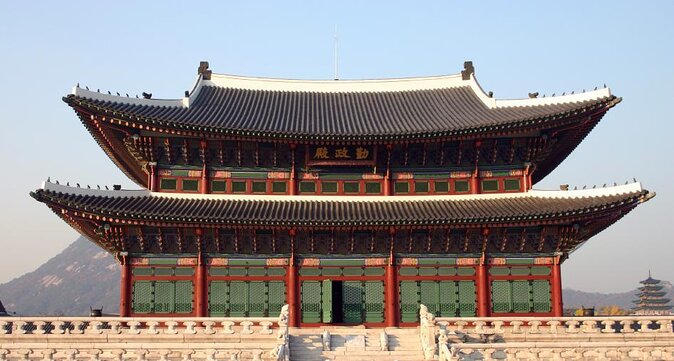
- Royal guard changing ceremony at Gyeongbokgung, a top Seoul sight with clear context
- All entrance fees included, so you are not paying twice to see the main sites
- National Folk Museum of Korea stop, which turns palace scenes into real daily life stories
- Bukchon Hanok Village uphill walk, great views, but wear shoes you trust
- Finish in Insadong, so you can turn history mode off and snack or browse right after
Why Gyeongbokgung plus Bukchon is the best first mix
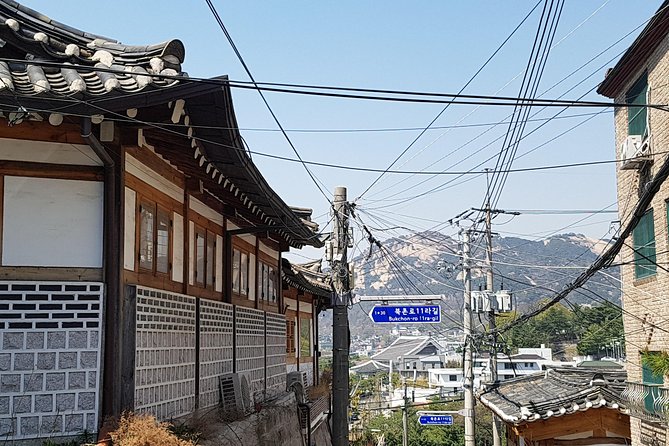
If you have only a day or a half-day in Seoul, this pairing is smart. Gyeongbokgung Palace gives you the big picture: the power, the layout, and the ceremonial feel of Joseon Dynasty Korea. Then Bukchon Hanok Village shows you the smaller picture, the human scale, with traditional houses and a neighborhood that still feels like it has a rhythm.
What makes the tour feel efficient is the way your guide connects the dots. You are not just standing in front of buildings, you are hearing how court life and city life linked together. Guides such as Jay Kim and Stella are praised for connecting Joseon history to what you can actually see, so your brain builds a map instead of a pile of facts.
Also, the tour ends in Insadong, which is handy. You finish in an area built for easy wandering and food breaks. In other words, you get your historic hits first, then you get to enjoy the city without a long commute afterward.
More Hanok Village Tours in Seoul
- Seoul City Sightseeing Tour Including Gyeongbokgung Palace, N Seoul Tower, and Namsangol Hanok Village
★ 5.0 · 1,423 reviews - Seoul: Gyeongbok Palace and Bukchon Hanok Walking Tour
★ 4.8 · 157 reviews - Experience Korean Cooking in Modern Hanok Kitchen
★ 5.0 · 118 reviews
Price and value: what $88 buys you in real terms
At $88 per person, you are paying for a short, concentrated experience with three main advantages.
First, the tour includes admission fees, and that matters in Korea. Palace and museum tickets add up, especially if you go out on your own with separate stops. Here, you get the palace portion and the museum portion folded into the price.
Second, you are paying for interpretation. The changing of the guard is impressive on its own, but it becomes much more satisfying when someone explains why the ceremony looks the way it does and what it meant in Joseon court life. Many guides have been recognized for strong English and for answering questions without making things feel scripted.
Third, group size. A maximum of 8 people keeps the tour from feeling like a cattle car. You get time for photos and short pauses, not just a rushed march.
If you are the type of visitor who wants your “first Seoul day” to feel organized and worth the money, this price is in the reasonable-to-good category because it includes access plus a guide plus multiple high-impact stops.
Meet-up, walk pace, and how to prepare
This is a 3-hour walking tour, with a starting point at 24-1 Taepyeongno 2(i)-ga in Jung District and an ending point at 75-5 Insa-dong in Jongno District, right by Insadong.
A few practical tips based on how the route is described and how people have talked about it:
- Wear comfortable shoes with grip. Bukchon involves uneven paving and uphill sections.
- Dress for weather. The tour needs good conditions, and rain or poor weather can cause a change of plan.
- Bring a small water bottle if you like to pace yourself.
- Plan for moderate walking. The tour is marked as requiring moderate physical fitness.
If you have any real walking limitations, especially on steps and slopes, skip this one. The Bukchon portion is exactly where you will feel it.
The tour uses a mobile ticket, so you can keep things simple on your phone. It is also near public transportation, which helps if you are building your day around other plans.
Setting the stage: the past and present, plus King Sejong
Early on, the tour uses two “warm-up” moments to help your visit click. One is framed around the idea of the past and the present, and another centers on a King Sejong stop.
Even if you are not deep into Korean history, this part matters. It primes you for what comes next so Gyeongbokgung does not feel like random walls and rooftops. Sejong is a key figure for Korea’s cultural and intellectual identity, and that context helps you understand why certain court priorities shaped architecture, ceremonies, and daily governance.
This is also where a good guide shines. A lot of palace tours begin with dates and end with a photo. Here, the start is designed to make the rest of the route feel like a story with characters and reasons. If your language comfort is limited, this early framing still helps you follow along because it stays connected to what you are seeing.
Same trip, a different corner of the country:
- Best DMZ Tour Korea from Seoul (Red Suspension Bridge Optional)
★ 5.0 · 41,422 reviews - DMZ Tour: 3rd Tunnel, Option(Suspension Bridge, Boat) from Seoul
★ 5.0 · 21,373 reviews - DMZ tour south Korea from Seoul (NK experience hall, defector)
★ 5.0 · 20,599 reviews - Seoul: The Best DMZ Tour with Optional Suspension Bridge
★ 4.7 · 4,978 reviews
Entering Gyeongbokgung Palace for the guard ceremony
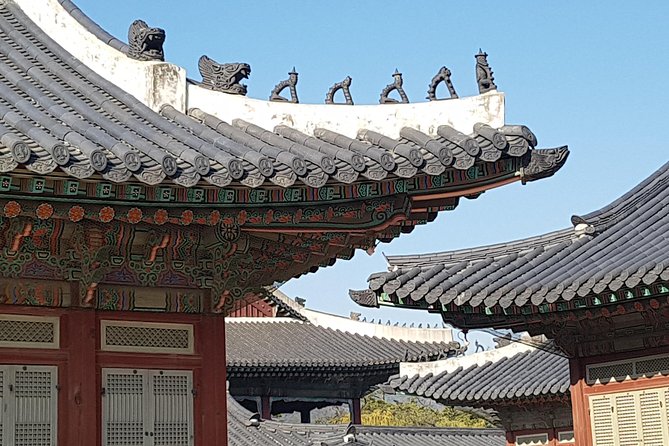
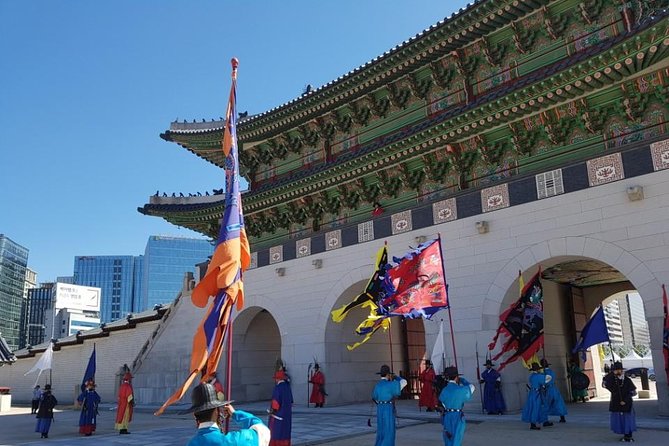
The main stop is Gyeongbokgung Palace, where you spend about an hour, and admission is included. The big headline moment is the royal guard changing ceremony.
This is one of those experiences that looks dramatic even if you know nothing. But the payoff is bigger when someone explains the ceremony structure and how the palace functioned as a stage for authority. People who have done this tour have singled out guides like Joe, Jack, Paul, and Joseph Cho for turning the palace into a living timeline, not just a static monument.
What I think you will like here is the balance. You get time to view multiple palace buildings, not just a drive-by. And because it is a walking tour format with a small group, you tend to have more freedom to pause for photos and to ask follow-up questions when something catches your eye, like gate design or roof shapes.
One small reality check: palace grounds mean walking outdoors. If it is hot, bring water and take short pauses. If it is cold, layer up. The ceremony does not care what the weather is doing.
National Folk Museum: turning buildings into daily life
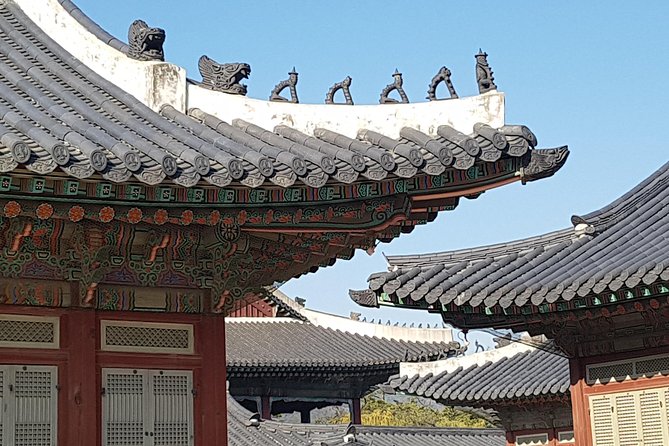
Between the palace areas and your move toward Bukchon, the tour includes a visit to the National Folk Museum of Korea. The museum stop is highlighted as part of the experience that connects Korean history to real lifestyles, including a large collection of artifacts.
This is the secret sauce for many first-timers. Palaces show power and ceremony. Museums show objects and routines. When you see the two back-to-back, you start noticing how culture is not only in grand events. It is also in tools, clothing, and everyday choices.
This museum stop is also useful if you are traveling with a kid or someone who gets restless with long architecture walks. The museum format is easier to engage with because you can focus on exhibits and specific items, then relate them back to what you just saw outside.
If you are short on time in Seoul, this is a great way to get depth without spending the whole day inside. It is history with a direct line from court life to ordinary life.
Walking the palace-to-village transition toward Bukchon
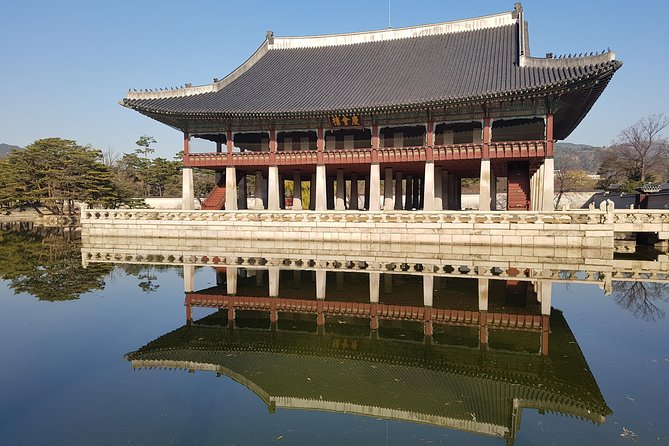
After Gyeongbokgung, the route heads toward Bukchon Hanok Village, and you also pass by the area between Gyeongbokgung Palace and Changdeokgung Palace. Even without a full deep-dive into Changdeokgung, the walk helps you feel the geography of Seoul’s historic core.
This matters because palace complexes are not isolated islands. They sit inside a city shaped by roads, neighborhoods, and changing power centers. When your guide points out how the city layout supports that story, you get a clearer mental map.
You also get a gradual shift in tone. The palace side feels formal and ceremonial. The walk toward Bukchon feels more local, more intimate, and more connected to daily life. That transition is a big reason why this tour works so well for people who want both “wow” and “understand.”
Bukchon Hanok Village: hidden looks inside traditional homes
The final major stop is Bukchon Hanok Village, with about 30 minutes allocated, and admission is free for the village viewing portion described.
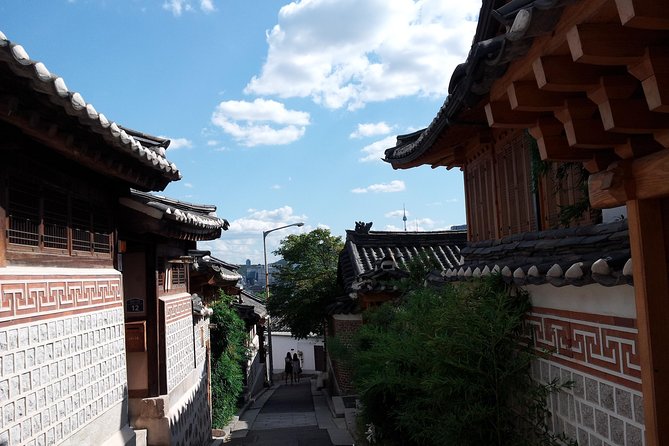
In this segment, the emphasis is on getting those inside-the-hanok glimpses and seeing how traditional homes relate to street life. You will likely notice the mix of heritage and modern use: traditional structures in an active neighborhood. That combination is what makes Bukchon feel special compared to a theme park version of Korea.
The phrase hidden looks fits well. You are not just looking at the main facades. You are learning where to look and what details matter, like how the house layout reflects lifestyle and how the streets preserve that sense of older Seoul.
Just remember the physical part. The village includes uphill walking and steps. It is manageable for many people, but if you are prone to leg fatigue, bring your patience and take breaks. The views and the close-up details are worth it, but you need comfortable shoes and a realistic pace.
Ending in Insadong: what to do right after the tour
The tour finishes near Insadong, specifically at 75-5 Insa-dong. This is a great ending because Insadong is designed for strolling, shopping, and grabbing food without much effort.
After a history-heavy morning or afternoon, you can do a light, flexible plan. Think snacks, a short walk, and browsing in craft or souvenir shops. If you want a calm winding-down phase, this is a better place to finish than a far-out station.
If you still have energy, Insadong also gives you a chance to compare what you learned about traditional life and architecture with how the area uses heritage as part of daily Seoul now. It is not the same as living in a hanok, but it helps you keep your impressions connected.
Who this tour is best for
This tour fits best if you are:
- Visiting Seoul for the first time and want a structured introduction
- Interested in Joseon Dynasty history but do not want a long, exhausting day
- Hoping to see multiple top sites in a short time, without extra ticket headaches
- Traveling with kids or teens who enjoy clear stories and breaks for photos
It is less ideal if:
- Walking on steps and uphills is hard for you
- You prefer a slow, self-guided wandering style without scheduled stop timing
- You want only one palace and a lot of free time elsewhere
Should you book this walking tour?
I would book it if your goal is a first-visit Seoul day that feels organized, meaningful, and good value. The mix of Gyeongbokgung Palace, the royal guard changing ceremony, the National Folk Museum, and Bukchon Hanok Village is a strong one-two punch. Add a small group and included admission, and the $88 price starts to look like less of a splurge and more like a smart package deal.
Skip it only if the uphill and step walking in Bukchon would be a problem. Otherwise, go in with comfy shoes, a phone with space for photos, and the mindset that you are learning a story while you walk.
FAQ
How long is the walking tour?
It is about 3 hours.
Where does the tour start and end?
It starts at 24-1 Taepyeongno 2(i)-ga, Jung District, Seoul, and ends at 75-5 Insa-dong, Jongno District, in the Insadong area.
Is admission included?
Yes. All entrance fees are included, and the palace portion includes an admission ticket. The Bukchon Hanok Village stop is described as admission free.
What is the main activity at Gyeongbokgung Palace?
You see the royal guard changing ceremony during the time at Gyeongbokgung Palace.
Do I need a paper ticket?
No. The tour uses a mobile ticket.
How many people are in the group?
The maximum group size is 8 travelers.
Is the tour suitable for people with walking difficulty on steps and uphills?
No. It is not recommended if you have walking difficulty on steps and uphills.
Does the tour run in bad weather?
It requires good weather. If it is canceled due to poor weather, you will be offered a different date or a full refund.
More Walking Tours in Seoul
- Seoul moonlight walking tour with local historian
★ 5.0 · 940 reviews - Seoul: Nighttime Hidden Gems Walking Tour
★ 5.0 · 775 reviews - Seoul: Evening Dark History, Folklore & Ghost Story Walking Tour
★ 5.0 · 593 reviews - Seoul: Dark Side of the City and Ghost Stories Walking Tour
★ 4.8 · 484 reviews
More Palace Tours in Seoul
- Seoul: Gyeongbok Palace, Bukchon Village, and Gwangjang Tour
★ 4.9 · 2,321 reviews - Best Seoul City Tour (Gyeongbokgung Palace,Insadong,Namsan Tower)
★ 5.0 · 1,647 reviews - Small-Group Royal Palace and Seoul City Tour (hotel pick-up)
★ 5.0 · 1,474 reviews - Seoul: Gyeongbok Palace, Bukchon Village, and Gwangjang Tour
★ 5.0 · 1,044 reviews
Recently reviewed in Seoul
- You’re Invited to Our Home in Seoul: The Only Cooking Class!★ 5.0 · 8 reviews
- Your Personal Seoul Photographer!★ 4.1 · 15 reviews
- From Seoul: Yongpyong Ski Day Tour with Transportation★ 4.9 · 40 reviews
- Seoul: Korean & English Language Exchange Global Party★ 5.0 · 28 reviews
- Watching sports match & local food experience in Seoul★ 5.0 · 11 reviews
- WKT Combat Taekwondo & Self-defense One Day Class in Seoul★ 5.0 · 5 reviews
- Unique Native Experience : Han River Picnic, Board game, BBQ★ 5.0 · 3 reviews
- Seoul: Gangneung BTS K-Pop & K-Drama Filming Locations Tour★ 4.6 · 14 reviews
Palace Tours, compared.
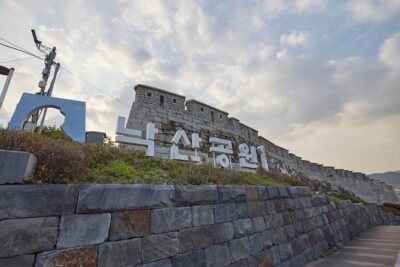
Gyeongbok Palace, Bukchon Village, and Gwangjang Tour
Read our review →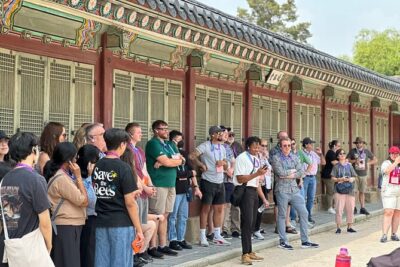
Best Seoul City Tour (Gyeongbokgung Palace,Insadong,Namsan Tower)
Read our review →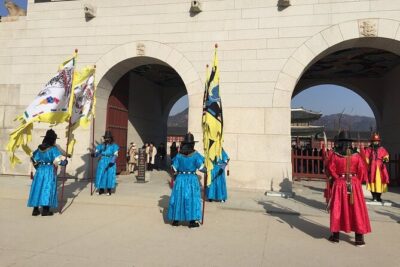
Small-Group Royal Palace and Seoul City Tour (hotel pick-up)
Read our review →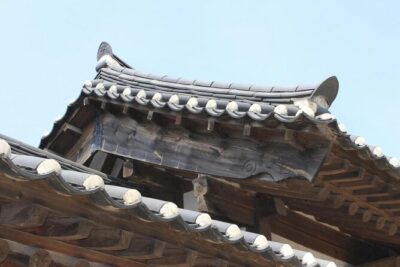
Seoul City Sightseeing Tour Including Gyeongbokgung Palace, N Seoul Tower, and Namsangol Hanok Village
Read our review →Gyeongbok Palace, Bukchon Village, and Gwangjang Tour
Read our review →
Palace, Temple and Market Guided Foodie Tour at Night
Read our review →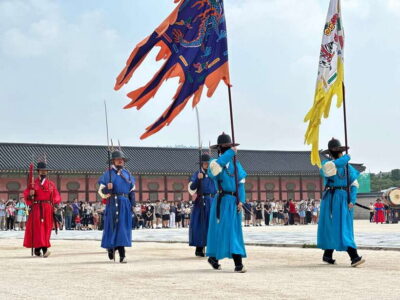
Seoul Highlights: Gyeongbok Palace, Insadong & N Seoul Tower
Read our review →
City Hightlights, Palace Tour, and Optional Hanbok
Read our review →Browse the lists this tour appears in