
Reviewed · HISTORICAL TOURS
Buam dong Walking Tour Art, History and Parasite in Seoul
Buam-dong walks uphill, in the best way. In just 2.5 hours, this small-group tour threads Cheongun Literature Library and a Parasite filming location into a calm hillside route with mountain views. You also get art and history woven together in a part of Seoul that feels slower than the main sights.
One note: this is for people with moderate physical fitness. Expect hillside walking and steps around historic structures, so plan comfy shoes and pace yourself.
In This Review
- Key highlights I’d prioritize
- Why Buam-dong feels quieter than central Seoul
- Getting to the tour: Jongno meeting point and a short bus ride
- Cheongun Literature Library: Seoul’s first Hanok library
- Buam-dong art and memorial stops: Choi Gyu-sik and more
- Cold War context on a hillside route
- Hill views: Bugaksan, Inwangsan, and Bukhansan on foot
- Seoul City Wall and Changuimun Gate (Jahamun Gate)
- Parasite filming location, and how to enjoy it without overthinking
- Mugyewon finish: an Anpyeong villa in hanok form
- Price and value: $38.50 for a 2.5-hour guided walk
- Practical tips so the walk feels easy, not stressful
- Should you book this Buam-dong walking tour?
- FAQ
- How much does the Buam-dong walking tour cost?
- How long is the tour?
- Where does the tour start and end?
- What time does the tour start?
- How many people are in a group?
- Is admission included for the stops?
- Do I need a printed ticket?
- Is this tour suitable if I have moderate physical fitness?
- Can I bring a service animal?
- What is the cancellation refund policy?
Key highlights I’d prioritize
- Cheongun Literature Library (Seoul’s first Hanok library), a quiet stop you can actually hear yourself think in
- Seoul City Wall and Changuimun Gate (Jahamun Gate), with defense-focused stories that make the stone feel useful
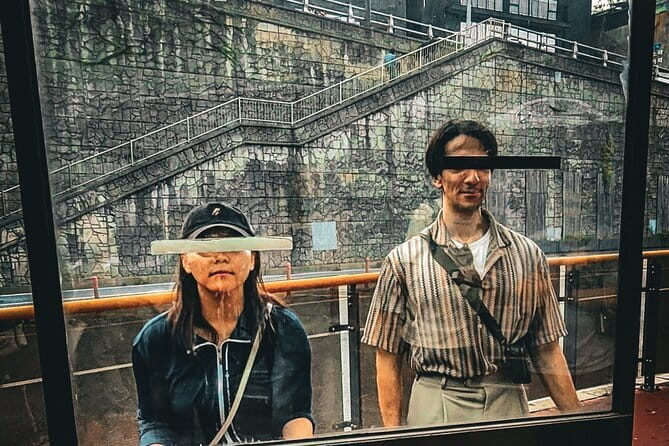
- Parasite filming location, a movie stop that works best when you like spotting place details
- Hill of Poet Yoon Dong-ju and mountain views toward Bugaksan, Inwangsan, and Bukhansan
- Mugyewon Hanok cultural space, finishing at the villa site of Grand Prince Anpyeong
- Small groups up to 15, plus mobile ticketing and free admission at the scheduled stops
Why Buam-dong feels quieter than central Seoul
Buam-dong sits on Seoul’s slopes, so the day starts with a change of pace. Even before the first big landmark, you’re trading crowds for streets that feel more residential and old-fashioned. The route is built around viewpoints too, so you’re not stuck inside all the time.
What I like about this neighborhood focus is that it gives you context. Instead of seeing Seoul as a checklist, you see it as a place shaped by terrain, walls, and where people lived. As you walk, you get views toward Bugaksan, Inwangsan, and Bukhansan, which helps your brain map the city faster.
The tour also promises a mix of art and history, not just scenic photos. That blend matters, because it keeps the walk from feeling like you’re only hiking between Instagram angles.
More Historical Tours in Seoul
- Seoul: Evening Dark History, Folklore & Ghost Story Walking Tour
★ 5.0 · 593 reviews - Hanbok Photoshoot and History Tour at Gyeongbokgung Palace
★ 5.0 · 276 reviews - From Seoul: Dae Jang Geum Park Historic K-Drama Set Tour
★ 4.9 · 143 reviews
Getting to the tour: Jongno meeting point and a short bus ride
You meet at 시민약국 (106-3 Jeokseon-dong) in Jongno District, with the tour starting at 2:00 pm. There’s a bus ride involved right away, about 10 minutes, and it’s there for a reason: it gets you into Buam-dong without eating your whole afternoon just to reach the hillside.
Group size is capped at 15 travelers, which is a big deal for this kind of route. Smaller groups move better on narrow lanes and at gates, and you spend less time waiting behind someone who needs an extra minute to take in the view.
In one review, the guide was specifically named Jon, praised for being both funny and good at turning history into stories you can remember. For a walking tour, that kind of guide energy is not fluff. It changes the experience from sightseeing to understanding what you’re seeing.
Cheongun Literature Library: Seoul’s first Hanok library
This is the kind of stop that resets your senses. You’ll visit the Cheongun Literature Library, described as Seoul’s first Hanok library, and it’s housed in traditional architecture. The timing is also smart, with about 20 minutes allocated so you can actually slow down instead of just passing through.
A Hanok library is different from most cultural stops because it’s built for reading and quiet. Even if you don’t read a word, the atmosphere does something. It makes the surrounding neighborhood feel more intentional, like art and daily life belong in the same place.
Practical tip: in a space like this, keep your phone ready but not constantly in your face. If you want photos, grab a few angles early, then spend the middle of your time just taking in how the rooms and courtyards change the light.
Buam-dong art and memorial stops: Choi Gyu-sik and more

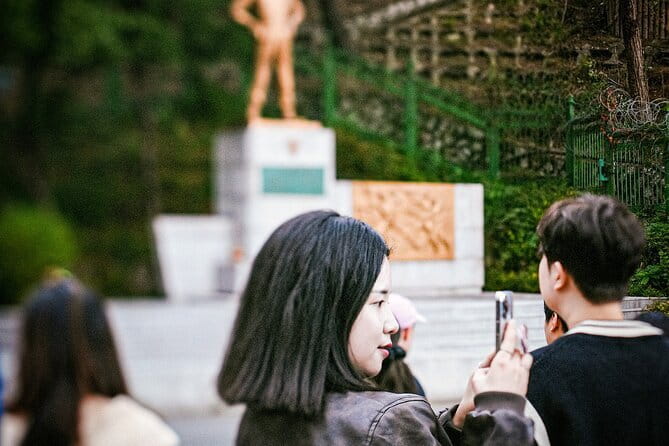
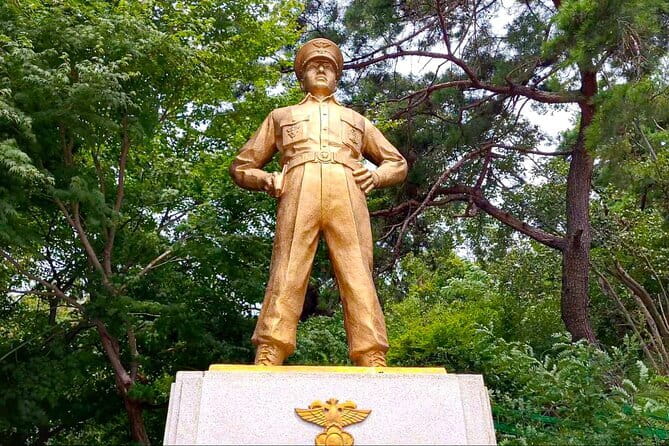
Buam-dong isn’t only pretty. The tour is designed to layer in art and remembrance along the walk. You’ll visit places tied to major cultural figures, including the Choi Gyu-sik Memorial Statue. There’s also a stop called the Hill of Poet Yoon Dong-ju, which helps connect the neighborhood to the way Korean literature and public memory live outside museums too.
These are short stops, but they matter. Memorials and statues in walkable neighborhoods act like signposts. They tell you that people once gathered here, wrote about the world from these viewpoints, and used the slopes as part of daily thinking.
If you like when a walking tour explains why something exists, not just where it is, this part is built for you. The guide’s stories are a key part of the value, especially when they connect local sites to broader Korean history.
Same trip, a different corner of the country:
- Best DMZ Tour Korea from Seoul (Red Suspension Bridge Optional)
★ 5.0 · 41,422 reviews - DMZ Tour: 3rd Tunnel, Option(Suspension Bridge, Boat) from Seoul
★ 5.0 · 21,373 reviews - DMZ tour south Korea from Seoul (NK experience hall, defector)
★ 5.0 · 20,599 reviews - Seoul: The Best DMZ Tour with Optional Suspension Bridge
★ 4.7 · 4,978 reviews
Cold War context on a hillside route
One of the most distinctive claims of this tour is that you’ll learn about Cold War history while moving through the neighborhood. That can sound abstract on paper, but the walking format helps. When you hear context while standing in a place, the story becomes less like a lecture and more like cause and effect.
Think of it this way: Seoul’s modern streets and its defensive architecture were shaped by decades of political pressure. When a guide links that context to what you’re seeing around you, the city starts making sense in a more practical way.
This is also where a good guide matters most. In a small group, you can ask quick questions and get clarifications without slowing the whole day too much. If you’re the type who likes details, you’ll probably enjoy how the Cold War context is threaded through the landscape you’re already walking.
Hill views: Bugaksan, Inwangsan, and Bukhansan on foot
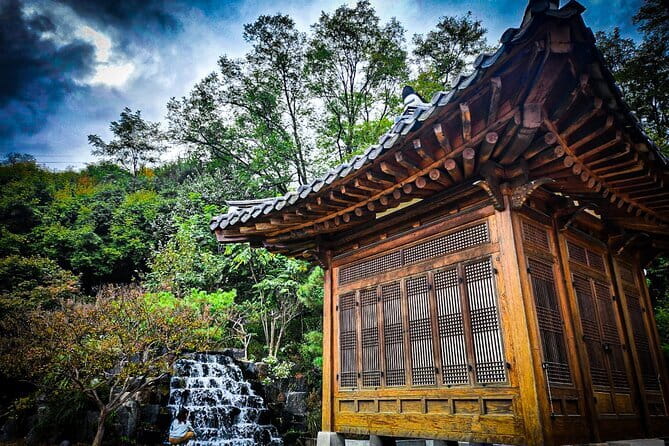
The tour’s promise of mountain views is not just marketing language. Buam-dong’s location makes it natural to look outward, and the walk gives you chances to see the city edges against the peaks. You’ll get views toward Bugaksan, Inwangsan, and Bukhansan, which helps you understand why Seoul has always been built with the terrain in mind.
For your experience, this matters more than it sounds. Viewpoints can become background noise if they are only quick photo stops. Here, they’re part of the route’s pacing, tied to the history and art stops above. So you’re seeing the mountains as part of the same story, not as an unrelated bonus.
Bring a lens if you like, but also remember the simplest photo can be the best one: one wide shot early, then come back to a mid-range view after you’ve heard the guide explain what you’re looking at.
Seoul City Wall and Changuimun Gate (Jahamun Gate)
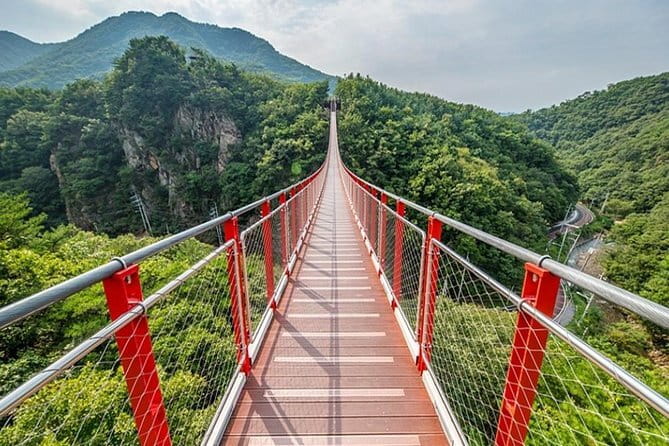
The highlight for many people will be the historic defenses: the Seoul City Wall and Changuimun Gate, also known as Jahamun Gate. You’ll spend around 15 minutes focusing on these landmarks, learning how they functioned in Seoul’s defense and heritage.
Gates are a special kind of history. They are infrastructure, but they also show how power and movement work. When you stand near a gate, you can picture the city as something protected, regulated, and organized. Even in daylight, that sense of purpose comes through.
My advice: slow down at the gate. You’ll want to look at the wall lines and the angles, not just take one quick picture and move on. Give the stone a minute and listen to how the guide explains the function. That’s when the time actually pays off.
This stop also connects well to the rest of the tour. Earlier stops make you feel the neighborhood’s tone, and then the wall gives you a bigger view of how Seoul defended itself and preserved identity over time.
Parasite filming location, and how to enjoy it without overthinking
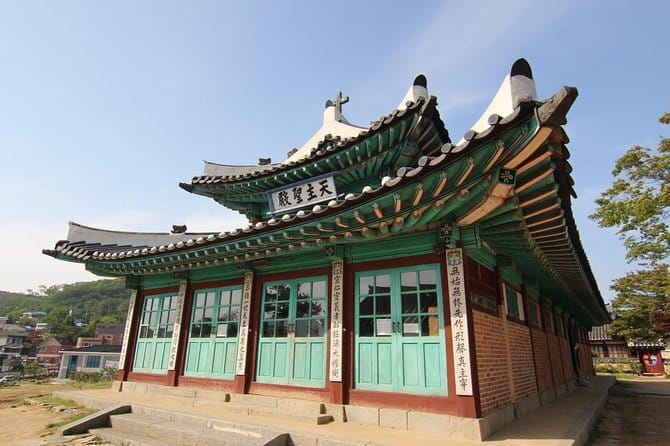
Yes, there’s a Parasite filming location on the route. Even if you don’t plan to rewatch scenes all afternoon, a movie stop can be a fun way to notice details you’d normally skip.
Here’s how I’d approach it: use the location as a prompt. Look at the architecture style, the street layout, and the way the area opens or funnels movement. Then connect that to what you already know about how films use places to create mood.
If you are a fan of the movie, you’ll probably enjoy the extra familiarity. If you’re not, you can still appreciate it as a modern layer on top of older Seoul. It’s a reminder that the city keeps generating stories, not just preserving them.
The key is not to treat it like a scavenger hunt. Treat it like a chance to see why filmmakers love specific streets and thresholds, then get back to the history you’re already learning.
Mugyewon finish: an Anpyeong villa in hanok form
You end at Mugyewon, a traditional Korean house that once served as the villa of Grand Prince Anpyeong. This finish comes with about 20 minutes on-site, enough time to take in how the hanok space feels at the end of a walking day.
Finishing here is a smart choice. You start among neighborhood streets and views, then move to defense-era landmarks, and finally land in a space designed for quiet and old-world elegance. If your legs are tired, this is the kind of stop where you can reset.
Mugyewon is also described as a hanok cultural space. That means you’re not only looking at architecture, you’re closing the tour in an environment meant to communicate culture. For many people, this is the stop that makes the day feel complete.
Tip: in a hanok interior or shaded courtyard, light changes fast. If you want photos, check both bright and shaded angles, then put your camera down for a few minutes to enjoy the atmosphere.
Price and value: $38.50 for a 2.5-hour guided walk
The tour costs $38.50 per person and runs about 2 hours 30 minutes. For that time, you’re getting a guided route through multiple themed stops, plus a short bus ride at the start.
Value comes from a few specific ingredients. Admissions at the scheduled stops are listed as free, and the group size is limited to 15 travelers, which improves how smoothly you move between points. You also get mobile ticket convenience, so you’re not juggling paper tickets while walking.
Also, this isn’t only “look and move.” The tour is built around storytelling themes: art and memorials, Cold War history, and historic Seoul defenses, plus a contemporary film touch. If you enjoy guided interpretation, this structure is worth the price more than a generic walk.
Where the value might not match your expectations is if you prefer long museum time or want fully structured rest stops every 20 minutes. This is a walking tour, and the pacing reflects that.
Practical tips so the walk feels easy, not stressful
This is a hillside neighborhood. Even with the bus ride, you should expect slope walking and steps near landmarks, so bring shoes with grip and plan to move at a comfortable pace. The tour recommends moderate physical fitness, so if you’re between levels, err on the side of caution.
Bring water, and think about weather. Seoul afternoons can swing quickly, and the tour runs at 2:00 pm. A light layer helps, especially if you’ll be near walls and open viewpoints.
Since it ends back at the meeting point, plan your next move with that in mind. If you have dinner reservations far away, you’ll want to account for transit after you finish at 시민약국.
Finally, use the small-group size to your advantage. If you have a question about a gate, a poem connection, or a history thread, this format is one of the better ways to ask without turning the whole day into a debate.
Should you book this Buam-dong walking tour?
Book it if you want a guided, story-forward Seoul walk that mixes neighborhood calm with major landmarks. You’ll likely love it if you care about Hanok spaces, city defense history, and you enjoy seeing how modern pop culture pops up inside real streets.
Don’t book it if you want a flat, low-effort tour with lots of indoor sitting. This one is timed for walking, and the hillside nature is part of the point.
Also consider it if you’re trying to escape only-the-palaces Seoul mode. Buam-dong gives you a different lens, and the ending at Mugyewon helps you leave with a sense of cultural continuity, not just photos.
If that sounds like your style, this is a smart use of an afternoon.
FAQ
How much does the Buam-dong walking tour cost?
It costs $38.50 per person.
How long is the tour?
The tour lasts about 2 hours 30 minutes.
Where does the tour start and end?
It starts at 시민약국 106-3 Jeokseon-dong, Jongno District, Seoul, South Korea, and it ends back at the meeting point.
What time does the tour start?
The start time is 2:00 pm.
How many people are in a group?
The maximum group size is 15 travelers.
Is admission included for the stops?
Admission tickets for the scheduled stops are listed as free.
Do I need a printed ticket?
No. The tour uses a mobile ticket.
Is this tour suitable if I have moderate physical fitness?
Yes, the tour recommends a moderate physical fitness level.
Can I bring a service animal?
Yes, service animals are allowed.
What is the cancellation refund policy?
Free cancellation is available. You can cancel up to 24 hours in advance for a full refund. If you cancel less than 24 hours before the start time, the amount you paid will not be refunded.
More Walking Tours in Seoul
- Seoul moonlight walking tour with local historian
★ 5.0 · 940 reviews - Seoul: Nighttime Hidden Gems Walking Tour
★ 5.0 · 775 reviews - Seoul: Dark Side of the City and Ghost Stories Walking Tour
★ 4.8 · 484 reviews - Gangnam Walking Tour on Youth and Society in Seoul Korea
★ 5.0 · 401 reviews
Recently reviewed in Seoul
- You’re Invited to Our Home in Seoul: The Only Cooking Class!★ 5.0 · 8 reviews
- Your Personal Seoul Photographer!★ 4.1 · 15 reviews
- From Seoul: Yongpyong Ski Day Tour with Transportation★ 4.9 · 40 reviews
- Seoul: Korean & English Language Exchange Global Party★ 5.0 · 28 reviews
- Watching sports match & local food experience in Seoul★ 5.0 · 11 reviews
- WKT Combat Taekwondo & Self-defense One Day Class in Seoul★ 5.0 · 5 reviews
- Unique Native Experience : Han River Picnic, Board game, BBQ★ 5.0 · 3 reviews
- Seoul: Gangneung BTS K-Pop & K-Drama Filming Locations Tour★ 4.6 · 14 reviews
Historical Tours, compared.

Gyeongju UNESCO World Heritage Guided Day Tour
Read our review →
Gyeongju UNESCO World Heritage Guided Day Tour from Busan
Read our review →
Evening Dark History, Folklore & Ghost Story Walking Tour
Read our review →
Old Korea Thousand History Tour of Gyeongju from Busan
Read our review →
Hanbok Photoshoot and History Tour at Gyeongbokgung Palace
Read our review →
UNESCO Heritage Tour Including Bulguksa Temple
Read our review →
Gyeongju UNESCO World Heritage Sites and History Full-Day Tour with Lunch
Read our review →Browse the lists this tour appears in