Reviewed · GUIDED
Korean War Memorial Private Guided Tour
A war memorial can feel like history at arm’s length. This one gives you a map of what led to the Korean War and how the DMZ came to be. You get a private, one-group-at-a-time visit focused on clarity, not crowd control.
Two things I especially like: you’re not just looking at displays, you’re walking through a guided storyline that covers the origins and backgrounds of the war, the four stages of the war situation, and the armistice. Also, the guides provide complementary materials, including pictures and copies of documents, so you leave with more than memories.
One possible drawback: it’s only about 2 hours. If you want to wander the museum on your own, this tour is structured and time is used for guidance and context.
In This Review
- Key highlights to know before you go
- Why this Korean War Memorial tour is a smart use of your Seoul time
- The 2-hour private format, up to 5 people, and what it means for value
- Meeting at the War Memorial lobby: logistics that keep the day smooth
- Inside the Korean War Rooms I to III: what you actually do for your money
- The guide-led learning style: more clarity, fewer dead ends
- The DMZ connection: why the armistice portion changes how you understand everything
- What to expect from the experience, room by room
- Who this tour is best for, and who may want a different style
- Practical tips to get the most out of your 2-hour guided session
- Should you book this Korean War Memorial tour in Seoul?
- FAQ
- How long is the Korean War Memorial Private Guided Tour?
- Is this tour private?
- What is the group size limit?
- How much does it cost?
- Where do we meet for the tour?
- Is admission included?
- What is included in the tour price?
- What should I bring or plan for?
- Are tips included?
- What if I need to cancel?
- Are there any limits like minimum travelers?
Key highlights to know before you go
- One private group session for up to 5 people, so questions actually get answered
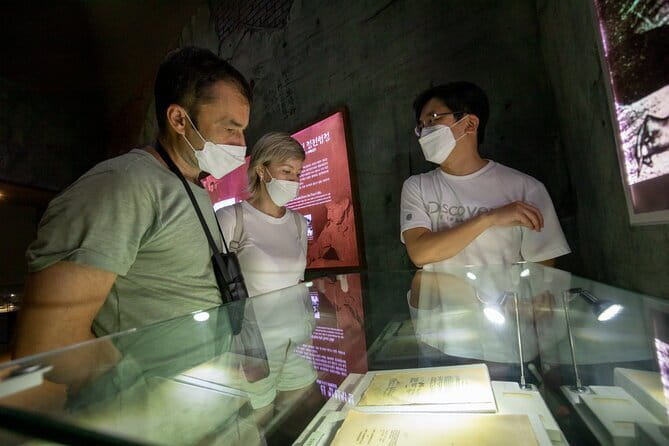
- Guides are PhD students with expertise in Korean history, peace activism, and DMZ tours
- Korean War Rooms I to III guided walkthrough inside the War Memorial of Korea
- Complementary materials with pictures and document copies to help you remember what matters
- Focus on separating propaganda from context, plus the social cost of the war
- Free on-site admission ticket for the tour experience portion (your guide manages access)
Why this Korean War Memorial tour is a smart use of your Seoul time
Seoul has a lot of world-class museums, but not all of them help you connect events into a single, understandable chain. This tour is built to do that. You start with the post-liberation split of the two Koreas, then work forward toward how the war developed and why the armistice changed everything.
The big value is how the tour uses the War Memorial of Korea as a teaching tool. Instead of treating exhibits like isolated facts, your guide frames them as part of a larger story about conflict, politics, and peace. That means you finish with a timeline in your head, not just images you saw.
You’ll also notice the tour has a peace angle. The goal is not only to understand what happened, but to think about how the conflict was shaped by ideology, international pressures, and the human cost. If peace activism and the origins of today’s divided peninsula interest you, this format fits.
A few more Seoul days worth comparing
- Best DMZ Tour Korea from Seoul (Red Suspension Bridge Optional)
★ 5.0 · 41,422 reviews - DMZ Tour: 3rd Tunnel, Option(Suspension Bridge, Boat) from Seoul
★ 5.0 · 21,373 reviews - DMZ tour south Korea from Seoul (NK experience hall, defector)
★ 5.0 · 20,599 reviews
The 2-hour private format, up to 5 people, and what it means for value
The price is $100 per group, up to 5 people. That makes it easy to calculate value: if you’re a couple, it costs $50 per person. If you’re a small group of five, it’s $20 per person. Either way, you’re paying for a guided session designed for interaction, not a seat on a crowded bus tour.
It’s also listed as one group private for about 2 hours. That matters in a museum setting. A private guide can slow down for your questions, clarify confusing details, and keep you on the right track inside the Korean War Rooms.
Your admission portion is free, and the tour includes all fees and taxes. So your cost is mainly the guide and the guided learning materials. Add complementary pictures and document copies, and the tour ends up feeling like a mini lesson you can revisit later, not just a short walk through rooms.
One more practical upside: it uses a mobile ticket. Less paper to manage, and you’re not hunting for printed vouchers at the last minute.
Meeting at the War Memorial lobby: logistics that keep the day smooth
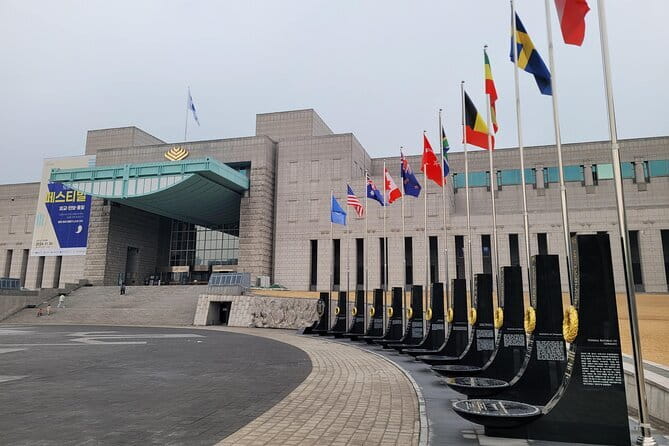
You’ll meet at the lobby area of the War Memorial of Korea, at 8-66 Yongsan-dong 1(il)-ga, Yongsan District, Seoul. The tour ends back at the War Memorial of Korea around 29 Itaewon-ro, Yongsan District, Seoul.
This area is served by public transportation, and the tour notes it’s near public transit. That’s useful because you’re not stuck planning a long taxi route. You can also time it so the tour fits between other nearby sights in central Seoul.
Service animals are allowed, which is always good to see. The tour also mentions moderate physical fitness level. In practice, that usually means you should be comfortable walking through an indoor museum and spending time on your feet, but you’re not doing a strenuous outdoor trek.
Finally, the experience is confirmed at the time of booking. That removes one common stress: waiting around to see whether you’re actually locked in.
Inside the Korean War Rooms I to III: what you actually do for your money
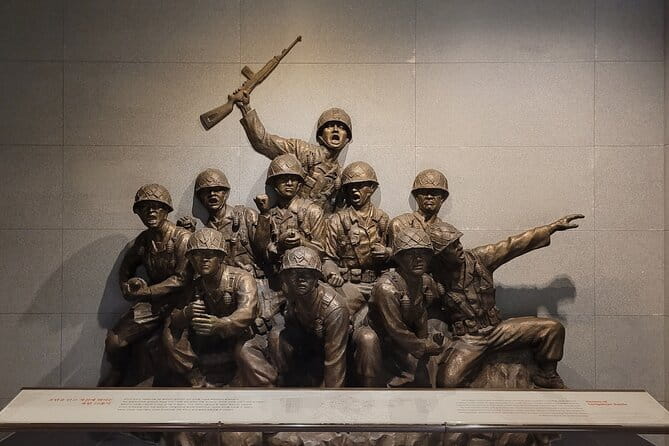
Stop 1 is the War Memorial of Korea, with a special guided tour of the Korean War Rooms I to III. The structure is important. Instead of scattering across the museum, your guide concentrates on the spaces that connect key phases of the conflict.
You’ll go through themes tied to:
- the origins and backgrounds of the war
- the four stages of the war situation
- the armistice and the birth of DMZ (Demilitarised Zone)
- how South Korea and North Korea developed after liberation
That list is what makes this tour feel more like a guided lesson than an audio-guide playlist. Your guide keeps a thread linking big political events to what you see on the walls, maps, and displays.
You’ll also get a perspective shift. The tour frames the Korean War not only as a national tragedy, but as a civil and international conflict. If you’ve heard the war described only in one dimension, this helps correct that. You start seeing how external involvement, regional tensions, and internal political dynamics fed into the same outcome.
Same trip, a different corner of the country:
- Seoul: The Best DMZ Tour with Optional Suspension Bridge
★ 4.7 · 4,978 reviews - Signature DMZ Tour: Exclusive Defector Talk & Suspension Bridge
★ 5.0 · 4,459 reviews - Thrilling Korean DMZ 3rd Tunnel Tour from Seoul + Red Bridge Rush
★ 5.0 · 3,097 reviews - Seoul: DMZ Tour & Suspension Bridge (Option English/Spanish)
★ 4.9 · 2,628 reviews
The guide-led learning style: more clarity, fewer dead ends
One of the most praised parts of this experience is how the guide handles questions. You’re not just hearing a lecture. You’re getting explanations designed to help you understand what you’re seeing and why it matters.
Guides on this tour are described as having expertise in Korean history, peace activism, and DMZ tours. You can feel that background in how they speak about the war and its aftermath. It’s also why the tour can tackle complex material without treating it like a blur.
A key theme is the difference between what’s presented as a message and what you can use as context. The tour is set up to help you distinguish propaganda from truth behind what happened during the Korean War. That doesn’t mean every detail is rewritten for you. It means your guide teaches you how to read what you see: who is speaking, what the display emphasizes, and what questions you should keep in mind.
This is where the included complementary materials help. Pictures and copies of documents can function like notes you take during class. Even if the museum exhibits are detailed, it’s easy to forget specifics once you walk out. The handouts give you something to review later, especially if you want to understand the conflict more deeply before moving on to other parts of Korea.
The DMZ connection: why the armistice portion changes how you understand everything
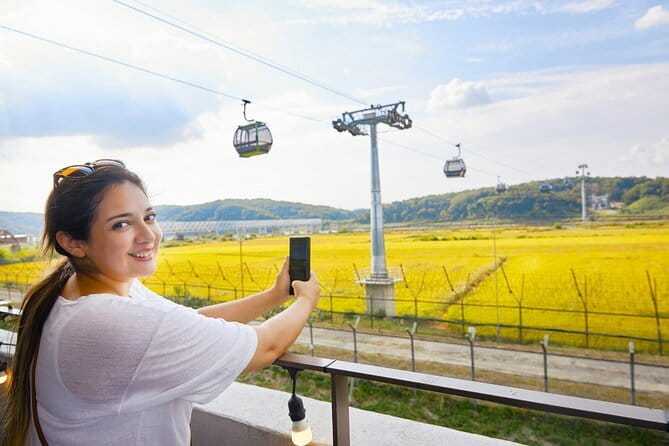
The tour doesn’t stop at war stories. It explicitly reaches the armistice and the birth of the DMZ. That is a major reason this experience feels useful even if you do not have plans to visit the DMZ later.
Here’s the practical takeaway: once you understand the armistice as a turning point, the DMZ stops being a vague symbol and becomes an outcome with reasons. Your guide helps you connect those dots while still staying grounded in what the museum shows.
The tour also aims to share hidden stories that the War Memorial of Korea doesn’t speak in the exhibitions. That phrasing can sound dramatic, but the effect you’ll feel is grounded. You’ll likely hear background context tied to social impacts, political motivations, and how the conflict affected civilians. It’s the difference between learning facts and understanding consequences.
Some of the tour’s strongest moments focus on the social cost of the war. If you care about human impact, that emphasis matters. It also supports the tour’s peace perspective, because understanding suffering is often what makes the next steps toward dialogue and conflict prevention feel real, not abstract.
What to expect from the experience, room by room
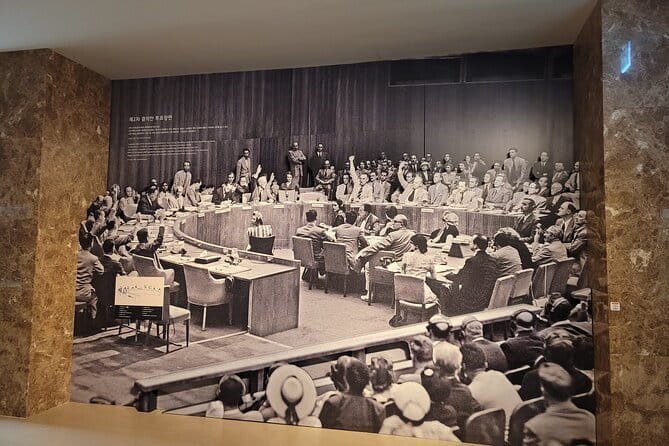
The tour is focused on Korean War Rooms I to III, and it runs for about 2 hours. Expect the guide to pace you through the exhibits while building a timeline. You can usually anticipate a mix of explanation, guided observation of specific displays, and time to ask questions.
Because it’s private for your group only, you’re not competing with a constant stream of other visitors. That means you can linger when something catches your attention, ask why a map is drawn a certain way, or request clarification when terms get technical.
Also, this is built for English-speaking guests. The guide is described as professional English-speaking, and multiple comments highlight clear explanations and ability to answer questions directly. If you prefer a structured guide who keeps you on track, this format should feel satisfying.
Who this tour is best for, and who may want a different style
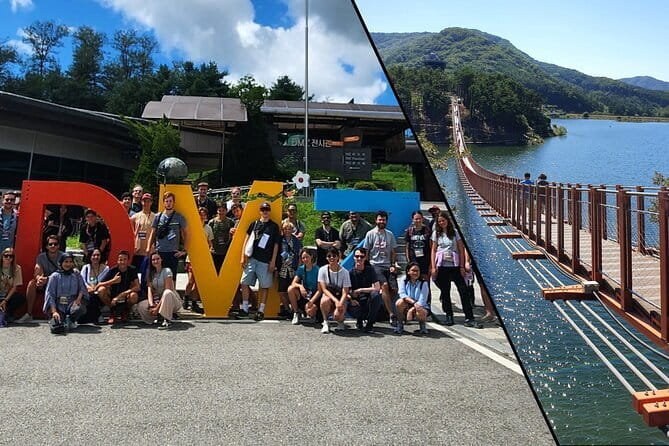
This tour is ideal if you want:
- a clear explanation of the Korean War causes and phases
- a peace and conflict-awareness perspective
- context that helps you interpret museum exhibits
- a guide-led session that can handle questions without rushing
It’s especially good for visitors who feel that museum displays alone do not fully answer what led to the war. The guide’s job is to connect. That’s the main benefit of a private tour like this.
If you already know the Korean War in detail and you mostly want time for self-guided browsing, you might find 2 hours short. You may need extra time on your own after the tour to follow up on exhibits at your own pace.
If your travel style is chaotic and you hate schedules, the structured nature could also feel limiting. But the tour is private, and guides are used to helping people coordinate smoothly. Even if you arrive late, the guiding team has a track record of communicating enough to help you join the group once you’re inside.
Practical tips to get the most out of your 2-hour guided session
First, arrive a few minutes early at the War Memorial lobby. You’ll get your bearings faster and won’t rush your first questions.
Second, come with 1 to 3 questions. You can ask about the conflict’s stages, how the armistice led to the DMZ, or how to read the exhibits with propaganda in mind. A small list helps you make the most of a short private tour.
Third, plan to keep the complementary materials handy. Pictures and document copies can be as useful as the museum itself. If you’re heading to other sites afterward, these notes make it easier to connect what you saw to what you learn next.
Finally, if you’re sensitive to heavy topics, you should know the tour focuses on war origins, social cost, and peace lessons. That’s part of the value, but it’s still intense subject matter.
Should you book this Korean War Memorial tour in Seoul?
If you want a focused, private, English-guided explanation of the Korean War and how the DMZ came to be, this is a strong pick. The standout value is the combination of guided structure, question-friendly coaching, and included materials that help you remember.
Book it if you:
- feel confused by how the Korean War is explained in sound bites
- want help distinguishing messaging from context
- prefer a guided lesson inside the museum rather than random self-wandering
- travel as a small group of friends or family and want the cost to stay reasonable
Skip it or consider another option if you:
- want to spend long hours exploring the entire museum independently
- only want surface-level highlights and do not plan to ask questions
For most visitors, a two-hour private orientation to the Korean War is a smart way to turn a big museum into something you truly understand. This one is designed to leave you with a clearer timeline, a better sense of human impact, and a peace-focused lens you can carry beyond the building.
FAQ
How long is the Korean War Memorial Private Guided Tour?
The tour runs for about 2 hours.
Is this tour private?
Yes. It’s a private tour/activity, and only your group participates.
What is the group size limit?
The price is per group up to 5 people.
How much does it cost?
It costs $100 per group.
Where do we meet for the tour?
You meet in the lobby of the War Memorial of Korea.
Is admission included?
Admission ticket for the tour portion is free, and the War Memorial visit is part of the guided experience.
What is included in the tour price?
It includes all fees and taxes, a professional English-speaking guide, and complementary materials such as pictures and copies of documents.
What should I bring or plan for?
You should be comfortable with moderate walking inside the museum. The tour uses a mobile ticket.
Are tips included?
No. Tips are not included.
What if I need to cancel?
You can cancel for a full refund if you cancel up to 24 hours in advance of the experience start time. Less than 24 hours before start time is not refundable.
Are there any limits like minimum travelers?
Yes. The experience requires a minimum number of travelers. If it’s canceled because the minimum isn’t met, you’ll be offered a different date or a full refund.
Recently reviewed in Seoul
- You’re Invited to Our Home in Seoul: The Only Cooking Class!★ 5.0 · 8 reviews
- Your Personal Seoul Photographer!★ 4.1 · 15 reviews
- From Seoul: Yongpyong Ski Day Tour with Transportation★ 4.9 · 40 reviews
- Seoul: Korean & English Language Exchange Global Party★ 5.0 · 28 reviews
- Watching sports match & local food experience in Seoul★ 5.0 · 11 reviews
- WKT Combat Taekwondo & Self-defense One Day Class in Seoul★ 5.0 · 5 reviews
- Unique Native Experience : Han River Picnic, Board game, BBQ★ 5.0 · 3 reviews
- Seoul: Gangneung BTS K-Pop & K-Drama Filming Locations Tour★ 4.6 · 14 reviews
Guided, compared.
Gyeongju Guided Day Trip to Three Kingdoms Capital
Read our review →
Gyeongju UNESCO World Heritage Guided Day Tour
Read our review →
Busan Private Tour with licensed tour guide + private vehicle
Read our review →
DMZ Guided Tour with Suspension Bridge / Gondola from Seoul
Read our review →
Palace, Temple and Market Guided Foodie Tour at Night
Read our review →
Gyeongju UNESCO World Heritage Guided Day Tour from Busan
Read our review →