
Reviewed · HISTORICAL TOURS
Discover Seoul: Local Life and History
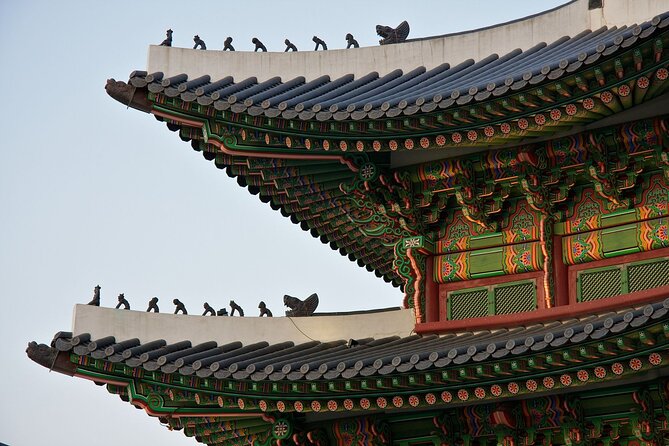
Seoul hits you fast. This 3.5-hour guided walk links Gyeongbokgung Palace with Gwanghwamun and the Hanok lanes of Bukchon, so you get the big picture of old and new Seoul in one circuit. I especially like how the guide ties the places together, whether you’re listening to Moises explain what you’re seeing or hearing Gemma bring the Joseon-era landmarks into focus. You also get time in Insadong, where the street feel shifts into tea houses, craft shops, galleries, and casual places to grab a drink, with practical suggestions on what and where to eat, like Korean beer chicken.
There are two things to plan around. The tour depends on good weather, and it’s a walking-focused outing, so comfy shoes matter. Also, Seoul City Hall is listed as free but may be closed on some Tuesdays, so expect a slight route adjustment if that happens.
In This Review
- Key highlights you’ll feel right away
- Why the Gwanghwamun to Bukchon route is such a smart use of time
- Seoul City Hall: a free history primer that sets the stage
- Gwanghwamun Square and the Sejong and Yi Sunshin story stops
- Gyeongbokgung Palace: the main event, plus the guards moment
- Insadong: tea houses, galleries, craft shops, and food advice that actually helps
- Bukchon Hanok Village: your final walk into preserved traditional streets
- Price and what you really get for $96.75
- Getting the most out of your 3.5-hour pace
- Who this tour is best for
- Should you book this Seoul walking tour?
- FAQ
- How long is the tour?
- What does it cost and how far in advance should I book?
- What is included for tickets at the stops?
- What is the meeting point and where does the tour end?
- Is a mobile ticket used?
- What happens if the weather is poor?
Key highlights you’ll feel right away
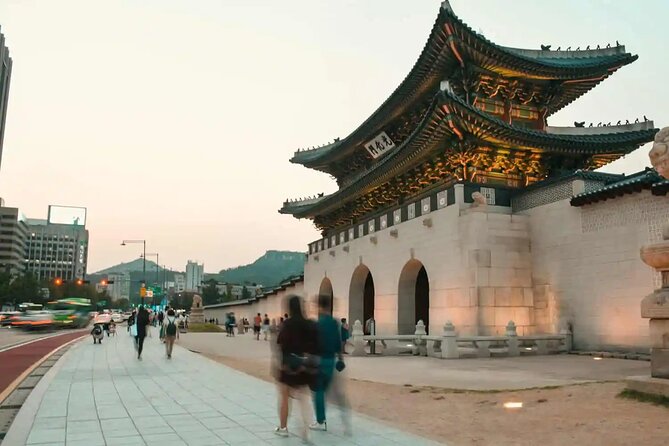
- Gyeongbokgung Palace focus, with a close look and the change of guards moment
- Gwanghwamun Plaza statues, featuring King Sejong and Admiral Yi Sunshin
- Insadong stop for tea houses and craft shopping, plus guidance on where to eat and drink
- Bukchon Hanok Village finish, with preserved traditional alleys above the palace area
- Small group size up to 20, which keeps the tour from feeling rushed
Why the Gwanghwamun to Bukchon route is such a smart use of time
If you only have a few days in Seoul, you need a route that does more than tick off landmarks. This one works because it strings together three “moods” of the city: the grand government area around Gwanghwamun, the traditional neighborhood vibe of Jongno and Insadong, then the quieter, photo-friendly Hanok streets of Bukchon.
The itinerary also has good pacing. You start with broad context, then you move into the palace core, then you drift into smaller lanes where you can actually slow down. That matters, because Seoul’s main sights can blur together if you see them solo, with no order and no explanation.
You’ll also benefit from the tour format. It runs about 3 hours 30 minutes and uses a mobile ticket. That’s ideal on a trip where you’re also juggling airport transfers, subway navigation, and meal planning.
And because the group maximum is 20, you’re not stuck behind a crowd the whole time. It’s still a walking experience, but it feels manageable, especially if you show up with the right expectations.
More Historical Tours in Seoul
- Seoul: Evening Dark History, Folklore & Ghost Story Walking Tour
★ 5.0 · 593 reviews - Hanbok Photoshoot and History Tour at Gyeongbokgung Palace
★ 5.0 · 276 reviews - From Seoul: Dae Jang Geum Park Historic K-Drama Set Tour
★ 4.9 · 143 reviews
Seoul City Hall: a free history primer that sets the stage
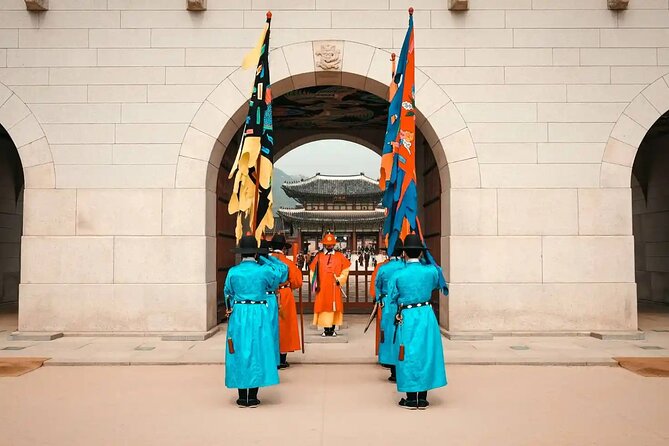
The tour begins at Seoul Plaza, near Seoul City Hall, and the first stop is basically your orientation to the city. City Hall is listed as admission free and is described as a great introduction to Seoul’s history.
That’s not a throwaway first stop. Starting here helps you understand why the tour later lingers around Gwanghwamun and the Joseon-era sites. You’re not just taking in scenery. You’re building a framework for what you’re about to see.
One practical note: the listing says that on some Tuesdays, Seoul City Hall might be closed. If that happens, you’re still doing the larger circuit, but you may notice a timing shift. I’d treat this as a normal part of planning in Seoul, where opening hours can change.
You get the benefit either way, because you’re not starting in a random spot. You start in the center, and the guide’s early context makes the rest of the walk click faster.
Gwanghwamun Square and the Sejong and Yi Sunshin story stops
Next up is Gwanghwamun Square and the surrounding avenue. The tour frames this as the main avenue of Seoul, with history and attractions along the way. You spend about 35 minutes here, and that time is important. It gives you enough room to see the flow of the area without feeling like you’re sprinting between photos.
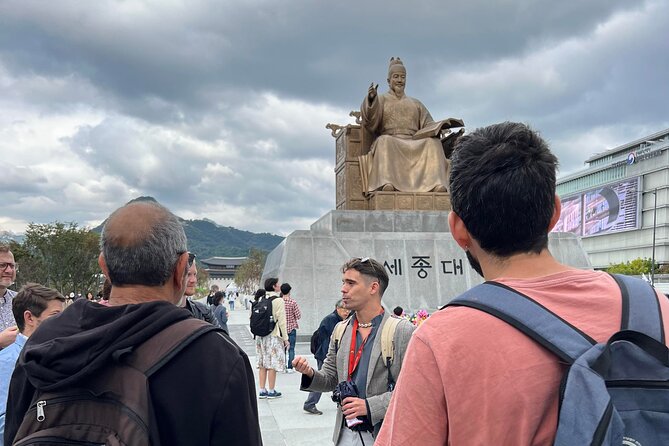
Right in front of the Gwanghwamun Gate, there’s also a quick stop at Gwanghwamun Plaza. Here you’ll see statues connected to King Sejong and Admiral Yi Sunshin. It’s only about 10 minutes, but these statues act like bookmarks. They’re easy to notice, and the guide uses them to connect the palace context to the larger Joseon story the tour keeps returning to.
This section is a good moment to pick up practical city-reading skills. You start noticing how Seoul uses public space: wide avenues, monuments that anchor the story, and views that give you a sense of where the palace sits in relation to everything else.
Drawback to keep in mind: this area can be busy, depending on the day and the time. If you’re sensitive to crowds, bring patience for the square portion and keep your eyes open for quieter edges of the walkway where you can still take in details.
Gyeongbokgung Palace: the main event, plus the guards moment
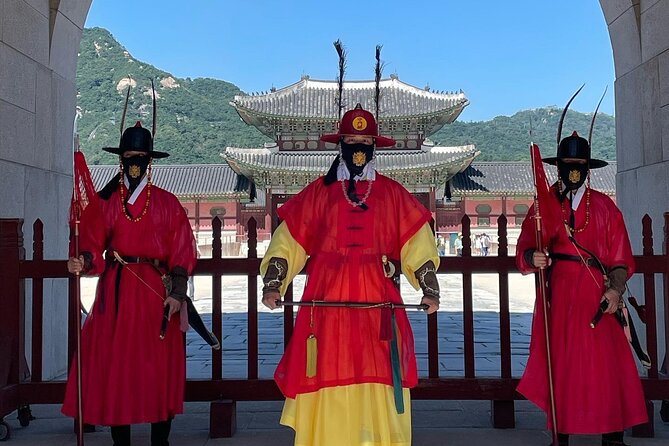
Then the tour goes to Gyeongbokgung Palace, described as the main palace of Seoul. It’s listed as admission free for this tour stop and includes an introduction to the palace as well as the change of the guards.
This is where the tour earns its ticket. Palaces are impressive on a postcard, but they get way more interesting when you understand what you’re looking at. The guide gives you an on-the-ground orientation so the space feels less like a set of separate buildings and more like one coherent world.
Even if you’ve seen photos before, the palace scale and layout can still surprise you. The change of guards moment adds structure to your visit. It gives you a clear time marker, so you’re not wandering in circles while trying to figure out the best spots to watch.
Timing note: the palace stop is listed at about 30 minutes. That’s not a full-day palace plan. But it’s enough for an intro, especially when you’re also heading to Insadong and Bukchon afterward.
One caution: palace grounds can be exposed. If it’s sunny, you’ll feel it. If it’s raining or windy, it’s less comfortable. Since the tour is described as requiring good weather, this is one reason you should check conditions before you go.
Same trip, a different corner of the country:
- Best DMZ Tour Korea from Seoul (Red Suspension Bridge Optional)
★ 5.0 · 41,422 reviews - DMZ Tour: 3rd Tunnel, Option(Suspension Bridge, Boat) from Seoul
★ 5.0 · 21,373 reviews - DMZ tour south Korea from Seoul (NK experience hall, defector)
★ 5.0 · 20,599 reviews - Seoul: The Best DMZ Tour with Optional Suspension Bridge
★ 4.7 · 4,978 reviews
Insadong: tea houses, galleries, craft shops, and food advice that actually helps
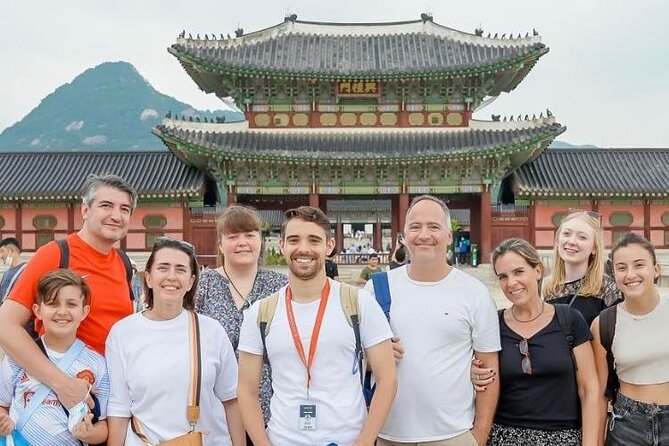
After the palace, the vibe shifts toward Insadong, one of the oldest neighborhoods in Seoul. The tour gives you about 30 minutes here, and the focus is on the human scale stuff: traditional tea houses, galleries, bars, and craft shops tucked into labyrinthine lanes lined with Hanoks.
This stop is the bridge between “big landmark Seoul” and “local street Seoul.” It’s where you start seeing daily life rather than ceremonial space. Insadong also makes a great place to reset your brain after standing around palace architecture.
The best part is that you get more than window-shopping suggestions. The tour overview says you’ll receive tips on where to drink and eat, including recommendations like the famous Korean beer chicken. That kind of direction is valuable, because Seoul has plenty of options, and it’s easy to end up with something that’s convenient instead of satisfying.
Practical drawback: this area is also a shopping and snack zone, which means it can be crowded in the lanes. If you want photos without shoulder-to-shoulder moments, you may need to be flexible with where you stand and how long you linger.
Still, even with a crowd, Insadong does something special. It turns the history you’ve been hearing into lived-in surroundings. You see the same traditional forms, now packed with modern habits like eating, browsing, and meeting friends.
Bukchon Hanok Village: your final walk into preserved traditional streets
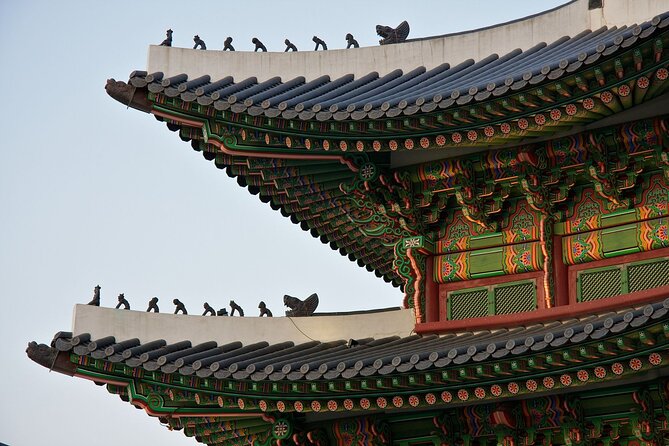
The tour’s finish is in Bukchon Hanok Village, and the meeting point location details show that it ends near Cafe Onion Anguk in the Jongno area. From there, you’re in the Hanok neighborhood, positioned on higher ground between the palace area and Bukchon.
The tour description highlights the village as a preserved traditional area, with hanok alleys and a setting said to reflect around 600 years of traditional home life. Even if you don’t obsess over the exact dates, you’ll feel the difference in the atmosphere.
This is a great ending because it gives your brain a visual and emotional release. You’ve spent time with monuments, public squares, and the formal layout of palaces. Bukchon is about intimate streets and traditional architecture close enough to notice textures and rhythms.
You’ll also get to linger after the guide’s main circuit, since the tour finishes here. That’s a smart design. You can decide whether you want to keep exploring on your own, or grab a final snack and call it a day.
Small consideration: Bukchon is uphill in feel, based on its positioning. If you’re not used to walking, you’ll notice the effort by the end of the tour. The upside is worth it, because the views and street character feel different from the lower-level squares.
Price and what you really get for $96.75
At $96.75 per person, this tour sits in the middle of the guided-tour range. Whether it’s a good deal depends on what you value.
If you want a “hit the highlights” plan with a focused route through major historic areas, it’s a strong value. The itinerary’s stops are listed with admission tickets as free for the tour. That doesn’t mean you’re only paying for walking, though. You’re paying for the organization, the storytelling, and the ability to understand what you’re looking at while someone else handles the flow.
You’re also getting a guide who is clearly comfortable with history and speaks English well, with examples like Moises and Gemma coming up in praise. That combination matters in Seoul. Without context, you can walk past a lot of impressive stuff and come away with mostly photos.
Another value signal: it runs with a maximum of 20 people. In a city where popular sights draw crowds, smaller groups make the experience feel more personal, and it’s easier to ask questions as you go.
And yes, the tour is popular enough that it’s often booked about 24 days in advance on average. If your dates are fixed, don’t wait until the last moment.
Getting the most out of your 3.5-hour pace
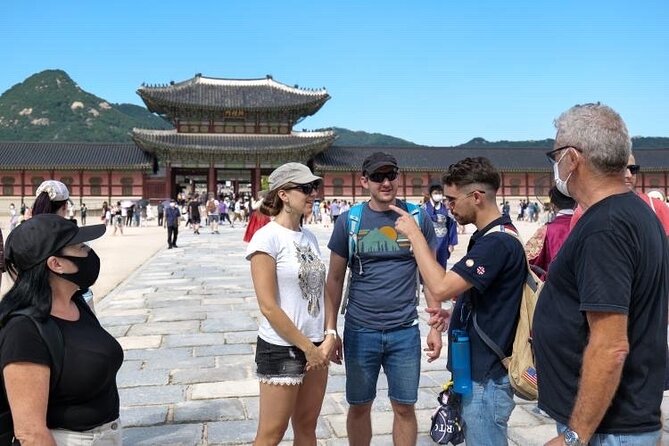
This is a walking circuit through central Seoul. That means you’ll want to travel like a local for the day.
- Wear comfortable shoes, because you’ll be on your feet for multiple stops.
- Bring water, especially since parts of the route around squares and palace areas can feel exposed.
- Keep your schedule flexible for weather, since the tour requires good conditions and can be rescheduled if it’s poor.
- Plan one meal to be guided. The tour’s food tips are one of its strengths, including the beer chicken suggestion, so don’t overbook lunch right before it ends.
If you’re the type who likes learning while moving, this tour matches your style. It’s not a slow museum day, and it’s not just about posing for pictures. It’s about connecting the dots between the city’s Joseon-era landmarks and modern Seoul’s street life.
Who this tour is best for
This is a good match if you’re:
- In Seoul for a short time and want a clean historic-meets-modern route
- Someone who prefers an organized plan but still wants time to feel neighborhood life
- A first-time visitor who wants direction for food and drinks, not just sightseeing
- Traveling with a group size that benefits from small-group attention, up to 20 people
It’s also described as “most travelers can participate,” and service animals are allowed. If you have mobility concerns, you’ll want to judge your walking comfort before committing, since the format is clearly designed around moving between multiple central areas.
Should you book this Seoul walking tour?
Yes, if you want a focused introduction to Seoul’s historic core, and you like the idea of finishing in a Hanok neighborhood where you can keep wandering after the guided part ends.
I’d book it if you care about understanding the sights you see, especially Gyeongbokgung Palace and the Joseon-era figures represented around Gwanghwamun. I’d also book it because the guide-based food and drink tips, including the Korean beer chicken recommendation, help you turn the afternoon into real local experiences.
I’d think twice if you’re very weather-dependent or you dislike walking for the duration. The tour requires good weather, and City Hall can be closed on some Tuesdays, which could affect the opening stop.
If your goal is to get your bearings fast and leave with a smarter, more connected sense of Seoul, this tour is a practical, value-minded way to do it.
FAQ
How long is the tour?
The tour duration is about 3 hours 30 minutes.
What does it cost and how far in advance should I book?
The price is $96.75 per person, and it is commonly booked about 24 days in advance.
What is included for tickets at the stops?
The itinerary lists admission tickets for the stops as free.
What is the meeting point and where does the tour end?
You start at Seoul Plaza, 110 Sejong-daero, Jung District, Seoul. You end at Cafe Onion Anguk, 5 Gyedong-gil, Jongno District, Seoul, near Bukchon Hanok Village.
Is a mobile ticket used?
Yes, the tour uses a mobile ticket.
What happens if the weather is poor?
The tour requires good weather. If it is canceled due to poor weather, you will be offered a different date or a full refund.
Recently reviewed in Seoul
- You’re Invited to Our Home in Seoul: The Only Cooking Class!★ 5.0 · 8 reviews
- Your Personal Seoul Photographer!★ 4.1 · 15 reviews
- From Seoul: Yongpyong Ski Day Tour with Transportation★ 4.9 · 40 reviews
- Seoul: Korean & English Language Exchange Global Party★ 5.0 · 28 reviews
- Watching sports match & local food experience in Seoul★ 5.0 · 11 reviews
- WKT Combat Taekwondo & Self-defense One Day Class in Seoul★ 5.0 · 5 reviews
- Unique Native Experience : Han River Picnic, Board game, BBQ★ 5.0 · 3 reviews
- Seoul: Gangneung BTS K-Pop & K-Drama Filming Locations Tour★ 4.6 · 14 reviews
Historical Tours, compared.
Gyeongju UNESCO World Heritage Guided Day Tour
Read our review →
Gyeongju UNESCO World Heritage Guided Day Tour from Busan
Read our review →
Evening Dark History, Folklore & Ghost Story Walking Tour
Read our review →
Old Korea Thousand History Tour of Gyeongju from Busan
Read our review →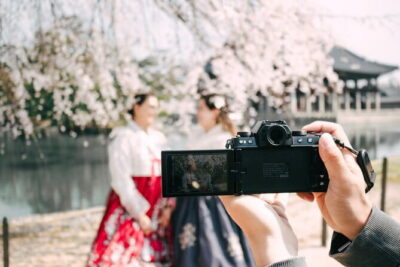
Hanbok Photoshoot and History Tour at Gyeongbokgung Palace
Read our review →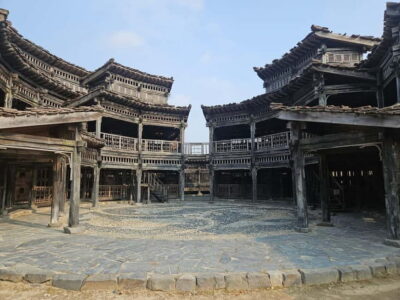
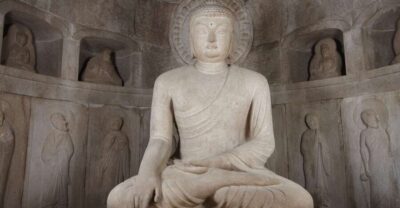
UNESCO Heritage Tour Including Bulguksa Temple
Read our review →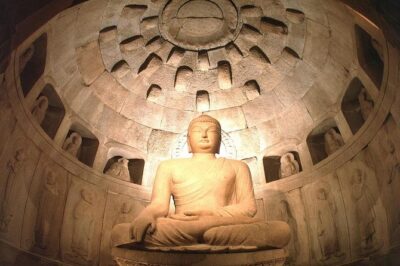
Gyeongju UNESCO World Heritage Sites and History Full-Day Tour with Lunch
Read our review →Browse the lists this tour appears in