
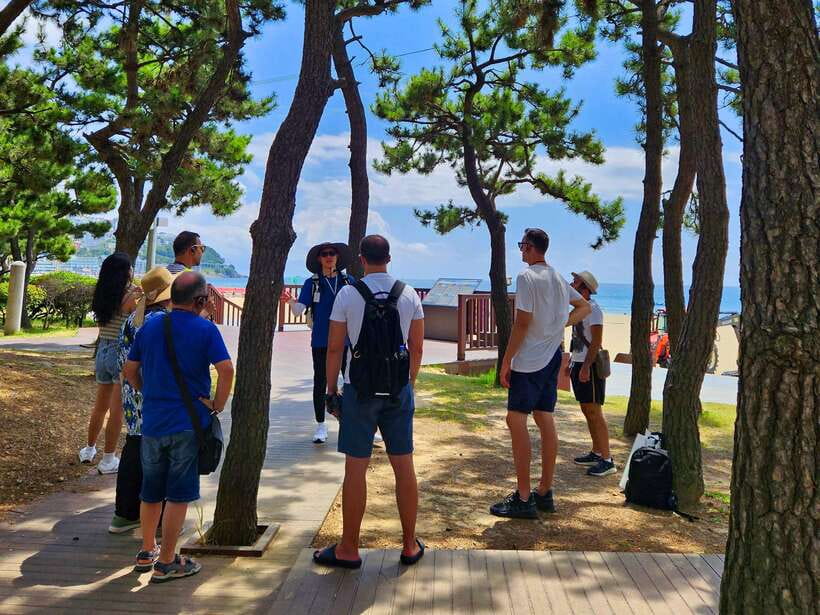
Reviewed · WALKING TOURS
Busan: Haeundae 100-Minute Walking Tour
Haeundae has stories you miss on your own. This 90-minute, 100-minute-style walk turns a beach getaway into a clear Busan history lesson, with stops that explain how the area changed over time. I especially love the way the guide, often Ingyu Kim, tells the Korea-wide story through very specific streets and landmarks. Another big plus is the practical pacing, so you get scenes, context, and time for questions without feeling rushed.
The main thing to watch is effort. The route includes about 2 kilometers of walking and a hill around 50 meters, plus sun exposure, so bring water and plan for comfy shoes.
In This Review
- Key Highlights You Will Actually Feel
- Why a 100-Minute Haeundae Walk Makes Sense
- Meet Your Guide at Old Haeundae Station (And Get Your Bearings Fast)
- Former Haeundae Station: Where Rail History Reshaped the Area
- Haeundae Beach: A Pretty Shore With War-Era Context
- Gunam-ro: Korea’s Seaside Hot Spring That Loved Royal Attention
- Haeundae Atelier Chik Chik Pok Pok: The Station Story Becomes a Walkable Set
- Dongbaek Island (Dongbaekseom): Choi Chi-Won and the Coast at the End
- Price and Value: Why $29 Feels Fair for This Type of Tour
- How Much Walking Is It, Really?
- Practical Tour Tips That Make the Difference
- Who This Tour Is Best For
- Should You Book This Haeundae History Walk?
- FAQ
- Where is the meeting point for this Haeundae tour?
- How long is the tour, and how much will I walk?
- What’s included in the price?
- What should I bring, and is there anything I can’t do?
- Is this tour okay for children or older adults?
- Is there wheelchair access?
Key Highlights You Will Actually Feel

- A short route that connects Haeundae Beach, Gunam-ro, and Dongbaek Island into one story
- Former Haeundae Station and the Donghae-Nambu Line, plus how rail history lives on today
- Gunam-ro and the Gunam Oncheon seaside hot spring, including royal-level appeal
- Haeundae Beach context tied to the Korean War and North-South dynamics
- Dongbaekseom and the legacy of Choi Chi-Won, the scholar who named Haeundae
- Wireless listening gear so you hear every detail while walking
Why a 100-Minute Haeundae Walk Makes Sense

If you only have a little time in Busan, this tour is a smart choice because it focuses on one tight slice of the city. Instead of bouncing between random photo stops, you’ll walk a route that explains why Haeundae looks the way it does.
I like it when a guide helps you read the place like a map. Here, the story keeps snapping into place: railway history, seaside hot springs, war-era change, and a scholar’s connection to the name Haeundae. You’ll leave with a mental picture that makes the skyline and beach feel purposeful, not just scenic.
More Walking Tours in Busan:
- Busan: Day Trip with Gamcheon Culture Village and Sky Walk
★ 4.8 · 32 reviews - Real Busan Walking Experience
★ 5.0 · 27 reviews - Busan Private Walking Tour with a Local
★ 4.5 · 11 reviews
Meet Your Guide at Old Haeundae Station (And Get Your Bearings Fast)
The tour meets at Haeundae Atelier Chik Chik Pok Pok (옛 해운대역), at 621, Haeundae-daero, Haeundae-gu, Busan. The easiest subway approach is Busan Metro Line 2 to Haeundae Station, then Exit 4. When you come up, look for a public square on your right and a guide holding a flag.
This start matters. Old Haeundae Station sets the theme immediately: modern Busan grew out of transportation, industry, and political change, not just good weather. Also, you’ll likely be able to ask your first questions early, while everyone is still oriented.
One small comfort win: the tour includes an English-speaking guide plus wireless audio. That means less straining your voice on windy coastal streets and fewer moments where you miss the point while glancing at your phone.
Former Haeundae Station: Where Rail History Reshaped the Area
You begin at the former station area, tied to the Japanese colonial period and the Donghae-Nambu Line. The guide explains how that railway helped shape Haeundae into the destination it became, rather than staying a sleepy coastal corner.
Here’s what I think you’ll like most: the way this stop reframes what you’re seeing nearby. If you’ve walked past station buildings or rail remnants while traveling, you know how easy it is to treat them like background. This tour puts them in the foreground and shows how rail routes influence where people live, trade, and gather.
You may also connect this history to what’s around today, including repurposed rail-related attractions like the Blue Line Park area. The point is not nostalgia. It’s cause-and-effect, and you can feel it in how the city grew outward from access.
Haeundae Beach: A Pretty Shore With War-Era Context
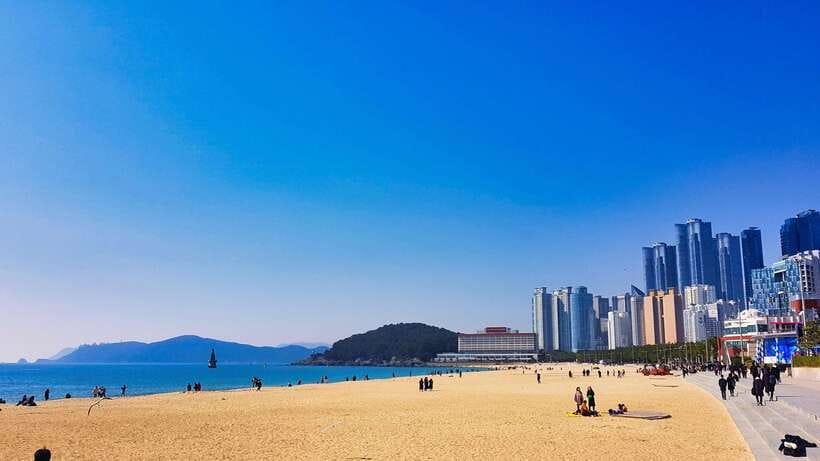
Next comes Haeundae Beach, guided for about 20 minutes. Yes, it’s beautiful. But the guide also explains how the beach’s role shifted during the Korean War, including a period when it served as a U.S. military base.
This is where the tour earns its keep. A lot of beach stops are just beaches. This one gives you the historical logic for why coastal areas in the same region can develop in similar ways during conflict, recovery, and rebuilding.
You’ll also get a clear explanation of how the relationship between South and North Korea has influenced Haeundae’s development. I like that the guide keeps the context practical, so you’re not drowning in dates. Instead, you walk away with an understanding of how geopolitics can reach shorelines and streets.
A few more Busan days worth comparing
- Busan: Gyeongju Guided Day Trip to Three Kingdoms Capital
★ 4.8 · 1,925 reviews - Small Group Full Day Busan Tour (Max 6 Pax)
★ 5.0 · 1,464 reviews - From Busan: Gyeongju UNESCO World Heritage Guided Day Tour
★ 4.8 · 1,250 reviews - Busan Private Tour with licensed tour guide + private vehicle
★ 5.0 · 1,143 reviews
Gunam-ro: Korea’s Seaside Hot Spring That Loved Royal Attention
After the beach, you head along Gunam-ro, the busy corridor that runs through the heart of Haeundae. The guided time here is shorter, around 8 minutes, but don’t treat it like a “quick photo stop.” This is where the tour connects culture to water.
Gunam-ro traces back to Gunam Oncheon, described as Korea’s only seaside hot spring. The guide shares how this hot spring was popular with Korean royalty, and how that kind of attention can shape an area’s social identity over time.
The big value for you is contrast. You’ll go from skyscraper-level city energy to a story where soaking and healing spaces influenced who came, what habits formed, and why certain spots became meeting points. Even if you’re not into baths, the lesson is about how health, leisure, and status can leave a long imprint.
Haeundae Atelier Chik Chik Pok Pok: The Station Story Becomes a Walkable Set
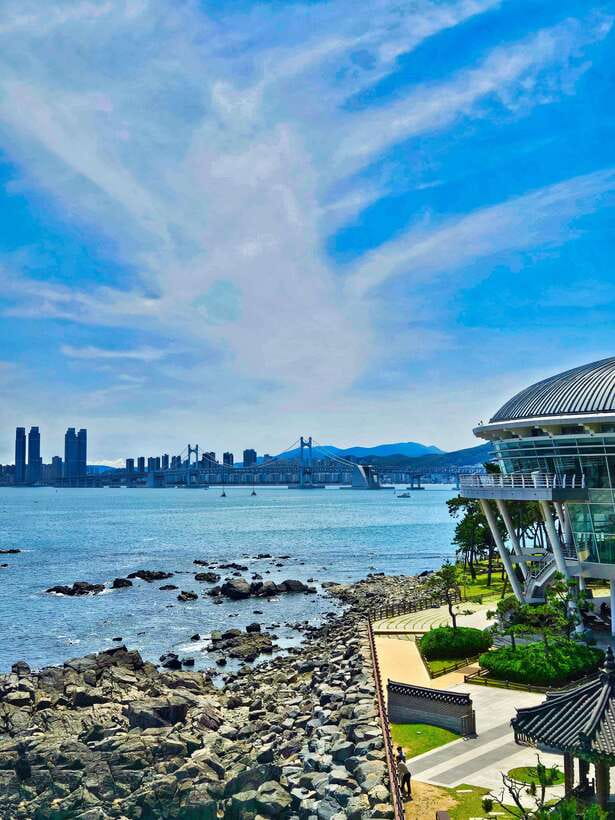
You’ll then return to the old-station theme at Haeundae Atelier Chik Chik Pok Pok (also referred to as the Old Haeundae Station area). You’ll spend around 20 minutes here, using it as another lens for understanding how the past is presented now.
This stop is useful even if you don’t plan to read every exhibit detail. What matters is that the guide uses the space to reinforce earlier points about transportation and transformation. In other words, you’re not repeating yourself. You’re seeing the same story from a different angle.
Also, if you end up in a smaller group, this portion is a good time to ask questions. I’ve found the best historical walks are the ones where you can steer the conversation a bit, and this tour format makes that easier than you might expect for a set route.
Dongbaek Island (Dongbaekseom): Choi Chi-Won and the Coast at the End
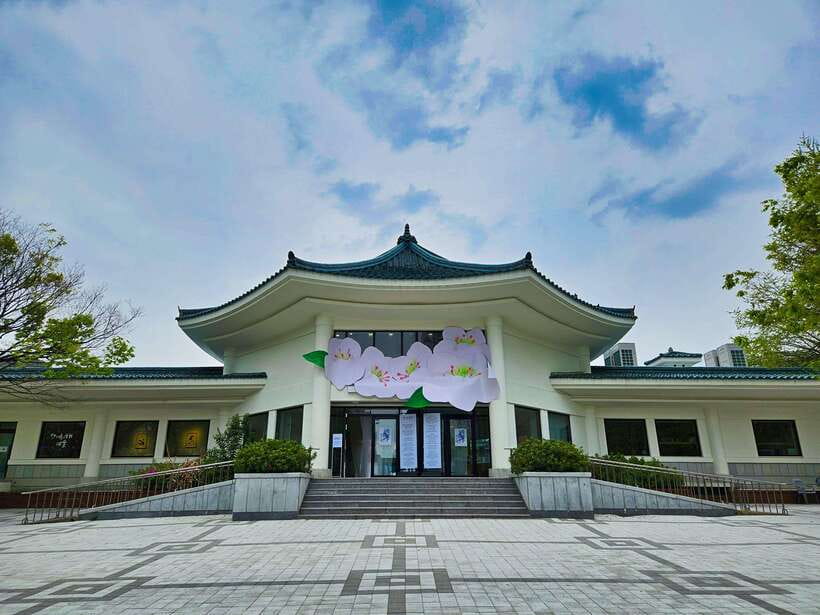
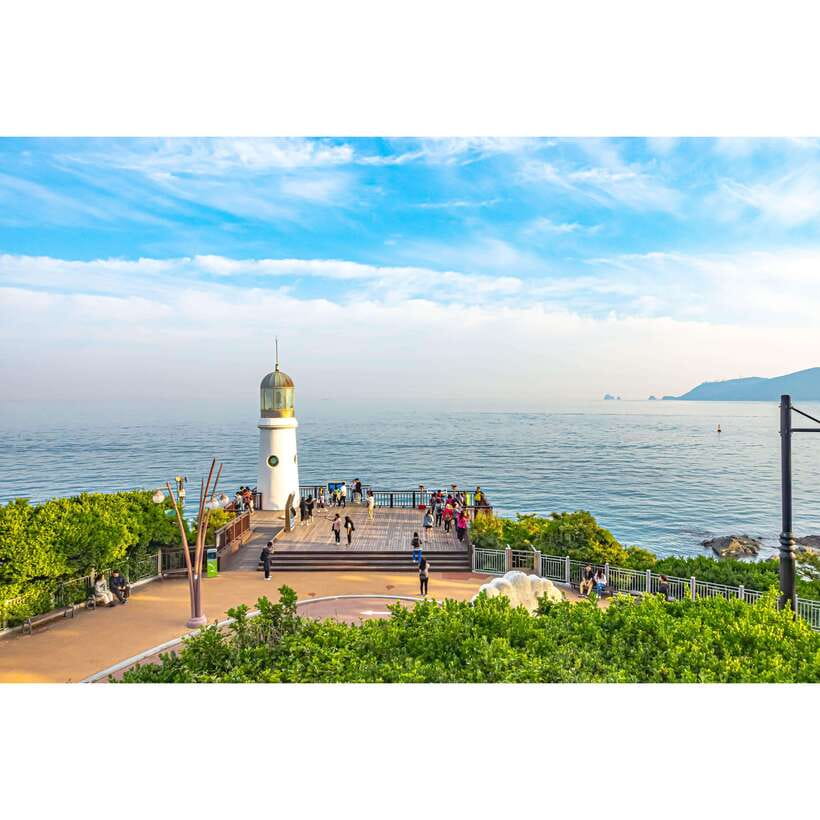
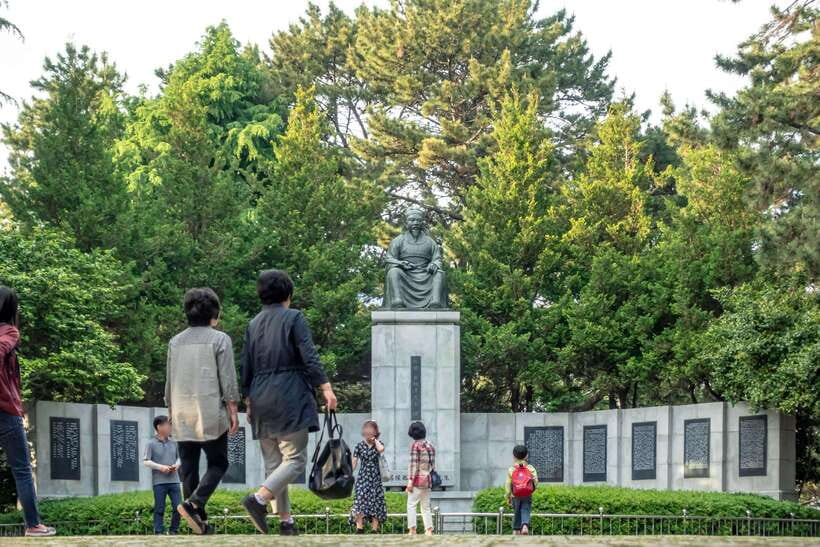
The tour concludes at Dongbaekseom (Dongbaek Island) for about 15 minutes of guided time. This is the calmer, scenic finish, where you’ll learn the legacy of Choi Chi-Won, a scholar who named Haeundae.
For photos, it’s a strong ending. For thinking, it works even better. Earlier stops gave you political and economic change. This one slows everything down and gives you a cultural anchor: a name, a person, and a sense of place that predates modern development.
I also like that the route naturally ends with coastal views. It’s an easy way to process what you just learned, without needing to sprint to the next activity.
Price and Value: Why $29 Feels Fair for This Type of Tour
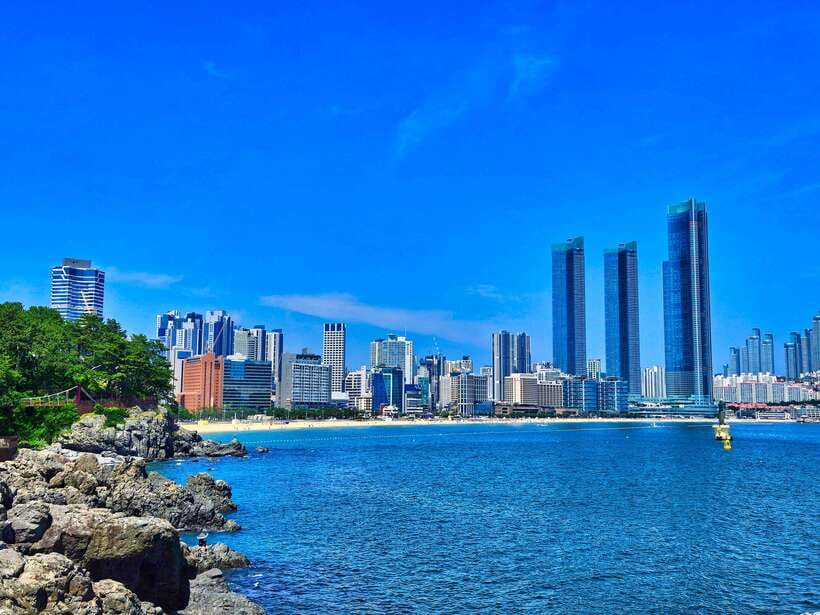
At $29 per person, you’re paying for three things that are hard to DIY quickly: an English-speaking guide, guided historical interpretation, and a route that connects multiple layers of Haeundae’s identity in a short time window.
A self-walk can get you photos and basic sightseeing. But it won’t easily explain why a former station matters, why a seaside hot spring shaped social culture, and why the Korean War left marks that still shape how you understand the beach today. That interpretive layer is the real value here.
The wireless audio also helps the cost feel reasonable. It reduces the frustration of crowded areas, wind, and long distances between you and the guide. Small comfort perks like that add up when you’re walking for nearly two kilometers.
How Much Walking Is It, Really?
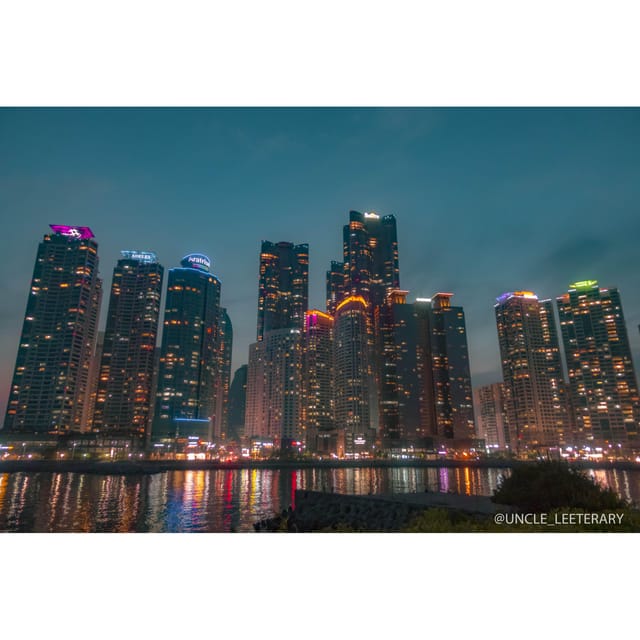
The walking difficulty is listed as easy, but you should still plan for real movement. You’ll walk about 2 kilometers and climb a hill around 50 meters. The pace is relaxed, and the route is short enough to stay enjoyable, but your legs will notice the climb.
What I recommend:
- Wear comfortable shoes, the kind you can walk in repeatedly.
- Bring water, since you’re advised to carry your own drinking supply.
- If it’s sunny, consider bringing a sun umbrella for shade, especially near open areas by the coast.
If you’re very heat sensitive or you’re not steady on hills, you might feel the climb more than the “easy” label suggests. If that’s you, consider timing it for cooler hours.
Practical Tour Tips That Make the Difference
This tour runs about 90 minutes, and it’s designed like a clean loop. Because the story travels from rail to hot spring to beach to island, it helps to arrive with a simple mindset: watch for the “why” behind each place.
A few practical tips:
- Plan to bring a charged phone, but use it mainly for navigation or quick notes. The guide’s audio setup will do most of the work.
- Since audio recording isn’t allowed, focus on listening and ask questions instead.
- If you have 100 minutes free before lunch, this fits nicely, and it gives you context so you can enjoy a meal later without feeling like you missed half the story.
Also, consider that the guide often makes time for questions. When your group is smaller, you can get more back-and-forth, which turns the walk into something closer to a local conversation than a lecture.
Who This Tour Is Best For
This is a great match if you:
- Want a history-based introduction to Haeundae without taking a full-day tour.
- Like walking tours but prefer a route that stays focused on one neighborhood.
- Enjoy understanding how modern Korea connects to railway growth, cultural spaces, and wartime change.
It may be less ideal if you:
- Need to avoid hills entirely. The 50-meter climb is a real factor.
- Have very limited stamina or you fall outside the tour’s suitability notes, which list children under 10 and people over 70 as not suitable.
Should You Book This Haeundae History Walk?
Book it if you want Haeundae to make sense beyond the beach. This tour gives you a fast, readable story that links former station infrastructure, seaside hot spring culture, Korean War context, and Dongbaek Island’s naming legacy in one compact route.
Skip it if you only want a low-effort beach wander and you’re not interested in historical context. Also think twice if the hill is a dealbreaker for you, since the route includes a 50-meter climb and about 2 kilometers of walking.
If you do book, bring water, wear good shoes, and give the guide space to talk. The best moments come when the story connects one place to the next, and the whole coast starts to feel like one long, coherent lesson.
FAQ
Where is the meeting point for this Haeundae tour?
Meet at Haeundae Atelier Chik Chik Pok Pok (Old Haeundae Station), address 621, Haeundae-daero, Haeundae-gu, Busan. From Busan Metro Line 2, take Haeundae Station and Exit 4, then look for a public square on your right where the guide will be holding a flag.
How long is the tour, and how much will I walk?
The tour is listed at about 90 minutes. You will walk approximately 2 kilometers total and climb a hill about 50 meters high.
What’s included in the price?
The tour includes an English-speaking guide and wireless transmitter and receiver with complimentary earphones. The tour also recommends bringing your own 3.5mm wired earphones for hygiene.
What should I bring, and is there anything I can’t do?
Bring comfortable shoes and water. Audio recording is not allowed during the tour.
Is this tour okay for children or older adults?
The tour notes that it is not suitable for children under 10 years old and people over 70.
Is there wheelchair access?
The tour is listed as wheelchair accessible, but the route includes a hill about 50 meters, so you should consider that when planning.
Recently reviewed in Busan
- West Busan Small Group Photo Tour (Max 7)★ 5.0 · 11 reviews
- Real Busan Walking Experience★ 5.0 · 27 reviews
- Visit Busan night market and enjoy the night view of Busan harbor★ 5.0 · 6 reviews
- Busan Highlights Shore Tour – Cruise Return Assured★ 4.5 · 34 reviews
- Suncheon one day tour from Seoul, Busan or Suncheon★ 5.0 · 3 reviews
- Busan Beomeosa Temple & Hongbeopsa Temple with temple lunch★ 5.0 · 11 reviews
- 1 Day Private Busan Guided Tour★ 4.5 · 3 reviews
- Busan Seafood Tour : Oyster village Tour with Oyster cuisines★ 5.0 · 3 reviews
Walking Tours, compared.

Seoul moonlight walking tour with local historian
Read our review →
Evening Dark History, Folklore & Ghost Story Walking Tour
Read our review →
Dark Side of the City and Ghost Stories Walking Tour
Read our review →
Gangnam Walking Tour on Youth and Society in Seoul Korea
Read our review →
Gyeongbok Palace and Bukchon Hanok Walking Tour
Read our review →
Best Walking Tour to Gyeongbok Palace Bukchon Hanok Village
Read our review →
Highlights & Hidden Gems With Locals: Best of Seoul Private Walking Tour
Read our review →Browse the lists this tour appears in