

Reviewed · COOKING CLASSES
Vegan Korean Food Cooking Class: Gimbap, Sundubu Jjigae, and more
Korean food tastes better when you make it yourself. I love the hands-on vegan meal you build from scratch, and the clear step-by-step guidance from host Soomin. One thing to plan for, this workshop is on the 3rd floor with no elevator, so stairs are part of the deal.
Itaewon is a smart base for this class because you get a true food neighborhood feel without the tourist-rush energy. You’ll work with tofu in a practical way, plus seasonal edible flowers for the sweet course, and the class can accommodate glutenfree on request.
If you want a fun, stomach-satisfying way to understand Korean flavors, this 2 hours 30 minutes workshop is built for that. Small groups (max 4) also mean you can ask questions without shouting across the room.
In This Review
- Key highlights to know before you go
- Why a vegan Korean cooking class in Itaewon makes sense
- Price check: what $75 buys you (and why it feels fair)
- Getting to class: the meeting point, mobile ticket, and 3rd-floor reality
- Your menu starts with gimbap, then turns into real technique
- Sundubu-jjigae from scratch: tofu stew you can tailor
- Biji-jeon: soy pulp pancakes with Korean-style crunch
- Hwa-jeon: shaping glutinous rice dough with edible flowers
- What the small-group format changes for you
- Tips for your day: come hungry, and plan for leftovers
- Who this class is perfect for
- The main drawback to weigh before booking
- Should you book this vegan Korean cooking class?
- FAQ
- How long is the vegan Korean cooking workshop?
- What dishes will I make during the class?
- Is the class vegan, and is it suitable for Muslim-friendly diets?
- Can the class accommodate glutenfree needs?
- Where is the meeting point, and what time does it start?
- Is there a way to get a refund if I cancel?
Key highlights to know before you go
- Small group, max 4 travelers, so you get real hands-on time
- Soomin teaches with step-by-step instructions, plus plenty of ingredient context
- Full vegan Korean menu, not a token taste
- Tofu is the star, shown in multiple roles across different dishes
- Seasonal edible flowers used for the hwa-jeon presentation
- 3rd floor with no elevator, plan your arrival accordingly
Why a vegan Korean cooking class in Itaewon makes sense

Itaewon is one of Seoul’s most practical areas for food-focused visitors. You can find international tastes nearby, but this class keeps the spotlight on Korean cooking, with tofu taking center stage.
What I like here is the “learn by doing” setup. You are not just watching someone cook and hoping it sticks in your brain. You assemble, roll, shape, and cook the dishes yourself, so you walk away understanding the logic behind the flavors and textures.
This workshop also has a helpful mix of comfort food and technique. Sundubu-jjigae gives you the cozy stew foundation. Gimbap teaches you how Korean-style rice and fillings work together. Then you finish with biji-jeon and hwa-jeon, which show Korean cooking is not only savory.
More Cooking Classes in Seoul:
- Local Home Korean Cooking Class & Market Adventure in Seoul
★ 5.0 · 1,024 reviews - Master Korean traditional cooking with a Kimchi chef
★ 5.0 · 385 reviews - Seoul: Korean Cooking Class at a Local Home and Market Tour
★ 5.0 · 348 reviews
Price check: what $75 buys you (and why it feels fair)
At $75 per person for about 2.5 hours, the value comes from how much food you make and how much instruction you get. This is not a quick sampling. You’re making multiple dishes that turn into a full meal, with hands-on time at each station.
Think of it like paying for three things at once: ingredients, cooking time, and coaching. When you do the math, you’re effectively getting enough guided practice to recreate these dishes later, rather than paying for a one-time plate.
It also helps that the class stays small, max 4 travelers. In a larger group, you often wait your turn. Here, you have a better chance to stay involved, ask questions while you cook, and get the texture right when it matters.
Getting to class: the meeting point, mobile ticket, and 3rd-floor reality
The class starts at 11:00 am and meets in Itaewon-dong, Yongsan District, Seoul. It ends back at the meeting point, so you do not need a second plan for where to go after.
You’ll use a mobile ticket, and the activity is near public transportation, which makes it easier to fit into a Seoul day. The one detail you should not ignore is the no elevator, 3rd floor note. If you have mobility limits, you’ll want to decide in advance whether stairs are workable for you.
Service animals are allowed, and the class confirms availability within 48 hours of booking. Since the class is small and popular enough to be commonly booked ahead, I’d treat it like a plan, not a last-minute browse.
Your menu starts with gimbap, then turns into real technique
Gimbap is the dish most people expect to learn in a Korean cooking class, and this one treats it like a skill, not a snack. You’ll assemble and roll gimbap, which means you practice the key moves: how rice behaves, how fillings should be placed, and how the roll stays neat.
What makes this valuable is the plant-based angle. Korean home cooking often uses seafood or meat by default, so switching to tofu and other vegan ingredients changes the balancing act. You learn how to keep the flavors satisfying without leaning on animal products.
You also get the visual payoff. Gimbap rolls are one of those foods where small differences show quickly, like uneven filling placement or loose rolling. That’s good news, because you can see exactly what you improve during the class.
If you’ve ever had gimbap that felt bland or messy, this style of hands-on learning helps you avoid that. You leave with a process, not just a recipe.
More Food Tours in Seoul:
- Seoul Street Food Market Tour
★ 5.0 · 1,226 reviews - Seoul: Night Market Food Tour with Local Guide
★ 4.9 · 943 reviews - Downtown Seoul Guided Food & Market Tour with 8+ Local Tastings
★ 5.0 · 580 reviews - Seoul Night Palace & Market Food Tour with Vehicle
★ 5.0 · 275 reviews
Sundubu-jjigae from scratch: tofu stew you can tailor
Sundubu-jjigae is Korea’s famous tofu stew, and here you get to cook it from scratch. That means you’re not just timing a simmer, you’re building the base that makes sundubu creamy and comforting.
Tofu in sundubu-jjigae isn’t just an ingredient. It’s a texture tool. As the stew heats, the tofu softens into the broth, which is why the final bowl feels silky rather than watery.
The “from scratch” part matters because it teaches you what to pay attention to while you cook. You learn how the flavors come together, then how the stew changes as it thickens. Even if you’re not cooking this exact version later, the method is the takeaway.
Also, stew is a great “confidence builder” dish for home cooks. If you can make a warm pot of sundubu-jjigae, you can build a comfort-food routine for busy days back home.
Biji-jeon: soy pulp pancakes with Korean-style crunch
Biji-jeon are soy pulp pancakes, and they bring a different texture lesson compared with gimbap and stew. Instead of soft and comforting, you’re aiming for a satisfying bite and crisp edges.
You’ll prepare and cook the soy pulp pancakes during the class, which gives you a practical understanding of how to handle the mixture and how heat affects the outcome. Pancakes can go wrong fast if the pan is too hot or the batter sits too long, so getting hands-on coaching helps.
This dish also shows something useful about tofu-centered cooking. Even when you move beyond tofu itself, Korean vegan technique still works. The class highlights soy-based ingredients in a way that feels realistic for home kitchens.
For me, biji-jeon is the dish that makes a vegan menu feel complete. It adds a savory “snack-meets-meal” option and gives you something to remember besides the stew.
Hwa-jeon: shaping glutinous rice dough with edible flowers
Hwa-jeon is the dessert-or-snack cousin that looks like art. In this class, you’ll shape and cook glutinous rice dough and then finish it with seasonal edible flowers.
That edible flower detail is more than decoration. It’s a reminder that Korean cooking often balances taste with visual style, and seasonal ingredients are part of that rhythm. Even if you do not source edible flowers easily at home, the technique of shaping and cooking the dough is the core skill.
Glutinous rice dough can be tricky because you need the right feel and thickness so it cooks evenly. Having instruction in the moment keeps you from guessing.
The result is a gentle finish that feels distinctly Korean, not like a generic sweet. It’s also a strong “wow” moment to share with whoever you’re traveling with.
What the small-group format changes for you

When a class caps at 4 people, your experience feels less like a show and more like a guided workshop. You’re not competing for attention, and you can keep moving through tasks at a pace that makes sense.
This matters with rolling gimbap, plating, and pancake timing. If you get stuck, you can ask questions and adjust, instead of waiting for the instructor to finish checking everyone.
It also makes conversation easier. You’ll hear ingredient and tradition explanations as you go, which helps the food make sense beyond the recipe steps. That background is handy when you’re browsing Korean markets later or trying vegan options on your own.
Tips for your day: come hungry, and plan for leftovers
The best advice is simple: go with an appetite. The class menu is substantial, and you’ll be making multiple dishes, so it adds up to a full meal.
If you want to take anything home, bring a box or container. That’s the kind of practical move that lets you stretch the experience beyond class time, especially if you’re planning a second stop later in Seoul.
Also, since the class is on the 3rd floor with no elevator, wear shoes that work well on stairs. It’s not a major hardship, but it is a real logistics detail.
Who this class is perfect for
This works for a wide range of diners:
- You’re vegan or vegetarian and want a full Korean meal you can actually eat
- You’re curious about tofu and want to see it in multiple roles
- You want a Muslim-friendly Korean cooking experience with plant-based choices
- You prefer glutenfree adjustments when possible, with glutenfree on request
It can also be a smart option if you’re a reducetarian. You’ll still get a clear Korean flavor profile, but you’ll see how the cooking changes when animal products are removed.
If you’re the type of traveler who loves food but does not want to rely only on restaurants, this class is a great fit. You leave with technique you can use again.
The main drawback to weigh before booking
The biggest consideration is physical. This is on the 3rd floor with no elevator, so if stairs are difficult for you, you should factor that into your plan.
The other minor “consideration” is timing. Starting at 11:00 am means you’ll want to structure your morning around it. Plan lunch around the class meal, not after it.
Should you book this vegan Korean cooking class?
I’d book it if you want hands-on Korean cooking in a small group, with an instructor who explains ingredients and processes clearly. The standout here is the full menu, not just one dish. You’ll make gimbap, sundubu-jjigae, biji-jeon, and hwa-jeon, and you’ll learn how tofu-centered cooking still delivers Korean comfort and Korean style.
I would hesitate only if stairs are a dealbreaker or if you’re looking for a low-engagement demo. This is built for you to cook. If you want to stand back and observe, it probably won’t feel as satisfying.
If you’re traveling with food goals, this class is a strong use of time. It’s a concentrated way to understand Korean flavors, not just sample them once.
FAQ
How long is the vegan Korean cooking workshop?
The workshop lasts about 2 hours 30 minutes.
What dishes will I make during the class?
You’ll make gimbap, sundubu-jjigae, biji-jeon (soy pulp pancakes), and hwa-jeon (glutinous rice dough finished with seasonal edible flowers).
Is the class vegan, and is it suitable for Muslim-friendly diets?
The workshop is a Korean vegan cooking class and is listed as Muslim-friendly.
Can the class accommodate glutenfree needs?
Glutenfree is available on request.
Where is the meeting point, and what time does it start?
You meet in Itaewon-dong, Yongsan District, Seoul, and the start time is 11:00 am.
Is there a way to get a refund if I cancel?
Yes, you can cancel for a full refund if you cancel at least 24 hours before the experience starts. If you cancel less than 24 hours before, the amount paid is not refunded.
Recently reviewed in Seoul
- You’re Invited to Our Home in Seoul: The Only Cooking Class!★ 5.0 · 8 reviews
- Your Personal Seoul Photographer!★ 4.1 · 15 reviews
- From Seoul: Yongpyong Ski Day Tour with Transportation★ 4.9 · 40 reviews
- Seoul: Korean & English Language Exchange Global Party★ 5.0 · 28 reviews
- Watching sports match & local food experience in Seoul★ 5.0 · 11 reviews
- WKT Combat Taekwondo & Self-defense One Day Class in Seoul★ 5.0 · 5 reviews
- Unique Native Experience : Han River Picnic, Board game, BBQ★ 5.0 · 3 reviews
- Seoul: Gangneung BTS K-Pop & K-Drama Filming Locations Tour★ 4.6 · 14 reviews
Cooking Classes, compared.
Local Home Korean Cooking Class & Market Adventure in Seoul
Read our review →
Master Korean traditional cooking with a Kimchi chef
Read our review →
Korean Cooking Class at a Local Home and Market Tour
Read our review →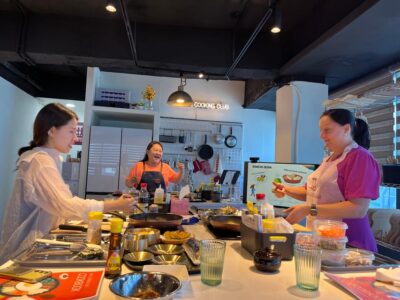
Experience Korean Cooking in Modern Hanok Kitchen
Read our review →
Korean Cooking Class with Grocery Shopping at Seoul Local Market
Read our review →
Taste of Korea, Authentic home style Cooking class
Read our review →Browse the lists this tour appears in