
Reviewed · COOKING CLASSES
Seoul : Taste of Korea, Authentic Home-Style Cooking Class
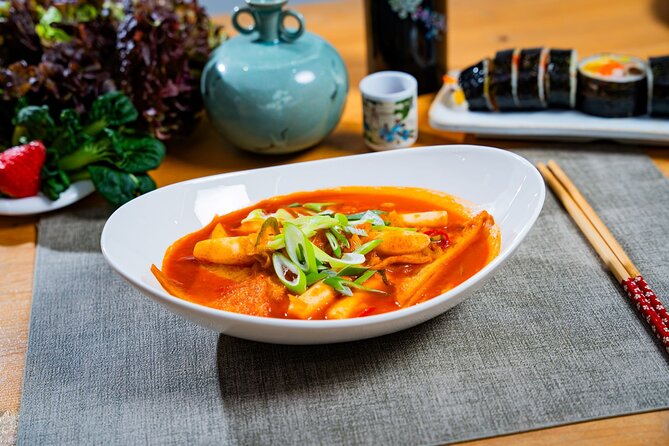
A cooking class in Seoul that feels like family table time. You get hands-on Korean home-style meals, guided step by step, with Hansik as the theme and the dishes you actually cook: gimbap, tteokbokki, haemulpajeon, and budae jjigae.
I especially liked how the teaching stays practical, with Jennifer (and her team) keeping things friendly while still moving at a good pace. And the food volume is real, you leave full, often with leftovers to bring home.
One thing to plan for: this is a 3 hour session, so you will be in the kitchen for most of the time. If you prefer slow sightseeing breaks, schedule it when you can keep your day flexible around eating.
In This Review
- Key points to know before you go
- Hansik home-style cooking in Seoul, what you are really learning
- Getting to the class at Jahamun-ro in Jongno
- The kitchen vibe, small group size and a very hands-on teacher
- Gimbap basics, building your rice roll
- Tteokbokki with gochujang heat, the sauce is the lesson
- Haemulpajeon seafood and scallions, crispy pancake technique
- Budaejjigae, cozy army stew comfort
- The full-course meal after cooking, tea, Sikhye, Makgeolli, dessert
- Pace, group energy, and why the class feels worth $89
- Practical tips to get the most from this Seoul Hansik class
- Who this class suits best (and who should skip it)
- FAQ
- How long is the Seoul Hansik cooking class?
- What dishes will I cook during the class?
- How many people are in a group?
- Are drinks included, and is there an age limit for alcohol?
- Do I get the recipes after the class?
- What if I have dietary restrictions?
- What is the cancellation policy?
- What happens if the class is canceled due to weather or not enough people?
- Should you book this Hansik cooking class in Seoul?
Key points to know before you go
- Small group, up to 10 people, so you get more help when you pause or mess up a roll.
- Four classic dishes from scratch: gimbap, tteokbokki, haemulpajeon, budae jjigae.
- Digital recipes after class, so you can recreate what you made at home.
- Large portions and leftovers, not a tiny tasting.
- Dietary restrictions handled, with alternative recipes offered when needed.
- Drinks include Korean tea and snacks, plus Sikhye and Makgeolli, with alcohol only served to travelers 21 and up.
Hansik home-style cooking in Seoul, what you are really learning
Hansik is Korean food, but the way people cook and share it is the bigger lesson. Here, it is not about fancy restaurant plating. It is about how home cooks build flavor, comfort, and variety from everyday ingredients.
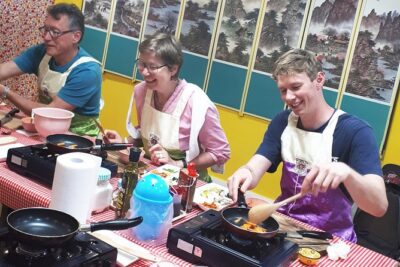
The class structure makes this easy to understand. You do the work yourself at dedicated cooking stations, and you get taught as you go. That means you learn technique, not just recipes you screenshot.
And because you are cooking four different dishes, you get a quick view of how Korean meals can feel both spicy and soothing, crispy and saucy, and light yet filling all in one course.
More Cooking Classes in Seoul:
- Local Home Korean Cooking Class & Market Adventure in Seoul
★ 5.0 · 1,024 reviews - Master Korean traditional cooking with a Kimchi chef
★ 5.0 · 385 reviews - Seoul: Korean Cooking Class at a Local Home and Market Tour
★ 5.0 · 348 reviews
Getting to the class at Jahamun-ro in Jongno
The meeting point is 31-5 Jahamun-ro, Jongno District, Seoul. It is set up for public transport access, and you finish by returning to the same place.
You also get a mobile ticket, and you receive confirmation at the time of booking. So you do not need to play guessing games with printouts or last-minute emails.
Practical tip: because this is a cooking session, build in a little extra time to get there hungry and calm. Jongno is active, and you do not want to sprint while thinking about rice rolling or sauce control.
The kitchen vibe, small group size and a very hands-on teacher
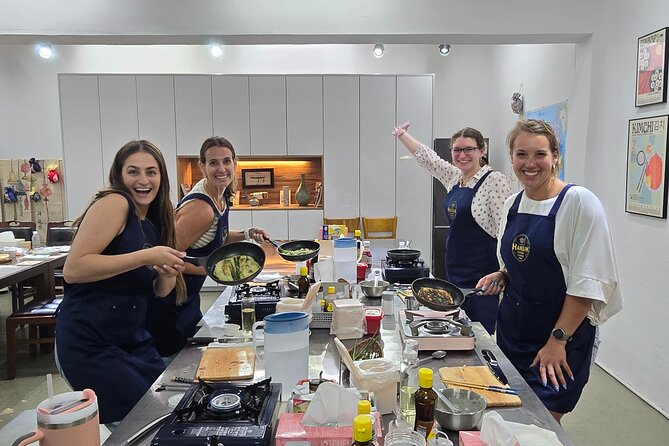
With a maximum of 10 travelers, this does not feel like you are watching from the sidelines. You cook, you ask questions, and you get correction early enough to actually use it.
Jennifer, as your lead instructor, comes up repeatedly in the best parts of the experience. People highlight her patience, her chatty warmth, and the way she explains dishes and their context. One review even credits her with helping participants succeed while still letting them make mistakes safely, which is the best kind of learning.
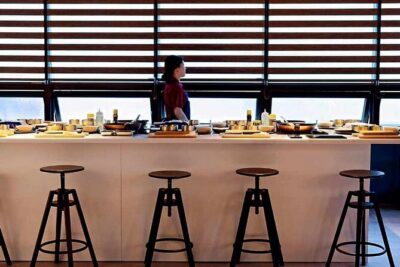
You will also find the setup described as clean and professional. That matters in a cooking class because hygiene and organization are not optional, especially when you are working close to heat, sauces, and shared stations.
Gimbap basics, building your rice roll
Gimbap is one of those dishes everyone thinks they know, until they try to make it properly. In this class, you learn it as a hands-on skill, with step-by-step guidance from the instructor.
The big value of starting with gimbap is how it teaches you Korean comfort food logic. You learn how rice and fillings work together as a portable, satisfying bite. Even if you have eaten gimbap a lot in Seoul, this gives you a new mental model for how it comes together.
What I like for you: gimbap is one of the easiest dishes to replicate later because it is structured. If you want a win you can take home quickly, this is a good candidate.
A few more Seoul days worth comparing
- Best DMZ Tour Korea from Seoul (Red Suspension Bridge Optional)
★ 5.0 · 41,422 reviews - DMZ Tour: 3rd Tunnel, Option(Suspension Bridge, Boat) from Seoul
★ 5.0 · 21,373 reviews - DMZ tour south Korea from Seoul (NK experience hall, defector)
★ 5.0 · 20,599 reviews - Seoul: The Best DMZ Tour with Optional Suspension Bridge
★ 4.7 · 4,978 reviews
Tteokbokki with gochujang heat, the sauce is the lesson
Tteokbokki is described as rice cakes with gochujang sauce, and that is exactly where the learning happens. Gochujang is sweet, savory, and spicy all at once. You cannot freestyle it without knowing what balance looks like while it cooks.
In class, you get to make it with instruction instead of just tasting. That means you are learning how to manage heat and thickness, how to recognize the sauce as it turns glossy, and how the rice cakes change as they absorb flavor.
If spice scares you, you should know the class can adapt for dietary restrictions. The data specifically calls out alternative recipes for restrictions, so if you have concerns, say something early.
Haemulpajeon seafood and scallions, crispy pancake technique
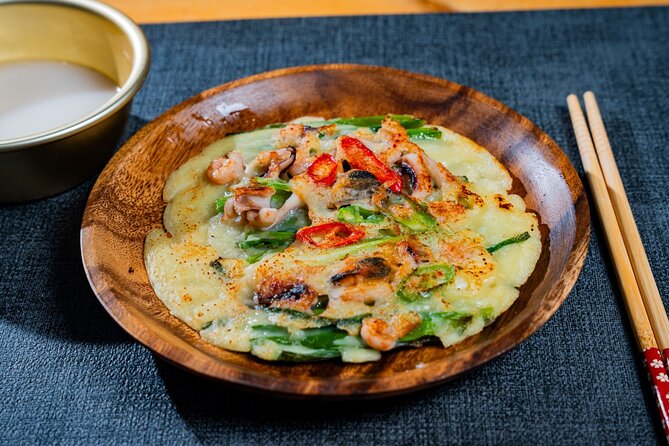
Haemulpajeon is a Korean seafood green onion pancake, and it teaches a different type of control than gimbap and tteokbokki. Pancakes reward attention to batter consistency and cooking rhythm.
Because you cook it yourself, you do not just learn ingredients. You learn texture. That is a subtle but important difference. Crispy edges and a set center are what turn this from a soggy experiment into a dish you crave again.
You also get the joy of working with familiar flavors like scallions while still learning Korean technique. This is one of the dishes that feels fun because it has instant feedback: if your batter is right, the pancake behaves right.
Budaejjigae, cozy army stew comfort
Budaejjigae, often translated as army stew, is hearty and warming. In a home-style class, it makes a lot of sense as the anchor dish because it teaches you how Korean meals can feel big and satisfying without being fussy.
You will cook it with instructor help, and this is where the class starts to feel like a real meal, not just four separate lessons. The stew format also gives you variety in your palate. After a roll and a spicy sauce and a pancake, you get something deep, savory, and filling.
In terms of value, this dish is a great final payoff. Even if you are not the most confident cook, stew is forgiving in the sense that flavor develops as it simmers, and you can adjust along the way with guidance.
The full-course meal after cooking, tea, Sikhye, Makgeolli, dessert
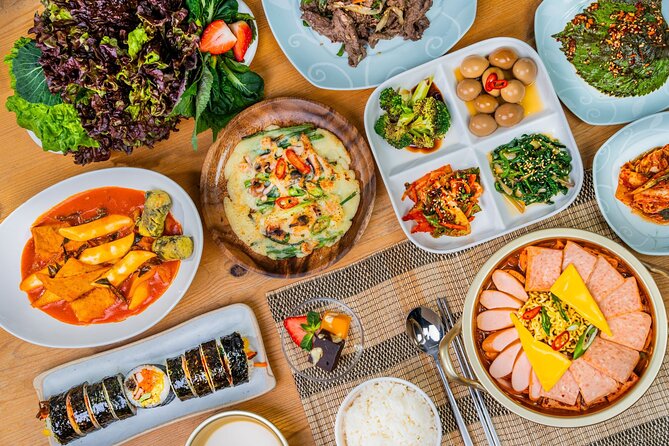
This class does not end when the cooking ends. You are served a full-course home meal along with Korean tea and snacks, plus Sikhye (Korean rice punch) and Makgeolli (Korean rice wine), and dessert.
That is a key part of the value. You are not paying for a demo. You are paying for cooking plus eating what you made in a shared meal format.
A practical note about alcohol: the class serves alcoholic drinks only to travelers 21 years old and above. If you are traveling with mixed ages, that is helpful. Kids and adults can still enjoy the non-alcohol parts of the table meal.
Also, based on what people highlight, the portions are generous. The result is you are likely to leave well fed, and in many cases with leftovers you can take home for later.
Pace, group energy, and why the class feels worth $89
At $89 per person, you are paying for three things at once: ingredient time, instructor coaching, and a full meal. In Seoul, that combination is often what separates a “tasting” from a real cooking skill-building experience.
The 3-hour duration is short, but the structure helps it work. Small group size plus step-by-step teaching keeps you moving without feeling lost. People repeatedly mention that the class pace feels organized and that instructions are clear.
You also get something practical for home: recipes are provided digitally after the class. That matters because cooking muscle memory fades fast, but a recipe you can check later is useful.
If you are the type who loves Korean food but wants to do more than order takeout, this price makes sense. You are buying a repeatable skill set, plus a meal, plus the chance to ask questions while you cook.
Practical tips to get the most from this Seoul Hansik class
Come hungry. I mean that literally, the class includes snacks, tea, Sikhye, Makgeolli (for those eligible), dessert, and a full-course meal after cooking. Several people also note leftovers, so your appetite plan should assume you will eat.
Bring questions about what you taste. This is where you can translate Korean flavors into choices you will make at home, like sauce balance and how each dish should feel.
If you have dietary restrictions, bring them up when you book or at the start of class. The class data says alternative recipes are offered, and that is one of the things people are happy about.
Finally, wear your “I might get flour or sauce on me” outfit. The kitchen is clean and professional, but hands-on cooking is still hands-on cooking.
Who this class suits best (and who should skip it)
This is ideal for food lovers who want real Korean home-style technique and not just a quick taste. It is also a strong pick for couples and friends because you get guided work at each station and then share the meal right after.
Families can do well here too. The class experience has been described as accommodating for children around 10 and 12, with the instructor helping different skill levels stay comfortable.
You might skip it if you are only in Seoul for a very tight schedule and cannot spare about 3 hours in one block. This is also best if you like participating, not just watching.
FAQ
How long is the Seoul Hansik cooking class?
The class runs for about 3 hours.
What dishes will I cook during the class?
You will cook four dishes: gimbap, tteokbokki, haemulpajeon, and budae jjigae.
How many people are in a group?
The class has a maximum of 10 travelers.
Are drinks included, and is there an age limit for alcohol?
You get Korean tea and snacks, plus Sikhye and Makgeolli. Alcohol is only served to travelers 21 years old and above, and minors are served non-alcoholic drinks.
Do I get the recipes after the class?
Yes. You receive the recipes digitally after the cooking session.
What if I have dietary restrictions?
Alternative recipes are offered if you have dietary restrictions or preferences.
What is the cancellation policy?
Cancellation is free, as long as you cancel up to 24 hours in advance for a full refund. If you cancel less than 24 hours before the start time, the amount paid is not refunded.
What happens if the class is canceled due to weather or not enough people?
If it is canceled due to poor weather, you will be offered a different date or a full refund. If it is canceled because the minimum number of travelers is not met, you will also be offered a different date or a full refund.
Should you book this Hansik cooking class in Seoul?
If you want a Korean food experience you can repeat at home, I think this is a smart booking. The combination of four classic dishes, small-group attention, step-by-step teaching, digital recipes, and a full meal with Sikhye and dessert makes it feel like real value rather than a quick activity.
Book it if you like hands-on cooking, want to learn the why behind Korean flavors, and you do not mind spending most of the 3 hours actively in the kitchen. Pass if your schedule is too tight or you are hoping for a mostly passive food tour.
If you choose one “food skill” class in Seoul, this is the kind that sticks.
Recently reviewed in Seoul
- You’re Invited to Our Home in Seoul: The Only Cooking Class!★ 5.0 · 8 reviews
- Your Personal Seoul Photographer!★ 4.1 · 15 reviews
- From Seoul: Yongpyong Ski Day Tour with Transportation★ 4.9 · 40 reviews
- Seoul: Korean & English Language Exchange Global Party★ 5.0 · 28 reviews
- Watching sports match & local food experience in Seoul★ 5.0 · 11 reviews
- WKT Combat Taekwondo & Self-defense One Day Class in Seoul★ 5.0 · 5 reviews
- Unique Native Experience : Han River Picnic, Board game, BBQ★ 5.0 · 3 reviews
- Seoul: Gangneung BTS K-Pop & K-Drama Filming Locations Tour★ 4.6 · 14 reviews
Cooking Classes, compared.
Local Home Korean Cooking Class & Market Adventure in Seoul
Read our review →
Master Korean traditional cooking with a Kimchi chef
Read our review →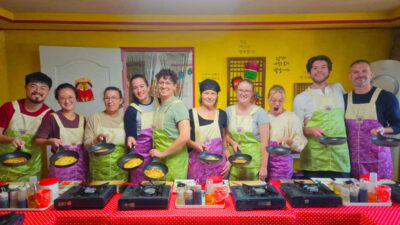
Korean Cooking Class at a Local Home and Market Tour
Read our review →
Experience Korean Cooking in Modern Hanok Kitchen
Read our review →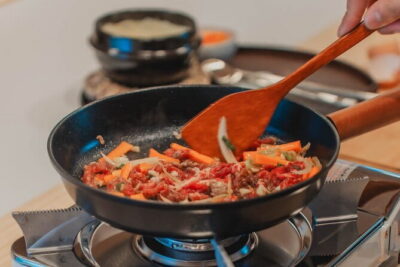
Korean Cooking Class with Grocery Shopping at Seoul Local Market
Read our review →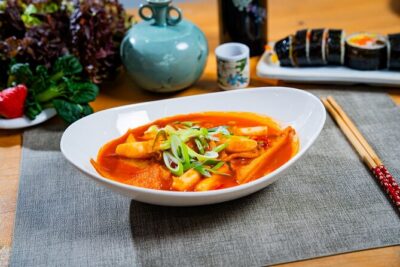
Taste of Korea, Authentic home style Cooking class
Read our review →Browse the lists this tour appears in