
Reviewed · MARKETS
Seoul: Fearless Foodie Gwangjang Market Food Adventure
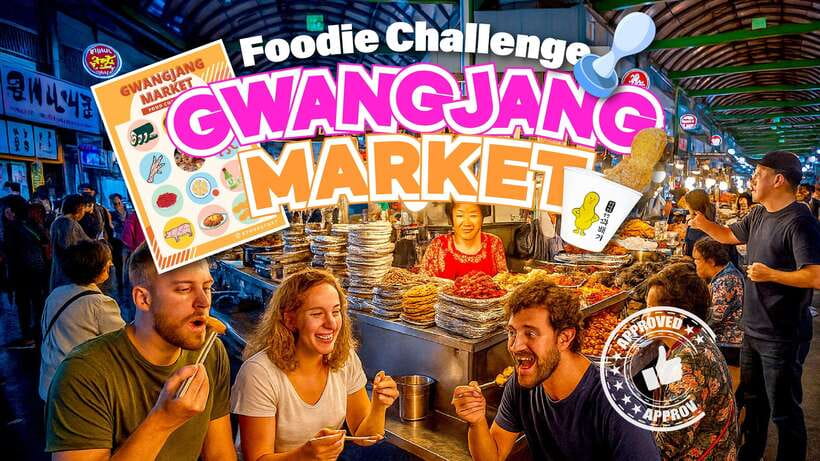
Your next meal comes with a mission. This 2-hour Seoul street-food adventure in Gwangjang Market turns eating into a stamp challenge, where you work through a set of dishes and collect stamps as you go. You’re not trying to finish one huge meal. You’re trying lots of different flavors, one bite at a time.
What I like most is the focus on variety without the commitment of ordering a full portion. You get an English-speaking guide, a small group (up to 10 people), and around 10 to 12 dish tastings, so you leave with a much clearer sense of Korean street food than you would on your own.
One thing to think about first: some dishes here can be very spicy, and the tour is not set up for vegetarians or vegans since some dishes can include meat, poultry, eggs, and dairy.
In This Review
- Key things to know before you go
- Stamp Challenge at Jongno 5-ga: how the 2-hour food run works
- Gwangjang Market food crawl: 10 to 12 tastings without over-ordering
- Why the English guide makes or breaks the experience
- The spice and pacing plan: how to keep the challenge fun
- Price and value check: what $81 really buys you in Seoul
- Who should book this Gwangjang Market food adventure
- FAQ
- Where is the meeting point?
- How long is the tour?
- What is included in the price?
- Is the tour suitable for vegetarians or vegans?
- Is the food spicy?
- What if I have allergies or dietary limitations?
- Should you book this Seoul stamp-challenge market tour?
Key things to know before you go
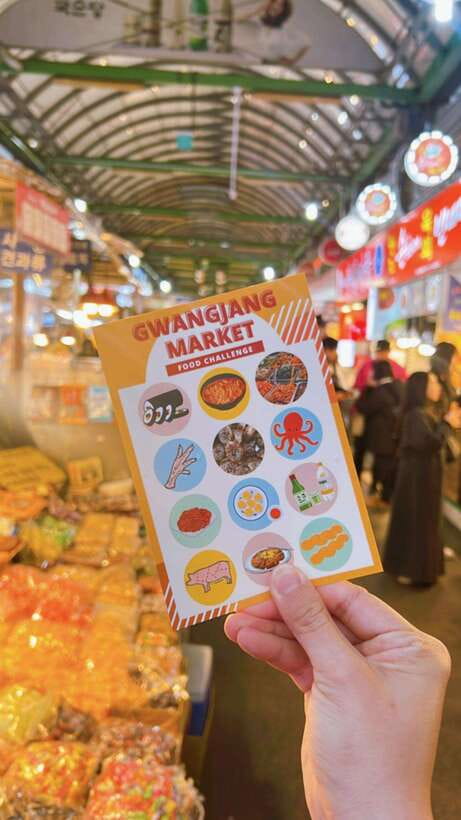
- Stamp challenge format: Each dish you successfully eat earns a stamp on your challenge list.
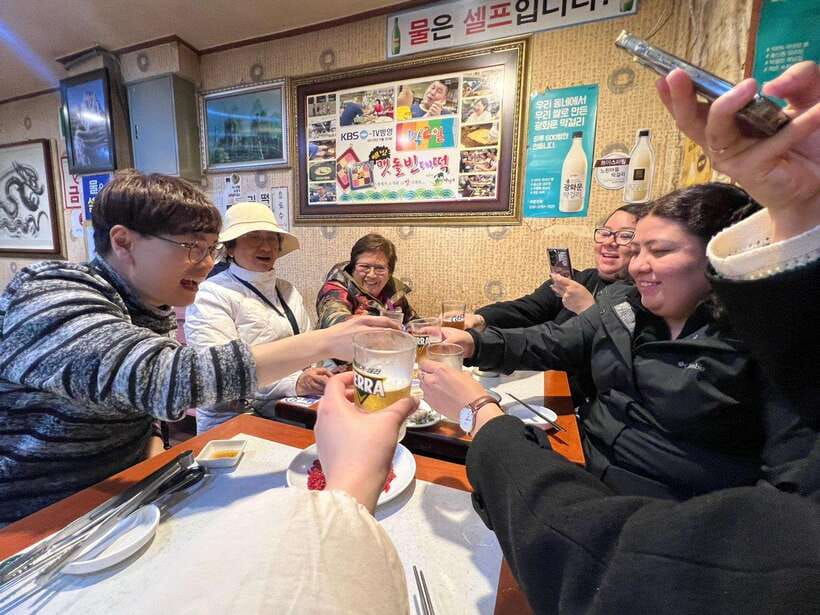
- 10 to 12 dish tastings: You sample a range of Korean favorites without over-ordering.
- English-speaking guide in a small group: Limited to 10 participants, with room to ask questions.
- You’ll get a reward souvenir: Finish the stamp set and you receive a small traditional Korean token.
- Spice is real: Some dishes may be very spicy, so pace yourself.
- Not vegetarian or vegan friendly: Dishes may include meat, eggs, and dairy.
Stamp Challenge at Jongno 5-ga: how the 2-hour food run works
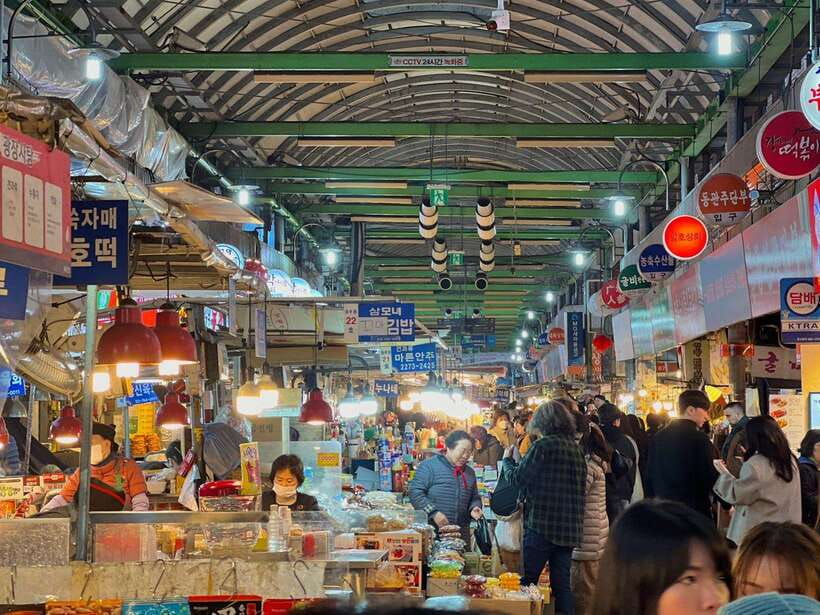
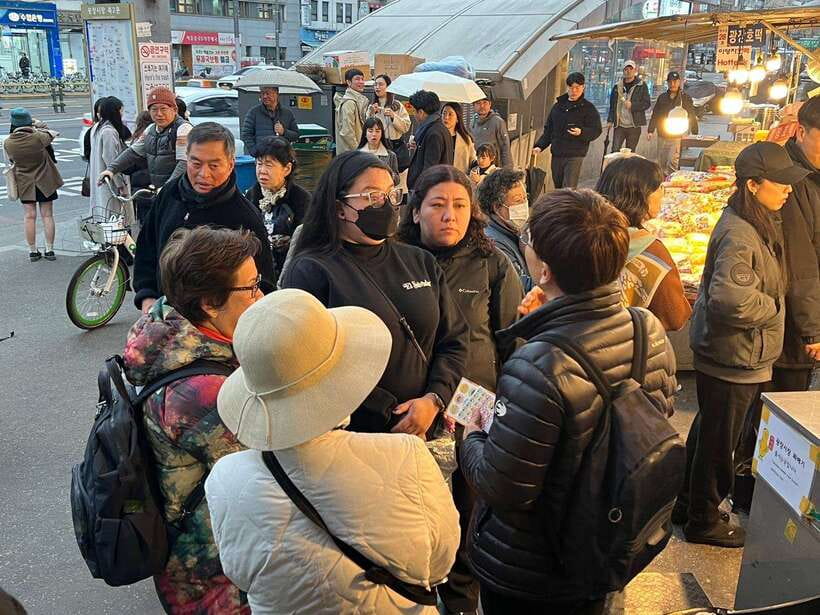
The day starts at Jongno 5-ga Station Exit 8, which is convenient because you can plug the market into a wider Seoul itinerary without wasting time. Once you meet up, you get the basic idea right away: this isn’t a sit-down dinner, and it’s not “buy whatever you want.” It’s a guided food route built around a simple goal, finish the dish set and collect all the stamps.
Then the challenge begins immediately with the first dish. If you successfully eat it, you earn the first stamp. After that, you move on to the next dish, and the process repeats until you’ve collected all the stamps. That structure changes how you experience the market. Instead of wandering and second-guessing, you stay in motion, you try what’s placed in front of you, and you learn by doing.
It’s also a good match for people who want a Korea food experience but don’t want to over-order. The tour is designed so you can sample widely while still feeling in control. You’re not stuck with one massive dish that you can’t finish, and you’re not stuck alone trying to interpret every sign in a crowded market.
Finally, there’s a small reward after you complete the stamp list. It’s not a big prize, but it gives the whole thing a clear finish line. It also makes the tour feel like an achievement, not just a tasting session.
More Food Tours in Seoul:
- Seoul Street Food Market Tour
★ 5.0 · 1,226 reviews - Seoul: Night Market Food Tour with Local Guide
★ 4.9 · 943 reviews - Downtown Seoul Guided Food & Market Tour with 8+ Local Tastings
★ 5.0 · 580 reviews
Gwangjang Market food crawl: 10 to 12 tastings without over-ordering
Gwangjang Market is known for food you can actually eat with your hands, food you can grab in small amounts, and stalls where the line tells you what’s worth your attention. This tour leans into that. You’re not just seeing food. You’re eating it as you go.
The tastings are listed as around 10 to 12 dishes, which is a sweet spot for a 2-hour tour. It’s enough variety to notice patterns, like what styles of savory you prefer, what feels heavy or light, and what textures you actually enjoy. At the same time, it’s not so much that you feel like you’re in a food coma by the end.
One of the most consistently praised parts of this style of tour is that it’s efficient. You get “try a lot” without having to plan each stop. You also avoid the common traveler problem of ordering one thing that you like, then missing everything else the market is famous for.
You’ll also get a mix of foods and beverages available in the market. The tour information notes that options can include both alcoholic and non-alcoholic choices. That matters because it gives you flexibility. If you want to try something local with a meal, you can. If not, you can stay with drinks that keep you comfortable for the rest of the route.
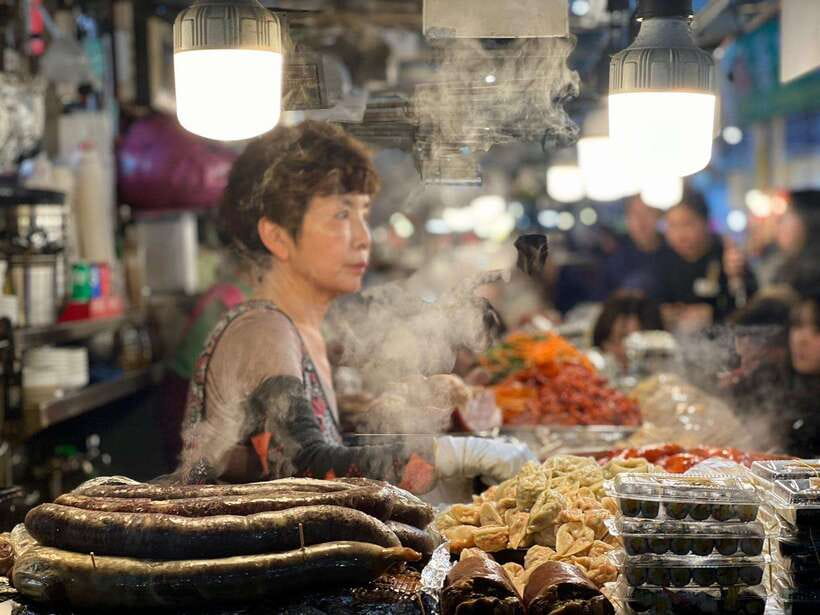
From the feedback, I also think the tastings are chosen to represent what many people come for. For example, the sundae and a crispy mungbean pancake are called out as standout favorites. Those are great examples of the kind of “Korea food identity” you can only understand by tasting, not by reading.
Why the English guide makes or breaks the experience
This tour is led by an English-speaking guide, and that’s not just a convenience. In markets like Gwangjang, the value is in the translation plus the story plus the “here’s how to eat this” details.
In multiple accounts, the guides are described as fun and helpful, and that energy matters because it keeps you relaxed. Street food can feel intimidating when you don’t know what you’re ordering, or when you’re worried you’ll get something wrong. A good guide turns that pressure into curiosity.
I also like that the group stays small, limited to 10 participants. That means the guide can check in with people, respond to questions, and keep the whole route moving. You’re not lost in a crowd or squeezed into a one-direction line where you can’t get clarity.
There’s also a cultural layer. Some guides share stories and anecdotes about the history and food culture, which helps you understand why certain dishes show up again and again. In one set of experiences, names like Gina, Helena, and Cecilia come up, and the common theme is that they add context while keeping the mood light.
Practical bonus: if you care about photos, guides may take photos for you, and several accounts mention that kind of extra help. In a market full of steam, crowds, and fast-moving stalls, that can save you time trying to juggle a snack with your phone.
The spice and pacing plan: how to keep the challenge fun
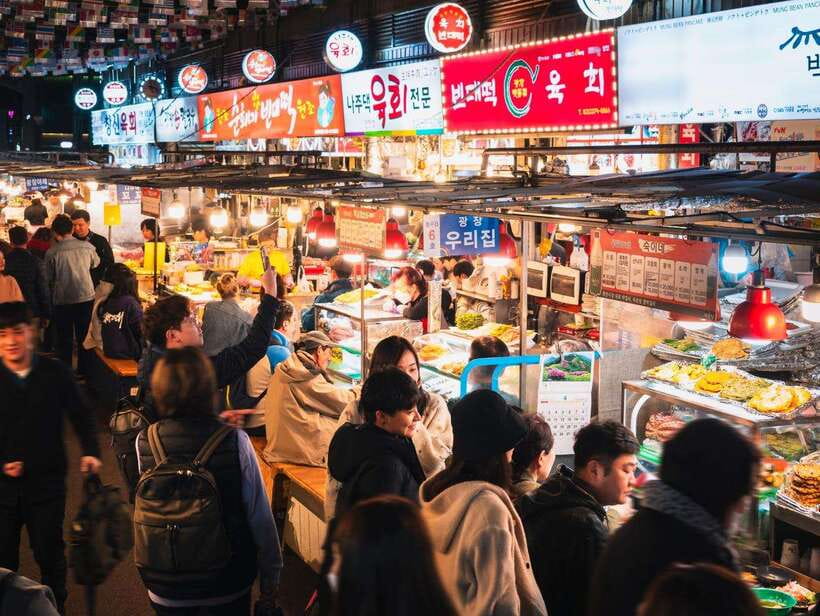
Let’s talk about the real risk, spicy food. The tour is clear that some dishes can be very spicy, and that means you should plan your strategy before you show up. You don’t need to fear it, but you should decide what your “max comfort level” is.
Here’s the approach that works best for me when I’m in a hot, busy food market:
- Take a small bite first, then decide if you want a second bite right away.
- Sip water between dishes if you need a reset, not during every bite.
- If you’re offered something spicy, go slow instead of powering through. The goal is finishing the stamp set, not suffering.
Because the tour is structured around successfully eating each dish, pacing matters. If you rush and then feel sick, you’ll lose the enjoyment fast. If you take your time and communicate your comfort level, you’ll likely have a better time with the whole route.
There’s another practical consideration: this tour is not suitable for vegetarians or vegans. The information explicitly warns that some dishes may include meat, poultry, eggs, and dairy. So if your diet is strict, you should skip this specific tour and look for a different food experience that matches your needs.
Finally, consider how much you eat before you start. Since you’ll have around 10 to 12 dish tastings, you don’t want to arrive starving and make every bite a struggle. But you also don’t want to arrive too full. A light meal beforehand usually sets you up to actually enjoy the range of flavors.
More Market Tours in Seoul:
- Local Home Korean Cooking Class & Market Adventure in Seoul
★ 5.0 · 1,024 reviews - Seoul: Palace, Temple and Market Guided Foodie Tour at Night
★ 4.9 · 750 reviews - Seoul: Korean Cooking Class at a Local Home and Market Tour
★ 5.0 · 348 reviews - Seoul Night Palace & Market Food Tour with Vehicle
★ 5.0 · 275 reviews
Price and value check: what $81 really buys you in Seoul

At $81 per person for a 2-hour market adventure, you’re paying for more than food. You’re paying for a guided route, an English-speaking host, and a built-in “sampling plan” that targets lots of dishes in a short time.
If you try to copy this on your own, you quickly hit friction:
- You have to figure out what to order at each stall.
- You might end up repeating the same type of dish instead of broad variety.
- You need the language and confidence to navigate crowded places quickly.
- You still might not know how much to eat so you don’t overdo it.
This tour gives you structure. You don’t need to plan each stop, and you don’t need to guess how many dishes will fit into the time window. The around 10 to 12 tastings, plus the stamp reward souvenir, are the core of the value. It turns market food into a checklist you can complete.
Is it expensive? For Seoul, $81 for a guided, multi-tasting street-food experience can feel like a fair trade if you’re the type who wants to eat smarter. If you’re on a strict budget and you’re happy to wander independently, you might spend less by doing it solo. But if you want a high hit-rate sampling plan with less decision fatigue, this price starts to look reasonable.
The strongest value signal in the feedback is how much people felt they got out of the tour in a short time, especially because of guide storytelling and the variety of bites. That combination is what makes the cost feel justified.
Who should book this Gwangjang Market food adventure
This is best for you if:
- You want a Korean street food intro without ordering huge portions.
- You enjoy a challenge format and want to stay engaged through the route.
- You like tasting different styles of savory, including dishes like sundae and crispy mungbean pancake.
- You prefer a small-group setting where you can ask questions.
You should think twice or choose something else if:
- You are vegetarian or vegan, since some dishes include meat, poultry, eggs, and dairy.
- You have a low heat tolerance. The tour notes that some dishes can be very spicy.
- You dislike competitive or mission-based formats, because the whole experience is built around earning stamps.
If you’re traveling alone, a small group up to 10 participants can be a nice way to enjoy the market without feeling lost. If you’re with friends, it’s a fun shared goal because everyone can compare how the dishes went and how quickly they earned their stamps.
Also, this is a good add-on day activity. Two hours is long enough to feel like you “did the market,” but short enough that you can keep going afterwards.
FAQ
Where is the meeting point?
Meet at Jongno 5-ga Station Exit 8.
How long is the tour?
It lasts 2 hours.
What is included in the price?
An English-speaking guide and Gwangjang Market food (around 10 to 12 dishes) are included.
Is the tour suitable for vegetarians or vegans?
No. The tour is not suitable for vegetarians or vegans, since some dishes may include meat, poultry, eggs, and dairy.
Is the food spicy?
Some dishes can be very spicy, so you should be prepared for heat.
What if I have allergies or dietary limitations?
You should inform the provider while reserving if you have dietary limitations or allergies, since the tour includes a variety of authentic foods and beverages.
Should you book this Seoul stamp-challenge market tour?
If you want a focused, high-variety introduction to Seoul street food, I’d say book it. The stamp challenge gives you momentum, the small group and English guide reduce stress, and the around 10 to 12 tastings are a smart way to sample more than a single meal. I’d especially recommend it if you’re excited to try dishes like sundae and mungbean pancake and you enjoy a guided plan.
But if you’re sensitive to spice, or you follow a vegetarian or vegan diet, this one is likely the wrong fit. In that case, look for a food tour that matches your needs from the start.
Overall, for $81 and 2 hours, you’re buying a lot of eating plus guidance, plus a souvenir reward at the finish line. That’s a tidy, satisfying way to experience Gwangjang Market.
More Shopping Tours in Seoul
- Private DMZ Tour (No Shopping): 3rd Tunnel & Suspension Bridge
★ 5.0 · 607 reviews - Cook 3 Authentic Korean Dishes with Local Market Tour
★ 5.0 · 231 reviews - Korean Palace and Market Tour in Seoul Including Insadong and Gyeongbokgung Palace
★ 4.0 · 174 reviews - Seoul: Nighttime Tour of Palace, Market, Naksan Park & More
★ 4.9 · 143 reviews
Recently reviewed in Seoul
- You’re Invited to Our Home in Seoul: The Only Cooking Class!★ 5.0 · 8 reviews
- Your Personal Seoul Photographer!★ 4.1 · 15 reviews
- From Seoul: Yongpyong Ski Day Tour with Transportation★ 4.9 · 40 reviews
- Seoul: Korean & English Language Exchange Global Party★ 5.0 · 28 reviews
- Watching sports match & local food experience in Seoul★ 5.0 · 11 reviews
- WKT Combat Taekwondo & Self-defense One Day Class in Seoul★ 5.0 · 5 reviews
- Unique Native Experience : Han River Picnic, Board game, BBQ★ 5.0 · 3 reviews
- Seoul: Gangneung BTS K-Pop & K-Drama Filming Locations Tour★ 4.6 · 14 reviews
Markets, compared.
Local Home Korean Cooking Class & Market Adventure in Seoul
Read our review →

Palace, Temple and Market Guided Foodie Tour at Night
Read our review →
Downtown Seoul Guided Food & Market Tour with 8+ Local Tastings
Read our review →
Korean Cooking Class at a Local Home and Market Tour
Read our review →
Seoul Night Palace & Market Food Tour with Vehicle
Read our review →
Cook 3 Authentic Korean Dishes with Local Market Tour
Read our review →Browse the lists this tour appears in