
Reviewed · COOKING CLASSES
Korea Cooking Class with 3 stars Michelin Chef & Content creators
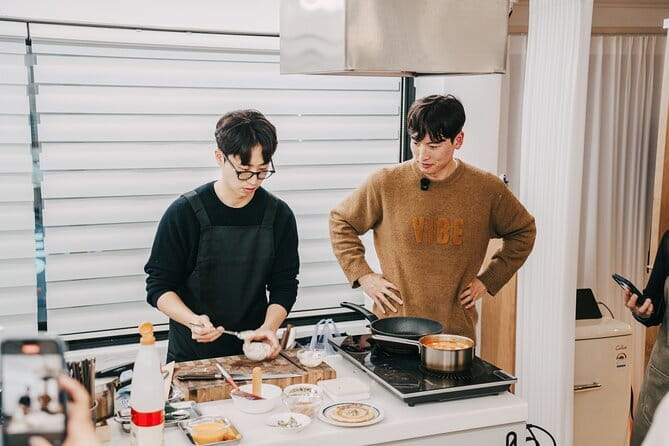
A Korean cooking class with a Michelin chef is already a win. Add Koreanbong as your content creator host, and the evening turns friendly, not fussy. I like that you cook in a small 16-person kitchen setup, so you get real attention while learning the flow of Korean home-style cooking.
What I also love is the structure: a short history intro, a chef demo, then you cook in small groups at shared stations. The one drawback to plan around is the fixed 7:00 pm schedule and the fact that this experience is non-refundable, so double-check your date before you lock it in.
You also get more than food. The program builds in culture through games during the dining time, plus a market ingredient run before you start cooking. If you want a hands-on Korean meal lesson that feels like hanging out with smart, upbeat locals, this hits the mark.
In This Review
- Key highlights you will actually feel during the class
- What makes this Seoul Korean cooking class feel different
- Timing: a 7:00 pm start and how the 2 hours are spent
- Session 1: introduction and a 15-minute Korean cuisine primer
- Session 2: the 3-star Michelin chef demo (and why recipe papers matter)
- Session 3: cooking together at four sinks, in groups of 2 to 4
- Session 4: dining time, plus games and Korean culture extras
- The market visit for ingredients: why it matters for flavor and confidence
- Lotte World Tower and Mall, plus Lotte World: pairing sights with dinner learning
- Price and value: what $70.44 includes beyond the stove
- Practical logistics you should plan around
- Who should book this, and who might prefer another style
- Should you book this Seoul Korean cooking class?
- FAQ
- What is the duration of the Korean cooking class?
- Where does the class start and where does it end?
- How many people are in the class?
- What is included in the price?
- What stops are part of the itinerary?
- What should I expect during the cooking sessions?
- What is the cancellation policy?
Key highlights you will actually feel during the class
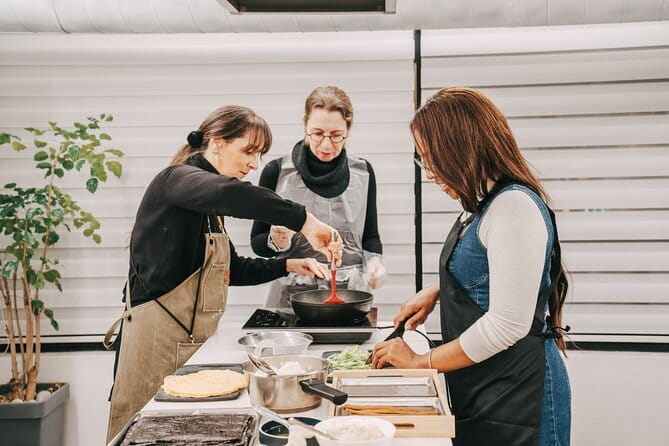
- 3-star Michelin chef cooking demo: you watch techniques first, then get recipe papers for your own cook-along.
- Koreanbong as your host: content creator energy, but family-friendly and easy to talk with.
- Small groups (2 to 4) at four large sinks, so your station does not get stuck in a bottleneck.
- Four-part format that moves from intro to demo to cooking to dining with games.
- Included dinner plus drinks: coffee or tea, alcoholic beverages, and bottled water are all part of the package.
What makes this Seoul Korean cooking class feel different
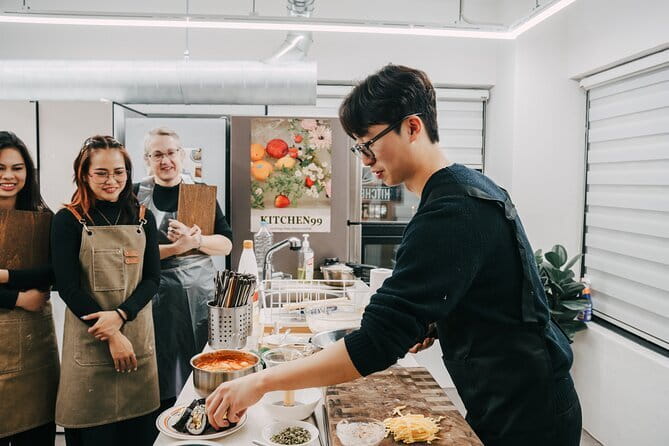
This is not a sit-and-watch workshop. It is a guided, talk-to-your-group cooking class where the Michelin chef leads the how, and Koreanbong helps with the who and the why.
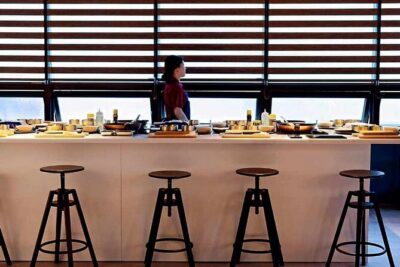
The kitchen setup matters. With a maximum of 16 participants, you are not shouting across a room. You are cooking in small teams, sharing a station flow, and actually getting your hands involved instead of just taking photos.
And Koreanbong brings a different kind of comfort. Korean cooking can look intimidating on day one, but a host who communicates well makes it easier to ask questions without feeling awkward. You get that warm, welcome vibe without turning the lesson into a performance.
More Cooking Classes in Seoul:
- Local Home Korean Cooking Class & Market Adventure in Seoul
★ 5.0 · 1,024 reviews - Master Korean traditional cooking with a Kimchi chef
★ 5.0 · 385 reviews - Seoul: Korean Cooking Class at a Local Home and Market Tour
★ 5.0 · 348 reviews
Timing: a 7:00 pm start and how the 2 hours are spent
The class runs about 2 hours and starts at 7:00 pm, finishing back at the meeting point. That timing is practical in Seoul because you can do a whole evening without scrambling for transport right after dinner.
Inside those 2 hours, you follow four sessions:
- introduction with Korean cuisine context
- a chef demo of the day’s menu
- team cooking at shared sinks
- dining time with extra cultural games or events
This schedule is useful because it does not dump everything at once. You learn the basics, see the steps once, then do the work while the process is still fresh in your head.
Session 1: introduction and a 15-minute Korean cuisine primer
You start by introducing yourself, then you get a 15-minute presentation on Korean cuisine history. This is short on purpose. You are not being forced into a lecture hall experience, you are getting enough background to understand what you are about to cook.
Even if you are not a food historian, this part helps you read the meal differently. Korean cuisine is closely tied to everyday ingredients, seasonal habits, and family cooking routines. That context makes the techniques feel less like random steps and more like a system.
If you tend to learn better when you know the meaning behind the method, you will appreciate this kickoff.
Session 2: the 3-star Michelin chef demo (and why recipe papers matter)
Next comes a 30-minute food demo. The Michelin chef demonstrates how to cook the day’s menus, and you get recipe papers per team.
I love that they plan for real life. During a cooking demo, it is easy to lose track, especially when you are focused on knife work, heat, timing, and smell all at once. Recipe papers keep you from feeling stuck if you miss a step while watching.
This is also where you get the “life hacks for cooking skills” angle. You are not only learning what to do, you are learning how to do it efficiently. Those little fixes are what separate a decent meal from a meal that tastes like it is supposed to.
A few more Seoul days worth comparing
- Best DMZ Tour Korea from Seoul (Red Suspension Bridge Optional)
★ 5.0 · 41,422 reviews - DMZ Tour: 3rd Tunnel, Option(Suspension Bridge, Boat) from Seoul
★ 5.0 · 21,373 reviews - DMZ tour south Korea from Seoul (NK experience hall, defector)
★ 5.0 · 20,599 reviews - Seoul: The Best DMZ Tour with Optional Suspension Bridge
★ 4.7 · 4,978 reviews
Session 3: cooking together at four sinks, in groups of 2 to 4
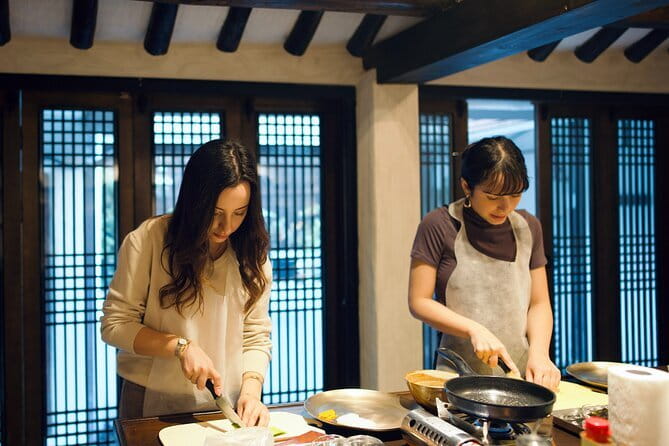
Now the class turns hands-on. You will cook different menus by group, with capacity per group set at 2 to 4. The kitchen has four large sinks, which keeps everyone moving and limits the awkward waiting that happens in bigger classes.
You will be making 3 typical dishes as part of the program. The key detail here is that each group is cooking different menus, which creates variety. You end up leaving with more than one “you could actually cook this at home” template.
Practical tip: treat your team like a relay. Assign roles quickly in your head. One person can focus on mixing steps, another can manage timing or plating prep. You do not need perfection, you need rhythm, and the small group size makes that rhythm easier.
Session 4: dining time, plus games and Korean culture extras
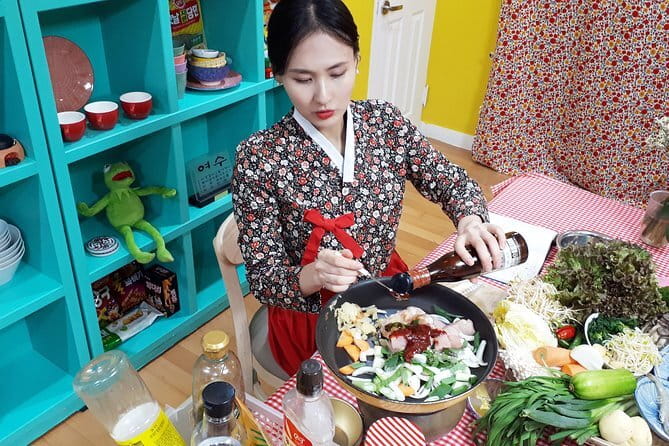
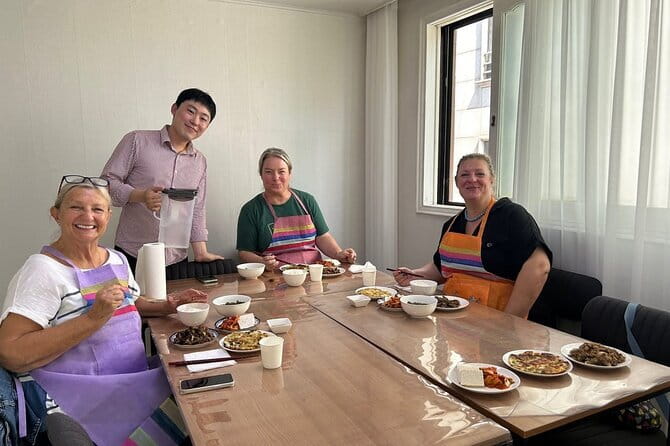
After cooking, you eat. Dining time starts as soon as you finish, and this part is built for fun and bonding.
The program also includes special games or events as a bonus, so you learn Korean cultural things in a less formal way than a classroom chat. It is the kind of add-on that helps the meal land emotionally, not just technically.
This is also when all the effort starts paying off. You get to taste what you made, compare notes with your team, and connect the technique to the final flavor. If you like tasting your way through learning, this session is a big plus.
The market visit for ingredients: why it matters for flavor and confidence
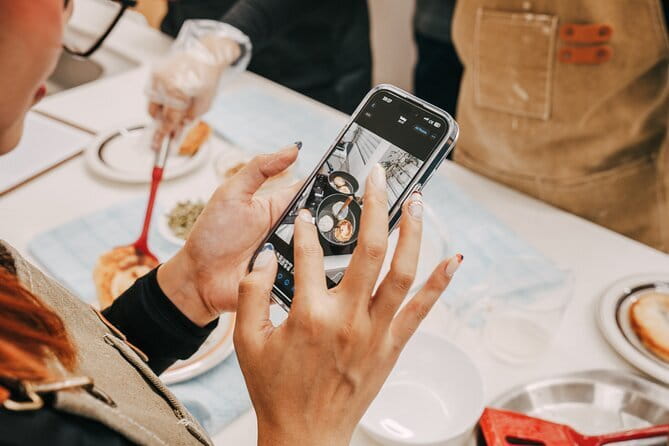
Before the class, you visit a local market and choose exotic ingredients. That ingredient choice step is valuable because it changes the whole experience from passive cooking to active sourcing.
When you pick ingredients yourself, you start to understand what creates Korean flavor. You notice textures, you learn what looks similar but tastes different, and you pick up a sense of how cooks think about combinations.
Then when you cook later, you are not just following instructions. You are recognizing the ingredients you chose and seeing how they behave under heat. That kind of learning sticks longer, and it makes your future grocery runs easier.
Lotte World Tower and Mall, plus Lotte World: pairing sights with dinner learning
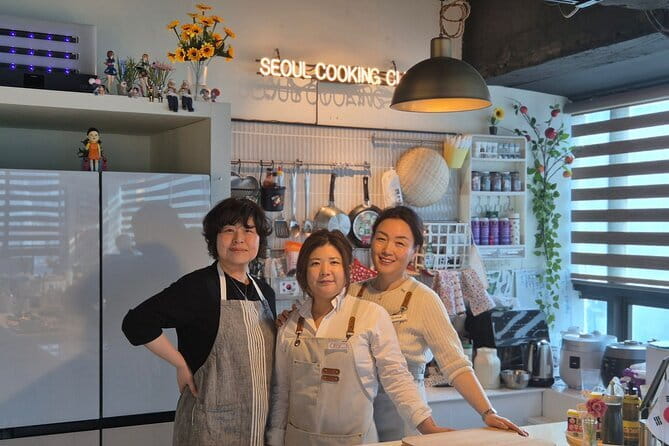
The itinerary includes stops at Lotte World Tower and Mall and Lotte World. Even if you do not plan a full sightseeing marathon, this matters for two reasons.
First, it gives you an easy, recognizable area to connect your evening. Second, it creates a Seoul “evening story” that starts with sights and ends with food, instead of treating the cooking class as a standalone event.
One thing to keep in mind: the cooking class is the main course of this experience. If your goal is strictly theme park exploration, you may find the time allocation limited since the program is built around the two-hour cooking and dining flow.
Price and value: what $70.44 includes beyond the stove
At $70.44 per person, this is not the cheapest cooking class in Seoul. But you are also not just paying for ingredients and a generic lesson.
Your inclusions are strong:
- dinner
- coffee and/or tea
- alcoholic beverages
- bottled water
That drink and dinner bundle changes the math. In a city like Seoul, food and beverages add up fast if you are buying everything separately. Here, the meal is part of the experience, and you are eating what you helped cook.
You also get the “chef plus host” combo: a 3-star Michelin chef running the demo and a communication-focused host, Koreanbong, guiding the vibe. That combination is often what makes the difference between a class that is technically good and one that feels welcoming and smooth.
What is not included is private transportation. So you will want to plan to handle your own transit to the meeting point area.
Practical logistics you should plan around
You meet at 175 Ogeum-ro, Songpa District, Seoul, South Korea, and the tour ends back at the same meeting point. Start time is 7:00 pm, and you finish within about 2 hours.
It is near public transportation, which is a real convenience. You also get a mobile ticket, so you can keep everything in your phone and move without hunting for paper confirmations.
Group size is capped at 16, with 2 to 4 people per cooking group. That setup is great for interaction, but it also means you should show up on time. There is not a lot of slack in a lesson that moves from demo to cooking to dining without delay.
Who should book this, and who might prefer another style
This tour fits best if you want:
- a hands-on Korean cooking lesson
- instruction with a high-level chef demo
- a friendly host who makes questions easy
- a small group experience where you are not lost in the crowd
It is also a good choice if you are the type who likes structure. Four sessions, clear steps, recipe papers, and then a shared meal. That is exactly what you need if cooking classes intimidate you.
You might want to look for a different option if you are only interested in sightseeing time at Lotte World and Tower and you do not care about cooking. This evening is built around the kitchen, with sightseeing as supporting stops.
And since the experience is non-refundable and cannot be changed, be confident about your schedule before you book. Cooking classes are not the best place to experiment with last-minute plans.
Should you book this Seoul Korean cooking class?
Yes, if you want a confident, friendly Seoul cooking evening with real technique. The combination of a 3-star Michelin chef demo, recipe papers for your team, and Koreanbong’s approachable host style makes it easier to learn without stress.
I would book it especially if you care about value in the “what you get for the money” sense. Dinner, coffee or tea, alcoholic beverages, and bottled water are included, and you are taking home useful cooking steps you can repeat later.
I would hesitate only if you hate fixed schedules or you are not sure your plans are firm, since this one is non-refundable. If your date is solid, this feels like a smart use of one evening in Seoul, with both flavor and culture built into the flow.
FAQ
What is the duration of the Korean cooking class?
The experience is about 2 hours.
Where does the class start and where does it end?
It starts at 175 Ogeum-ro, Songpa District, Seoul, South Korea, and ends back at the same meeting point.
How many people are in the class?
The activity has a maximum of 16 travelers.
What is included in the price?
It includes dinner, coffee and/or tea, alcoholic beverages, and bottled water.
What stops are part of the itinerary?
The itinerary includes Lotte World Tower and Mall, and Lotte World.
What should I expect during the cooking sessions?
There are 4 sessions: an introduction with a 15-minute presentation, a 30-minute chef food demo, cooking in small groups at four large sinks, and dining time with special games or events.
What is the cancellation policy?
This experience is non-refundable and cannot be changed for any reason.
Recently reviewed in Seoul
- You’re Invited to Our Home in Seoul: The Only Cooking Class!★ 5.0 · 8 reviews
- Your Personal Seoul Photographer!★ 4.1 · 15 reviews
- From Seoul: Yongpyong Ski Day Tour with Transportation★ 4.9 · 40 reviews
- Seoul: Korean & English Language Exchange Global Party★ 5.0 · 28 reviews
- Watching sports match & local food experience in Seoul★ 5.0 · 11 reviews
- WKT Combat Taekwondo & Self-defense One Day Class in Seoul★ 5.0 · 5 reviews
- Unique Native Experience : Han River Picnic, Board game, BBQ★ 5.0 · 3 reviews
- Seoul: Gangneung BTS K-Pop & K-Drama Filming Locations Tour★ 4.6 · 14 reviews
Cooking Classes, compared.
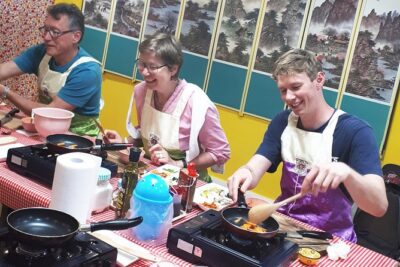
Local Home Korean Cooking Class & Market Adventure in Seoul
Read our review →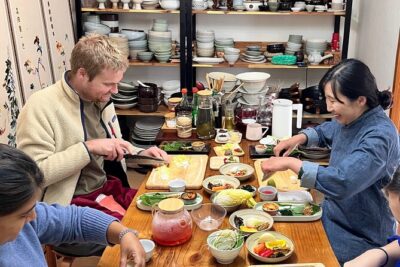
Master Korean traditional cooking with a Kimchi chef
Read our review →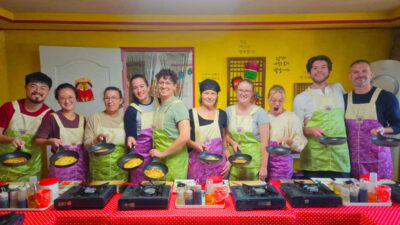
Korean Cooking Class at a Local Home and Market Tour
Read our review →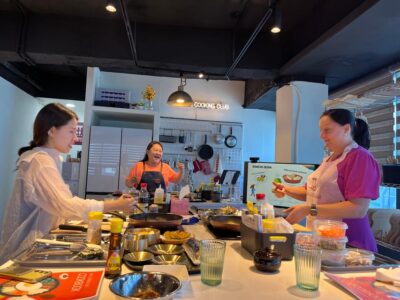
Experience Korean Cooking in Modern Hanok Kitchen
Read our review →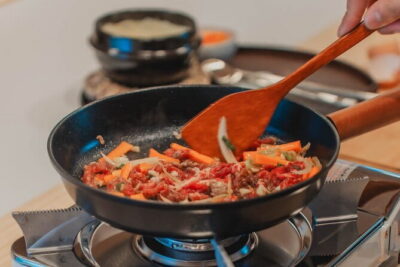
Korean Cooking Class with Grocery Shopping at Seoul Local Market
Read our review →
Taste of Korea, Authentic home style Cooking class
Read our review →Browse the lists this tour appears in