
Reviewed · COOKING CLASSES
K-food cooking Japchae Mandu Tteokbokki & Fishcake
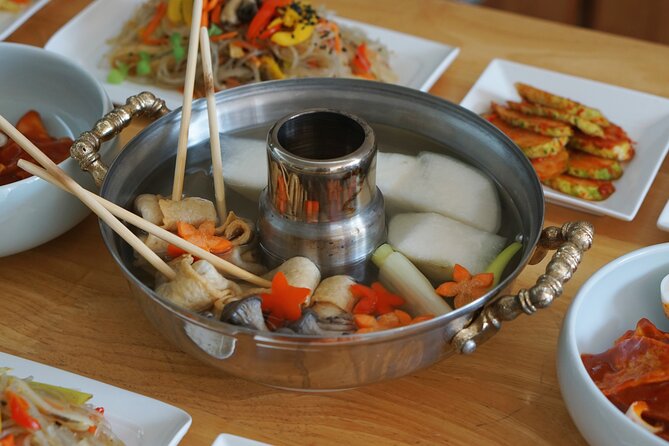
K-foods get real when you cook them yourself. This hands-on Seoul class turns you into a four-dish chef with Japchae, Tteokbokki, Mandu, and fishcake, plus a sweet stop for seasonal Korean desserts. I like that the setup is calm and ready, so you spend time learning and eating, not hunting ingredients. I also love the add-on indoor market tour, where you can see how Koreans stock pantry staples and even kimchi refrigerators.
One consideration: the market tour is not held on the 2nd and 4th Sundays, so check dates if you want that shopping walk. Also, alcoholic beverages are not included, so plan on water or buy something separately if that matters to you.
In This Review
- What makes this class worth your evening
- Key points at a glance
- A 5:30 pm Korean cooking night in Mapo-gu
- The four K-foods you will cook: Japchae, Tteokbokki, Mandu, and fishcake
- Japchae (Korean glass noodles)
- Tteokbokki (spicy rice cakes)
- Mandu (dumplings)
- Fishcake (skewers or slices, Korean style)
- Why four dishes work better than one
- How the class keeps you moving, from plating photos to dessert breaks
- Small-group energy (max 6)
- Seasonal Korean desserts: yakgwa, wind rice cake, and sesame rice cake
- Indoor supermarket tour across the street, kimchi fridges, and smart tax refund tips
- What you are looking at
- Bring your passport for the tax refund angle
- One date-based snag
- Price and value check: what $81 buys you in real life
- Who this class fits best, and who should skip it
- Tips to get the most out of your cooking night
- Should you book this Seoul K-food cooking class?
- FAQ
- What dishes do I cook in this class?
- How long does the experience last?
- Where do I meet, and when does it start?
- Are alcoholic beverages included?
- Does the indoor market tour happen every day?
- Is the tour suitable for children?
- Can I get a tax refund during the supermarket visit?
What makes this class worth your evening
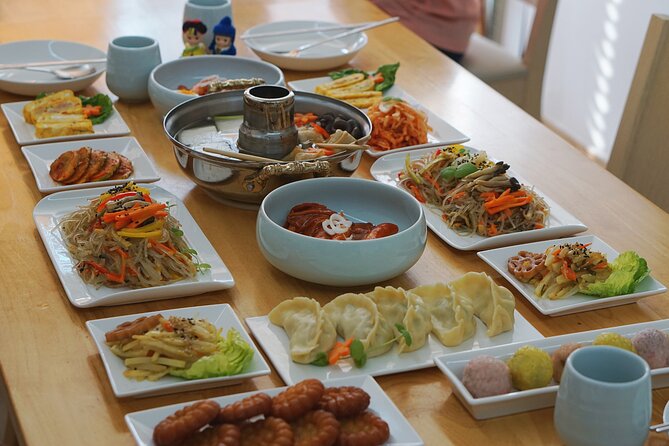
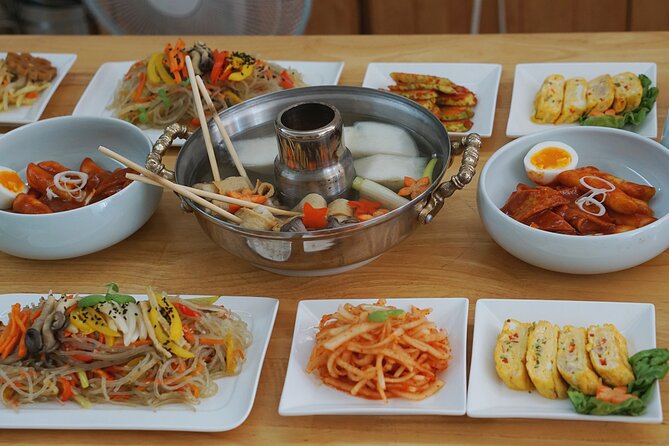
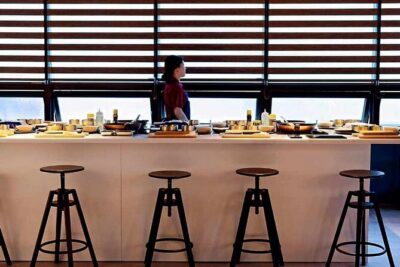
You meet in Mapo-gu (199 Baekbeom-ro) at 5:30 pm and stay close to the same area for the whole experience. After cooking together, you eat what you made, photograph your plated food for social media, and then head to the indoor supermarket across the street for a focused 30-minute walk over multiple floors.
This is built for small groups, with a maximum of 6 travelers, which usually means less waiting around and more chances to ask questions. If you are visiting with kids, the class is only for age 10 and above (younger children can join when accompanied by a guardian).
Key points at a glance
- Four representative dishes in one session: Japchae, Tteokbokki, Mandu, and fishcake
- Small group size (max 6), for a more relaxed pace and easier questions
- Korean table time for photos, including careful plating after cooking
- Seasonal dessert tasting such as yakgwa, wind rice cake, or sesame rice cake
- Indoor supermarket tour across the street with a quick route over four floors
- Tax refund tip if you buy qualifying items and bring your passport
More Cooking Classes in Seoul:
- Local Home Korean Cooking Class & Market Adventure in Seoul
★ 5.0 · 1,024 reviews - Master Korean traditional cooking with a Kimchi chef
★ 5.0 · 385 reviews - Seoul: Korean Cooking Class at a Local Home and Market Tour
★ 5.0 · 348 reviews
A 5:30 pm Korean cooking night in Mapo-gu
This is the kind of activity that fits nicely into a Seoul itinerary because it is an evening-focused block, about 2 hours for cooking and then a short market tour afterward. A 5:30 pm start also helps if you want food-centered plans without fighting daytime crowds.
The meeting point is at 199 Baekbeom-ro, Mapo-gu, and the experience ends back at the meeting point. You will get a mobile ticket, which is convenient on travel days when you are juggling maps, transit, and reservations.
What I appreciate most is the structure. You are not wandering around trying to figure out tools or measuring. Everything is prepared for you, including materials, cooking tools, and packaging, which keeps the session moving at a cooking-class pace instead of a logistics test.
The four K-foods you will cook: Japchae, Tteokbokki, Mandu, and fishcake
You cook four Korean staples in one go. That matters because it gives you a rounded view of Korean home-style flavors, not just one dish.
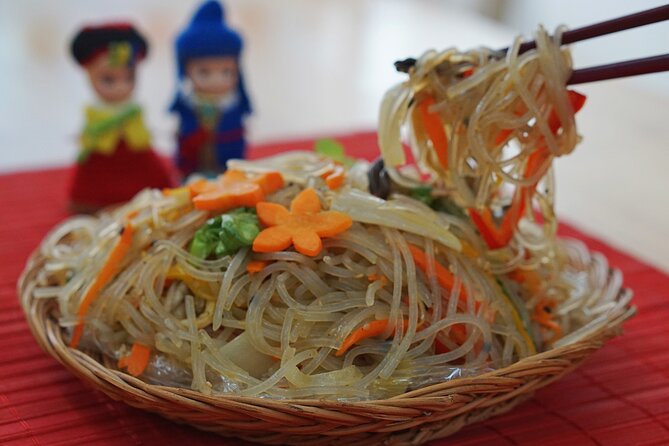
Japchae (Korean glass noodles)
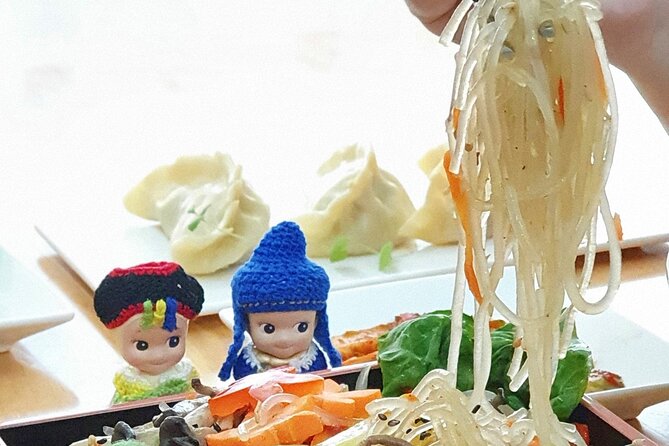
Japchae is a great anchor dish because it teaches balance. You are working with noodles and stir-fry style components, so you learn how to keep textures from turning mushy. Even when the class keeps things simplified, you still come away with a repeatable idea: cook ingredients with care, then combine in a way that lets each component hold its own.
More Food Tours in Seoul:
- Seoul Street Food Market Tour
★ 5.0 · 1,226 reviews - Seoul: Night Market Food Tour with Local Guide
★ 4.9 · 943 reviews - Downtown Seoul Guided Food & Market Tour with 8+ Local Tastings
★ 5.0 · 580 reviews - Seoul Night Palace & Market Food Tour with Vehicle
★ 5.0 · 275 reviews
Tteokbokki (spicy rice cakes)
Tteokbokki is where your sauce sense gets tested. The rice cakes take the flavor from the sauce directly, so small changes in thickness or seasoning can shift the whole dish. You learn how Korean kitchens think about that signature sweet-spicy profile, and you also get a feel for adjusting to what you like.
Mandu (dumplings)
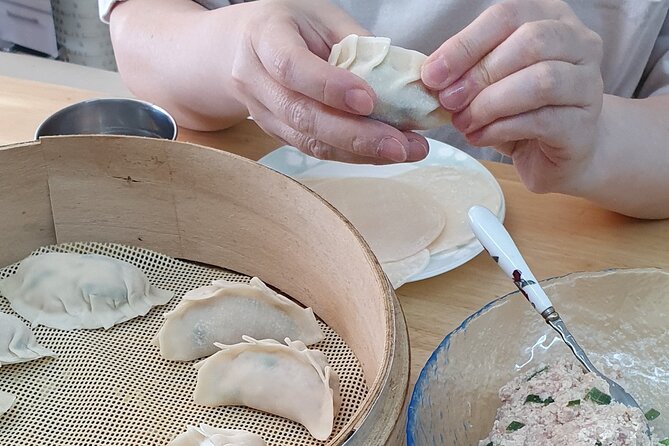
Mandu is the dish that rewards patience and setup. In a class like this, you learn the basics of assembling or handling dumplings so you do not get stuck during the process. It is also one of those foods that helps you understand how Korean meals move from savory mains to snackable bites.
Fishcake (skewers or slices, Korean style)
Fishcake is a classic comfort food ingredient, and it is also a practical one to recreate at home. In this class setup, fishcake is paired with your cooking session so you can learn how Koreans treat it as a flexible component. You get the savory, salty depth without needing to become a seafood specialist.
Why four dishes work better than one
If you only learn one dish, you might leave with a recipe but still feel unsure about other Korean pantry staples. Four dishes in one evening forces your brain to connect flavors, textures, and cooking methods. It is also simply more fun. You end up with a full meal, plus leftover potential thanks to the included packaging.
How the class keeps you moving, from plating photos to dessert breaks
A cooking class can go one of two ways: calm and confident, or chaotic and stressful. This one aims for calm. The teaching style is described as prepared and easy to follow, which you feel immediately once you start.
You also get a built-in photo moment. After cooking, you set up your food nicely at a Korean table and take time to film and photograph it for your personal social media. That might sound extra, but it is actually a nice step. It slows you down enough to appreciate what you made, not just race through the steps.
During the class, you taste what you made and listen to explanations, including notes on history and context. The specific dessert lineup changes by season, but the approach stays the same: you are not just eating, you are learning what you are eating.
Small-group energy (max 6)
With a maximum of 6 travelers, you typically get more attention than you would in a big class. If something is unclear, you have a better chance to ask quickly and get back to cooking.
This is especially important for dishes like tteokbokki and mandu, where timing and handling really matter.
Seasonal Korean desserts: yakgwa, wind rice cake, and sesame rice cake
Food classes can be very one-note. This one gives you variety with dessert tasting after the main cooking.
You might get popular seasonal desserts such as:
- yakgwa
- wind rice cake
- sesame rice cake
The exact types can vary depending on season, so do not expect the same dessert every month. Still, it is a smart inclusion because these desserts help you understand how Korean sweets are not always the same style as Western desserts. You learn how texture and sweetness work in a Korean setting, which is useful if you later shop for ingredients back home.
Also, dessert fits the pacing. After savory cooking and eating, you get something sweet, but it is not a random add-on. It is part of the lesson flow.
Indoor supermarket tour across the street, kimchi fridges, and smart tax refund tips
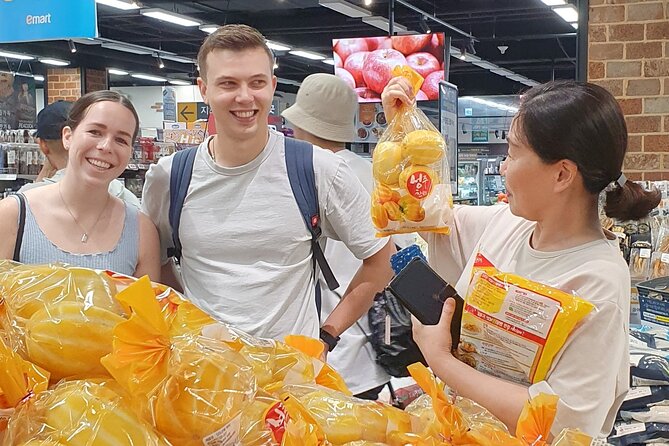
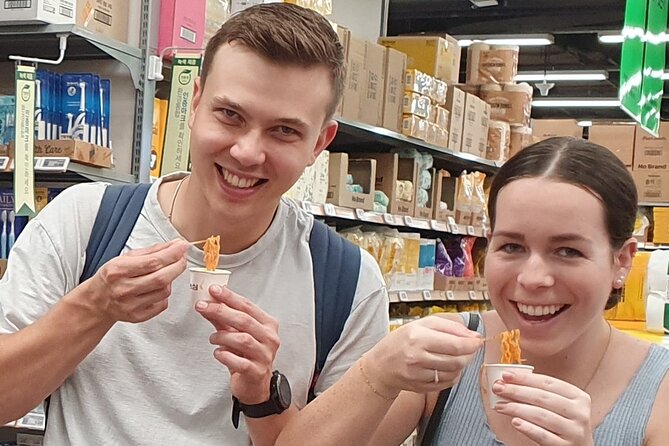
The cooking part is only half the fun. Right after your meal, you head to an indoor supermarket across the street for a compact 30-minute tour.
You cover four floors during that time. In a short window, you will not see everything, but you will see enough to understand what Koreans buy routinely. This is also where the experience becomes practical for your future self.
What you are looking at
You can browse groceries, snacks, and ingredients you saw in class. There are also large kimchi refrigerators used by Koreans, which is a memorable visual and a real clue about how serious many Korean households are about storage and fermentation.
Bring your passport for the tax refund angle
If you want to shop, the tour includes a quick tax refund moment for qualifying purchases. The guidance is clear: you can get a tax refund immediately for purchases over 30,000 won including VAT, as long as you bring your passport. You see the purchase process for the used materials and get help with choices for K-snacks and seasonings.
Even if you do not buy much, this is still useful. You learn what to search for and what labels or ingredient types matter when you are recreating dishes.
One date-based snag
The supermarket tour is not held on the 2nd and 4th Sundays. If your trip includes those days, you might still enjoy the cooking portion, but you should align your schedule if the market time is a big reason you booked.
Price and value check: what $81 buys you in real life
At $81 per person, this is not a budget impulse buy, but it also does not try to be one of those “pay for ingredients you could buy cheaper” classes.
Here is what your money covers:
- materials, tools, and packaging
- four dishes worth of cooking
- tasting and explanations, including dessert
- a guided indoor supermarket tour after the meal
- immediate shopping guidance and a tax refund process for qualifying purchases
So you are paying for labor, structure, and convenience. The big value is that you do not need to source all ingredients in advance, and you do not need to figure out technique by trial and error. You also get a market walkthrough that helps you translate the class into real shopping decisions.
If you are the type who likes recreating meals at home, that added grocery-shopping time can pay off fast. If you only want one dish and you hate crowds, you might think twice, but for most people, the four-dish format makes the price feel fair.
Who this class fits best, and who should skip it
This is a strong fit if you want:
- a hands-on Korean cooking night that produces a full meal
- a guided way to learn common Korean flavors
- practical shopping help for seasonings and snacks
- a short, contained activity in Seoul that still feels cultural
It is also good if you are traveling solo or in a small group, since max group size is 6 and the pacing tends to stay calm.
You might skip it if:
- you are traveling on a date when the supermarket portion is not held (2nd and 4th Sunday)
- you are only interested in one specific dish
- you want a heavy focus on alcohol or nightlife, because alcoholic beverages are not included
For families: the class is for age 10 and above, with younger kids allowed only with a guardian. If you are traveling with older kids who can follow cooking steps, this can be a fun, memorable food lesson.
Tips to get the most out of your cooking night
A few small choices can make a big difference.
- Arrive on time for the 5:30 pm start. Evening cooking goes fast once everyone is seated.
- Wear comfortable clothes. You will be standing, handling utensils, and staying active.
- Bring your passport if you plan to shop. The tax refund process depends on it.
- Think about what you want to recreate later. When you eat, pay attention to what tastes right to you. That helps you buy the right seasonings in the supermarket.
And when you plate your meal for photos, do not rush it. The photo time is part of the experience, not a random interruption.
Should you book this Seoul K-food cooking class?
Yes, if you want a practical, well-structured way to learn Korea through food. The biggest win for me is the combination of four dishes + tasting + dessert + market shopping in one evening. You leave with both skills and real shopping direction, not just a recipe card.
Book it especially if:
- you like making food at home and want technique, not guesswork
- you want an indoor market window into Korean grocery culture
- you can travel on a day when the supermarket tour is running
Skip it if the market tour matters to you and your dates fall on the 2nd or 4th Sunday, or if you only want one dish and do not care about the shopping and dessert parts.
FAQ
What dishes do I cook in this class?
You cook Japchae, Tteokbokki, Mandu, and fishcake all within the same session.
How long does the experience last?
The cooking portion is about 2 hours (approx.), and then there is an additional 30-minute indoor supermarket tour.
Where do I meet, and when does it start?
The meeting point is 199 Baekbeom-ro, Mapo-gu, Seoul, South Korea, and the start time is 5:30 pm.
Are alcoholic beverages included?
No. Alcoholic beverages are not included.
Does the indoor market tour happen every day?
No. The supermarket tour is not held on the 2nd and 4th Sundays.
Is the tour suitable for children?
It is for children age 10 and above. Children under 10 can join when accompanied by a guardian.
Can I get a tax refund during the supermarket visit?
Yes. You can get a tax refund immediately for purchases over 30,000 won including VAT if you bring your passport.
Recently reviewed in Seoul
- You’re Invited to Our Home in Seoul: The Only Cooking Class!★ 5.0 · 8 reviews
- Your Personal Seoul Photographer!★ 4.1 · 15 reviews
- From Seoul: Yongpyong Ski Day Tour with Transportation★ 4.9 · 40 reviews
- Seoul: Korean & English Language Exchange Global Party★ 5.0 · 28 reviews
- Watching sports match & local food experience in Seoul★ 5.0 · 11 reviews
- WKT Combat Taekwondo & Self-defense One Day Class in Seoul★ 5.0 · 5 reviews
- Unique Native Experience : Han River Picnic, Board game, BBQ★ 5.0 · 3 reviews
- Seoul: Gangneung BTS K-Pop & K-Drama Filming Locations Tour★ 4.6 · 14 reviews
Cooking Classes, compared.
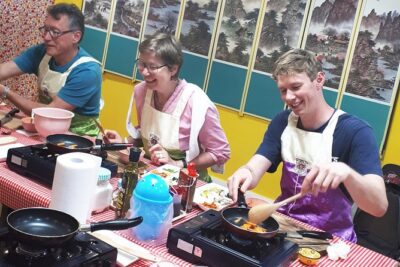
Local Home Korean Cooking Class & Market Adventure in Seoul
Read our review →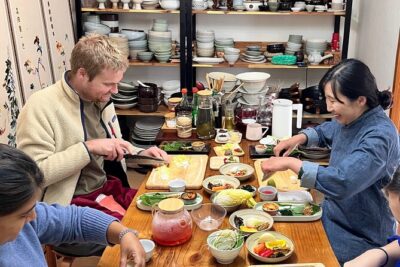
Master Korean traditional cooking with a Kimchi chef
Read our review →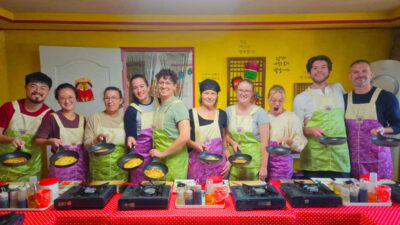
Korean Cooking Class at a Local Home and Market Tour
Read our review →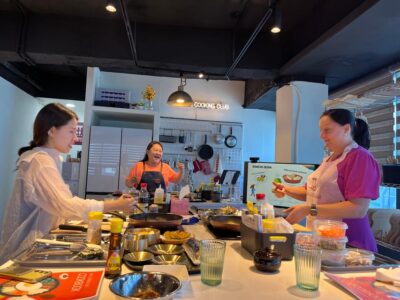
Experience Korean Cooking in Modern Hanok Kitchen
Read our review →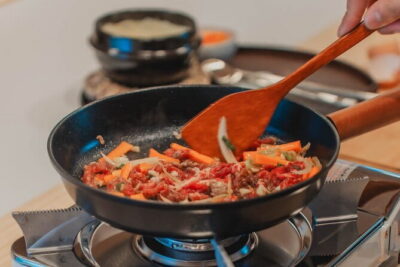
Korean Cooking Class with Grocery Shopping at Seoul Local Market
Read our review →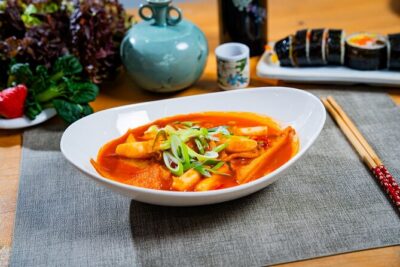
Taste of Korea, Authentic home style Cooking class
Read our review →Browse the lists this tour appears in