
Reviewed · JEJU ISLAND TOURS
Jeju Island UNESCO Heritage Bus Tour
Jeju gets busy fast, so this route helps you see more with less stress. I like the English-friendly support and the way the plan targets major Jeju highlights efficiently. I also like that you get both UNESCO-linked geology and real culture stops without bouncing around on your own. One thing to think about: the exact lineup can shift with weather and closures, so build in flexibility.
This is a big-value choice if you want a guided whirlwind that still feels human, not rushed like a checklist. The day structure is built around Jeju’s east-west differences, and the company runs different routes on different weekdays. Still, because it’s a group tour with set stops, you might feel limited if you prefer long, slow time in just one place.
In This Review
- Key highlights
- Jeju in two packed days, with pickup and real English help
- Price and value: why $125 can make sense here
- East vs West UNESCO days, and why your booking date matters
- Day 1 forest and folk culture: Saryeoni and Seongeup
- Seongsan Ilchulbong Sunrise Peak and the Women Diver show
- Seopjikoji and Sangumburi crater views, depending on the month
- Jongdal-ri coastline road, hydrangeas, and beach passes
- Hamdeok Beach and the Manjang Cave replacement plan
- Day 2 volcanic and national-park flavor: Hallasan Oreum
- Osulloc Tea Museum: the break from stone and sea
- Sanbangsan Mountain and the cave temple stop
- Yongmeori Coast, Cheonjeyeon Falls, and the sea change of pace
- Daepo Haean Jusangjeolli Cliff, columnar joints, and UNESCO GEO Park
- Rainy-day culture and Circus World, plus the Jeju Art Circus performance
- Group size, vehicle type, and what it means for your experience
- Who should book this tour, and who might want something else
- Should you book Jeju Travel Lucas UNESCO Bus Tour?
- FAQ
- What parts of Jeju do these UNESCO tours cover?
- Is hotel pickup included?
- Are admission tickets included?
- What happens if Manjang Cave is closed?
- What if it rains?
- How big is the group, and is there a minimum?
- Is transportation and an English guide included?
Key highlights
- East and West UNESCO focus by weekday, so pick your departure day on purpose
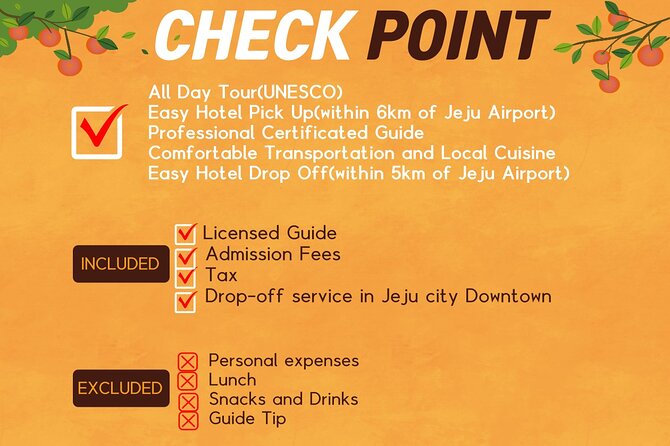
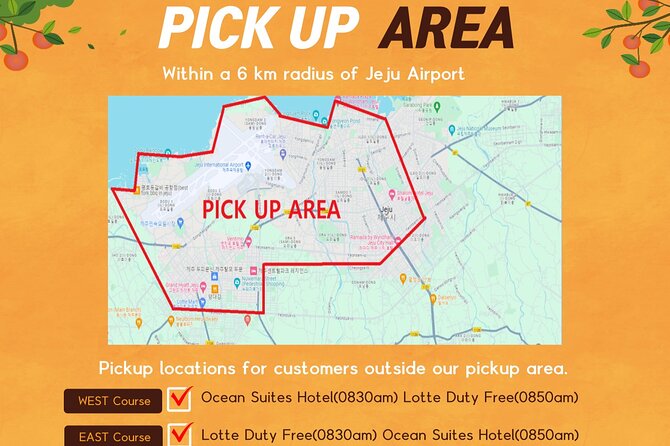
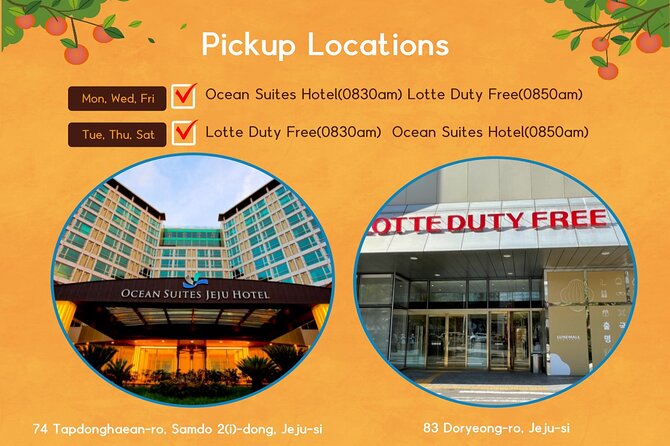
- Hotel pickup inside downtown Jeju City, which saves time and hassle
- Seongsan Ilchulbong includes the Women Diver show, plus big scenery time
- Seasonal swaps like Seopjikoji replaced by Sangumburi in October
- Weather-proof routing that reroutes to places like Circus World and Haenyeo Museum
- A mix of geology and culture, from forest paths to lava tubes and columnar cliffs
Jeju in two packed days, with pickup and real English help
If Jeju is your first stop in South Korea, language can feel like a tax you pay all day. This tour reduces that tax. You get hotel pickup and drop-off in Jeju City downtown, plus transportation in a van, minibus, or bus, based on group size.
I also like the staff approach: the operator, Jeju Travel Lucas, runs the same style of routing across two days, and they aim to match your group size with an English-speaking guide or driver support. You might end up with people like Andy or Lee as a guide, and Terry as a driver, depending on the group and day. That matters because the explanations are what turn a stop from pretty into memorable.
The trade-off is simple: this is a fixed route. You get a lot in a short window, but you do not control the pacing at each location.
More UNESCO Heritage Tours in Jeju:
- Jeju Premium Small Group UNESCO Day Tour – East Course
★ 5.0 · 84 reviews - Jeju Island Private Taxi Tour : UNESCO Day Tour
★ 4.5 · 82 reviews - Jeju Premium Small Group UNESCO Day Tour – South Course
★ 5.0 · 73 reviews
Price and value: why $125 can make sense here
At $125 per person for about two days, you are paying for four things: guided planning, transportation, and fewer “what do we do next?” moments. You are also paying for day-to-day flexibility when sites close due to conditions, since the tour builds in swaps.
The value improves if you would otherwise rent a car or do multiple separate tickets and transfers. Jeju distances add up, and figuring out bus connections or hiring taxis back-to-back can cost time and money fast. Here, the transport is handled, and many stops list free admission.
There is also one quietly smart element: the tour’s structure changes by weekday, so you can line up your travel dates with the east or west focus instead of guessing. If you can book ahead, the average booking window listed is about 37 days in advance, which usually means better planning on your end.
East vs West UNESCO days, and why your booking date matters
Jeju feels like two islands in one: the east has dramatic coast views and iconic volcanic shapes, while the west leans more toward tea country and different coastal scenery. This tour leans into that.
Here’s the pattern you should use when choosing your departure day:
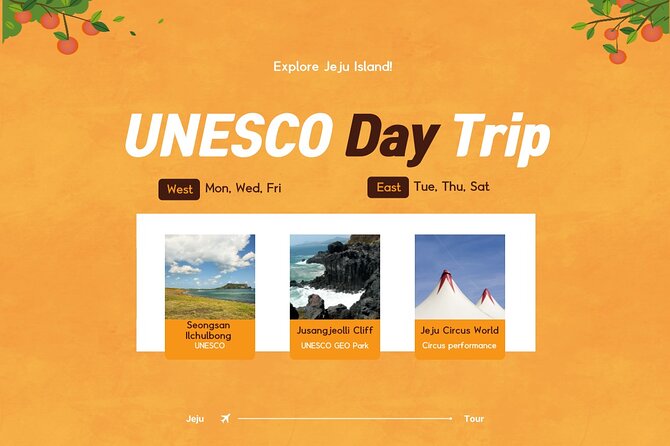
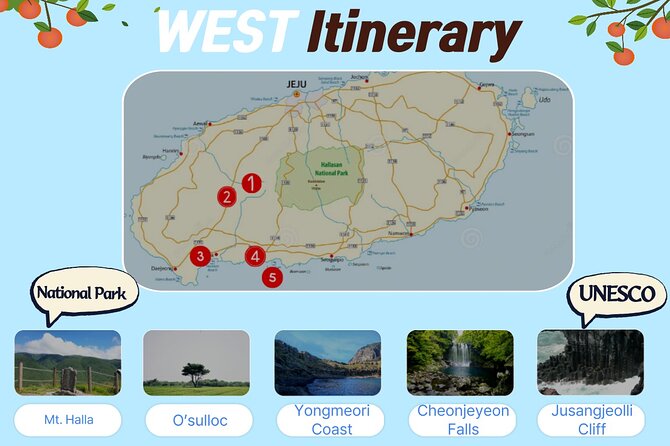
- Western Jeju (UNESCO) runs Mon, Wed, Fri
- East Jeju (UNESCO) runs Tue, Thu, Sat
- K-Drama themed east or west runs from Monday to Saturday, depending on the timetable
Why should you care? Because this affects which major sights you’ll hit across the two days. If you want Seongsan Ilchulbong level landmarks, you are typically looking at the east-focused days. If you prefer a tea and western coast vibe, match your dates to the west schedule.
Also note: some stops are seasonal. In October, Seopjikoji can be replaced by Sangumburi, so if you’re traveling then, you may get a different kind of crater scenery.
Day 1 forest and folk culture: Saryeoni and Seongeup
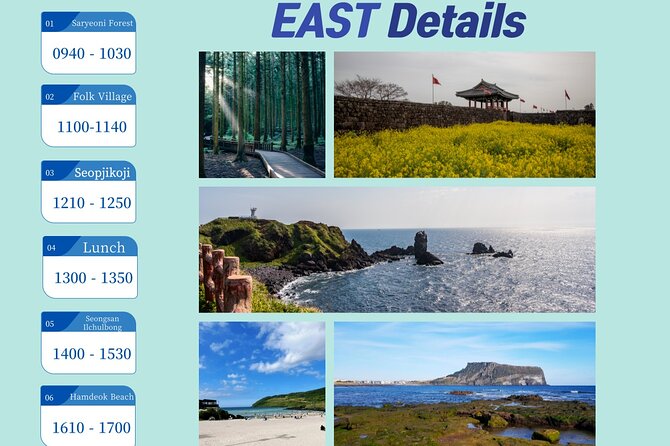
Day 1 often starts with a nature hit that is gentle on logistics and strong on atmosphere. The Saryeoni Forest Path is described as one of Jeju’s top “hidden attractions,” and it is protected. Expect a protected forest trail with a calm feel, and a stop length of about 50 minutes.
This is a great opener because you avoid burning your energy on the biggest climb first. You get fresh air, quick photos, and a mental reset before the more famous volcanic sights.
Next comes the cultural side with Seongeup Folk Village. The village is preserved in older form, with stone structures designed to protect roofs from wind. It is also tied to periods when people built homes with defense in mind.
This stop runs about 50 minutes, and it’s most enjoyable if you pay attention to the details, not just the buildings. Look at how the stone piles are used for shelter and wind protection, and you’ll get a sense of how people adapted to Jeju’s weather.
Potential drawback: both of these culture and forest stops are time-boxed. If you want to wander longer, you will be wishing for more time at the edges. The payoff is you save that time for the major UNESCO-linked sites later.
More Jeju Island tours:
- Jeju Island English Private & Flexible Tour any number anywhere
★ 5.0 · 561 reviews - Jeju: East Tour with Sunrise Peak, Seongeup & Coastal Views
★ 4.8 · 197 reviews - Jeju English Private Taxi Tour(1day, 2days, 3days & 1 to 12pax)
★ 5.0 · 118 reviews - Jeju Island Private Taxi Tour : 2 Full days
★ 5.0 · 106 reviews
Seongsan Ilchulbong Sunrise Peak and the Women Diver show
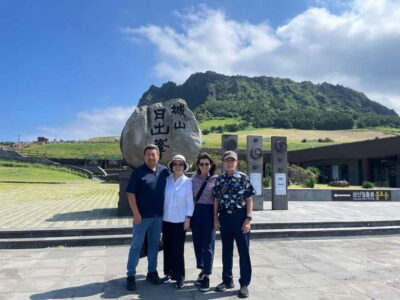
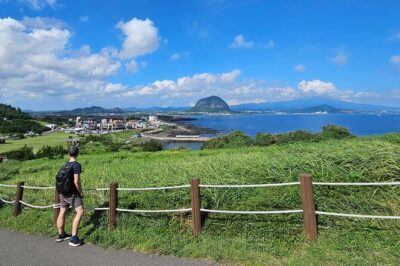
Then you pivot to one of Jeju’s headline landscapes: Seongsan Ilchulbong, also called Sunrise Peak. It’s a UNESCO-linked volcanic tuff cone formed from hydrovolcanic eruptions, with a crater bowl shape and layered inner structures.
You get about 1 hour 20 minutes, and that extra time matters because you want space for viewpoints without feeling rushed. This is one of the places where weather changes how it looks, so that timing buffer helps.
A highlight listed for this stop is the Women Diver show. Jeju haenyeo culture is central to the island identity, and having that show connected to the landscape makes the stop feel grounded. Even if you are not a “performance person,” it adds context to what you’ll see in other haenyeo-related spots later in the day or across the two days.
A practical consideration: plan for uneven ground and sun exposure. Even on days that are not hot, wind can feel strong near the coast.
Seopjikoji and Sangumburi crater views, depending on the month
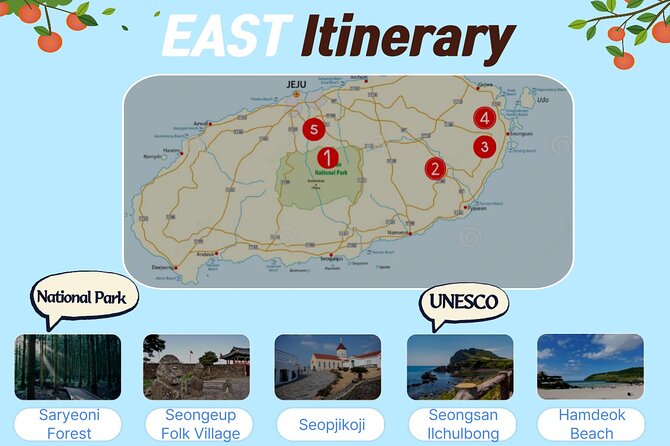
After the sunrise peak, the route often heads toward the eastern shoreline scenery. Seopjikoji is a coastal natural area, with special seasonal appeal. In April, it is known for yellow canola flowers. The timing also fits well because it gives you a change of pace after the volcanic focus.
In October, Seopjikoji may be swapped for Sangumburi. The route describes Sangumburi’s autumn look: ridges colored gold by silvergrass waves, plus planted cedar and Korean fir that form forest paths. You also get a sense of how the crater ecology changes with season.
This is where the tour feels flexible in a good way. Instead of giving you the same version every time, the plan tries to match the landscape mood to your travel month.
What to watch: even with good weather planning, October can be busy. If you care about getting the best viewpoint photos, keep your camera ready the moment you disembark and do not treat it like a slow stroll.
Jongdal-ri coastline road, hydrangeas, and beach passes
Next is a coastal transition that many people enjoy because it turns “transport time” into scenery time. The bus takes the Jongdal-ri Shore Road through parts of north-east Jeju, with pass-by scenery including Hado Beach and Saehwa Beach.
Jongdal-ri is noted for hydrangeas in summer, which makes this stop especially good if you travel in the warmer months and want a color-focused coastal feel.
This portion is about 40 minutes, and that is usually enough for a few viewpoints and photos, but not enough for deep beach time. If the sea is calm and you have energy, you can make it work with short breaks, but this is not a “spend hours at the water” stop.
Hamdeok Beach and the Manjang Cave replacement plan
Here’s where weather and closures start to matter more. The tour lists Hamdeok Beach as part of the route, but on rainy days it can be replaced by Haenyeo Museum.
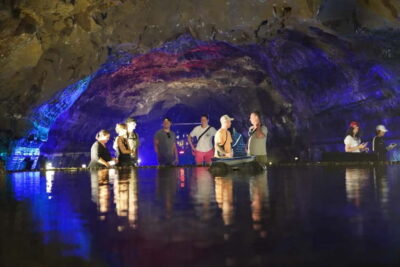
The bigger storyline is Manjang Cave, listed as UNESCO World Heritage but currently closed due to anti-falling construction, scheduled to reopen in August 2025. During the closure period, Manjang Cave is substituted with Hamdeok Beach.
This is one of the most important “value protection” features of this tour. You paid for a two-day mix of geology and culture, and the plan tries not to leave you with a dead end just because a landmark is under maintenance.
There are other swap rules too. If Manjanggul Lava Tube is closed, which is noted as the first Wednesday of every month, the plan can route you to Haenyeo Museum as an alternative. And on rainy days, Jeju Stone Park can be replaced by Haenyeo Museum.
So what is Haenyeo Museum? It’s built to reevaluate and document haenyeo culture, with exhibits focused on the environment, fishing villages, folk culture, and the fisheries industry. You are not just seeing a costume culture here, you are learning how it worked economically and socially.
Trade-off: museum time can be less scenic than caves, but it is usually time well spent if it’s raining anyway. It also gives you more meaning for the haenyeo show you might have already seen.
Day 2 volcanic and national-park flavor: Hallasan Oreum
Day 2 leans into Jeju’s volcanic heart with Hallasan National Park and the Eoseungsaengak area. Eoseungsaengak is described as a baby volcano called an oreum of Halla Mountain.
Stop time is about 1 hour, and the idea here is to see the volcanic personality of Jeju without needing to commit to the longest trek people dream about. That makes it a good fit for the tour’s “two days, many sights” approach.
On rainy days, Hallasan can be replaced by Circus World. If you’re on a wet day, that swap keeps your schedule moving rather than stuck.
Osulloc Tea Museum: the break from stone and sea
Then you move from geology into a more gentle, cultural stop: O’sulloc Tea Museum. It’s described as Korea’s first tea museum, with a tea museum opened in 2001 and a nearby tea stone built in 2013 for tea experience and cultural activities.
This stop is about 1 hour, and I like it because it gives your brain a new flavor after volcanic coasts. Tea country also tends to feel more comfortable in bad weather, since the mood is indoors and garden-adjacent rather than fully exposed.
Admission is listed as free here, which helps the budget. It also means you can spend your time on the experiences rather than calculating what’s worth paying for.
Sanbangsan Mountain and the cave temple stop
Next comes Sanbangsan Mountain, with a height of 395 meters and a dome-shaped volcanic form. The name is tied to a stone cave at the mountain, where Sanbanggulsa Temple is located, including a Buddha statue. The route includes time for this stop at about 30 minutes, with admission ticket included.
This one is quick, but it can be memorable because it adds a spiritual pocket to the volcanic day. The cave idea makes it feel different from the open crater viewpoints.
Practical note: cave and temple areas often mean cooler temperatures and damp steps. Wear shoes that handle uneven surfaces.
Yongmeori Coast, Cheonjeyeon Falls, and the sea change of pace
After the mountain, you shift to dramatic sea formations. Yongmeori Coast is described as a volcanic beach made from ash from violent explosions when hot magma met cold seawater. You walk down a narrow path to reach the beach, and you may see sandstone cliffs too.
The route lists 1 hour, with admission ticket included. There is also a realistic constraint: entry may not be allowed during rising tides or bad weather. When that happens, Mt. Songaksan is offered as an alternative tour course.
This is the kind of substitution that keeps your day from collapsing. Coastal spots are the first to change with conditions, so having an alternative is a big deal.
Then comes the waterfall beat: Cheonjeyeon Falls, named Pond of God. It’s described as three sections, with water flowing into a pool and then dropping twice more into the sea. The area is also noted for plant life, including rare reeds.
Stop time is about 40 minutes, with admission ticket included. It’s another “short but satisfying” stop, and the three-level water pattern means it rarely feels repetitive.
Daepo Haean Jusangjeolli Cliff, columnar joints, and UNESCO GEO Park
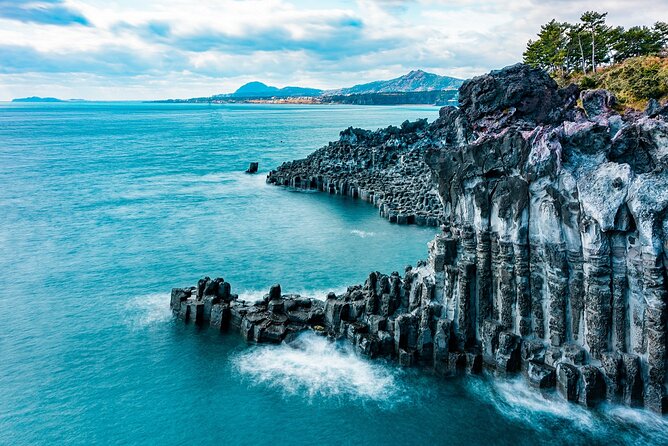
One of the most photo-friendly stops is Daepo Haean Jusangjeolli Cliff, listed as UNESCO GEO Park. The columnar joints are described like a large folding screen of black hexagon stone pillars, shaped by volcanic processes.
You get about 50 minutes, with admission ticket included. The ocean waves crashing against the columns are the point, and this is one of those places where timing within the stop matters. If you arrive when the sea looks lively, the whole site feels more dramatic.
Caution: it can be slippery near sea cliffs. Use stable footing and stay where you are allowed.
Rainy-day culture and Circus World, plus the Jeju Art Circus performance
The tour is designed with weather reality in mind. If it’s rainy, the plan can shift. Hallasan can be replaced by Circus World, and Hamdeok can be replaced by Haenyeo Museum. You might also see other swaps based on closure timing.
There is also a specific performance stop: Jeju Art Circus (Jeju Art Circus). The route describes it as a Chinese-technique circus performance, started in January 2004 and blending circus performance with Arirang, plus other performance corners like a motorcycle show. Stop time listed is about 1 hour, with admission listed as free.
This is a smart addition to a two-day package because it changes the pacing. You go from sun and sea to controlled indoor entertainment, which can feel like a reset.
If you catch it on a clear day, it can still be a nice break. On a rainy day, it can turn the whole trip from “weather misery” into something you remember for the right reasons.
Group size, vehicle type, and what it means for your experience
This tour runs with a minimum of 13 travelers to proceed. That minimum affects whether you get the full bus version or whether the operator offers alternatives if there are not enough people.
Vehicle and guide setup depends on group size:
- Up to 4 individuals can join at the same price with a regular taxi driver with advanced English skills
- Groups 5 to 10 may get a minibus with an English-speaking guide
- Groups larger than 10 can be matched with a van, minibus, or bus up to a maximum of 35 travelers, and the operator makes best efforts to arrange professional English-speaking guidance
This matters because the “feel” of the tour changes. A larger bus group typically means fewer deep conversations. A smaller vehicle often means quicker questions and more direct interaction.
If English explanations are a priority for you, aim for a smaller group setup when possible. If your goal is simply to get from A to B efficiently, any of the vehicle formats will still do the job.
Who should book this tour, and who might want something else
This is a strong choice if you want a guided, time-efficient Jeju overview across east coast geology and a day of volcanic and cultural stops. It also works well if you dislike logistics. You can focus on the scenery, the stories, and taking photos, instead of managing transport connections.
You should consider skipping it if you want maximum flexibility. Because the route is structured, you will not be able to turn one stop into a half-day detour on your own. You also need to accept that some major sights, like Manjang Cave, can be closed during construction periods, and the tour will reroute.
It also suits people with moderate physical fitness. Many stops include walking and outdoor viewpoints, but the plan uses short stop durations rather than long trekking.
Should you book Jeju Travel Lucas UNESCO Bus Tour?
Yes, if you want a solid two-day sampler with guidance, and you like the idea of strong scenery plus cultural grounding. The main reason I would book is the way the tour protects your time: hotel pickup, transportation handled, and built-in weather or closure swaps like the Manjang Cave to Hamdeok replacement and rainy-day reroutes to Haenyeo Museum or Circus World.
Hold off or look for another option if you only want one specific landmark and cannot handle substitutions. With UNESCO-level sights, closures and conditions can change what you see.
If you can match your travel dates to the East vs West weekday schedule, you’re more likely to get the exact flavor of Jeju you’re dreaming about.
FAQ
What parts of Jeju do these UNESCO tours cover?
The tours are scheduled by weekday: Western Jeju (UNESCO) runs Mon, Wed, and Fri, while East Jeju (UNESCO) runs Tue, Thu, and Sat.
Is hotel pickup included?
Yes, pickup and drop-off are included within Jeju city downtown area only.
Are admission tickets included?
Admission is listed as included for some stops (like Seongsan Ilchulbong, Eoseungsaengak at Hallasan, Sanbangsan, Yongmeori Coast, Cheonjeyeon Falls, and Daepo Haean Jusangjeolli Cliff). Other stops list admission as free, while some alternatives like Haenyeo Museum are used depending on conditions.
What happens if Manjang Cave is closed?
Manjang Cave is currently listed as closed due to anti-falling construction and scheduled to reopen in August 2025. During the closure period, it is substituted with Hamdeok Beach.
What if it rains?
On rainy days, some stops are replaced, such as Hallasan National Park being replaced by Circus World, and Hamdeok Beach being replaced by Haenyeo Museum.
How big is the group, and is there a minimum?
This tour requires a minimum of 13 travelers to proceed. The maximum is 35 travelers.
Is transportation and an English guide included?
Yes. The price includes transportation (van, minibus, or bus depending on group size) and a driver or professional English tour guide.
More Historical Tours in Jeju
- Private Full Day Tour World Natural Heritage & UNESCO in jeju
★ 5.0 · 9 reviews - Jeju Day Tour – World Heritage & UNESCO
★ 5.0 · 4 reviews - From Busan: Gyeongju UNESCO World Heritage Guided Day Tour
★ 4.8 · 1,250 reviews - Gyeongju UNESCO World Heritage Guided Day Tour from Busan
★ 5.0 · 660 reviews
Recently reviewed in Jeju
- jeju island Jumbo taxi Private tour with Mr.Hong East of jeju★ 5.0 · 19 reviews
- Jeju Private Tour Package-South of Jeju(Mt.Hallasan & Waterfalls)★ 5.0 · 5 reviews
- Customized private tour in Jeju island★ 5.0 · 19 reviews
- Private Jeju Geopark Gotjawal and Oreum Trekking Experience★ 5.0 · 3 reviews
- Jeju: Haenyeo Culture Experience with Seafood Tasting★ 5.0 · 4 reviews
- Small group Private Taxi Tour DAY experience in Jeju island★ 5.0 · 25 reviews
- Jeju Premium Small Group UNESCO Day Tour – West Course★ 5.0 · 3 reviews
- UNESCO Jeju Full Day Tour Package By Taxi★ 5.0 · 5 reviews
Jeju Island Tours, compared.

East Jeju Essentials – Seongsan Ilchulbong (UNESCO) & Haenyeo
Read our review →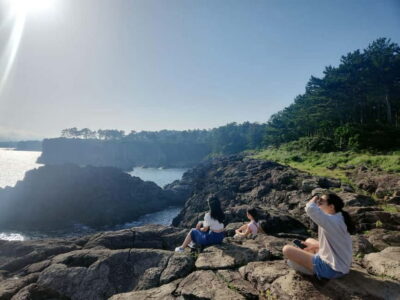
South-West Jeju Essentials: Hallasan & Signature Highlights
Read our review →
Jeju Island English Private & Flexible Tour any number anywhere
Read our review →
Jeju Island: Full-Day East Jeju Bus Tour with Entry Fees
Read our review →Browse the lists this tour appears in