
Reviewed · JEJU ISLAND TOURS
Jeju Day Tour – World Heritage & UNESCO
Jeju geology in one smooth day plan. This private tour strings together World Heritage geology, iconic waterfalls, and ocean viewpoints, with pickup and a mobile ticket so you spend less time figuring things out.
I also like the “you get to choose” part of the day. Your route depends on whether you start in Seogwipo or Jeju City, and at the end you pick between places like Manjanggul Cave versus Osulloc Tea Museum, or Seopjikoji versus Seongeup Folk Village. When my start time shifted, the team response I saw was quick, and the driver Hyun-woo Lee kept things moving with simple English.
The one consideration: some site entrance fees are not included, and Manjanggul Cave can close for safety inspection or construction, with a museum-style alternative offered instead. Budget a little extra, and bring patience for cave-day changes.
In This Review
- Key things I’d plan around
- A realistic pace for UNESCO Jeju in 8 to 9 hours
- Oedolgae and Cheonjiyeon Falls, the sea and stone start
- Jeongbang Waterfall, the rare one where water meets sea
- Seongsan Ilchulbong tuff cone, do part of the trail
- Manjanggul Cave, cool volcanic air and a long underground feel
- Beaches that fit the schedule: Woljeongri and Hamdeok
- Woljeong-ri Beach
- Hamdeok Beach
- Seopjikoji versus Seongeup Folk Village, your choice changes the tone
- Seopjikoji
- Seongeup Folk Village
- Osulloc Tea Museum, a calming reset on the Seogwipo side
- Price and what $320 per group really buys you
- When this tour is a great match, and when to skip
- Should you book this Jeju day tour?
- FAQ
- What is the duration of the Jeju UNESCO day tour?
- Where do pickups happen?
- Is lunch included?
- Are entrance fees included in the tour price?
- What is included besides transport?
- What if Manjanggul Cave is closed?
- Is this a private tour?
- How many people can be in a group?
- Can I cancel for a full refund?
Key things I’d plan around
- Private group only means you are not competing with strangers for the good angles or the quick bathroom stop.
- Two route options (Seogwipo side or Jeju City side) help you match the day to where you are staying.
- Seongsan Ilchulbong trails let you do as much walking as your energy allows within a single day.
- Manjanggul Cave stays cool year-round, so you can treat it like a reliable weather refuge.
- Your “choose-one” stop makes the tour feel less like a conveyor belt.
A realistic pace for UNESCO Jeju in 8 to 9 hours
This is a full-day circuit, about 8 to 9 hours, built around volcanic sites that earn UNESCO recognition and a handful of classic waterfall and coast scenes. Because the stops are packed, the best way to enjoy it is to treat each location as a focused visit, not a long linger.
The tour works well if you want the headline sights, but you still like to stop, take photos, and read signage for a few minutes. If you hate being on a schedule, you might find the day a bit fast, since the itinerary is clearly designed to cover multiple regions of Jeju in one outing.
More UNESCO Heritage Tours in Jeju:
- Jeju Premium Small Group UNESCO Day Tour – East Course
★ 5.0 · 84 reviews - Jeju Island Private Taxi Tour : UNESCO Day Tour
★ 4.5 · 82 reviews - Jeju Premium Small Group UNESCO Day Tour – South Course
★ 5.0 · 73 reviews
Oedolgae and Cheonjiyeon Falls, the sea and stone start
On the Seogwipo departure route, the day kicks off at Oedolgae, a stone pillar rising about 20 meters from the sea. It is also part of Jeju Olle Trail Course 7, so even if you do not do the full trail, it gives you a sense of place. The naming comes with legends, including the story linking General Choi Yeong to an old conflict and the rock’s nickname, General Stone, and Grandma Rock. You also get the volcanic angle here, since the pillar is believed to form from a volcanic eruption and later sea erosion.
Then you move to Cheonjiyeon Falls, one of the better “wow, that sound is real” stops. The falls are about 22 meters high and 12 meters wide, dropping from a cliff with a thunderous roar. The name meaning sky connected with land gives you a nice mental picture for the setting.
What I like for this stop is that it is not only scenery. The area includes plants tied to Natural Monument protections, including Elaeocarpus (Natural Monument 163). There is also a Natural Monument for Giant Mottled Eels (Natural Monument 27), and the eels are nocturnal, so you are learning about a living ecosystem rather than just staring at water.
Practical tip: this is near the water. A light wind layer helps, especially if the breeze picks up.
Jeongbang Waterfall, the rare one where water meets sea
Jeongbang Falls is short, about 40 minutes, but it is a top-tier stop. The big fact that makes it special is simple: it is the only waterfall in Korea where the water falls directly into the sea.
You are looking at a 23-meter drop from a black cliff, with two streams making that distinct, loud cascade effect. The combination of steep cliffs and old pine trees also gives you the “postcard look” from multiple angles around the falls.
You will also notice the cultural layer. The cliff area is associated with a legend about Seobul and an elixir quest, and the text notes words like Seobulgwacha are engraved on the cliffs near Jeongbang Falls. That kind of detail matters because it turns the waterfall from a generic attraction into a place with local meaning.
One small drawback: the entrance fee for this stop is not included in the tour price. If you arrive expecting everything to be covered, you may have a small surprise.
Seongsan Ilchulbong tuff cone, do part of the trail
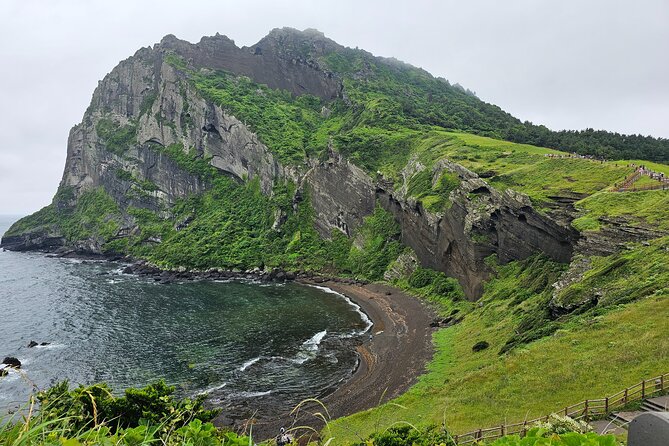
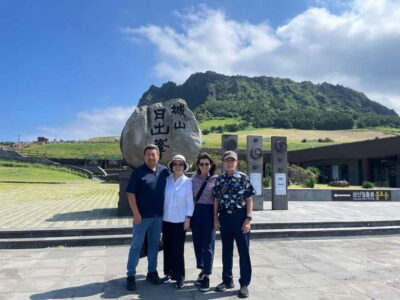
Seongsan Ilchulbong (Seongsan Ilchulbong Tuff Cone) is the UNESCO hit in this day. It formed about 5,000 years ago from a magma eruption on the ocean floor. It is famous as a sunrise spot, but you do not need sunrise to appreciate the geometry. Even in daylight, the crater shape and the surrounding blue ocean make the place feel like a real-world geology lesson.
The tour time here is around 1 hour and the entrance fee is not included. That matters because you likely cannot do a long, full hike in that window. Still, the area is set up for flexible walking.
The trails mentioned are:
- Seongsan-Ojo Trail, connecting two villages by crossing the peak
- Jijil Trail, offering closer views of the UNESCO geopark area and local culture
My advice if you get motion-sick or simply want a low-stress visit: choose one trail segment and turn back. The crater and sea views are the payoff, and you can still get them without rushing to the summit.
If you have a bit of time after, the day includes a chance to head to Seongsanpo Port to watch haenyeo (female divers). Even if you only catch a session briefly, it adds a human rhythm to the geology heavy schedule.
More Jeju Island tours:
- Jeju Island English Private & Flexible Tour any number anywhere
★ 5.0 · 561 reviews - Jeju: East Tour with Sunrise Peak, Seongeup & Coastal Views
★ 4.8 · 197 reviews - Jeju English Private Taxi Tour(1day, 2days, 3days & 1 to 12pax)
★ 5.0 · 118 reviews - Jeju Island Private Taxi Tour : 2 Full days
★ 5.0 · 106 reviews
Manjanggul Cave, cool volcanic air and a long underground feel
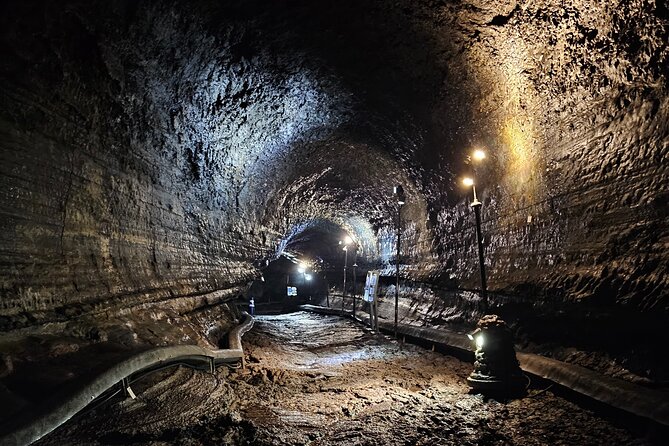
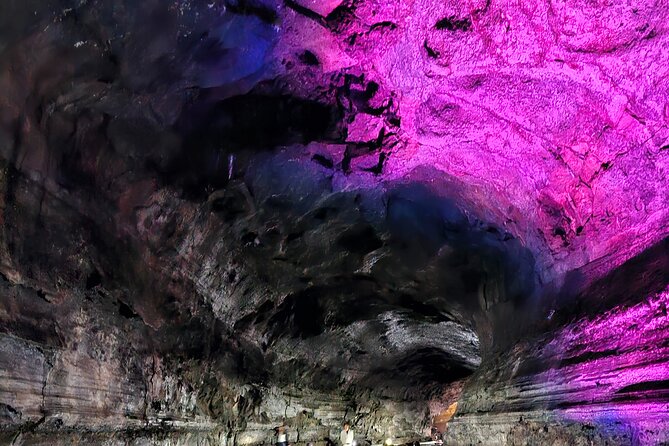
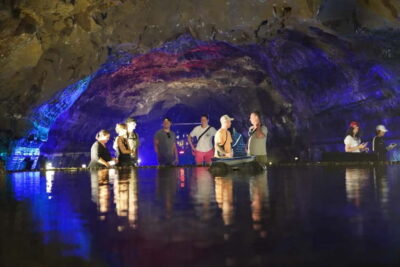
Manjanggul Lava Tube is the other UNESCO World Natural Heritage stop, and it is the one most people remember. The cave belongs to Geomunoreum, the only parasitic cone on Jeju designated as a UNESCO World Natural Heritage site. Manjanggul is the publicly accessible lava tube, while the broader cone is described as holding over 20 caves.
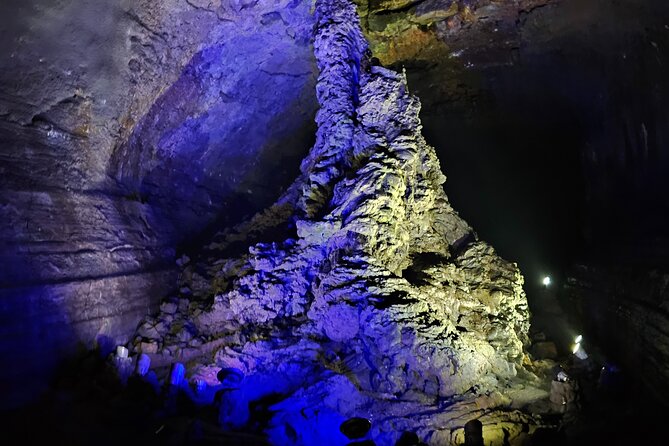
What stands out is the sheer mood change when you step inside. The description frames it like moving into a Hades-like underworld, with lava rock formations that look engineered by time. You follow the tunnel until a giant rock pillar marks the end of the accessible route.
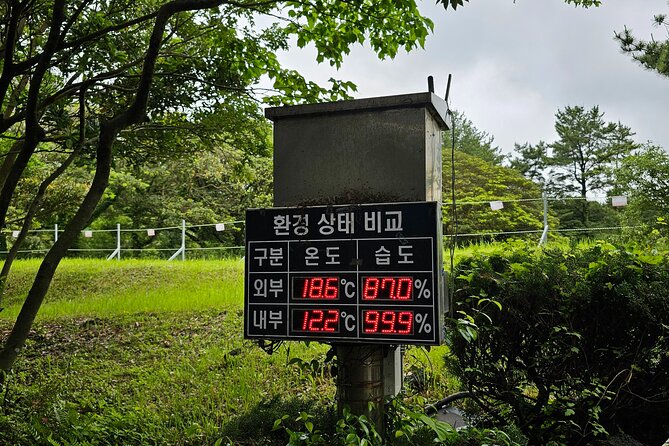
Here is the practical reason to love it: cave temperature stays around 11 to 21°C year-round. That means you can treat it like climate insurance. If it is hot outside, the cave becomes a cool reset. If it is cold and windy, it is still controlled.
Your stop here is about 1 hour, and the entrance fee is not included. Bring shoes with good grip and consider a light jacket. The cave setting encourages you to look up and around as you walk, but you will want to keep your footing.
Important note on closures: the operator lists that Manjanggul Cave can be suspended for safety inspection and internal construction, and when closures happen (for example, the first Wednesday is mentioned), an alternative tour is offered via Jeju Haenyeo Museum. The day is designed to adapt, but you should be ready for the swap if your date hits a closure window.
Beaches that fit the schedule: Woljeongri and Hamdeok
Not every Jeju tour needs beaches, but this one does a smart job of placing them where they do not steal the day from the UNESCO sites.
Woljeong-ri Beach
Woljeong-ri Beach is a 15-minute break. It is known for white sand and emerald water, plus a road lined with tea houses and coffee shops. That short stop works best for a quick coastal walk and a couple of photos. If you want beach time with a towel and a full swim session, you would likely need a separate half-day.
Hamdeok Beach
If you start from Jeju City, you get Hamdeok Beach instead, with about 30 minutes on the sand and sea. The description calls it a jewel-like emerald scene and notes that it is also called Hamdeok Seoubong Beach because Oreum Seoubong Peak sits beside the shoreline.
Two details I like for planning:
- It is about 20 km from Jeju Airport, so it feels accessible even early in the day.
- The setting includes palm trees at the entrance, and the sea visibility can be high enough that you may notice seaweed details through the water.
For most people, this beach stop is the emotional reset between volcanic sites and heritage villages.
Seopjikoji versus Seongeup Folk Village, your choice changes the tone
On the Jeju City departure route, you get a “choose-one” moment that decides whether your ending feels coastal-artsy or heritage-life.
Seopjikoji
Seopjikoji is about 40 minutes with free admission. The name comes from Jeju dialect for a “Cape of Small Land,” tied to cliff shapes that jut into the ocean. The hill and ocean combination is why people return here year-round.
As you walk along the cliff, the trip connects to Bulgeunoreum parasitic cone viewpoints, including an overlook where you can see a white lighthouse against darker blue sea. The stop also mentions the Glasshouse and the Yumin Art Gallery, designed by architect Ando Tadao. If you like architecture that respects place, this is the moment to pay attention.
There is also a chance to see Jeju ponies grazing on the grass.
Seongeup Folk Village
If you prefer culture over cliffs, choose Seongeup Folk Village for about 20 minutes, also free. This is designated as an Important Folklore Cultural Heritage site, and a key difference from many “folk villages” is that residents still live in the village today. Volunteer guides share info, which is especially helpful when signage is dense.
The center has trees worth pausing for, including Saw-leaf Zelkova and a Japanese hackberry. With only 20 minutes, you will want to focus on the main village layout rather than trying to read everything deeply.
Osulloc Tea Museum, a calming reset on the Seogwipo side
If you start from Seogwipo, you may swap Manjanggul Cave for Osulloc Tea Museum, with about 50 minutes and free admission. This is the day’s cultural palate cleanser.
The museum is described as the first tea museum in Korea, opened in 2001 by AMOREPACIFIC, with a mission to teach tea and traditional Korean tea culture. It is set near the Seogwang tea field, and the experience includes a tea museum space, a nature-friendly rest area, and a cafe where you can enjoy menus using tea.
I like this option because it gives your brain a break from geology. It is still Jeju, just from a different angle, and it is a comfortable place to regroup before the final beach or coastline segments.
Price and what $320 per group really buys you
This tour costs $320 per group, up to 4 people. On average, people book about 15 days in advance, which tells you it is popular enough that waiting too long can shrink your options.
Here is where the math usually makes sense:
- You get pickup and drop-off from Jeju Island, not just a meeting point.
- Fuel and parking fees are included, which can quietly add up if you rented a car or hired multiple taxis.
- Your driver speaks simple English, Japanese, or Chinese, and insurance is included.
- It is a private tour, so you avoid the usual stress of joining a shared bus that might delay you with others’ pacing.
Entrance fees and lunch are not included, so you should think of the base price as covering the transport and guiding plan, then add site costs on top.
If you are traveling as a couple, the per-person cost is still reasonable. If you are a solo traveler, it may be pricier than joining a bus group, but the private setup can still feel worth it when you value flexibility.
When this tour is a great match, and when to skip
This is a solid pick if you want a guided “best of Jeju UNESCO and nature” day without car logistics. It is also a good fit if you are short on time and hate the idea of driving between far-flung areas while juggling navigation, parking, and tolls.
It might not be the right match if:
- You want a slow, beach-first vacation day.
- You plan to spend long hours inside one site rather than seeing many in shorter windows.
- Your heart is set on a single exact stop date for Manjanggul Cave, because the operator notes possible closure for safety inspection and internal construction, with an alternative tour offered.
Should you book this Jeju day tour?
Book it if you want the UNESCO highlights plus the classic Jeju coast and waterfall scenes, and you like the idea of having your route planned with a private group and a clear schedule. The big winners are the geological drama of Seongsan Ilchulbong and Manjanggul Cave, plus the reliable stops like Jeongbang Falls and the choice between coast, village, or tea culture at the end.
Skip it if your priorities are deep, unhurried time at one place, or if you need all entrance fees to be fully included upfront.
FAQ
What is the duration of the Jeju UNESCO day tour?
The tour runs about 8 to 9 hours.
Where do pickups happen?
Pickup and drop-off services are offered from Jeju Island. The tour route differs depending on whether you depart from Seogwipo City or Jeju City.
Is lunch included?
No. Lunch is not included, and you will need to cover food and drinks on your own.
Are entrance fees included in the tour price?
Not all of them. Entrance fees are not included for Jeongbang Waterfall, Jusangjeli, Seongsan Ilchulbong, and Manjanggul Cave.
What is included besides transport?
The price includes fuel and parking fees, an English or Japanese or Chinese speaking driver with simple language ability, and insurance. The tour also provides a mobile ticket.
What if Manjanggul Cave is closed?
If Manjanggul Cave is closed (the first Wednesday of every month is mentioned), the tour offers an alternative with the Jeju Haenyeo Museum.
Is this a private tour?
Yes. It is a private activity, and only your group participates.
How many people can be in a group?
The pricing is per group up to 4 people for a regular taxi. For 5 or more people, a jumbo taxi or minivan is used, and for 9 or more people, a mini-bus is used.
Can I cancel for a full refund?
Yes. You can cancel up to 24 hours in advance for a full refund. Less than 24 hours before the start time is not refundable.
More Historical Tours in Jeju
- Jeju Island UNESCO Heritage Bus Tour
★ 4.5 · 15 reviews - Private Full Day Tour World Natural Heritage & UNESCO in jeju
★ 5.0 · 9 reviews - From Busan: Gyeongju UNESCO World Heritage Guided Day Tour
★ 4.8 · 1,250 reviews - Gyeongju UNESCO World Heritage Guided Day Tour from Busan
★ 5.0 · 660 reviews
Recently reviewed in Jeju
- jeju island Jumbo taxi Private tour with Mr.Hong East of jeju★ 5.0 · 19 reviews
- Jeju Private Tour Package-South of Jeju(Mt.Hallasan & Waterfalls)★ 5.0 · 5 reviews
- Customized private tour in Jeju island★ 5.0 · 19 reviews
- Private Jeju Geopark Gotjawal and Oreum Trekking Experience★ 5.0 · 3 reviews
- Jeju: Haenyeo Culture Experience with Seafood Tasting★ 5.0 · 4 reviews
- Small group Private Taxi Tour DAY experience in Jeju island★ 5.0 · 25 reviews
- Jeju Premium Small Group UNESCO Day Tour – West Course★ 5.0 · 3 reviews
- UNESCO Jeju Full Day Tour Package By Taxi★ 5.0 · 5 reviews
Jeju Island Tours, compared.

East Jeju Essentials – Seongsan Ilchulbong (UNESCO) & Haenyeo
Read our review →
South-West Jeju Essentials: Hallasan & Signature Highlights
Read our review →
Jeju Island English Private & Flexible Tour any number anywhere
Read our review →
Jeju Island: Full-Day East Jeju Bus Tour with Entry Fees
Read our review →Browse the lists this tour appears in