
Reviewed · MARKETS
Gwangjang market Netflix Food Walking Tour with Insadong
A smart street-food walk through two Seoul worlds. In just about 3 hours, you move from Insa-dong craft streets to Gwangjang Market’s food stalls, with a guide who explains what you’re seeing. I like that the snacks come with context, so you understand more than just the flavors.
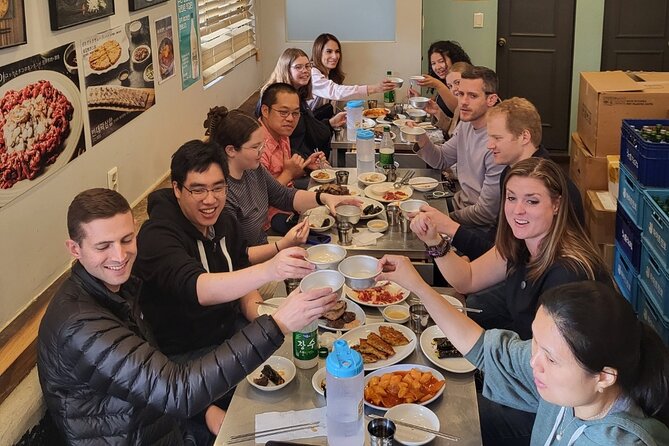
The standout for me is the guide, often Alan Han, who stays patient, answers questions, and sets a relaxed pace. You’ll also get 3 to 5 street-food tastings plus a sweet and rice wine, which makes the tour feel like a real meal experience, not a quick grab-and-go.
The main consideration is weather. This tour depends on good conditions, and hot or rainy afternoons can change how comfortable the walk feels, even if the experience still goes on.
In This Review
- Key Points to Know Before You Go
- A 3 PM Start That Fits Real Sightseeing Time
- Insa-dong Culture Avenue: Crafts, Teahouses, and the Art of Korea
- Ikseon-dong Alley: When Old Lanes Meet Trendy Cafes
- Gwangjang Market: Snacks, Textiles, and a Market That Lasts
- What You Actually Eat: Tastings That Add Up
- Alan Han and the Real Advantage of an English Guide
- Price and Logistics: Is $48.60 Good Value?
- Weather Reality: Bring a Plan, Not Just Good Intentions
- Who This Tour Fits Best (and Who Might Skip It)
- Should You Book This Gwangjang Market Food Walk With Insa-dong?
- FAQ
- How long is the tour?
- Where does the tour start and where does it end?
- What food is included in the tastings?
- Is the guide English-speaking?
- How big is the group?
- What happens if the weather is bad?
Key Points to Know Before You Go
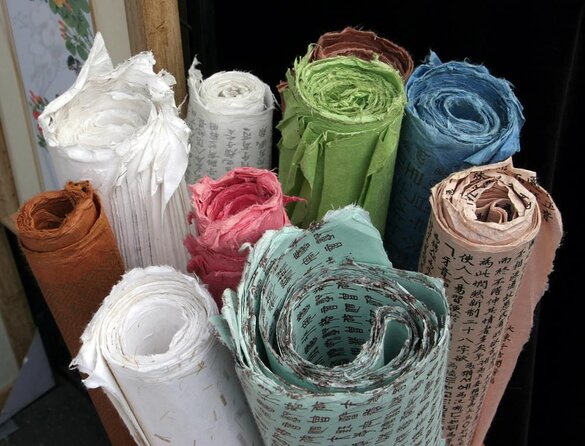
- Insa-dong Culture Avenue and craft shops: Traditional Korean arts, tea houses, and handmade goods along the way
- Ikseon-dong Alley stop built into the route: Narrow lanes with traditional hanok houses and modern cafes
- Gwangjang Market since 1905: Old-school market energy, plus textiles and lots of snack options
- Guided tastings that include specific favorites: Fish cake, mung-bean pancake, honey dessert, and Korean rice wine
- Small group size (max 10): More chances to ask questions and keep things moving smoothly
- Start and finish are simple: Starts near Anguk Station and ends at Gwangjang Market
A 3 PM Start That Fits Real Sightseeing Time
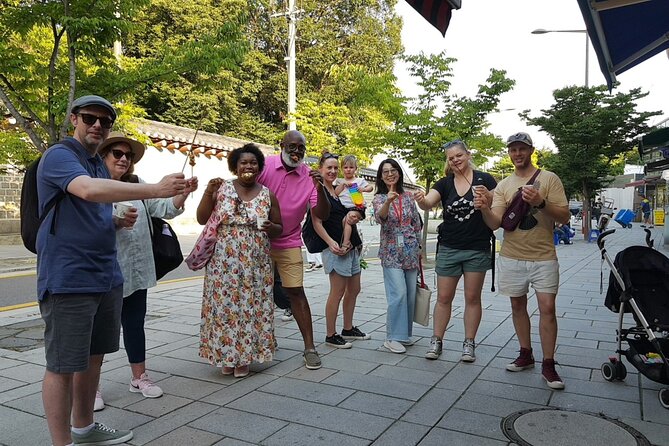
This tour runs in the afternoon, starting at 3:00 pm and lasting about 3 hours. For me, that timing is practical because you catch the neighborhoods when shops are open and the market is alive, but you are not locked into an all-day schedule.
The meeting point is Anguk Station, and the end point is Gwangjang Market (88 Changgyeonggung-ro, Jongno District). That matters more than it sounds. You’re not forced to backtrack to where you started. Once the tour ends, you can keep browsing the market stalls or head out for dinner nearby, without having to plan a return trip.
The group size is kept small, with a maximum of 10 travelers, which usually means less waiting and more personal questions for the guide. You also get a mobile ticket, so you’re not hunting for paper confirmations at the last second.
More Food Tours in Seoul:
- Seoul Street Food Market Tour
★ 5.0 · 1,226 reviews - Seoul: Night Market Food Tour with Local Guide
★ 4.9 · 943 reviews - Downtown Seoul Guided Food & Market Tour with 8+ Local Tastings
★ 5.0 · 580 reviews
Insa-dong Culture Avenue: Crafts, Teahouses, and the Art of Korea
Insa-dong is the part of Seoul that feels made for slowing down. It’s known for traditional Korean architecture, art galleries, handicraft shops, tea houses, and traditional restaurants. In a normal day, you can wander here forever and still miss what makes the place tick. On this tour, you get a guide-led route that helps you connect the streets to the bigger story of why Insa-dong is considered a center for Korean culture.
What I especially like about the Insa-dong portion is that it’s not only about looking. It’s about learning what to look for. You’ll be guided through art spaces and craft shops, where you can spot handmade items like pottery, calligraphy brushes, and traditional Korean paper. Even if you do not plan to buy anything, this kind of guidance makes browsing feel purposeful.
If you’re the type who normally rushes through shopping streets, this stop gives you a reason to slow your pace. The guide’s explanations help you understand the difference between tourist decor and objects made for real use, like calligraphy tools and materials used by artists and crafters.
One practical tip: Insa-dong can be busy, and afternoons can be warm. Wear breathable shoes. You’ll be walking and stopping often enough that comfort matters.
Ikseon-dong Alley: When Old Lanes Meet Trendy Cafes
The tour also covers the area around Ikseon-dong Alley, where traditional and modern Seoul share the same tight spaces. The route is described as narrow alleys with hanok houses and trendier cafes, and that blend is the whole point. You’re not just passing pretty streets. You’re learning how this neighborhood’s identity has changed over time and why it’s become a go-to cultural destination.
This stop works well for two reasons. First, it’s visually interesting without requiring a ticket or long lines. Second, the guide stories give you a framework for what you’re seeing. Instead of “pretty houses plus cafes,” it becomes a neighborhood with a timeline, including how past and present coexist in the same small blocks.
There’s also a good lesson here if you’re new to Seoul. Many neighborhoods look like they evolved “organically,” but they really do have turning points. Hearing those stories helps you read the city like a map, not just a postcard collection.
If you want a photo moment, this area is one of the better bets. Keep your pace steady, though. The lanes are narrow, and other pedestrians move through the same space.
Gwangjang Market: Snacks, Textiles, and a Market That Lasts
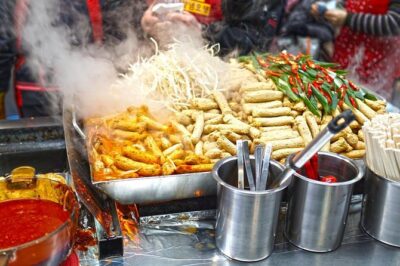
Then you reach the main event, Gwangjang Market, one of the oldest and largest markets in Seoul. It has been operating since 1905, and the market is known for a mix of food stalls, textiles, and handmade goods. That combination is a big reason this place is so different from a typical food court.
The tour experience here focuses on street food, but you will also notice the market’s other layers, like textile browsing. It helps the food feel grounded. You are not just tasting isolated dishes. You’re experiencing a working market where shopping and eating happen side by side.
This part of the tour also leans into history in a grounded way, including references to 1990s Korean local life. Even if you do not know anything about that era, it gives your visit a time-and-place feel. You start to recognize why certain foods are associated with everyday life, not just special occasions.
You’ll see familiar Korean street-food names like bindaetteok (mung bean pancakes), tteokbokki (spicy rice cakes), and bibimbap as you move around. Even when the exact tasting set is predetermined, it’s helpful to know what you are looking at. It makes the market less intimidating when you want to continue browsing after the tour ends.
More Market Tours in Seoul:
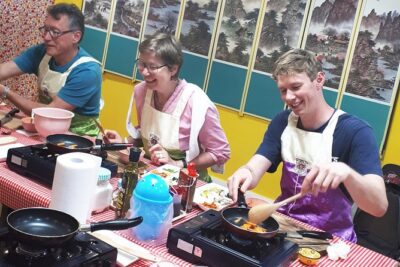
- Local Home Korean Cooking Class & Market Adventure in Seoul
★ 5.0 · 1,024 reviews - Seoul: Palace, Temple and Market Guided Foodie Tour at Night
★ 4.9 · 750 reviews - Seoul: Korean Cooking Class at a Local Home and Market Tour
★ 5.0 · 348 reviews - Seoul Night Palace & Market Food Tour with Vehicle
★ 5.0 · 275 reviews
What You Actually Eat: Tastings That Add Up
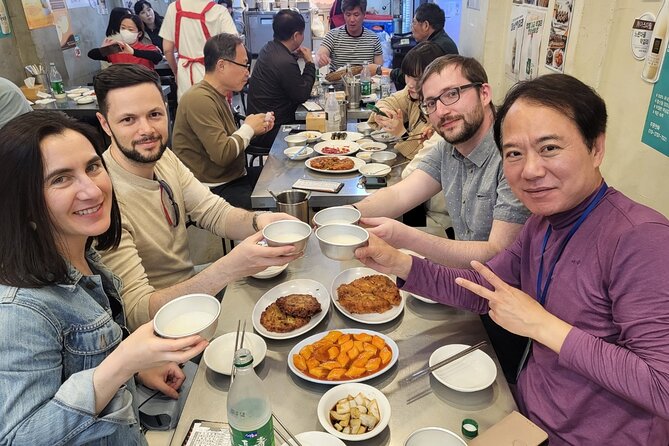
Food walking tours can be hit or miss. Sometimes you get vague tastes and a lot of standing around. Here, the included items are specific, and that’s a big part of the value.
Your included tasting set is listed as 3 to 5 kinds of street food, plus these highlights:
- Fish-cake
- Mung-bean pancake (bindaetteok)
- Honey dessert
- Korean rice wine
You also get a sweet as part of the experience, not as an afterthought. That matters because savory street food can be salty or spicy, and a honey dessert helps you reset your palate.
The fish cake and mung-bean pancake are especially good choices for a first-timer because they are both classic comfort-food textures in Korean street-snack form. If you’ve never had bindaetteok before, it’s a great “start here” dish because it gives you both flavor and a sense of how Korean vendors build snack items with real ingredients.
The rice wine addition is a nice detail for adults who want the full street-market vibe. If you’re not sure about drinking, you can decide based on your own comfort level, but it is listed as included.
One more thing I like: the tour is structured so you taste, then move on. You do not spend the entire time in one stall. That keeps variety high and walking purposeful.
Alan Han and the Real Advantage of an English Guide
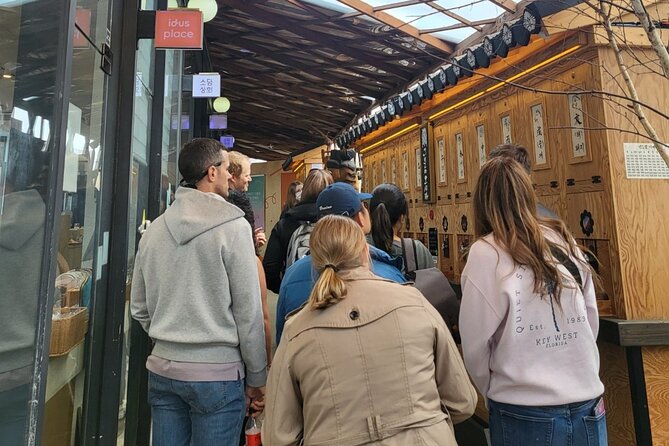
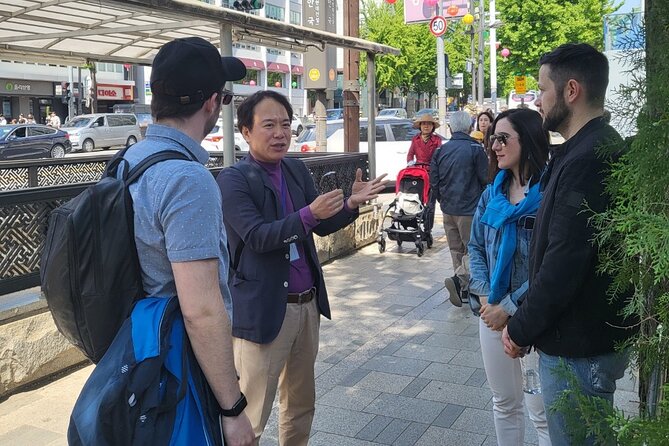
A big reason this tour earns strong ratings is the way the guide handles the group. The name Alan Han shows up in feedback, and the pattern is clear: he’s personable, knowledgeable, and patient. People also highlight that he takes his time and answers questions.
That matters because a market can be overwhelming on your own. You might see ten stalls and still not know what to try first, or you might worry about ordering something you do not understand. With a guide, you get a clear plan and you can ask small questions like:
- What is this dish actually made of?
- How is it traditionally eaten?
- What should I try next so I do not get stuck with only one flavor style?
Even better, the pacing feels considerate. On a scorching hot day, one review notes the guide did his best to keep everything going comfortably while explaining neighborhood history. Another mentions that rain made things soggy, yet the experience still felt worth it. That’s the kind of difference a good guide makes.
Price and Logistics: Is $48.60 Good Value?
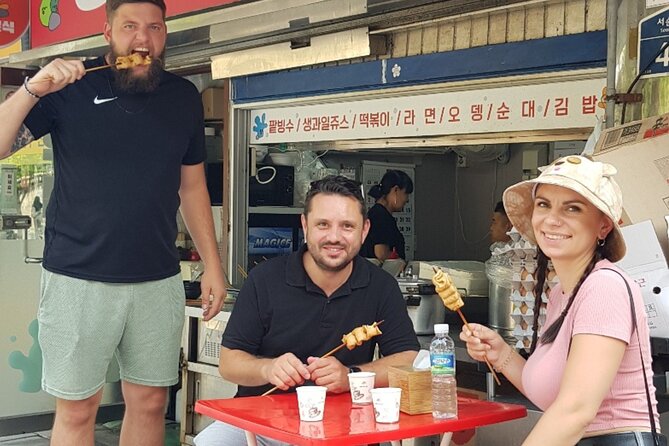
At $48.60 per person, you are paying for three things: a guided walk through two neighborhoods, translation and ordering help, and actual included food and drink. For many visitors, the biggest value is not the price tag. It’s that you get a plan that prevents food-tour “guessing.”
If you try to recreate this yourself, you still need to:
- figure out where to go in Insa-dong and how to move toward Ikseon-dong
- choose which stalls at Gwangjang Market make sense
- order the right dishes
- pay for multiple snacks and drinks on your own
- manage the timing so you don’t waste time backtracking
Here, the tour solves those problems for you, and it includes items like fish cake, mung-bean pancake, honey dessert, and Korean rice wine. That’s a real lineup for one afternoon.
It’s also small-group. With a maximum of 10 travelers, you are more likely to get questions answered and to keep a steady pace through tight market aisles.
One scheduling note: this experience is often booked far ahead (on average, about 62 days). If your travel dates are fixed, it’s smart to reserve early so you do not end up choosing a later slot that throws off your plans.
Weather Reality: Bring a Plan, Not Just Good Intentions
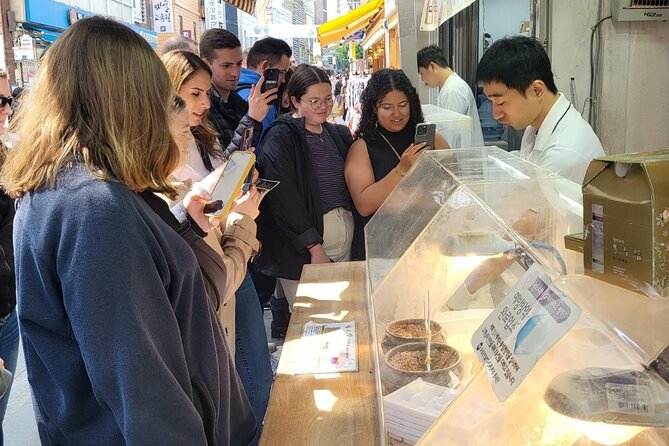
This tour is weather-dependent, meaning it requires good weather. The good news is that if it gets canceled due to poor conditions, you should expect either a different date or a full refund.
Still, you can control what happens on the ground. Seoul afternoons can swing from hot to rainy quickly. If you’re going, I’d pack like this:
- a light rain layer or compact umbrella, in case showers pop up
- water and something light to avoid getting run down
- shoes that handle wet sidewalks well
The practical goal is simple: you want to stay comfortable enough to enjoy the tastings and the stop-by-stop explanations, even if the sky changes.
Who This Tour Fits Best (and Who Might Skip It)
This tour is a strong match if you:
- want a short, structured way to connect Insa-dong with Gwangjang Market
- enjoy street food and want a guide to help you pick confidently
- like history that comes through neighborhoods, not just plaques
- prefer small groups and room for questions
It might be less ideal if you:
- dislike walking for a few hours at a time
- want a fully self-paced shopping spree where you can linger for an extra hour in one shop
- are traveling with someone who does not want any chance of being outdoors during a changeable afternoon
Should You Book This Gwangjang Market Food Walk With Insa-dong?
I’d book it if you want an efficient afternoon that covers the parts of Seoul many first-time visitors miss. The combination of Insa-dong crafts, Ikseon-dong alley atmosphere, and Gwangjang Market street food gives you variety without a long day. On top of that, the included lineup is specific enough that you feel the value right away.
If you are on the fence, here’s the quick decision rule: if you want a guide to point you to the right foods and explain the neighborhoods while you eat, this is a smart use of time. If you already know exactly what you want to eat and you prefer total freedom, you might not need the structure.
Either way, it’s an easy choice for your calendar, because it starts at a convenient transit spot and ends where you naturally want to keep exploring.
FAQ
How long is the tour?
The tour lasts about 3 hours.
Where does the tour start and where does it end?
It starts at Anguk Station and ends at Gwangjang Market, located at 88 Changgyeonggung-ro, Jongno District, Seoul.
What food is included in the tastings?
The tour includes tasting of 3 to 5 kinds of street food, including fish-cake and mung-bean pancake, plus honey dessert and Korean rice wine.
Is the guide English-speaking?
Yes, the tour includes a professional English-speaking guide.
How big is the group?
The tour has a maximum of 10 travelers.
What happens if the weather is bad?
This experience requires good weather. If it is canceled due to poor weather, you will be offered a different date or a full refund.
More Walking Tours in Seoul
- Seoul moonlight walking tour with local historian
★ 5.0 · 940 reviews - Seoul: Nighttime Hidden Gems Walking Tour
★ 5.0 · 775 reviews - Seoul: Evening Dark History, Folklore & Ghost Story Walking Tour
★ 5.0 · 593 reviews - Seoul: Dark Side of the City and Ghost Stories Walking Tour
★ 4.8 · 484 reviews
More Shopping Tours in Seoul
- Private DMZ Tour (No Shopping): 3rd Tunnel & Suspension Bridge
★ 5.0 · 607 reviews - Cook 3 Authentic Korean Dishes with Local Market Tour
★ 5.0 · 231 reviews - Korean Palace and Market Tour in Seoul Including Insadong and Gyeongbokgung Palace
★ 4.0 · 174 reviews - Seoul: Nighttime Tour of Palace, Market, Naksan Park & More
★ 4.9 · 143 reviews
Recently reviewed in Seoul
- You’re Invited to Our Home in Seoul: The Only Cooking Class!★ 5.0 · 8 reviews
- Your Personal Seoul Photographer!★ 4.1 · 15 reviews
- From Seoul: Yongpyong Ski Day Tour with Transportation★ 4.9 · 40 reviews
- Seoul: Korean & English Language Exchange Global Party★ 5.0 · 28 reviews
- Watching sports match & local food experience in Seoul★ 5.0 · 11 reviews
- WKT Combat Taekwondo & Self-defense One Day Class in Seoul★ 5.0 · 5 reviews
- Unique Native Experience : Han River Picnic, Board game, BBQ★ 5.0 · 3 reviews
- Seoul: Gangneung BTS K-Pop & K-Drama Filming Locations Tour★ 4.6 · 14 reviews
Markets, compared.
Local Home Korean Cooking Class & Market Adventure in Seoul
Read our review →
Palace, Temple and Market Guided Foodie Tour at Night
Read our review →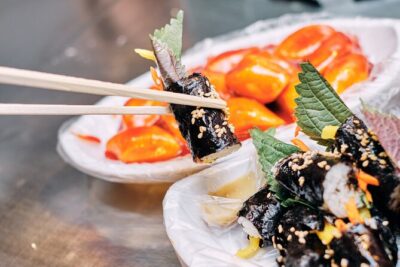
Downtown Seoul Guided Food & Market Tour with 8+ Local Tastings
Read our review →
Korean Cooking Class at a Local Home and Market Tour
Read our review →
Seoul Night Palace & Market Food Tour with Vehicle
Read our review →
Cook 3 Authentic Korean Dishes with Local Market Tour
Read our review →Browse the lists this tour appears in