Reviewed · SEOUL TOURS
Tour Seoul’s oldest district with a storyteller from Bukchon
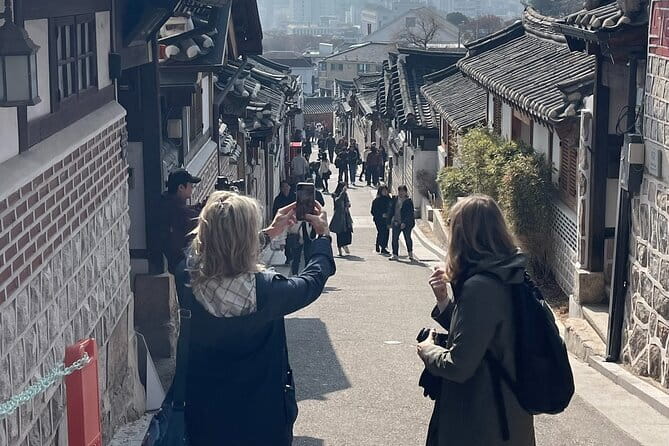
Bukchon feels different with a storyteller leading. This is a walking tour of Seoul’s oldest district that moves through major eras, from the Joseon dynasty to the 1980s, using stories connected to specific places. What makes it special is the guide, a storyteller born and raised in Bukchon, who talks like someone who has lived the neighborhood rather than someone reading it off a sign.
I particularly like two things. First, the tour’s pace is built for conversation and questions, with stops that are short enough to keep energy up but long enough to understand what you are seeing. Second, the stops are not just “pretty hanoks,” they are named locations tied to Korea’s power struggles, architecture, feng shui, and even pop-culture filming spots like Choong Ang High School.
One drawback to consider: this is a moderate walking tour with uneven alleys, so it may be challenging for kids under 12. Also, because it’s private, the tour can be canceled if fewer than 2 guests join, so it helps to book with a little flexibility.
In This Review
- Key highlights before you go
- Bukchon’s back lanes, told by someone who grew up there
- Price and value: $39.20 for a guided path with free entry points
- Your 2 to 3 hour walk through Joseon to the 1980s
- Stop 1: Unhyeongung and the Joseon royal turning point
- Stop 2: Cafe Onion Anguk and architecture across centuries
- Stop 3: Bukchon Traditional Culture Center and the hanok viewpoint
- Stop 4: Seokjeong Boreum Well and family memory turned historical proof
- Stop 5: Choong Ang High School, Winter Sonata fame with real history
- Stop 6: Samcheongdong and Bukchon’s feng shui power map
- Stop 7: Bukchon Hanok Village and the 1920s to 1930s change
- Pace, questions, and how this tour actually feels on the ground
- Handcraft add-on and small extras you might notice
- Who should book this Bukchon Storytelling Tour
- Should you book it
- FAQ
- Where does the tour start?
- What time does the tour begin?
- How long is the Bukchon storytelling walk?
- Is this a private tour or shared group?
- What is included in the standard tour price?
- Are there admission fees at the stops?
- How physically demanding is the walk?
- Is it suitable for children?
- What happens at the end of the tour?
Key highlights before you go
- A Bukchon-born guide who connects Joseon-era politics and everyday life to what you see in front of you
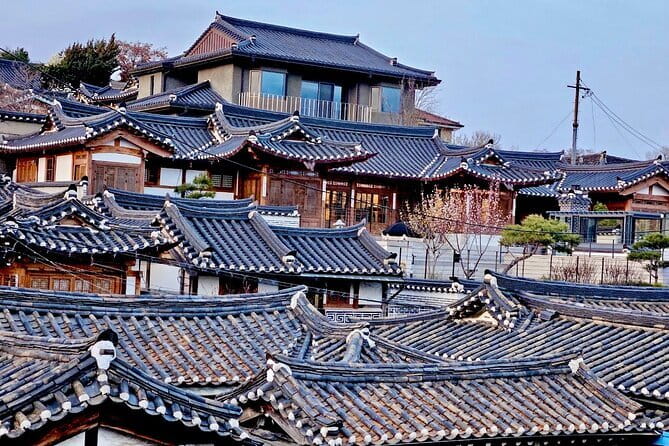
- Seven story stops, including Unhyeongung, a historic well, and Bukchon Hanok Village
- Free admission at every named stop, so your money goes to the story and the walking plan
- Feng shui explained through real locations, not vague theory
- Movie-and-drama recognition at Choong Ang High School, tied to how Korea’s modern identity formed
Bukchon’s back lanes, told by someone who grew up there
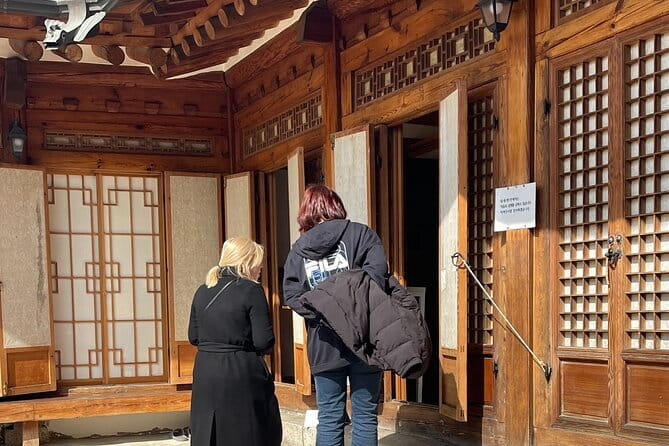
If you have ever walked Bukchon and felt like you were looking at history through glass, this tour is the fix. The idea is simple: you move alley by alley, then the guide gives you a reason those alleys, wells, and courtyards matter. Instead of treating Bukchon like a museum, the tour treats it like a living neighborhood that has kept changing, decade after decade.
The guide’s background matters a lot. In multiple past tours, the storyteller has been Dong, and people highlight that he grew up in Bukchon and can describe how the area felt in real life, not just how it looks in photos. That “insider tone” is what makes the stories click, especially when you hear about how power and money shaped land use, architecture, and even where key spaces ended up.
You also get a more personal Seoul experience because the tour is private for your group. That means you can ask questions without feeling like you are interrupting a mass crowd.
A few more Seoul days worth comparing
- Best DMZ Tour Korea from Seoul (Red Suspension Bridge Optional)
★ 5.0 · 41,422 reviews - DMZ Tour: 3rd Tunnel, Option(Suspension Bridge, Boat) from Seoul
★ 5.0 · 21,373 reviews - DMZ tour south Korea from Seoul (NK experience hall, defector)
★ 5.0 · 20,599 reviews
Price and value: $39.20 for a guided path with free entry points
At $39.20 per person for a 2 to 3 hour walk, the value comes from where the money actually goes. Every stop listed has free admission, which means you are not paying extra for entry fees to parks and palaces during your walk. Instead, the cost is focused on the guided interpretation and on getting you from point to point efficiently in one coherent route.
You also get practical add-ons that keep things smooth:
- Mobile ticket for easier check-in
- Group discounts if you are traveling with friends or family
- A route that is realistic in time, not a marathon
One more value factor: the tour covers a big time span, described as moving from 1392 AD to the 1980s. That is a lot of ground for a short walking window, and the only way it works is with strong storytelling and smart stop selection.
Your 2 to 3 hour walk through Joseon to the 1980s
This tour is scheduled to start at 10:00 am at Anguk Station Exit 4 (Unni-dong, Jongno District). You finish in a different location, so plan your next activity nearby rather than assuming you will end back at the exact station exit.
The route is also designed so you do not just stop at major landmarks. You bounce between sites that explain how Bukchon functioned as the heart of Korea’s power and culture. In other words, you are not only looking at history, you are seeing how the district supported political influence, economic strength, and social identity over time.
Here is what you can expect at each stop.
Stop 1: Unhyeongung and the Joseon royal turning point
Your tour starts at Unhyeongung, where a crucial Joseon story begins. The setup is dramatic: when the king dies without a crown prince, an 11-year-old royal boy born and raised here becomes the 26th king of Joseon. For the next 10 years, his father rules the country from this place.
This is a great opener because it gives you a reference point. Once you know the district connected to succession, rule, and governance, the rest of the stops stop feeling random. Even if you are new to Korean history, you can understand why a location like this is tied to stability, authority, and decision-making.
Time on this stop is about 20 minutes, so you get enough context to connect story to place.
Same trip, a different corner of the country:
- Seoul: The Best DMZ Tour with Optional Suspension Bridge
★ 4.7 · 4,978 reviews - Signature DMZ Tour: Exclusive Defector Talk & Suspension Bridge
★ 5.0 · 4,459 reviews - Thrilling Korean DMZ 3rd Tunnel Tour from Seoul + Red Bridge Rush
★ 5.0 · 3,097 reviews - Seoul: DMZ Tour & Suspension Bridge (Option English/Spanish)
★ 4.9 · 2,628 reviews
Stop 2: Cafe Onion Anguk and architecture across centuries
Next comes Cafe Onion Anguk. On paper, it sounds like a cafe stop, but the point is the surroundings. You are meant to admire historic architecture from multiple time layers, including 600 years, 100 years, and 50 years ago, then learn the stories behind them.
This is one of the “quick but meaningful” stops. Ten minutes is not long, but it can still reframe how you look at Bukchon: you start noticing that the district is not uniform. It is a patchwork where generations altered buildings, entrances, and streets.
If you like architecture, bring your attention here. If you do not, the guide’s narration should carry you anyway.
Stop 3: Bukchon Traditional Culture Center and the hanok viewpoint
At the Bukchon Traditional Culture Center, the focus shifts to the hanoks associated with the Yangban, the ruling class who usually lived in Seoul.
This stop helps you understand what “traditional Bukchon” actually meant for the people at the top of society. It is not just about style. It is about daily life patterns, status, and how physical space matched authority.
Time is about 10 minutes. It is enough for orientation without turning the tour into a museum visit.
Stop 4: Seokjeong Boreum Well and family memory turned historical proof
Then you move to Seokjeong Boreum Well. The guide shares childhood-type well stories and connects them to what history has revealed.
Wells might sound minor compared with palaces, but in older neighborhoods, wells were lifelines. This stop is useful because it balances the grand political stories with ordinary survival and community routines.
Expect about 10 minutes here. It is a short chapter, but it often becomes one of the most memorable parts of the walk because it feels human and local.
Stop 5: Choong Ang High School, Winter Sonata fame with real history
Stop five is Choong Ang High School, famous for filming, including what many people recognize from Winter Sonata. But the key point here is that the school is treated as a historic space that helped shape Korea into the country it became.
Time is 10 minutes. It is not designed to be a deep lecture, but it gives you a “why it mattered” angle that you would probably miss if you only remembered the drama footage.
If you like pop culture history, you will appreciate this stop. It helps you see how modern identity formation is tied to institutions, not only politics and palaces.
Stop 6: Samcheongdong and Bukchon’s feng shui power map
This is the heavier story stop. You trace the dramatic rise and fall of powerful politicians and business tycoons who held land in Bukchon. The district’s selection as capital space is linked to principles of feng shui, and the area is described as auspicious.
In my opinion, this is where the tour earns its name. Bukchon is famous, yes, but the explanation of feng shui through real property choices makes the concept feel grounded. Instead of treating feng shui like a mystical add-on, the tour shows it as part of how influential people planned and justified power.
Time is about 20 minutes, so you should be ready for a longer story arc.
Stop 7: Bukchon Hanok Village and the 1920s to 1930s change
The final stop is Bukchon Hanok Village, tied to a man who changed the face of Bukchon in the 1920s and 1930s.
This ending matters because it connects “old Bukchon” with the kind of modernization pressures that reshape neighborhoods. A lot of tours stop at early history. Here, you are encouraged to think about the transition period and how the look and feel of Bukchon got influenced by events in the early 20th century.
Time is about 15 minutes, which is a good length for a wrap-up. It also sets you up to keep exploring on your own after the tour ends.
Pace, questions, and how this tour actually feels on the ground
The stated duration is 2 to 3 hours, and the stop times add up to roughly 1 hour and 35 minutes of on-site storytelling. That leaves room for walking time and brief transitions, which is important in Bukchon because the alleys can slow you down.
The biggest on-the-ground benefit is that the pace is described as not rushed. In past tours, people have specifically said it felt relaxing and engaging, and that the guide linked past and present. You can also expect time for questions, especially if you ask about architecture, feng shui, or how to move around Seoul efficiently.
One practical note: the tour starts at 10:00 am. That timing is helpful because you get decent light for photo stops at the start. If you go in colder months, expect it to feel cooler in shaded alleys.
Also, the tour is recommended for age 12 and above. That is not snobbery. It’s about attention span and the density of historical storytelling in a short walking block.
Handcraft add-on and small extras you might notice
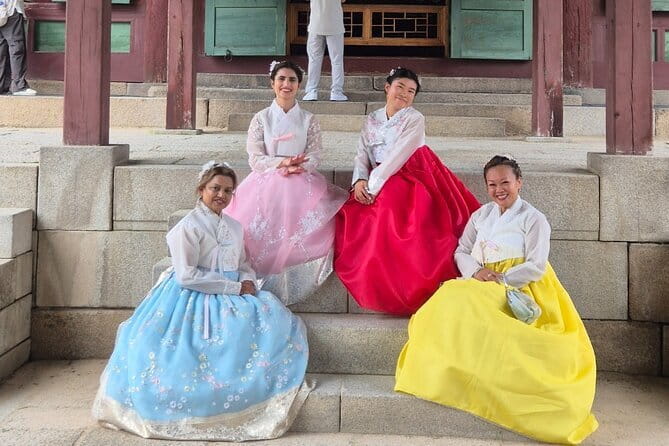
The tour includes a professional guide from Bukchon. There is also a traditional Korean handicraft experience available with the Plus Tour only.
So if you see the Plus option, consider choosing it. Even though the main tour already gives you a strong story route, an added hands-on element can help you convert what you learn into something physical you remember.
In previous experiences associated with the handicraft option, people have talked about making Hopae tags. If your session includes that type of craft, it becomes a fun break from walking and a way to take a piece of symbolism home.
Some groups have also received extra suggestions during or after the walk, tailored to interests. That kind of personal recommendation is hard to quantify in a brochure, but it is often where a local guide adds real value.
Who should book this Bukchon Storytelling Tour
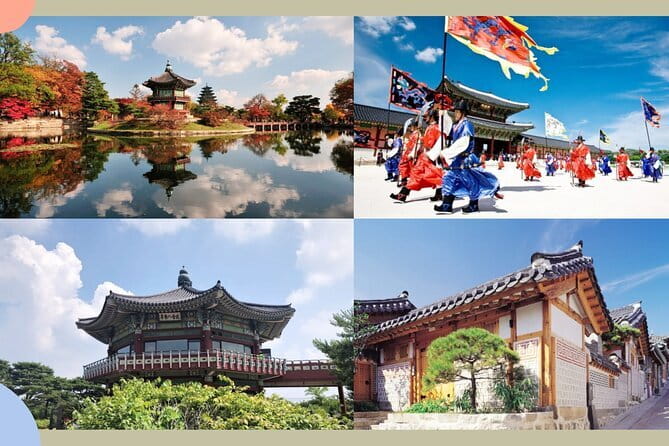
This tour is a strong match if you want:
- A guided walk through Bukchon that explains what you are seeing, not just where you are standing
- A local perspective, especially on how politics, economy, and daily life shaped the neighborhood from Joseon onward
- A story route that includes both famous filming locations and everyday historic details like wells
- A relatively short time commitment that still covers a big historical span
You might skip it if:
- Your group includes children under 12
- You want a casual stroll with no historical context
- You need an end point that is guaranteed to be the same as the start location
Should you book it
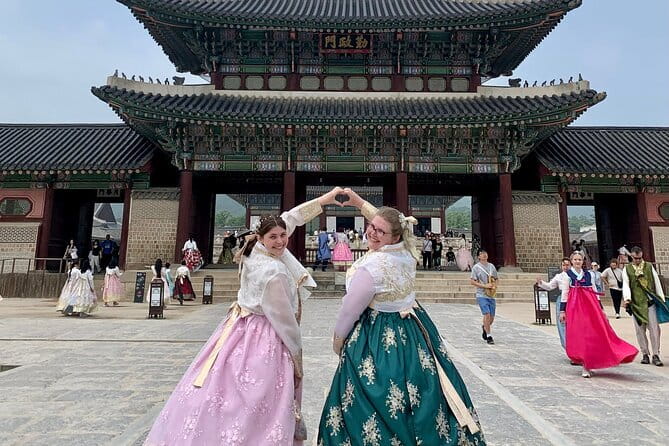
Yes, if you are planning to spend time in Seoul’s older core and you care about understanding how Bukchon became what it is today. The price makes sense because the stops have free entry, so you are paying for the storytelling, the routing, and the guide’s ability to connect architecture to power.
I would book it especially if you:
- Like walking tours but get frustrated by vague commentary
- Want a local voice and a route built around real locations like Unhyeongung and Seokjeong Boreum Well
- Enjoy feng shui explanations that tie to how land and influence were treated
If you are short on time, this is still a workable choice. If you have the flexibility to choose a Plus option for a handicraft experience, that can add another layer to your memory of Bukchon.
If you go, show up ready to listen. Bukchon rewards curiosity, and this tour is built for it.
FAQ
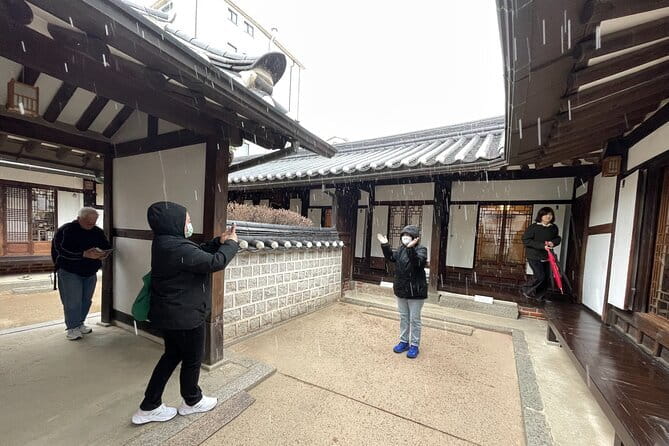
Where does the tour start?
The tour starts at Anguk Station Exit 4 in Unni-dong, Jongno District, Seoul.
What time does the tour begin?
The start time is 10:00 am.
How long is the Bukchon storytelling walk?
It runs about 2 to 3 hours.
Is this a private tour or shared group?
It is a private tour/activity, so only your group participates.
What is included in the standard tour price?
The included items are a professional guide from Bukchon. A traditional Korean handicraft experience is available only with the Plus Tour.
Are there admission fees at the stops?
The listed stops include free admission.
How physically demanding is the walk?
It is recommended for people with a moderate physical fitness level.
Is it suitable for children?
The tour is strongly recommended for age 12 and above, and it may be challenging for children aged 12 and under.
What happens at the end of the tour?
The activity ends in a different location than the start, with details provided separately.
Recently reviewed in Seoul
- You’re Invited to Our Home in Seoul: The Only Cooking Class!★ 5.0 · 8 reviews
- Your Personal Seoul Photographer!★ 4.1 · 15 reviews
- From Seoul: Yongpyong Ski Day Tour with Transportation★ 4.9 · 40 reviews
- Seoul: Korean & English Language Exchange Global Party★ 5.0 · 28 reviews
- Watching sports match & local food experience in Seoul★ 5.0 · 11 reviews
- WKT Combat Taekwondo & Self-defense One Day Class in Seoul★ 5.0 · 5 reviews
- Unique Native Experience : Han River Picnic, Board game, BBQ★ 5.0 · 3 reviews
- Seoul: Gangneung BTS K-Pop & K-Drama Filming Locations Tour★ 4.6 · 14 reviews
Seoul Tours, compared.
Best DMZ Tour Korea from Seoul (Red Suspension Bridge Optional)
Read our review →
DMZ Tour: 3rd Tunnel, Option(Suspension Bridge, Boat) from Seoul
Read our review →
DMZ tour south Korea from Seoul (NK experience hall, defector)
Read our review →
The Best DMZ Tour with Optional Suspension Bridge
Read our review →
Signature DMZ Tour: Exclusive Defector Talk & Suspension Bridge
Read our review →
Thrilling Korean DMZ 3rd Tunnel Tour from Seoul + Red Bridge Rush
Read our review →
DMZ Tour & Suspension Bridge (Option English/Spanish)
Read our review →