
Reviewed · PALACE TOURS
Seoul UNESCO Heritage Palace, Shrine, and More Tour
A UNESCO morning in Seoul can be chaos. This tour is built to keep it calm, with a small-group pace and guide storytelling across Bukchon, Jongmyo, and Changdeokgung. I like that it pairs major history stops with a practical city drop-off in Myeongdong. One thing to plan around: the sites swap depending on the day of the week, and the schedule is tight, so you will not linger everywhere.
What I really like is the mix of places that show different sides of Joseon-era Korea. You start in a hanok neighborhood that feels like a living time capsule, then move into royal ceremony at Jongmyo and the palace-and-garden design at Changdeokgung. I also appreciate the included admission tickets and air-conditioned minivan, so you spend your brainpower on the culture, not on logistics.
The only real drawback is the way the half-day format compresses time. Even with an excellent guide, you might feel a bit rushed inside the palaces and shrines, and there can be a sales-leaning moment at the ginseng stop. If you want slow, sit-down sightseeing, this tour may feel like it moves too quickly.
In This Review
- Key points before you go
- A smooth UNESCO morning in Seoul, starting in Myeongdong
- Bukchon Hanok Village and the look of Joseon Korea
- Jongmyo Royal Shrine, ancestral rites, and what changes on Tuesday
- Changdeokgung Palace gardens, the rear garden, and Monday swap
- Cheongha Korea Ginseng Museum stop, when a learning visit turns salesy
- Why the 4-hour format works, and where it can feel rushed
- Price and value: what $34 buys you in tickets and transport
- Choosing the right day: Sunday vibes and day-of-week swaps
- Guides make it: Leo, Sam, Dragon, Park, and Jung in action
- What to bring and what to do after drop-off in Myeongdong
- Should you book this UNESCO palace and shrine tour?
- FAQ
- Which UNESCO sites are covered on this tour?
- What happens if Jongmyo or Changdeokgung is closed?
- How long is the tour and what is the meeting time?
- Do I need hotel pickup?
- What is included in the price?
- Are meals included?
- Can I get a full refund if I cancel?
Key points before you go
- Early start from Myeongdong helps you get in before the day ramps up
- UNESCO stops with built-in day-of-week swaps when Jongmyo or Changdeokgung is closed
- Bukchon first, then palace and shrine so the story builds logically
- Included tickets and minivan transport lower the usual Seoul hassle factor
- Ginseng museum stop is included, but it can lean commercial
- Guides named Leo, Sam, Dragon, Park, and Jung come up often, and they focus on clear explanations
A smooth UNESCO morning in Seoul, starting in Myeongdong
This tour starts at 8:30 am in the Myeongdong area. The meeting point is at Myeongdong Station, Exit 1061-7, near Chungmuro 2(i)-ga. Ending in Myeongdong is a big deal because it puts you close to easy transit and lots of food options afterward, without forcing you to fight your way back to a far hotel.
If your hotel is centrally located, pickup is offered by air-conditioned minivan. If your place is tucked behind alleys, the guide will meet you at the nearest central hotel or the nearest subway station instead. I like this approach because it keeps the group moving, and you do not waste half the morning trying to locate a van on tiny side streets.
One other practical thing: it’s capped at 40 travelers. That matters in Korea, where big tour groups can turn every site into a line shuffle. With a smaller max, your guide can actually keep an eye on the group and answer questions without shouting.
Finally, you get a mobile ticket. That saves time at entry points, and it reduces the chance you forget something important. Booking tends to be steady, often around a month in advance, so if you are traveling during peak season or weekends, I would lock in early.
More Historical Tours in Seoul
- Seoul: Evening Dark History, Folklore & Ghost Story Walking Tour
★ 5.0 · 593 reviews - Hanbok Photoshoot and History Tour at Gyeongbokgung Palace
★ 5.0 · 276 reviews - From Seoul: Dae Jang Geum Park Historic K-Drama Set Tour
★ 4.9 · 143 reviews
Bukchon Hanok Village and the look of Joseon Korea
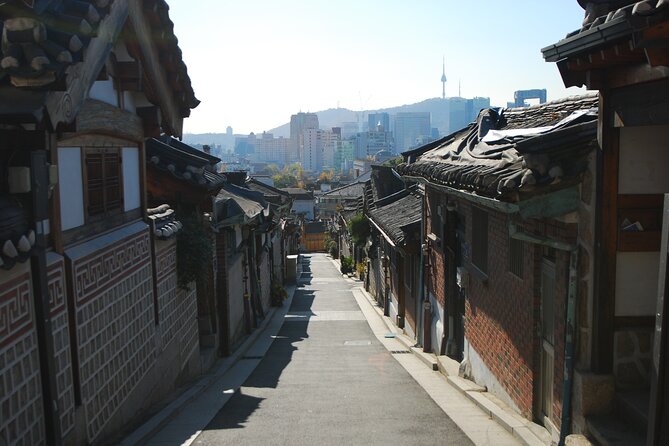
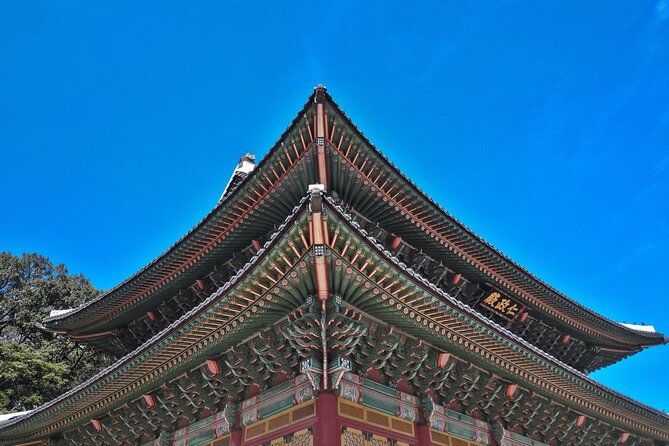
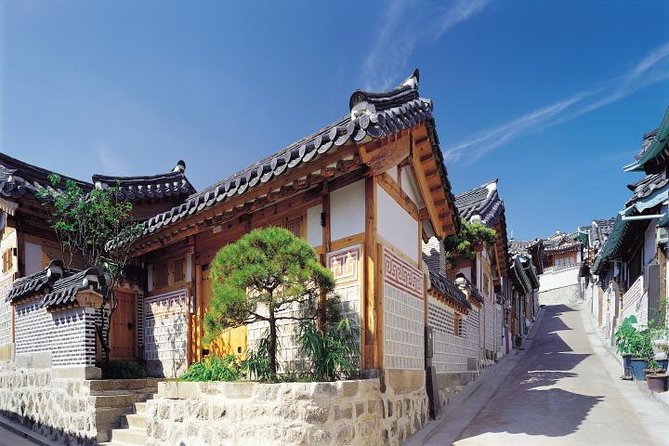
Your first cultural hit is Bukchon Hanok Village, starting at the Bukchon Traditional Culture Center area. This is the kind of place where the architecture does half the teaching for you. You see hanok homes and the street pattern that reflects how people lived when Joseon-era life was centered on hierarchy, family compounds, and neighborhood rhythms.
The wording around Bukchon is often used like a metaphor, but in practice you really do feel it: the village is like a historic block of Korea right in the urban core. Your guide’s job here is to give you what a photo cannot, like what makes a house a hanok, how the layout relates to daily life, and why certain neighborhoods became known for specific functions.
Timing is short at this stop, about 40 minutes. That is enough to get bearings and absorb a few key details, but it is not a long wander. If you like photographing doors, courtyards, and rooflines, you will want to be ready to move quickly when your guide signals it is time to regroup.
There is also a day-of-week twist. On Sunday, you may visit Namsangol Hanok Village instead. The goal stays the same, hanok context and Joseon-era atmosphere, but it can feel different depending on the village setting that day. Either way, this start works because it grounds you before the UNESCO ceremony sites.
Jongmyo Royal Shrine, ancestral rites, and what changes on Tuesday
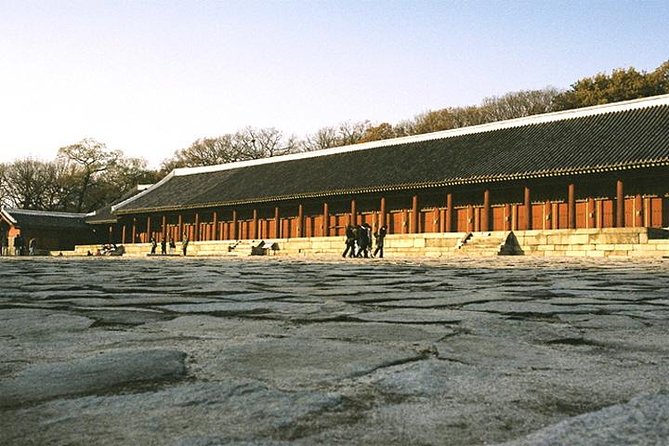
Jongmyo Shrine is where royal ancestor tablets of the Joseon Dynasty are enshrined. The big concept to carry with you is that this is not just a pretty complex. It is a place built for continuity, where the state recognized its lineage through ritual memory.
The tour stop is about 40 minutes, with admission included. Inside, your guide will help connect the names, the purpose of the memorial service, and the scale of tradition that kept running for centuries. One reason this works so well on a tour is that Jongmyo can feel abstract if you only read placards. A good guide gives you a story thread so the layout makes sense: where ceremony happens, what you are supposed to notice, and why it is significant.
Here is the schedule reality: Jongmyo is closed on Tuesday. When that happens, you visit Insadong Antique shop alley instead. That swap is actually smart. Insadong still puts you in an old-school Seoul zone, with the vibe of heritage commerce and craft browsing, even if it is not the UNESCO ceremony site itself. If your trip lands on Tuesday, go into it expecting a cultural detour rather than a strict Jongmyo day.
Also, keep expectations flexible. Renovations can affect access or visible areas. If you arrive and notice construction, it does not mean you picked a bad tour, it means you are seeing the site in real operational condition.
Changdeokgung Palace gardens, the rear garden, and Monday swap
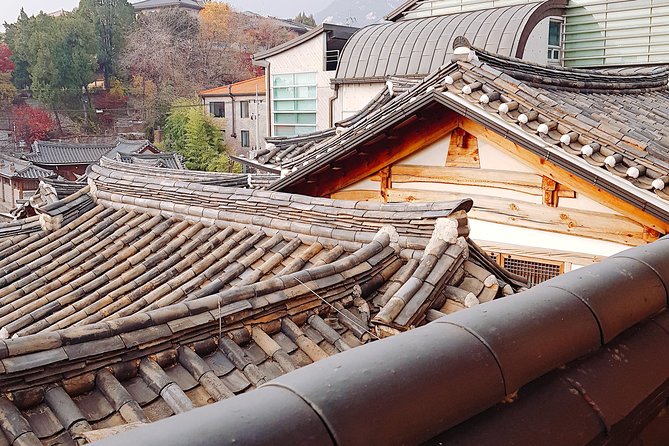
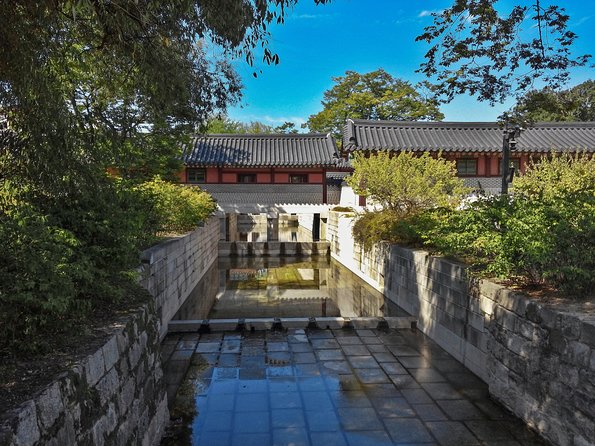
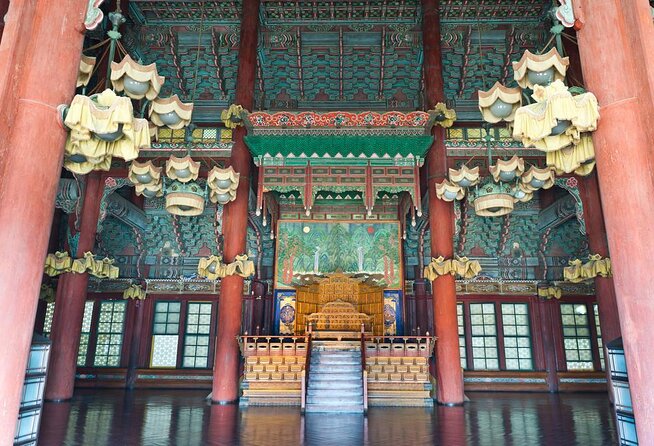
Changdeokgung Palace is often praised for preservation and for its layout that makes nature part of the royal design. This is your UNESCO palace complex stop, about 1 hour including admission, and it is split into public palace areas, royal residential spaces, and the rear garden.
The guide’s best contribution here is structure. The palace grounds can feel sprawling, and a set route helps you not miss the meaning. You will learn that Changdeokgung became the principal palace for many Joseon kings, and you will get context for why the rear garden matters as a place of rest. The rear garden is the highlight for many people, especially because of a very old tree, a small pond, and a pavilion. This is where the palace feels less like stone and more like a living system.
The day-of-week plan matters again: Changdeokgung is closed on Monday. On Monday, the tour visits Gyeongbokgung Palace instead. If you care about garden design and the specific mood of Changdeokgung, check your day first. If you just want maximum palace time and you are okay with switching, this Monday backup keeps your UNESCO experience intact.
One practical caution: the palace time feels tight because the garden takes effort to appreciate. If you want to slow down and really look at the path, the water, and the pavilion setting, you may have to do it in quick, focused bursts. Your guide will likely prioritize key photo and viewpoint moments so you leave with the right highlights.
More UNESCO Heritage Tours in Seoul
- Day Trip to UNESCO: Suwon Fortress Adventure from Seoul
★ 5.0 · 56 reviews - Full-day UNESCO Heritage Tour with Suwon Hwaseong from Seoul
★ 5.0 · 28 reviews - Andong Hahoe Village [UNESCO site] Premium Private Tour from Seoul
★ 5.0 · 24 reviews - From Seoul: 5-Day Tour of Korea with UNESCO Sites
★ 4.8 · 22 reviews
Cheongha Korea Ginseng Museum stop, when a learning visit turns salesy
The last scheduled stop is Cheongha Korea Ginseng Museum, about 30 minutes. Admission is free, which helps overall value because you are adding a cultural topic without paying an extra entry fee.
The concept here is ginseng as a traditional medicinal plant. The tour framing typically covers where ginseng is mentioned in older Chinese texts and how Korean ginseng is studied for adaptogenic properties. If you have a curious streak about Korean wellness traditions, this is a short, easy add-on.
Now the honest part: this stop can feel commercial to some people. One common complaint is a hard sales push. That does not mean the visit is useless, but it does mean you should treat it like a museum plus a pitch. If you know you are not buying anything, you can still learn a bit, look at the displays, and keep your boundaries clear.
If you hate sales environments, consider keeping your wallet zipped and your time expectations modest. Thirty minutes is short enough to get something out of it, and then you can move on.
Why the 4-hour format works, and where it can feel rushed
This is a half-day tour of about 4 hours, and it is paced like one. That is the deal: you see three major cultural sites plus one museum stop, all in a single morning.
In a city like Seoul, that kind of compression is usually the difference between seeing UNESCO highlights and spending your day traveling between them. Your minivan rides help a lot because the sites are not right next to each other, and walking the whole route would take far longer.
That said, the trade-off is time inside each site. Some people love the structure, because you do not wander too long and miss the important parts. Others feel the same structure is a little too fast, especially if you want extra minutes to read slowly and photograph without interruption. The guide has to keep timing so the group hits each start window and does not get left behind.
If you are the type who likes to ask lots of questions, this can still work. A number of guides praised in this tour style are described as friendly, enthusiastic, and good at answering questions. The best move is to ask your big questions early, then do quiet looking when you have it.
Your physical requirement is listed as moderate fitness. That fits the real-world pace: some standing, some walking, and uneven surfaces in older neighborhoods. If you need long rests or step-free routes, you might want to plan for extra breaks outside of the guided segments.
Price and value: what $34 buys you in tickets and transport
At $34 per person, this tour is priced like a straightforward city best-bet, not a luxury experience. The value comes from stacking three things together: a guide, transport, and entry admissions.
You get air-conditioned minivan transport from central Seoul, plus the guide. Admission tickets are included for the hanok village stop and the two UNESCO sites, which can otherwise add up quickly if you book on your own. The ginseng museum stop is free, which also helps the math.
What you do not get is meals. No meals or drinks are included, so budget for a snack or lunch plan after drop-off in Myeongdong. On top of that, you are not picked up from every possible hotel location. If you are staying in a remote pocket or behind alleys, you meet at a nearby central hotel or subway station. Still, the trade is simple: a set schedule with less waiting time.
Also, the group cap matters for value. A tour that stays under 40 travelers tends to feel more human than those that turn every stop into a slow-moving crowd.
For me, the key question is this: do you want to see these sites in one morning without planning entry times, transit routes, and guide context? If yes, the price feels fair. If you prefer solo strolling with no schedule pressure, you might do better going on your own.
Choosing the right day: Sunday vibes and day-of-week swaps
This tour’s success depends a little on the day of the week because sites close on specific days. On Tuesday, Jongmyo is closed, so you swap to Insadong Antique shop alley. On Monday, Changdeokgung is closed, so you swap to Gyeongbokgung Palace. On Sunday, your hanok-area experience may shift to Namsangol Hanok Village.
If your travel dates allow flexibility, I like the logic of going early on a day when you can enjoy quieter atmosphere. One of the best-rated experiences tied to this format was a Sunday morning, with people appreciating the calmer feel and well-kept restored areas. Even if it is never empty, starting at 8:30 am and having a guide route does help you avoid the later crush.
If your heart is set on a specific garden design or on Jongmyo itself, check the closure pattern. The tour still gives you UNESCO-grade experiences, but the exact site might shift.
The bottom line: view this as a culture circuit with smart swaps, not as a promise that you will see the exact same door in the exact same way every day.
Guides make it: Leo, Sam, Dragon, Park, and Jung in action
The guide is the secret ingredient here, and it shows in the written feedback. Several guide names come up, including Leo, Sam, Dragon, Park, and Jung. Across the comments, the common strengths are clear: friendly energy, good storytelling, and practical help.
One example you can take seriously: when restricted access affected a hanok-area moment, Leo reportedly rearranged timing to keep the flow. That is exactly the kind of skill you want when you are dealing with real-world conditions at historic sites.
Sam and Park are described as enthusiastic and strong at Korean history explanations, with lots of Q and A. There is also mention of taking good photos and helping people document the day, which matters if you want at least a few photos that look intentional instead of accidental selfies.
Even Dragon’s stop included an experience gap at the ginseng museum, but Dragon still came through as an excellent host and guide for the rest of the day. That suggests the guide quality is consistent, even when one attraction is a harder sell environment.
If you want the biggest payoff, show up ready with a couple of themes you care about, like how Joseon royal life worked, what ancestral rites mean, or why gardens mattered. Then ask questions early. You will get more out of those 4 hours.
What to bring and what to do after drop-off in Myeongdong
Because meals are not included, plan your timing. You will finish back in Myeongdong, which is convenient for grabbing lunch or a snack right away. Many people also like using that time to shop or just wander, but this particular tour says it does not stop at shopping centers as a standard part of the route. The ginseng museum can still be the one commercial moment, so keep that in mind.
What to bring is simple:
- Comfortable shoes for palace grounds and hanok streets
- A light layer, since mornings can shift in temperature
- Your patience for short site visits, since the schedule is compact
- Any questions you want answered about Joseon life, since that is where guides shine
Also, if you are the type who likes to return to a site after your guided pass, consider how you will do that. Myeongdong is a great base for that, and it gives you options the rest of the day without forcing you back through the same transit puzzle again.
Should you book this UNESCO palace and shrine tour?
I think you should book it if you want three UNESCO heavyweights handled in one morning, with a guide to connect the dots between Joseon housing, royal ancestor rites, and palace garden design. The included tickets and minivan transport make the price feel reasonable, and the Myeongdong drop-off is practical.
Skip it if you are hoping for a slow, photographic day where you can linger for long at each stop. The schedule is tight by design, and the ginseng museum can turn into a salesy environment depending on how you feel about that kind of presentation.
If you do book, set expectations right: think of this as a well-run culture circuit. You will come away with a clearer sense of how these places fit together, and you will have a smooth way to spend your limited time in Seoul without turning your day into a transit workout.
FAQ
Which UNESCO sites are covered on this tour?
The tour includes Jongmyo Shrine and the Changdeokgung Palace Complex. On days when either site is closed, the tour swaps to another related stop.
What happens if Jongmyo or Changdeokgung is closed?
Jongmyo Shrine is closed on Tuesday, and the tour visits Insadong Antique shop alley instead. Changdeokgung Palace is closed on Monday, and the tour visits Gyeongbokgung Palace instead.
How long is the tour and what is the meeting time?
The tour runs for about 4 hours. It starts at 8:30 am and meets at Myeongdong Station Exit 1061-7.
Do I need hotel pickup?
Hotel pickup is only available for centrally-located Seoul hotels. If your hotel is behind alleys, the guide meets you in front of the nearest central hotel or the nearest subway station.
What is included in the price?
Included items are a local guide and air-conditioned minivan transport. Admission tickets are included for the hanok village stop and the UNESCO sites. The ginseng museum stop is listed as free.
Are meals included?
No. Meals or drinks are not included.
Can I get a full refund if I cancel?
Yes. You can cancel for a full refund if you cancel at least 24 hours before the experience’s start time. Free cancellation is allowed under that condition.
More Palace Tours in Seoul
- Seoul: Gyeongbok Palace, Bukchon Village, and Gwangjang Tour
★ 4.9 · 2,321 reviews - Best Seoul City Tour (Gyeongbokgung Palace,Insadong,Namsan Tower)
★ 5.0 · 1,647 reviews - Small-Group Royal Palace and Seoul City Tour (hotel pick-up)
★ 5.0 · 1,474 reviews - Seoul City Sightseeing Tour Including Gyeongbokgung Palace, N Seoul Tower, and Namsangol Hanok Village
★ 5.0 · 1,423 reviews
Recently reviewed in Seoul
- You’re Invited to Our Home in Seoul: The Only Cooking Class!★ 5.0 · 8 reviews
- Your Personal Seoul Photographer!★ 4.1 · 15 reviews
- From Seoul: Yongpyong Ski Day Tour with Transportation★ 4.9 · 40 reviews
- Seoul: Korean & English Language Exchange Global Party★ 5.0 · 28 reviews
- Watching sports match & local food experience in Seoul★ 5.0 · 11 reviews
- WKT Combat Taekwondo & Self-defense One Day Class in Seoul★ 5.0 · 5 reviews
- Unique Native Experience : Han River Picnic, Board game, BBQ★ 5.0 · 3 reviews
- Seoul: Gangneung BTS K-Pop & K-Drama Filming Locations Tour★ 4.6 · 14 reviews
Palace Tours, compared.
Gyeongbok Palace, Bukchon Village, and Gwangjang Tour
Read our review →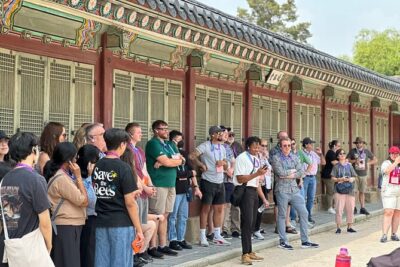
Best Seoul City Tour (Gyeongbokgung Palace,Insadong,Namsan Tower)
Read our review →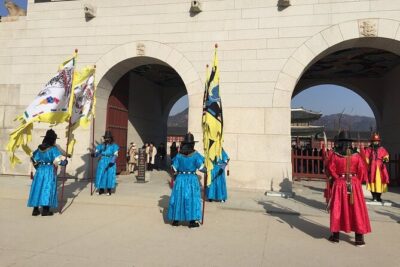
Small-Group Royal Palace and Seoul City Tour (hotel pick-up)
Read our review →
Seoul City Sightseeing Tour Including Gyeongbokgung Palace, N Seoul Tower, and Namsangol Hanok Village
Read our review →Gyeongbok Palace, Bukchon Village, and Gwangjang Tour
Read our review →
Palace, Temple and Market Guided Foodie Tour at Night
Read our review →
Seoul Highlights: Gyeongbok Palace, Insadong & N Seoul Tower
Read our review →
City Hightlights, Palace Tour, and Optional Hanbok
Read our review →Browse the lists this tour appears in