Reviewed · MORNING
Seoul: Guided Small Group V.I.P Morning Pedicab Tour
A morning pedicab in Seoul is smart fast sightseeing. This 3-hour small-group route lets you cover big landmarks, like Cheonggyecheon, Gyeongbokgung, Bukchon, and Jogyesa, without the usual getting-lost tax. I also like the photo stops with guide context, plus practical perks like Wi-Fi and a blanket in the VIP ride. One tradeoff: each stop is short, so you’ll get great orientation, not long wandering.
You’ll meet at We Ride Korea and hop into a brand-new e-rickshaw with a professional guide, or you can pedal yourself if that sounds more fun. The plan is built for “see it, understand it, move on,” with guided time at each highlight and photo moments timed so you’re not sprinting.
One more thing to watch: the tour notes wheelchair accessibility, but it also says it is not suitable for people with mobility impairments. If you’re relying on mobility support, I’d treat that as a key question before booking, and plan to confirm with the provider.
In This Review
- Key highlights at a glance
- The VIP pedicab setup: comfort, control, and less Seoul stress
- Where the tour starts on Jong-ro, and why arriving early matters
- Cheonggyecheon: a calm start that sets the tone
- Gwanghwamun and Gyeongbokgung: royal Seoul in photo-stop form
- Seochon Hanok Village: traditional streets with guided pacing
- Tongin Traditional Market: food tastings that make the history stick
- The quick “hidden gem” stop: a short pause for local texture
- Blue House area and the ride up toward Bukchon
- Jogyesa Temple: a calm ending with Buddhism context
- Time and distance: what 3 hours really buys you
- Who this tour suits best, and who should think twice
- Practical tips for a smoother ride
- Should you book this Seoul guided VIP pedicab tour?
- FAQ
- How long is the Seoul VIP morning pedicab tour?
- What is the group size for this tour?
- What will I ride during the tour?
- Is Wi-Fi provided?
- Where is the meeting point?
- What should I bring?
Key highlights at a glance
- VIP e-rickshaw comfort, including a blanket and Wi-Fi
- Small group size (up to 3) for a more personal pace
- Photo stops at major landmarks, with guide explanations
- Traditional market food tasting at Tongin Traditional Market
- Old Town classics plus calmer hilltop views at Bukchon and beyond
- Multiple modes of riding, either as a passenger or pedaling yourself
The VIP pedicab setup: comfort, control, and less Seoul stress
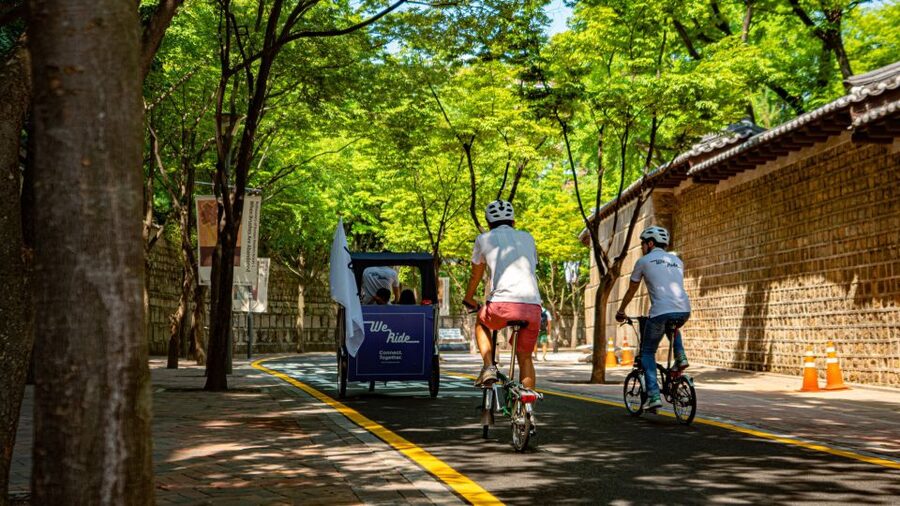
This tour is built around an e-rickshaw experience designed for short hops between neighborhoods. You’re not stuck in traffic, you’re not dragging a heavy day pack across uneven streets for every stop, and you’re not doing the “Which exit is this again?” routine for every landmark.
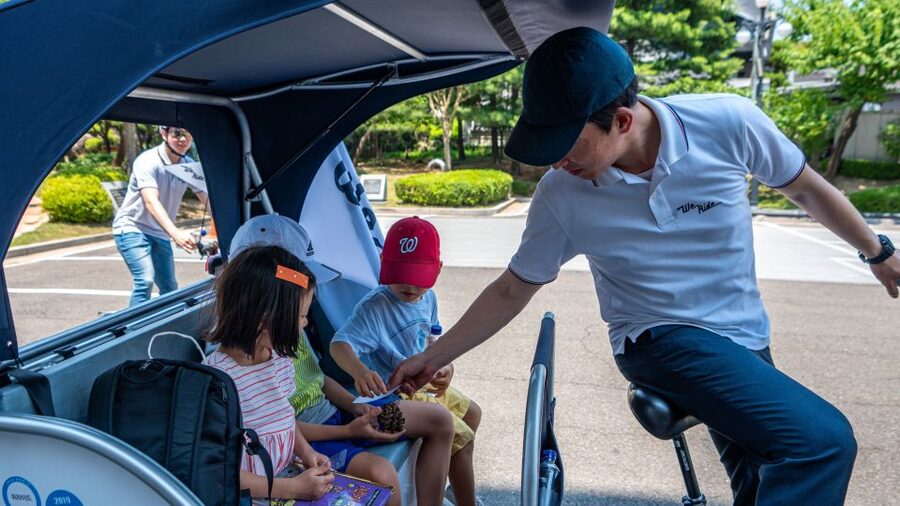
The VIP touches are what make the ride feel like more than transport. You get a bottle of water, and the VIP rickshaw can include a blanket for comfort. Wi-Fi plus a power bank are also provided during the ride, which sounds small until you realize you’ll likely want to check maps, translation help, and save those photos quickly.
Safety is taken seriously. There’s an initial safety briefing (about 10 minutes), and a safety helmet is optional. If you’re the kind of traveler who hates rushing before something important, this is a nice start because you’ll know what the ride will feel like before you roll out.
A few more Seoul days worth comparing
- Best DMZ Tour Korea from Seoul (Red Suspension Bridge Optional)
★ 5.0 · 41,422 reviews - DMZ Tour: 3rd Tunnel, Option(Suspension Bridge, Boat) from Seoul
★ 5.0 · 21,373 reviews - DMZ tour south Korea from Seoul (NK experience hall, defector)
★ 5.0 · 20,599 reviews
Where the tour starts on Jong-ro, and why arriving early matters
You’ll meet at the We Ride Korea shop on the 2nd floor of Le Meiller Jongno Town, right on Jong-ro Boulevard. The building sits between Jonggak Station (Line 1, Exit 1) and Gwanghwamun Station (Line 5, Exit 4), so you can usually get there without too much dead-end wandering.
The walk-in cue is helpful: look for the statue of a man on a horse on the sidewalk, and enter the building through the large glass doors with the number 19 above. Once inside, take the escalator to the 2nd floor and you should see the shop right away.
Arrive 20 to 30 minutes early. The tour begins at the advertised time, and you’ll want breathing room to check in, get settled, and avoid the “I’m sprinting in my best shoes” moment.
Cheonggyecheon: a calm start that sets the tone
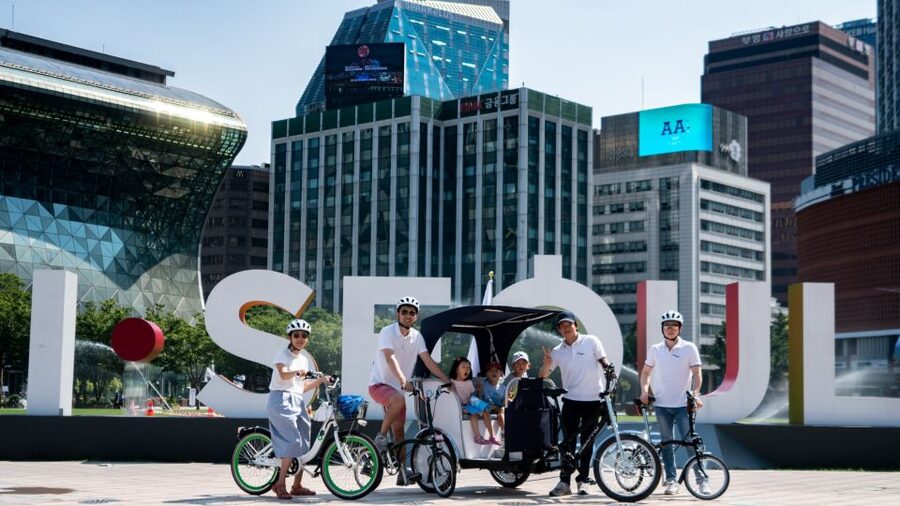
The tour begins with Cheonggyecheon, one of Seoul’s most famous urban streams. You’ll get guided time and sightseeing, usually around 15 minutes. This is a smart opening stop because it gives you an easy first mental map of the city, and it’s a relief after travel. Instead of jumping straight into palaces, you start with a space where the city feels more human-scaled.
What to look for here is the contrast. Seoul can feel intense and fast, but along Cheonggyecheon you’re introduced to a different rhythm. Your guide uses that rhythm to set context, so when the route shifts toward royal Seoul and neighborhood markets later, you’ll understand what you’re seeing.
Photo tip: if you care about photos, remember that time is limited. Pick one or two angles you want and let your guide know what you’re aiming to capture.
Gwanghwamun and Gyeongbokgung: royal Seoul in photo-stop form
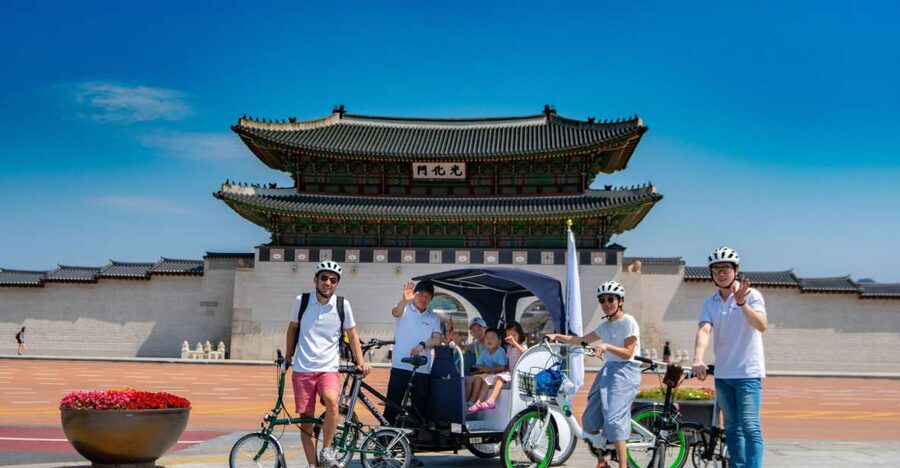
Next is Gwanghwamun, with a photo stop and a guided look around for about 10 minutes. This area acts like a backbone for Seoul’s old core. Even if you don’t memorize dates, you’ll start linking the names you’ve heard with real streets and real sightlines.
Then comes Gyeongbokgung Palace area, one of the big must-sees. You’ll have a photo stop plus guided time and sightseeing, about 15 minutes. This is not a “study every hall” palace day. It’s more like a guided orientation that helps you understand what matters: scale, symmetry, and why this complex became the center of power.
If you want to go deeper later, this stop is still valuable. You’ll leave with enough context to know what to return to on a second visit, instead of just taking a few photos and hoping it all clicks.
Same trip, a different corner of the country:
- Seoul: The Best DMZ Tour with Optional Suspension Bridge
★ 4.7 · 4,978 reviews - Signature DMZ Tour: Exclusive Defector Talk & Suspension Bridge
★ 5.0 · 4,459 reviews - Thrilling Korean DMZ 3rd Tunnel Tour from Seoul + Red Bridge Rush
★ 5.0 · 3,097 reviews - Seoul: DMZ Tour & Suspension Bridge (Option English/Spanish)
★ 4.9 · 2,628 reviews
Seochon Hanok Village: traditional streets with guided pacing
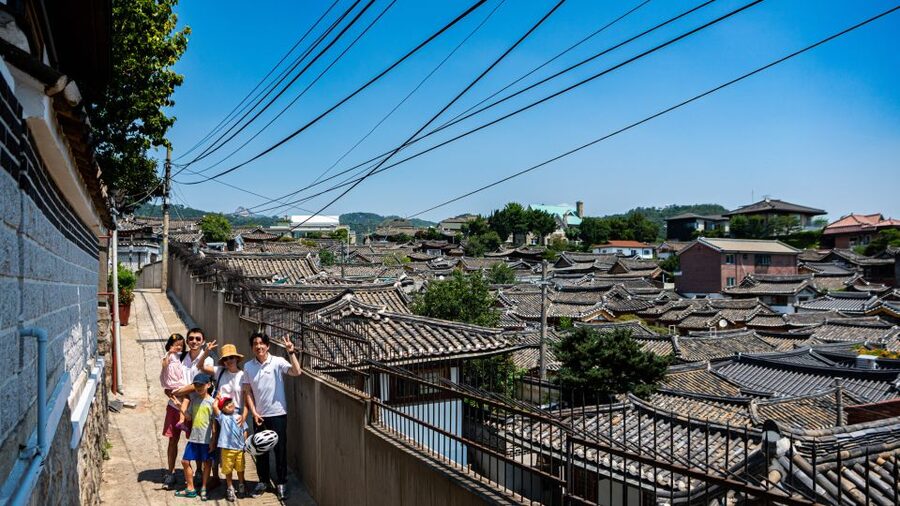
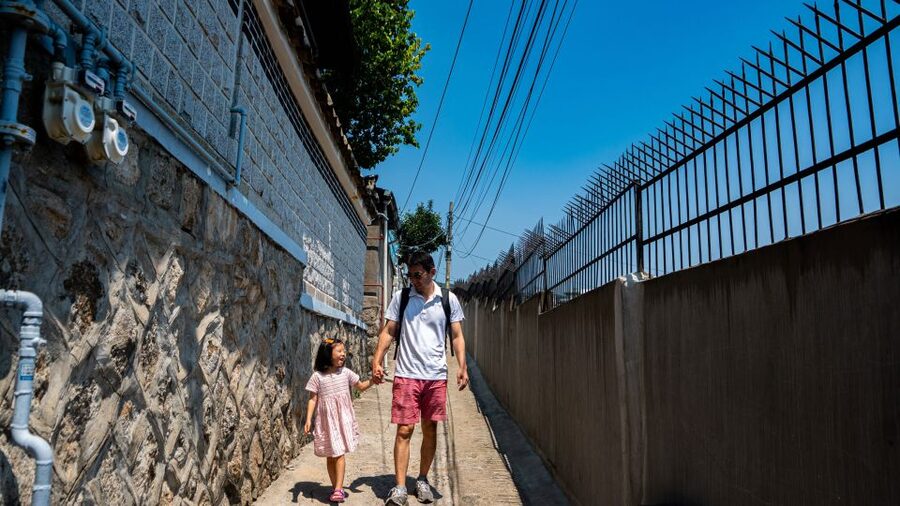
From there, you move into Seochon Hanok Village area, with guided sightseeing and bike tour time of roughly 30 minutes. This is where the vibe shifts from grand monuments to lived-in neighborhood feel.
Hanok areas are easy to misread when you go solo. It’s not just pretty houses. There are patterns to how these neighborhoods preserve traditional forms, and there’s a sense of daily life mixed into the history. With a guide, you’re more likely to understand what you’re looking at, instead of treating it like a museum backdrop.
The route here also helps you avoid a common problem in Seoul. If you try to “do everything” on your own, you spend too long backtracking and waiting in lines. Here, you’re kept moving at a pace that balances photos, explanation, and actual walking time.
Tongin Traditional Market: food tastings that make the history stick
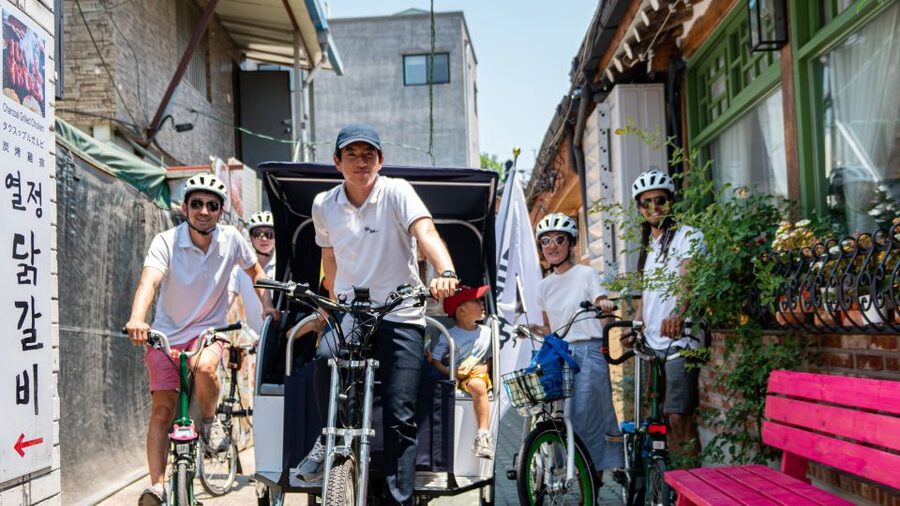
One of the strongest parts of the tour is Tongin Traditional Market. You’ll get a photo stop, street food time, guided tour, free time, and food tasting, typically around 15 minutes in total.
Market stops work especially well on tours like this because food is one of the fastest ways to understand culture. Even if you don’t speak the language, you can follow what’s happening and taste what locals recognize. Plus, you’re not just browsing. You’re there to sample.
From a practical standpoint, this is the stop where you’ll likely decide what you want to hunt for later on your own. If one snack hits, your guide can point you toward what to look for next time.
If you’re someone who gets hangry fast, this timing is another reason the tour is worth considering. You’re not left wondering where you’ll eat lunch while you’re still chasing landmarks.
Also, on at least one run, guide Hagar and June coordinated lots of photo moments along the way and paired them with clear explanations and tasty tastings. That kind of pacing matters because market time can otherwise turn chaotic if nobody is steering you.
The quick “hidden gem” stop: a short pause for local texture
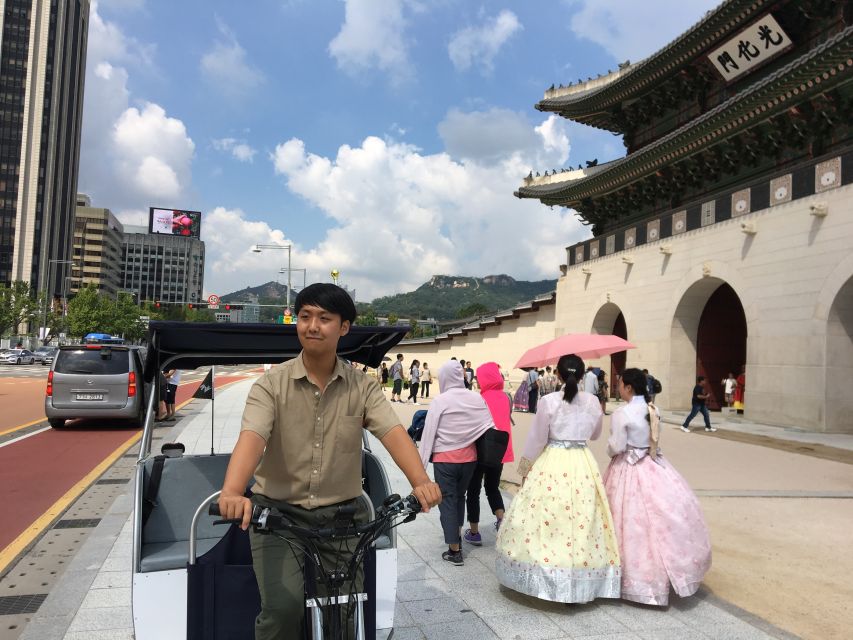
You’ll also have a brief stop labeled as a hidden gem, around 10 minutes, with guided time, some free time, and a little shopping opportunity. This is the kind of segment that can be hit-or-miss on tours, but in this case it functions as a breathing point.
Here’s what you’ll likely appreciate: the tour refuses to be only postcard landmarks. That short window helps you experience side streets and local energy, even if you’re short on time.
If you’re the type who likes collecting small, useful purchases, this is where it helps to keep your eyes open. If you’re not, treat it as a chance to stretch, reset your feet, and get ready for the hilltop views ahead.
Blue House area and the ride up toward Bukchon
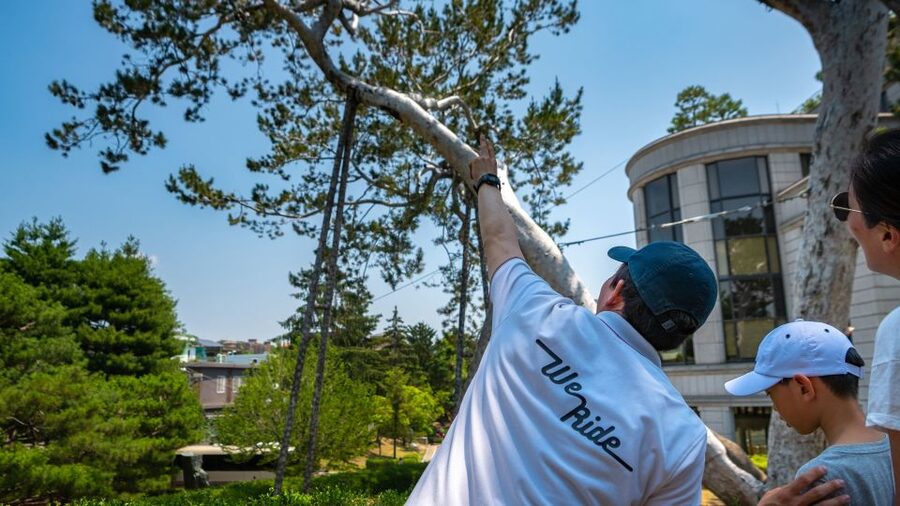
Then you get a guided look at the Blue House area, with sightseeing and bike tour time of about 10 minutes. Even if you’ve read about it, seeing how the area fits into Seoul’s geography helps. The guide time makes the space feel less abstract and more like part of the city you’re moving through.
After that, the ride starts climbing toward Bukchon Hanok Village, with photo stop, guided time, sightseeing, and bike tour time around 30 minutes. This is one of the most photogenic parts of the route because you’re dealing with both traditional structures and viewpoints across older neighborhoods.
Bukchon is where the tour’s “orientation value” becomes clear. If you go solo, you may see pretty houses but miss the bigger picture, like how this district fits into Seoul’s older layout and why it’s preserved. With a guide steering your route and stopping at likely photo angles, you get a better sense of what makes it special.
Photo tip: if it’s a clear morning, this is a good place to take your time with one or two strong shots. The tour pace is quick, but Bukchon is long enough to do that if you choose your angles wisely.
Jogyesa Temple: a calm ending with Buddhism context
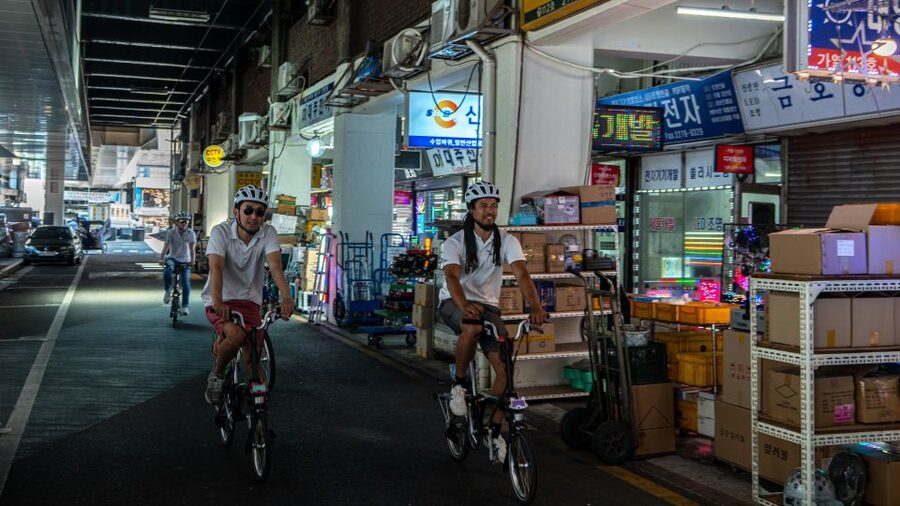
You finish this sequence at Jogyesa Temple. You’ll have a photo stop plus guided sightseeing time around 10 minutes.
This stop works well as a contrast to palaces and markets. Palaces show structure and power. Markets show daily life and taste. Jogyesa slows everything down. Even in a short time, you’re given context around the brief history of Buddhism in Korea, and then you get to experience that calm atmosphere your guide is pointing you toward.
If you like religious sites for the atmosphere rather than just the architecture, this is a strong closer. It also gives you a satisfying emotional “landing” before you head back to the start point.
Time and distance: what 3 hours really buys you
At three hours, this tour is designed for maximum coverage with minimum fuss. That’s why it’s priced the way it is, and why it’s worth matching to your travel style.
Your value hinges on two things:
1) Group size and guidance, because you’re not just paying for a vehicle. You’re paying for a planned route, timed photo stops, and explanations that help you connect landmarks.
2) Efficiency, because you’re hitting multiple districts in one go without needing to coordinate transit, parking, or a self-made itinerary.
The price is $219 per group, up to 3 participants. If you book with others, your per-person cost drops fast. If you’re traveling solo, you’ll pay more relative to solo walking or public transit, but you’re buying back time and energy, plus the comfort of a guided loop.
One caution: at each major site, you get guided time but not long stays. If you want to spend an hour inside every palace hall, this is not that type of experience. If you want a smart overview plus enough context to choose your next steps, it’s a good fit.
Who this tour suits best, and who should think twice
This tour is best for you if:
- You want a guided Old Town highlights loop without stressing over directions
- You like photo-friendly stops and clear explanations
- You want one traditional market experience without spending half a day figuring out where to eat
Think twice if:
- You prefer slow, unstructured wandering, because the pacing is intentionally tight
- You have mobility limitations that make pedicab riding hard, since the tour includes a ride component and the information includes a note that it is not suitable for mobility impairments
If you’re traveling with children, the pedicab setup can seat up to two adults and one child, or three children. That flexibility can make the tour workable for families who want a sightseeing loop without carrying strollers through too much walking.
Practical tips for a smoother ride
Wear comfortable shoes. You’ll have photo stops and some walking, and you don’t want to feel miserable by the time you reach Bukchon. Also plan your morning for realistic timing. You’re asked to arrive 20 to 30 minutes early so you can check in and get ready.
This tour runs in most weather conditions. In extreme cases, you should expect a refund or an alternative date. For day-of comfort, use layers, because mornings can swing a bit in temperature.
One more rule that matters for your schedule: intoxication is not allowed. If you’re trying to make this part of a bigger itinerary that includes drinking later, keep your timing sensible.
Should you book this Seoul guided VIP pedicab tour?
If you want a short, structured way to see a lot of Old Town landmarks with guidance that helps the names and places make sense, I think this tour is a strong yes. The combination of small-group pace, photo stops, and practical comforts like Wi-Fi and a blanket makes it feel easier than doing it all by yourself.
Skip it if your goal is deep, slow, museum-style exploration. This is orientation plus highlights, not long stays. But if you’d rather spend your precious Seoul hours looking, tasting, and learning without navigation headaches, booking it for your morning is a smart move.
FAQ
How long is the Seoul VIP morning pedicab tour?
It lasts about 3 hours.
What is the group size for this tour?
It is a small group limited to 3 participants.
What will I ride during the tour?
You can ride in a brand-new e-rickshaw driven by a professional guide, or choose to take your own bike.
Is Wi-Fi provided?
Yes. Wi-Fi and a power bank are provided during the ride.
Where is the meeting point?
You meet at We Ride Korea on the 2nd floor of Le Meiller Jongno Town, on Jong-ro Boulevard, between Jonggak Station (Line 1, Exit 1) and Gwanghwamun Station (Line 5, Exit 4).
What should I bring?
Wear comfortable shoes, and be ready for most weather conditions. A safety helmet is optional.
Recently reviewed in Seoul
- You’re Invited to Our Home in Seoul: The Only Cooking Class!★ 5.0 · 8 reviews
- Your Personal Seoul Photographer!★ 4.1 · 15 reviews
- From Seoul: Yongpyong Ski Day Tour with Transportation★ 4.9 · 40 reviews
- Seoul: Korean & English Language Exchange Global Party★ 5.0 · 28 reviews
- Watching sports match & local food experience in Seoul★ 5.0 · 11 reviews
- WKT Combat Taekwondo & Self-defense One Day Class in Seoul★ 5.0 · 5 reviews
- Unique Native Experience : Han River Picnic, Board game, BBQ★ 5.0 · 3 reviews
- Seoul: Gangneung BTS K-Pop & K-Drama Filming Locations Tour★ 4.6 · 14 reviews
Morning, compared.
Mt. Seorak+Nami Island+Garden of Morning Calm Day Trip from Seoul
Read our review →
Nami Island and Garden of Morning Calm opt Railbike
Read our review →
Day Trip to Nami Island with Rail bike and The Garden of Morning Calm
Read our review →
Trip to Nami Island with Petite France & Italian Village, Garden of Morning Calm
Read our review →
Nami Island & Garden of Morning Calm & Gangchon Railbike Tour
Read our review →
Nami+Alpaca+Garden of Morning Calm (+Rail Bike Option)
Read our review →
Alpaca, Nami, Morning Calm or Eobi (+Rail Bike)
Read our review →