
Reviewed · DMZ TOURS
Private DMZ tour(Tunnel / Observation) with hotel pick up
Underground steps and distance tell the story. This is a DMZ-focused day from Seoul that does not send you into the actual DMZ line, but instead takes you into the military zone outside it for the Third Infiltration Tunnel and Dora views. I also like the built-in context, starting with Imjingak and ending with a North Korea museum stop where you may meet a defector.
What makes this tour feel worth the time is the human scale and the guide. Private pickup and a small-group feel (many people report it is more engaging than big buses) plus English interpretation from guides like Juno Lee, Miae, and June make the day easier to follow when the subject matter is heavy.
One consideration before you book: this tour is not JSA, so you will not be at the Armistice signing area. And since you walk through the tunnel, it is not a good fit if you are claustrophobic or have trouble moving steadily.
In This Review
- Key highlights I would circle before you go
- DMZ Tour, but not the DMZ line, and not JSA
- Price and logistics: is $210 actually good value?
- Start time at 8:00 am, then a full day of border context
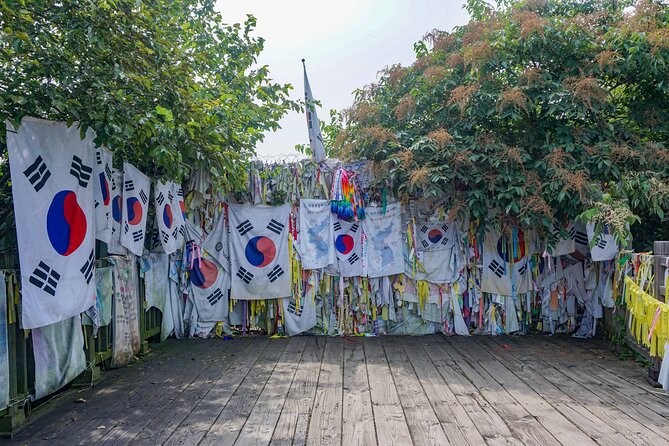
- Imjingak Pyeonghoa-Nuri Park: the emotional setup
- The DMZ tour bus, 3 stop route, and the Unification Village quick stop
- Third Infiltration Tunnel: walking the scale of military planning
- Dora Observatory: why distance becomes part of the message
- Imjingak museum and the chance to meet a defector
- Guides and group feel: why Juno Lee, Miae, and June get praised
- What to bring and what to expect, passport included
- Who should book this DMZ tour?
- Should you book this DMZ tour?
- FAQ
- What time does the tour start?
- How long is the DMZ tour?
- Is hotel pickup included?
- Do I need a passport?
- Does this tour go inside the DMZ?
- Is JSA included?
- What are the main stops during the day?
- Is lunch included in the price?
- Are entrance tickets included?
- Is the tour suitable for claustrophobic travelers?
Key highlights I would circle before you go
- Hotel pickup plus an air-conditioned ride that keeps the long day manageable
- Third Infiltration Tunnel experience to understand how infiltrations were planned
- Dora Observatory for seeing the division from a fixed high vantage point
- Imjingak Pyeonghoa-Nuri Park to set the emotional and historical context early
- North Korea museum stop with a chance to meet a defector and ask questions
DMZ Tour, but not the DMZ line, and not JSA
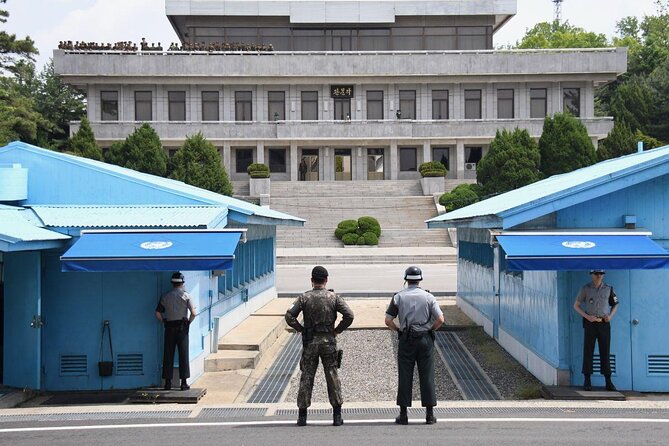
This tour is often described as a DMZ tour because it is all about the Korean Peninsula division. But here is the key distinction: you do not go inside the actual DMZ. Instead, you visit the military zone outside the DMZ and see the places that were built to monitor, deter, and communicate across the border.
You also need to know what you are not getting. This is not a JSA tour. JSA is the Armistice signing site, and it is the place most people associate with the political symbolism of 2019. If JSA is your must-see, you should book a JSA-focused option and not assume this itinerary includes it.
That difference matters because it changes what you will feel that day. Standing at fixed points outside the DMZ still gives you the sense of a border that is more than a line on a map. But you are also protected from the kind of access that would be impossible for ordinary visitors. Plan for distance, observation, and the tunnel, not a walk right up to the exact Armistice area.
More DMZ Tours in Seoul:
- Best DMZ Tour Korea from Seoul (Red Suspension Bridge Optional)
★ 5.0 · 41,422 reviews - DMZ Tour: 3rd Tunnel, Option(Suspension Bridge, Boat) from Seoul
★ 5.0 · 21,373 reviews - DMZ tour south Korea from Seoul (NK experience hall, defector)
★ 5.0 · 20,599 reviews
Price and logistics: is $210 actually good value?
At $210 per person for a 7 to 8 hour day, you are paying for three things: transportation, guided interpretation, and included entrance/tour access. The tickets that are covered include Dora Observatory and the Third Tunnel. You also get bottled water, and the guide provides tour information in English.
Lunch is not included, so you are smart to plan for food either before you go or during whatever break time is built into the day. Since the stops are spaced out and the day starts early, bringing a small snack can save you from feeling rushed later.
Is it cheap? No. But it is not just a bus ride either. The value is in the structure: a tight itinerary, time on the major sites, and a guide who can connect what you are seeing to what it meant in the war and after the armistice.
Also, this tour tends to be booked about 36 days in advance. That can be a sign that spots are limited or schedules fill up, so if you care about a specific date, you do not want to wait until the last week.
Start time at 8:00 am, then a full day of border context
The meeting time is 8:00 am, and your day starts with travel out of Seoul. Expect roughly an hour to reach Imjingak Pyeonghoa-Nuri Park from your pickup point, then additional driving between stops.
After the tunnel and Dora Observatory, there is another drive back toward Seoul that takes about an hour. Overall, the day stretches to around 7 to 8 hours, depending on timing and the pace of the group.
This timing is important because DMZ-area tours run on controlled schedules. You are not in a flexible choose-your-own-adventure day. You are instead following a route that is designed to hit key points while staying on the rules for military-zone access.
If you like your sightseeing with minimal waiting and clear transitions, the early start can feel efficient. If you are the type who hates mornings, mentally prepare for a 8:00 am start and an early finish.
Imjingak Pyeonghoa-Nuri Park: the emotional setup
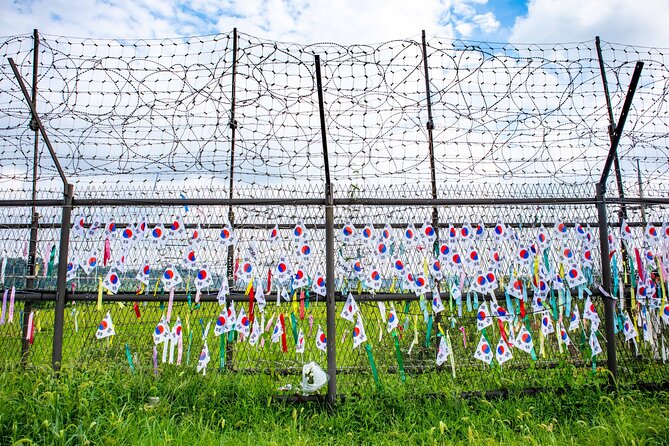
Your first stop is Imjingak Pyeonghoa-Nuri Park, about an hour from Seoul. This place is associated with the 1972 talks between South and North Korea, and it has a theme of longing for unification.
That may sound abstract, but it is a useful on-ramp before you head to the tunnel and observatory. Imjingak helps explain why the Peninsula division still shows up in daily life, not just in textbooks. Even if you know the war basics, this stop helps you understand the ongoing human impact.
Admission here is listed as free, which is a nice bonus early in the day. It also gives you a mental breather before the itinerary turns more intense, especially once you are physically walking through the Third Infiltration Tunnel.
I like using this kind of start point because it keeps the rest of the day from feeling like isolated photo stops. You get context first, then the more dramatic sites make sense as part of a longer story.
A few more Seoul days worth comparing
- Seoul: The Best DMZ Tour with Optional Suspension Bridge
★ 4.7 · 4,978 reviews - Signature DMZ Tour: Exclusive Defector Talk & Suspension Bridge
★ 5.0 · 4,459 reviews - Thrilling Korean DMZ 3rd Tunnel Tour from Seoul + Red Bridge Rush
★ 5.0 · 3,097 reviews - Seoul: DMZ Tour & Suspension Bridge (Option English/Spanish)
★ 4.9 · 2,628 reviews
The DMZ tour bus, 3 stop route, and the Unification Village quick stop
After Imjingak, you take the DMZ tour bus to visit three points: the Third Infiltration Tunnel, Dora Observatory, and a quick stop at a supermarket in Unification Village.
This bus portion matters for two reasons. First, it is part of how the route is controlled. You do not get to roam. Second, it gives you built-in time for the guide to connect the stops into one continuous explanation.
The Unification Village supermarket stop is short, but it can be useful. It is a reminder that border zones are not just history landmarks. They are places where people live and businesses operate inside tightly framed limits. Even if you do not shop, it can help you picture what day-to-day life looks like at the edge of the division.
One more practical note: the area you travel through is described as heavily mined. You do not control where the bus goes, and you do not need to worry about counting steps yourself. Still, it is smart to follow staff and guide instructions quickly, and do not wander.
Third Infiltration Tunnel: walking the scale of military planning
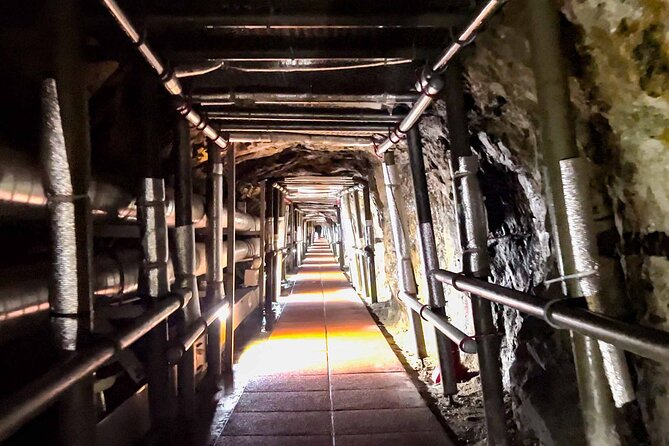
The Third Infiltration Tunnel is the signature stop for many people, and it runs about an hour on site. The basic idea is straightforward: it is an underground route excavated by North Korea, and it is tied to claims about how many armed soldiers could move through if an infiltration plan was fully executed.
What you should plan for is a physically and mentally different experience than standing at an observatory. A tunnel adds sensory constraints. You should expect confined space and lower visibility, and you should be prepared to move at a steady pace.
That is why the tour specifically warns against claustrophobia and difficulty walking. If you are even slightly unsure, do not gamble. This is not the kind of stop where you can simply wait outside and catch the view, since the tunnel visit is part of the route.
Also, tunnel conditions can make photos less predictable. If your main goal is photography, focus on the moment you are inside and the guide’s explanations first. If you want, ask the guide when it is best to stop and look, so you do not miss key points while you are adjusting your camera.
If you can handle confined spaces and want a hands-on understanding of how the Peninsula conflict was operationalized, this stop is the one that sticks in your memory.
Dora Observatory: why distance becomes part of the message
Dora Observatory is another major anchor of the day, also included in the tour. It is about 50 minutes at this stop, and it is designed to let you witness the border from a distance.
At an observatory, the lessons are not only political. They are also visual and practical. You are seeing how lines of tension can stretch across geography. From this vantage point, you understand division not as an abstract map, but as a physical space that still shapes movement and planning.
The tour also frames Dora as a place to observe changes in cooperation. That point is important. It keeps the day from being only grim. You are not just looking at a conflict. You are looking at the ongoing reality that relationships can shift even when the border remains.
If you wear layers, this is a good stop for comfort. Observatories can feel cooler or windier than the city. And since you are on a schedule, it helps to be ready to spend your full time there without adjusting your outfit every five minutes.
Imjingak museum and the chance to meet a defector
After the DMZ-area portion, the day returns to Imjingak Pyeonghoa-Nuri Park for a museum stop. You get about 40 minutes here, and this is where you may have the chance to meet a defector and interview them.
This is the part of the itinerary that can feel the most personal. The museum context sets up questions. Then the meeting gives you a human connection to the facts. If you get the opportunity to ask questions, you will get more out of it if you keep your questions clear and respectful.
Since the time is limited, I suggest thinking in advance. Ask about what life changed after leaving North Korea, how information was different, or what surprised them most after crossing. Even if you do not get a specific topic answered, the exchange usually adds a layer that no tunnel or observatory can provide.
Do note the practical side: you are still in a structured tour day with set timing. Keep your questions focused, and listen for the guide’s framing so you do not miss what matters.
Guides and group feel: why Juno Lee, Miae, and June get praised
The biggest recurring strength in this experience is the guide. Many people highlight Juno Lee for clear English, flexibility, and making the trip work smoothly with different schedules. Other guide names such as Miae and June also show up, with praise for being helpful, funny, and genuinely supportive.
Why does that matter in a DMZ tour? Because the places you visit are not easy to interpret on your own. Tunnels and observatories can turn into just physical landmarks unless someone explains what to notice and how the details connect to the conflict.
Also, private pickup and a smaller group feel help here. When you are not packed into a huge bus, you can ask follow-up questions and you do not lose time to crowd movement. That makes the day feel less rushed, even when the itinerary is tight.
If you care about getting more out of the day than photos, prioritize this part. Choose a date when your guide communication will be easiest, and come with some curiosity about the war aftermath and how the armistice created today’s border system.
What to bring and what to expect, passport included
This tour goes into a military zone outside the DMZ. That means you should bring your passport. Do not show up without it. If the name on your booking does not match your passport details, fix that with the operator as soon as you can.
Packing-wise, think about comfort more than style:
- Wear shoes you can walk in for tunnel conditions
- Bring layers, observatory sites can feel cooler and windier
- If you get hungry, plan because lunch is not included
- Avoid assuming you can bring everything you want into restricted areas, follow the guide instructions quickly
The tour also notes moderate physical fitness is needed. That is especially relevant for the tunnel stop. Even if you can walk fine on city streets, the tunnel can change how your body feels.
If you are traveling with parents or teens, it can still work, but choose the group members carefully. Clear English guidance helps older visitors, but the tunnel itself is still the tunnel.
Who should book this DMZ tour?
This tour is a strong match if you want the most important DMZ-area experiences without needing JSA access. You get the Third Infiltration Tunnel, Dora Observatory, and the Imjingak context in one 7 to 8 hour schedule with hotel pickup.
It is also a great fit for people who want a guided interpretation in English and do not want to manage public transport or timing through this region on their own.
If you are claustrophobic or have difficulty walking, skip it. The tunnel is a central stop, and it is not presented as optional. Also, if your top priority is the Armistice signing area itself, you should look for a JSA tour instead.
For families, the guide approach tends to be praised for being patient and clear, especially for groups that include visitors who might be less comfortable navigating alone.
Should you book this DMZ tour?
If you want a well-structured, English-guided border day with the tunnel and the Dora views, this is an easy yes. The price is not low, but the included tickets, transportation, and guided interpretation make it feel like more than a basic sight-seeing circuit.
Book it when you want context, not just photos. The Imjingak start and museum stop help the day land emotionally, and the tunnel gives you something concrete to think about.
Skip it only if you need JSA specifically, or if the tunnel makes you uncomfortable. In that case, you will enjoy the day less, and you might lose time trying to manage stress in a confined space.
Overall, this is one of those Seoul day trips that changes how you see the Peninsula, because you are not only looking at history. You are standing where the conflict is explained through tunnels, observation points, and the ongoing search for meaning.
FAQ
What time does the tour start?
The tour starts at 8:00 am.
How long is the DMZ tour?
It lasts about 7 to 8 hours.
Is hotel pickup included?
Yes. Pickup is offered.
Do I need a passport?
Yes. You should bring your passport because the route goes into a military zone.
Does this tour go inside the DMZ?
No. It is a DMZ tour, but you do not go inside the DMZ. You visit the military zone outside the DMZ.
Is JSA included?
No. This is not a JSA tour, and JSA is noted as a separate kind of tour.
What are the main stops during the day?
You visit Imjingak Pyeonghoa-Nuri Park, then the DMZ tour bus route including the Third Infiltration Tunnel and Dora Observatory, and you also have a quick supermarket stop in Unification Village. Afterward, you return to Imjingak for a museum stop.
Is lunch included in the price?
No. Lunch is not included.
Are entrance tickets included?
Yes. Tickets for Dora Observation and the Third Tunnel are included, along with admission for the tour stops as listed.
Is the tour suitable for claustrophobic travelers?
No. It is not recommended for those who are claustrophobic, since you walk through the tunnel.
Recently reviewed in Seoul
- You’re Invited to Our Home in Seoul: The Only Cooking Class!★ 5.0 · 8 reviews
- Your Personal Seoul Photographer!★ 4.1 · 15 reviews
- From Seoul: Yongpyong Ski Day Tour with Transportation★ 4.9 · 40 reviews
- Seoul: Korean & English Language Exchange Global Party★ 5.0 · 28 reviews
- Watching sports match & local food experience in Seoul★ 5.0 · 11 reviews
- WKT Combat Taekwondo & Self-defense One Day Class in Seoul★ 5.0 · 5 reviews
- Unique Native Experience : Han River Picnic, Board game, BBQ★ 5.0 · 3 reviews
- Seoul: Gangneung BTS K-Pop & K-Drama Filming Locations Tour★ 4.6 · 14 reviews
DMZ Tours, compared.
Best DMZ Tour Korea from Seoul (Red Suspension Bridge Optional)
Read our review →
DMZ Tour: 3rd Tunnel, Option(Suspension Bridge, Boat) from Seoul
Read our review →
DMZ tour south Korea from Seoul (NK experience hall, defector)
Read our review →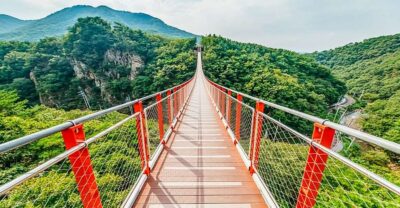
DMZ Insider Tour: 3rd Tunnel, NK Defector Meet & Red Bridge
Read our review →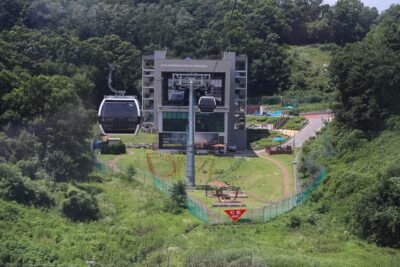
The Best DMZ Tour with Optional Suspension Bridge
Read our review →
Signature DMZ Tour: Exclusive Defector Talk & Suspension Bridge
Read our review →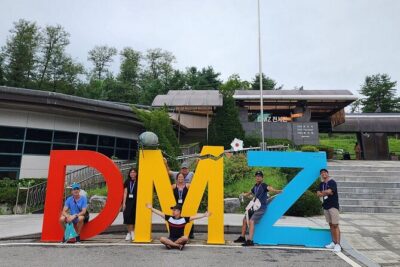
Thrilling Korean DMZ 3rd Tunnel Tour from Seoul + Red Bridge Rush
Read our review →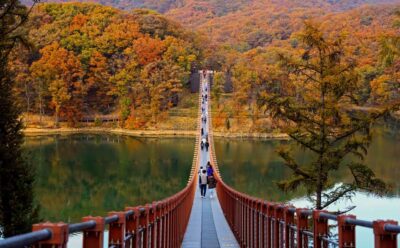
DMZ Tour & Suspension Bridge (Option English/Spanish)
Read our review →Browse the lists this tour appears in