Reviewed · FULL-DAY
Ganghwa Island – Full day private tour
North Korea is 2 km away, sort of. That is the hook, but what makes this tour work is the private guide plus a full day of changing scenery, from Joseon-era battle sites to the Peace Observatory where you can use binoculars. I also like that lunch is the only real blank spot in the plan, so you can budget quickly, but you will need to plan your meal on your own.
I really appreciate the practical setup: hotel pickup and drop-off in Seoul, an air-conditioned minivan, and bottled water. You get about 8 hours of structured stops without having to handle transit or tickets.
One more consideration before you book: the day is built for moderate walking and viewpoints, and the island pace is not a sit-on-the-bus all day kind of day. The Ganghwa Seaside Resort stop is optional, and the luge option is there if you want it, but you’ll pay for it separately.
In This Review
- Key things I’d watch for on this Ganghwa private day
- Why Ganghwa Island is a smart break from Seoul
- Price and value: what $220 buys you (and what it does not)
- Getting moving at 8:30 and covering 7 stops in one day
- Gwangseongbo Fortress: Joseon strategy and the 1871 battlefield context
- Jeondeungsa Temple in the mountain air: Buddhism plus wartime history
- Ganghwa Seaside Resort: optional, for the people who want extra fun
- Pungmul Sijang Market: the simplest way to feel island life
- Peace Observatory: binocular views of North Korea, with history in the frame
- Yeonmijeong Pavilion: more scenery, more North Korea peeks
- Ganghwa Anglican Cathedral: western contact when the island guarded Seoul
- The real secret sauce: a guide who ties dates to meaning
- Who this tour fits best (and who should skip it)
- Should you book this Ganghwa Island private tour?
- FAQ
- How long is the Ganghwa Island full day private tour?
- What time does the tour start?
- Is hotel pickup and drop-off included?
- What does the price include?
- What is not included in the tour price?
- Is this tour private?
- Can I see North Korea during the tour?
- Is there free time for a market and food?
- What is the cancellation policy?
Key things I’d watch for on this Ganghwa private day
- Private, driver-led pacing that keeps you from waiting around or hunting for connections
- Peace Observatory binocular time with North Korea only about 2 km away from the island
- Fortress and temple sites tied to 1871 and 1866 conflicts that shaped the island’s importance
- A traditional market stop to see what locals actually look for on Ganghwa
- An optional seaside resort, with the luge ride available but not included
Why Ganghwa Island is a smart break from Seoul
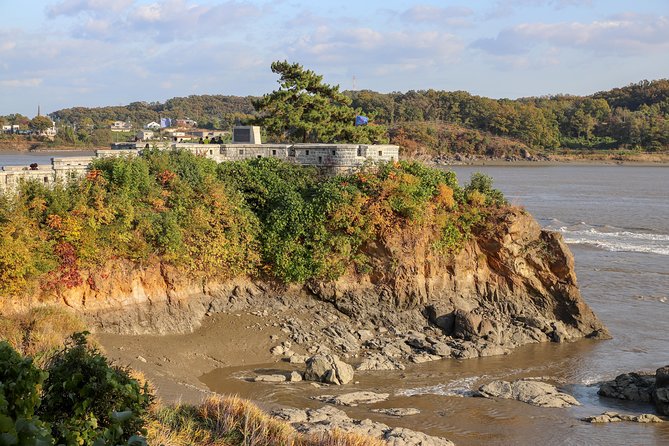
Ganghwa Island is close enough to do as a day trip, but it feels like a different world once you leave Seoul behind. You trade big-city motion for rural roads, hill views, and sites that explain why this island mattered so much in older Korean history. That mix is exactly why this tour is worth your time.
I like how the day is arranged around places that connect to real events, not just pretty scenery. You move from fortifications to a Buddhist temple, then finish at spots where the North Korea question becomes physical, not abstract.
And because it is private, you can ask questions as you go. If you care about how Korea’s geography shaped politics and war, you’ll get more out of each stop than you would wandering on your own.
A few more Seoul days worth comparing
- Best DMZ Tour Korea from Seoul (Red Suspension Bridge Optional)
★ 5.0 · 41,422 reviews - DMZ Tour: 3rd Tunnel, Option(Suspension Bridge, Boat) from Seoul
★ 5.0 · 21,373 reviews - DMZ tour south Korea from Seoul (NK experience hall, defector)
★ 5.0 · 20,599 reviews
Price and value: what $220 buys you (and what it does not)
At $220 per person for a full-day private tour, you are paying for three things: a dedicated guide, a dedicated vehicle, and included entry fees at multiple stops. For a place like Ganghwa, that matters because the sites are spread out, and you do not want to spend half your day figuring out transportation.
Here is the clean breakdown based on what is included: pickup and drop-off, transport by air-conditioned minivan, a driver cum guide, bottled water, and entrance fees for the stops listed with fees. That usually covers the main friction points of a countryside day trip.
What is not included is equally important. Lunch is not included, and the optional Ganghwa Seaside Resort has its own admission costs, so you should plan for extra spending if you add the luge ride. If you like the idea of flexibility, that works in your favor.
Getting moving at 8:30 and covering 7 stops in one day
The tour starts at 8:30 am, with hotel pickup and then a full day of site-hopping for about 8 hours total. The stops are timed in chunks, usually around 30 to 40 minutes, which is long enough to see and listen, but short enough to keep the day from dragging.
You are not stuck in a single museum-style environment. Instead, you switch between historical viewpoints, temple calm, a market break, and observation points. That rhythm is a big part of why the day feels full but not exhausting.
You also need to be comfortable with a moderate level of physical activity. Expect some walking to viewpoints and around outdoor areas, especially near fortresses and pavilions. If you are fine with that, the pacing will feel just right.
Gwangseongbo Fortress: Joseon strategy and the 1871 battlefield context
The day begins at Gwangseongbo Fortress, a site tied to conflict in the late 1800s, including fighting involving the United States in 1871. Even if you only know the broad outline of Korean history, this stop helps you connect the dots to why Ganghwa Island was strategically important during the Joseon dynasty.
What I like about this fortress stop is the way it turns geography into a story you can picture. You are not just hearing names and dates. You are standing in a place that shows how coastal control, access routes, and defense mattered. It is also one of the more straightforward stops for first-time visitors because the battlefield context gives you a clear mental framework.
The downside? If you are hoping for a purely peaceful scenic start, this is more of a lesson than a postcard. But it sets up the rest of the day, especially the later North Korea viewing stops.
Same trip, a different corner of the country:
- Seoul: The Best DMZ Tour with Optional Suspension Bridge
★ 4.7 · 4,978 reviews - Signature DMZ Tour: Exclusive Defector Talk & Suspension Bridge
★ 5.0 · 4,459 reviews - Thrilling Korean DMZ 3rd Tunnel Tour from Seoul + Red Bridge Rush
★ 5.0 · 3,097 reviews - Seoul: DMZ Tour & Suspension Bridge (Option English/Spanish)
★ 4.9 · 2,628 reviews
Jeondeungsa Temple in the mountain air: Buddhism plus wartime history
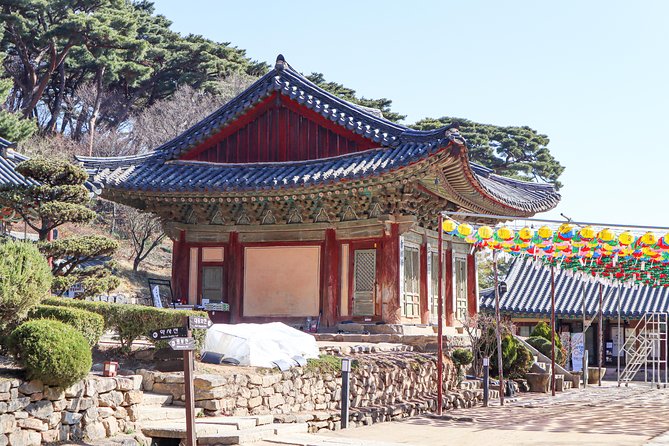
Next is Jeondeungsa Temple, an old Buddhist temple in the Samrangseong fortress area. This is not only a religious site, it is also connected to conflict history, including battles involving France in 1866.
I love this pairing: fortress history followed by mountain temple calm. The contrast makes both stops more meaningful. At the temple, you can slow down, look around, and understand Korean Buddhist culture in a setting that feels tied to the land, not just built for tourism.
There is also a practical benefit. A temple stop breaks the day up nicely before you move toward the seaside option and then the market. So even if you are not a religious traveler, the atmosphere and setting provide real variety.
Ganghwa Seaside Resort: optional, for the people who want extra fun
The Ganghwa Seaside Resort stop is optional, and it is here largely for leisure. One highlight is that the resort offers a luge ride down the hill if you want that kind of activity.
You should know two things before you count on it. First, because it is optional, your guide will likely treat it as a flexible choice depending on your group’s interests. Second, admission fees are not included here, so if you want the luge, you should expect an extra cost on the day.
For value, I see this as a plus if you have any energy left after the historical stops. It is also a good fit for groups who want one lighter segment, especially if not everyone is equally into fortresses or temple history.
Pungmul Sijang Market: the simplest way to feel island life
At Ganghwa Pungmul Sijang, you get a traditional market stop to see special products from the island. This one is free in terms of admission, and it is short enough that it does not swallow your day.
This is the stop I recommend using with a small goal in mind. Instead of trying to sample everything, pick one or two items to look for, and ask your guide what they are and how locals use them. That turns a quick market browse into a real cultural moment.
Also, this is often where your day can include informal food options. The tour does not list lunch as included, so a market break is your best natural chance to grab something quick, snack-sized, and local. If you want to build in time for food without scrambling later, this is the best place to do it.
Peace Observatory: binocular views of North Korea, with history in the frame
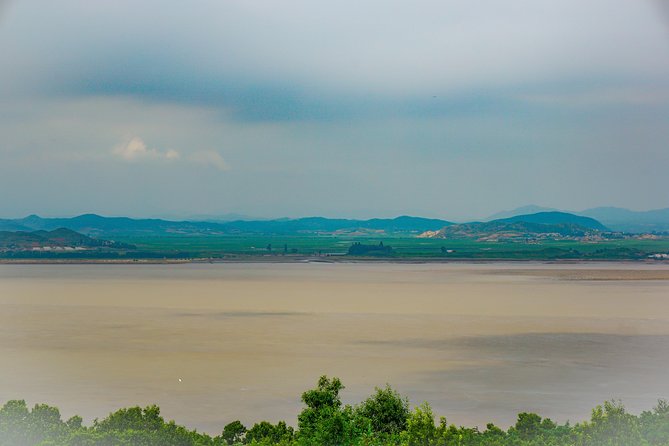
Then comes the stop that people remember: Ganghwa Peace Observatory. You can use binoculars here to see North Korean people’s living, and the location is close, about 2 km away from the island.
This is not the kind of viewpoint where you just take photos and move on. The sheer closeness of North Korea makes the whole situation feel immediate. And because this tour is guided, you can get context for what you are seeing, how the viewing works, and why the island became a stage for modern tensions.
Practical note: bring your attention, not just your camera. Take your time aligning binocular viewing with whatever your guide points out. If you rush, you will miss the point of the stop, which is the human-scale view.
Yeonmijeong Pavilion: more scenery, more North Korea peeks
After the observatory, you also stop at Yeonmijeong Pavilion. This one is free and it gives you a beautiful view of the island, plus another chance for a peek toward North Korea.
I like this stop as a breather. The Peace Observatory is intense in a way, because it focuses on living across the border. The pavilion balances that by letting you see the broader shape of the landscape, so the day ends up feeling less like a single concept and more like a real place with layers.
Because this stop is shorter, about 30 minutes, it is ideal when you want to keep energy up for the final historical piece.
Ganghwa Anglican Cathedral: western contact when the island guarded Seoul
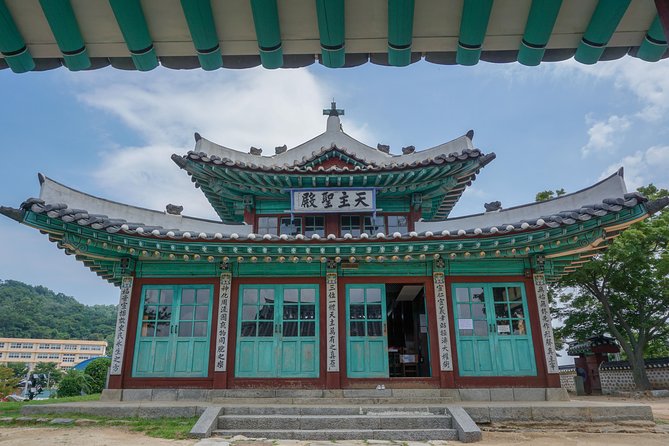
The last major stop is Ganghwa Anglican Cathedral. The story here is that Ganghwa Island functioned as an entrance route to Seoul, so it became a place where westerners came. The cathedral is presented as evidence of that western presence.
This final stop is a good wrap-up because it broadens the day’s story. The earlier stops are mostly about conflict and defense. This one adds cultural contact, showing that the island also mattered in how outsiders interacted with Korea.
It also functions as a visual landmark. After observatory viewpoints, a church building gives your eyes something different to focus on, and it gives the guide a chance to connect earlier historical threads to later cultural ones.
The real secret sauce: a guide who ties dates to meaning
A private tour lives or dies on the guide, and this route is the kind that needs context. When your guide can explain why a fortress mattered, why a temple sits in a contested zone, and why a viewing point exists, the day stops being a checklist.
In recent experiences with this kind of tour, guides such as Miae have been praised for being personable and for turning the island’s events into a story with clear meaning for Western visitors. Other groups have also mentioned drivers like Mr. Lee who bring lots of facts and energy into the ride between stops.
You should treat this as a chance to ask your own questions. Want the Joseon dynasty angle explained in plain terms? Ask. Curious how the island’s position affects what you can see at the observatory? Ask. That back-and-forth is where private touring earns its keep.
Who this tour fits best (and who should skip it)
This Ganghwa day trip is ideal if you like history but do not want a classroom day. It is also great if you enjoy rural scenery and want a break from big-city routines without giving up structure.
You will likely love it if you want:
- A private guide to add context to every stop
- A focused day that includes fortresses, temples, market life, and North Korea viewing points
- A plan that makes it easy to manage your time in the countryside
You might want to think twice if:
- You hate walking viewpoints and outdoor stops
- You strongly want lunch included (here, it is not)
- You are not interested in the North Korea context at all, since the observatory is a central part of the day
Should you book this Ganghwa Island private tour?
I think it is a strong choice if you want one day to do real work for your understanding of the peninsula. The price makes sense because you get a dedicated vehicle, a guide, and multiple entrance fees handled, plus a rare viewpoint experience at the Peace Observatory with binocular time.
If you are the type who gets bored by generic sightseeing, this tour is built for you. The stops are not random. They connect to how Ganghwa Island shaped access to Seoul, how it played roles in conflicts, and how geography turns into today’s tense reality.
Just plan one thing ahead: your lunch. If you do that and you are comfortable with moderate walking, you should have an efficient, memorable day.
FAQ
How long is the Ganghwa Island full day private tour?
It runs for about 8 hours.
What time does the tour start?
Pickup and the start are scheduled for 8:30 am.
Is hotel pickup and drop-off included?
Yes. The tour includes hotel pickup and drop-off for hotels located in Seoul.
What does the price include?
Included items are hotel pickup and drop-off, transport by air-conditioned minivan, a driver cum guide, bottled water, and entrance fees listed in the itinerary.
What is not included in the tour price?
Lunch is not included. Admission fees are also not included for the optional Ganghwa Seaside Resort stop.
Is this tour private?
Yes. It is a private tour, and only your group participates. There is also a minimum of 2 people per booking.
Can I see North Korea during the tour?
Yes. At the Ganghwa Peace Observatory you can see North Korean people’s living through binoculars. North Korea is about 2 km away from the island, and Yeonmijeong Pavilion also offers views and a peek.
Is there free time for a market and food?
There is a traditional market stop at Ganghwa Pungmul Sijang with free admission, and it is about 30 minutes. Lunch itself is not included, so you would plan meals separately.
What is the cancellation policy?
You can cancel for free up to 24 hours in advance of the experience’s start time for a full refund. If you cancel less than 24 hours before, the amount paid is not refunded.
Recently reviewed in Seoul
- You’re Invited to Our Home in Seoul: The Only Cooking Class!★ 5.0 · 8 reviews
- Your Personal Seoul Photographer!★ 4.1 · 15 reviews
- From Seoul: Yongpyong Ski Day Tour with Transportation★ 4.9 · 40 reviews
- Seoul: Korean & English Language Exchange Global Party★ 5.0 · 28 reviews
- Watching sports match & local food experience in Seoul★ 5.0 · 11 reviews
- WKT Combat Taekwondo & Self-defense One Day Class in Seoul★ 5.0 · 5 reviews
- Unique Native Experience : Han River Picnic, Board game, BBQ★ 5.0 · 3 reviews
- Seoul: Gangneung BTS K-Pop & K-Drama Filming Locations Tour★ 4.6 · 14 reviews
Full-Day, compared.
Full Day Tour In The Soop BTS Ver in PyeongChang Filming Location
Read our review →

Seoul City Private Full-Day Tour Including Lunch
Read our review →
Jeju Island: Full-Day East Jeju Bus Tour with Entry Fees
Read our review →
Full-day Customizable Private Seoul Highlight Tour
Read our review →