Reviewed · SEOUL TOURS
Discover Round Korea in 7days: All-Inclusive Experience
Seven days, zero planning stress.
This all-inclusive Round Korea route is built for easy days: you get the major sights, entrance fees included, and the program is explicitly set up as no shopping so you can focus on places and food. The tradeoff is a group pace, so if you prefer slow, free wandering, the days can feel busy, especially with an early start.
What I like most is how the itinerary mixes big-name Korean heritage with hands-on moments. You are not just looking at monuments, you also get experiences like hanbok time in Jeonju, tea with a Buddhist monk at Baekyangsa, and a traditional dessert-making class in Andong.
One more consideration before you book: this is outdoors and travel-heavy. You should have moderate physical fitness, because you will be walking at fortress sites, villages, temples, and a national park.
In This Review
- Key highlights worth planning around
- What all-inclusive really means on this Korea loop
- Day 1 in Gongju: Fortress views, King Muryeong’s tomb, and a museum hit
- Day 2 in Jeonju: Hanok lanes, hanbok time, and a monk’s tea conversation
- Day 3: Boseong green tea terraces and Suncheon Bay wetlands
- Day 4 in Busan: UN Memorial Cemetery, Jagalchi Market, and the Songdo cable car
- Day 5: Gyeongju Silla highlights, from Bulguksa to Cheomseongdae
- Day 6: Andong Hahoe folk village and Korean dessert-making class
- Day 7: Seoraksan National Park and the Jujeongol Valley views
- Meals, hotels, and the pace: how to decide if this fits you
- Price and value: what you’re really paying for
- My call: who should book, and who should think twice
- Should you book Discover Round Korea in 7 days?
- FAQ
- What is the tour duration?
- Where is the meeting point, and when does it start?
- What is included in the price?
- Are meals included, and which ones?
- Is hotel pickup on the first day included?
- Is shopping part of the itinerary?
- What fitness level do I need?
- How large is the group?
- What if the weather is bad?
Key highlights worth planning around
- No shopping, no options means you can relax and trust the schedule
- UNESCO heavy itinerary from Gongju to Gyeongju and Andong Hahoe
- Food moments built in, including tea time and dessert-making
- Busan market energy plus sea views, capped by the Songdo cable car
- Small-group feel with a maximum of 35 travelers
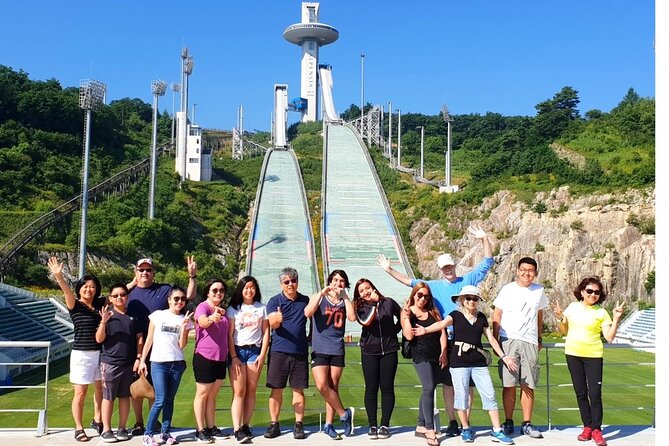
- English guidance with an on-the-ground guide who takes care of the group (I saw this clearly with guide Jay)
What all-inclusive really means on this Korea loop
On paper, the package looks simple. In real life, that simplicity is the point. You are paying for a guided route where the big costs are already handled, including entrance fees and day-to-day basics like accommodation, most meals, and a vehicle with air-conditioning.
Specifically, you get six nights in twin or double rooms, breakfast for six mornings, dinner for six evenings, and lunch for seven days. That matters because in Korea, once you start stacking admissions, transit, and meals, the cost adds up fast. Here, you can budget confidently and spend your energy on the places themselves, not spreadsheets.
You also get a welcome kit, plus mobile tickets, which is useful when you want to move quickly through check-in and entrances. And there is an included schedule tied to a wellness facility designated by the Korea Tourism Organization, which helps add a “slow down” element in the middle of otherwise packed sightseeing days.
The only real friction is the fixed timetable. This is not a “show up whenever you feel like it” trip. It starts from AMID Hotel Seoul at 8:00 am, and it returns you back to the meeting point at the end. If you are the kind of traveler who loves detours, late breakfasts, and doing one place at your own rhythm, you will feel that structure.
A few more Seoul days worth comparing
- Best DMZ Tour Korea from Seoul (Red Suspension Bridge Optional)
★ 5.0 · 41,422 reviews - DMZ Tour: 3rd Tunnel, Option(Suspension Bridge, Boat) from Seoul
★ 5.0 · 21,373 reviews - DMZ tour south Korea from Seoul (NK experience hall, defector)
★ 5.0 · 20,599 reviews
Day 1 in Gongju: Fortress views, King Muryeong’s tomb, and a museum hit
Gongju gives you a strong first impression because it is hillside Korea. Your day begins at Gongsanseong Fortress, a UNESCO site from 2015 perched above the city. Fortresses like this are made for slow looking. Even when you are in a group, you get those “stand here, look out” moments that show how strategic these locations were.
Next comes a very different kind of power, the Songsan-ri Tombs and the Royal Tomb of King Muryeong. The standout detail here is the brick-built burial style. You do not just read about ancient craftsmanship, you see how the structure itself communicates status and careful engineering.
Then you wrap up in the Gongju National Museum, which holds about 10,000 artifacts. For me, this is a smart way to anchor the day. A fortress tells you about defense and landscape. A royal tomb tells you about ritual and the court. A museum gives you context so you leave with a clearer sense of what you just saw.
Practical tip: wear comfortable walking shoes and bring a light layer. Fortress mornings can feel cooler on exposed hills.
Day 2 in Jeonju: Hanok lanes, hanbok time, and a monk’s tea conversation

Jeonju is where this tour shifts into “slow beauty,” and it does it with a balanced mix of culture and atmosphere. You spend real time in the Jeonju Hanok Village, exploring the alleys among traditional hanok houses, with Gyeonggijeon Shrine as a focal point.
The schedule also includes a hanbok experience. That is not just a photo stop. Done well, it changes how you move through the space. Clothing that is made for Korean aesthetics nudges you to notice details, like how doorways, courtyards, and paths are shaped for traditional life.
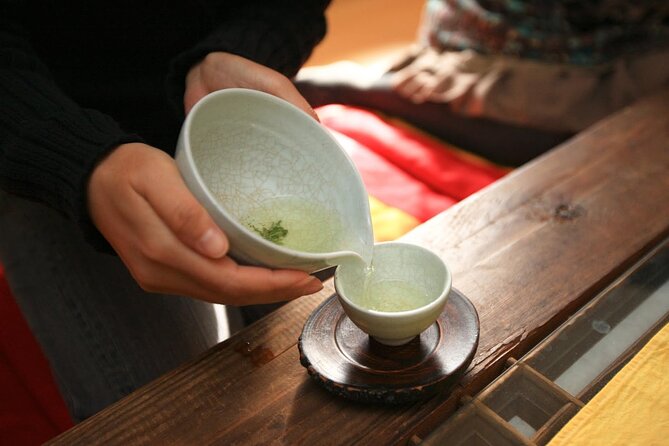
After the shrine, you head to Baekyangsa Temple. The memorable piece here is the tea conversation with a Buddhist monk. This is not a theme-park performance. The value is that you get a calm, reflective break in the middle of a tour that otherwise runs on momentum.
If there is a drawback, it is that temple days can mean quiet spaces and limited flexibility. You are on the schedule, so you should expect to follow the group flow rather than wandering whenever you feel like it.
Day 3: Boseong green tea terraces and Suncheon Bay wetlands
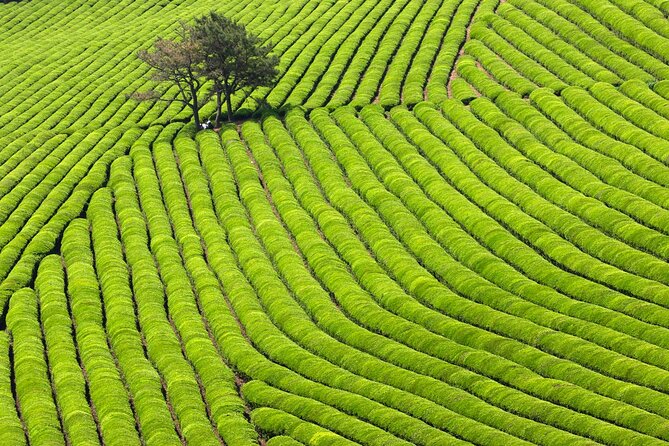
Day 3 is all about changing scenery. You start in the Boseong Green Tea Field (Daehan Dawon), described as Korea’s largest green tea field. Terraced tea plantations are visually satisfying in a simple way. The rows give you a sense of rhythm, and the views tend to feel open even when you are walking at a gentle pace.
After lunch, the route heads to Suncheon Bay Wetland Reserve, where the river meets the sea. Wetlands are excellent for travelers who like nature without feeling like you need serious trekking gear. The reserve is known as a top wetland area and a sanctuary for more than 250 species, which means you are likely to notice birds, reeds, and the overall “living ecosystem” feel if the timing works out.
Practical tip: this is one of the better days to keep your camera ready, but also keep your eyes up. Wetland highlights are often in what you notice from a path, not only in the far distance.
Same trip, a different corner of the country:
- Seoul: The Best DMZ Tour with Optional Suspension Bridge
★ 4.7 · 4,978 reviews - Signature DMZ Tour: Exclusive Defector Talk & Suspension Bridge
★ 5.0 · 4,459 reviews - Thrilling Korean DMZ 3rd Tunnel Tour from Seoul + Red Bridge Rush
★ 5.0 · 3,097 reviews - Seoul: DMZ Tour & Suspension Bridge (Option English/Spanish)
★ 4.9 · 2,628 reviews
Day 4 in Busan: UN Memorial Cemetery, Jagalchi Market, and the Songdo cable car
Busan is where the trip leans warmer, louder, and more coastal.
You begin with the UN Memorial Cemetery in Busan, a solemn visit dedicated to UN soldiers who lost their lives during the Korean War. This part of the trip matters because it slows you down and puts the rest of your sightseeing in a deeper context. It is a reminder that Korea’s story includes both beauty and loss.
Then you switch gears to Jagalchi Market, Busan’s iconic fish market. This is where you feel the daily life of the city. If you like watching people buy, sell, and prepare food, this stop is a treat. You do not have to be a seafood superfan to enjoy it. Even just walking the aisles gives you texture, smells, and local energy.
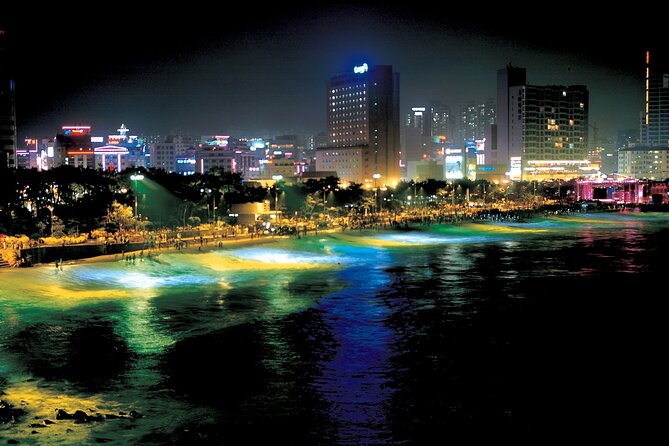
Finally, you ride the Songdo Cable Car, about 1.6 km, stretching from Songdo Beach Station to Songdo Sky Park. For many first-time Korea visitors, cable cars are fun in a straightforward way, but the point here is the coastal viewpoint. You get a real sense of how Busan’s shoreline is shaped.
Practical tip: markets are comfortable with light layers. Cable car time can make you feel cooler near the water, even when the city feels warm.
Day 5: Gyeongju Silla highlights, from Bulguksa to Cheomseongdae
Gyeongju is often called a living museum, and this itinerary treats it like one. Your day includes major UNESCO-level history in a tight, satisfying sequence.
You start at Bulguksa Temple, a UNESCO World Heritage Site. Bulguksa is a top temple experience because it blends architecture and spiritual atmosphere. You get a sense of why Silla-era sites are still treated as national treasures.
Next is the Daereungwon Tomb Complex, with royal burial mounds and relics, including elaborate gold crowns. This stop is all about scale. Big tomb complexes are hard to understand from photos. In person, you can feel the “court power” visually and spatially.
You finish with two layers of learning. The Gyeongju National Museum brings the treasures down to human scale, including iconic golden crowns and masterpieces from about a millennium ago. Then you close at Cheomseongdae Observatory, a beloved symbol of Gyeongju. Even if astronomy history is not your obsession, this structure is one of those places you remember because it is so specific and oddly satisfying to look at.
If you get tired, this is where the group format helps. When you are moving from temple to tomb to museum, you need someone to connect the dots. That is where the English speaking guide earns their keep.
Day 6: Andong Hahoe folk village and Korean dessert-making class
Day 6 adds two hands-on experiences that break up the long sightseeing stretch.
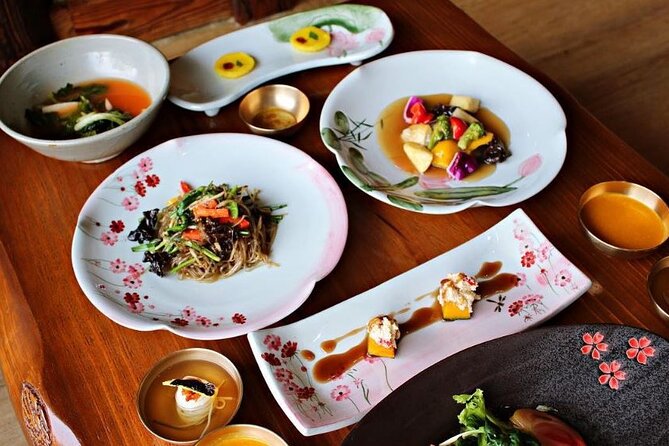
First, you go to Momyeongjae, a Korean traditional dessert-making experience at a Korean Traditional Culture Center. The key detail here is that you learn from expert instructors and create your own dessert. Even if your cooking skills are basic, these classes are practical in one big way: they give you something tangible to bring home emotionally, not just visually.
After that, you head to Andong Hahoe Folk Village, known for being one of the best-preserved traditional villages and a UNESCO World Heritage Site with more than 600 years of history. Hahoe is more than buildings. It is a cultural landscape. You walk through an environment that still feels designed around community life.
Possible drawback: villages require patience. You cannot expect a fast, hit-and-run photo stop. If you rush, you miss the subtlety, like how the paths guide you and how the village layout connects to daily rhythms.
Day 7: Seoraksan National Park and the Jujeongol Valley views
Your final day turns outdoors again, which is a smart way to end. You start in Pyeongchang and then make your way to Jujeongol Valley in Seoraksan National Park.
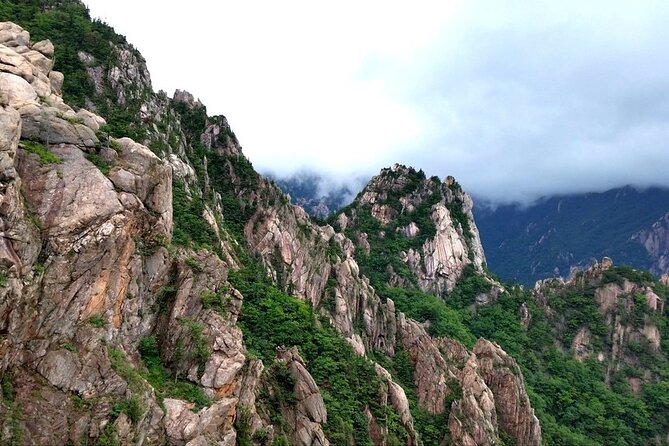
Seoraksan is known for dramatic rock formations, soaring peaks, and clear streams. Even when you do not do long hikes, the valley setting tends to make a big impression because the geology is dramatic and the air feels different.
This final day is free of admissions on the schedule, but it is not low effort. Plan your clothing for changing mountain conditions and expect uneven ground. Moderate fitness is the right call here.
Meals, hotels, and the pace: how to decide if this fits you
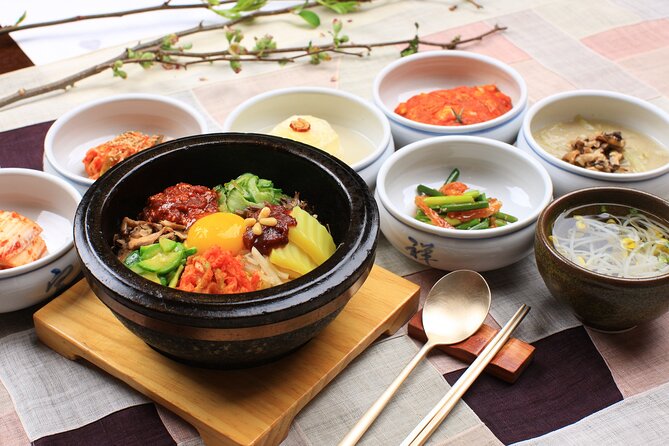
The trip includes lunch most days, breakfast for six mornings, and dinner for six evenings. That helps a lot if you want a clear day structure. It also reduces decision fatigue. You are not constantly scanning menus, translating, or worrying whether you picked the wrong place for your time and energy.
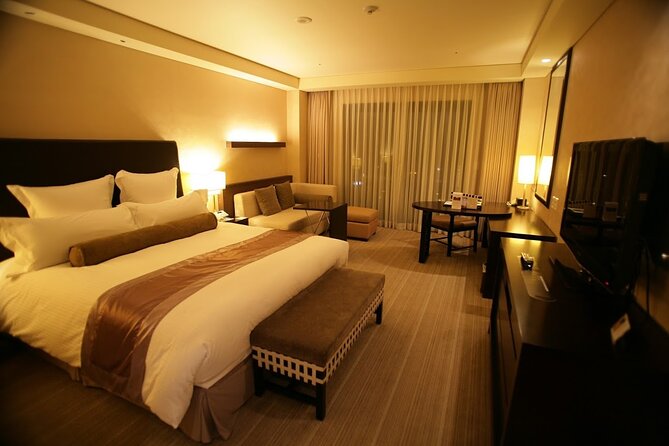
Hotel-wise, you are in six nights of accommodation in twin or double rooms. This is a good setup for couples and friends who want clean comfort after long days. But solo travelers should note that rooms are twin or double, so you will want to clarify how single occupancy is handled when you book.
Pace is the big question. The days are full, and you start early. There is also a maximum group size of 35 travelers, which usually keeps things from feeling chaotic, but you still move as a group. If you like spontaneity, pair this with extra days in Seoul or Busan before or after, so you have some breathing room outside the official schedule.
On the people side, the tour runs with an English speaking guide or driver-guide. One review highlighted guide Jay for being friendly, fun, and attentive through the whole trip. That kind of care makes a difference when the schedule includes multiple transit legs and several heritage sites in a row.
Price and value: what you’re really paying for
At $1,970 per person for a 7-day, all-inclusive style package, the price may look steep if you are used to DIY travel. But when you break down what is covered, it starts to make more sense. You are paying for:
- six nights of accommodation
- guided transport with air-conditioning
- English guidance
- admissions throughout the route
- most meals
Also, the itinerary covers a wide geographic sweep from central Korea heritage sites to Busan’s coastal scene, then back north for Seoraksan. That means you are paying for time, logistics, and planning effort you would otherwise do yourself.
Value is also about how much stress you avoid. If you want to see UNESCO sites, markets, and hands-on culture moments without becoming a full-time trip manager, this package is built for you.
If you are the type who loves choosing every restaurant and making your own day plan, a DIY approach could be cheaper. But you would lose the included admissions and the structured day flow that makes this route work smoothly.
My call: who should book, and who should think twice
This tour is a strong match if you want:
- a no-shopping culture-and-nature route
- entrance fees and meals handled
- UNESCO sites plus meaningful food and learning moments
- an English speaking guide and a group size that stays manageable (max 35)
I would think twice if you:
- hate fixed schedules and want total freedom
- have very limited mobility or do not want outdoor walking on uneven ground
- plan to pack in extra late-night activities during the trip, since early starts are part of the rhythm
If you do book, I recommend building in buffer time around it. Even if the tour returns to the meeting point at the end, you will enjoy the trip more if you are not rushing to catch flights the same day.
Should you book Discover Round Korea in 7 days?
Yes, if your goal is to see a lot of Korea without managing tickets, admissions, and daily meal decisions. The route has a smart mix of UNESCO heritage (Gongju, Gyeongju, Andong), a real cultural day in Jeonju, market and sea views in Busan, and a nature finish in Seoraksan.
If you want to slow travel or you get cranky when days start early, then add extra days before or after this week. Do not try to squeeze this style of tour into a tight, fully packed schedule.
Book with confidence if you are chasing variety, comfort, and a guided structure that keeps things moving while still giving you cultural depth.
FAQ
What is the tour duration?
The tour runs for 7 days (approx.).
Where is the meeting point, and when does it start?
It starts at AMID Hotel Seoul, 38 Insadong 5-gil, Jongno District, Seoul, South Korea, and the start time is 8:00 am. It ends back at the meeting point.
What is included in the price?
The package includes all entrance fees during the tour, air-conditioned vehicle, 6 nights accommodation in twin or double rooms, an English speaking guide (or driver-guide), breakfast for 6, lunch for 7, and dinner for 6, plus a special welcome kit. Mobile tickets are also part of the experience.
Are meals included, and which ones?
Yes. Breakfast is included for 6 mornings, lunch for 7 days, and dinner for 6 evenings.
Is hotel pickup on the first day included?
No. Hotel pickup on the first day and drop-off on the last day are not included. The tour recommends you stay at Amid Hotel Seoul.
Is shopping part of the itinerary?
The program is described as no shopping and no options.
What fitness level do I need?
The tour recommends travelers have a moderate physical fitness level.
How large is the group?
The tour has a maximum of 35 travelers.
What if the weather is bad?
This experience requires good weather. If it is canceled due to poor weather, you will be offered a different date or a full refund.
Recently reviewed in Seoul
- You’re Invited to Our Home in Seoul: The Only Cooking Class!★ 5.0 · 8 reviews
- Your Personal Seoul Photographer!★ 4.1 · 15 reviews
- From Seoul: Yongpyong Ski Day Tour with Transportation★ 4.9 · 40 reviews
- Seoul: Korean & English Language Exchange Global Party★ 5.0 · 28 reviews
- Watching sports match & local food experience in Seoul★ 5.0 · 11 reviews
- WKT Combat Taekwondo & Self-defense One Day Class in Seoul★ 5.0 · 5 reviews
- Unique Native Experience : Han River Picnic, Board game, BBQ★ 5.0 · 3 reviews
- Seoul: Gangneung BTS K-Pop & K-Drama Filming Locations Tour★ 4.6 · 14 reviews
Seoul Tours, compared.
Best DMZ Tour Korea from Seoul (Red Suspension Bridge Optional)
Read our review →
DMZ Tour: 3rd Tunnel, Option(Suspension Bridge, Boat) from Seoul
Read our review →
DMZ tour south Korea from Seoul (NK experience hall, defector)
Read our review →
The Best DMZ Tour with Optional Suspension Bridge
Read our review →
Signature DMZ Tour: Exclusive Defector Talk & Suspension Bridge
Read our review →
Thrilling Korean DMZ 3rd Tunnel Tour from Seoul + Red Bridge Rush
Read our review →
DMZ Tour & Suspension Bridge (Option English/Spanish)
Read our review →