
Reviewed · NATIONAL PARKS
Bukhansan National Park: The Summit Course
Want Seoul’s highest peak on a half-day?
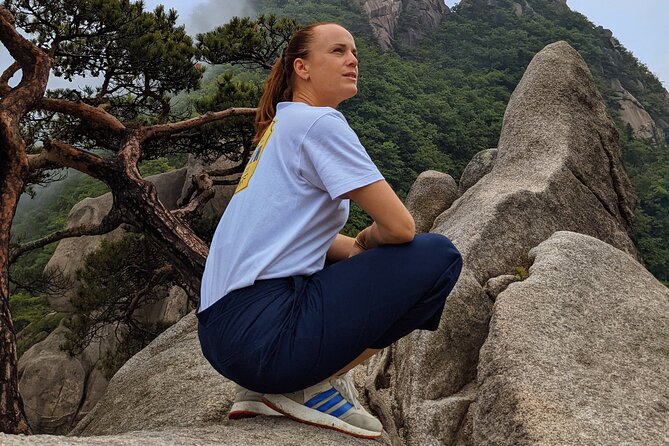
Bukhansan National Park’s Summit Course takes you to Baek-un-dae at 836 m, and you really feel the mountain’s seasons as you move up through changing light and air. What I like most is the clear focus on a safer route that aims to get you to the summit in about 4 hours, not the longer, more exhausting options people often try on their own.
I also like the hike structure for real bodies, especially the way the route targets a fast ascent plan. You gain about 600 meters in elevation over roughly 2.1 km, and it is described as a moderately fit challenge (think lots of stairs). Then the climb to the highlight section involves steeper rope-assisted angles, so you get a guided way to handle it without guessing.
Here’s the main catch: this is still a vertical hike. If you have knee issues, it is not recommended, and the steeper rope section may not feel fun if you are uneasy on heights, even with the option to pause and regroup.
In This Review
- Key highlights you will actually feel
- Bukhansan National Park, Seoul’s mountain that changes with every season
- How the Summit Course route saves hours (without cutting corners)
- The Baek-un-dae climb: steep angles, ropes, and smart break options
- What it feels like with a small group and guides like Koa and Sam
- Meeting at Bukhansan UiSeoul, starting 8:00 am, and pacing your day
- Lunch after the summit: optional tofu meal with vegan-friendly choices
- What to bring, and how to think about knees and poles
- Price and value: $64.89 for time saved and guided safety on a steep mountain
- Weather matters on this course, and the cancellation rules are strict
- Should you book the Bukhansan National Park Summit Course?
- FAQ
- How long is the Bukhansan Summit Course?
- What time does the tour start?
- Where does the hike begin and end?
- How many people are in the group?
- Is lunch included in the price?
- Can I rent hiking poles?
- What if weather is bad or I need to cancel?
Key highlights you will actually feel
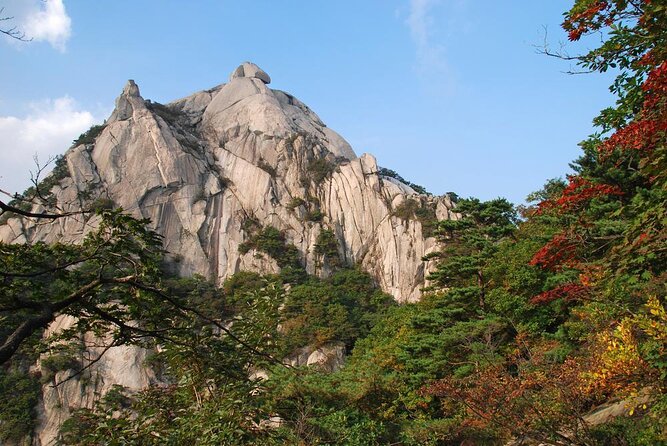
- Seoul’s highest peak, Baek-un-dae (836 m), in a focused half-day plan
- Faster summit approach, aiming for about 4 hours to the top
- Steep section with ropes, around 20 to 30 minutes, with a built-in ability to take a break
- Small groups, up to 20 people, so the pace and safety checks feel more personal
- Optional tofu lunch after the hike, vegan/vegetarian friendly and also has meat
- Hiking poles rental available for a cost, only if you arrange it ahead
Bukhansan National Park, Seoul’s mountain that changes with every season
Bukhansan sits right at the edge of Seoul, so this hike feels like a day trip without pretending you are far away from the city. One moment you are surrounded by urban noise, and the next you are on rocky paths where the air feels different, especially when the season shifts. Even if you have hiked in other places, Seoul’s mountain vibe is its own thing: people are close to the trails, the views are dramatic, and crowds come fast.
The Summit Course is built around a simple promise: you get to the top of Seoul’s highest peak without spending your whole day struggling with the wrong trail. In the overview, the peak is framed as a must-do, but also a reminder that it is one of the most visited mountains in Seoul, and rescues happen every year. That matters, because the goal is not just sightseeing. The goal is getting you there with a safer plan.
You’ll also feel the reality of elevation quickly. This hike is not a slow wander. It is a straight-up effort, and the payoff is that you reach the summit in a surprisingly short time compared with typical longer routes.
A few more Seoul days worth comparing
- Best DMZ Tour Korea from Seoul (Red Suspension Bridge Optional)
★ 5.0 · 41,422 reviews - DMZ Tour: 3rd Tunnel, Option(Suspension Bridge, Boat) from Seoul
★ 5.0 · 21,373 reviews - DMZ tour south Korea from Seoul (NK experience hall, defector)
★ 5.0 · 20,599 reviews
How the Summit Course route saves hours (without cutting corners)
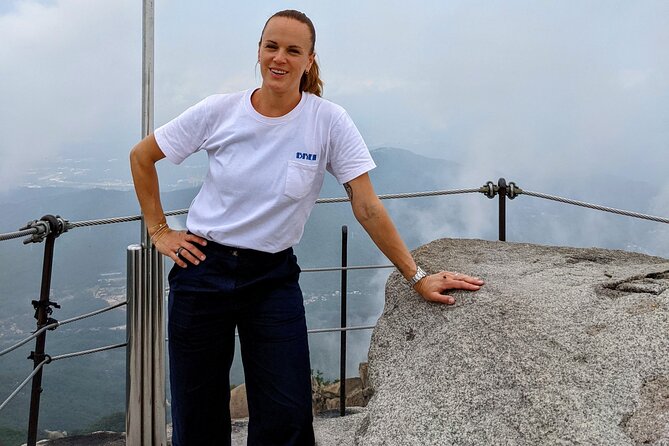
The standout idea here is the route planning. With research, the guides set up a trail that aims to bring you to the summit in about 4 hours, instead of the more common 6-hour turnaround you may see for other approaches. That time difference is not just convenience. It changes how you experience the mountain.
If you go too slowly, fatigue stacks up, your attention drops, and the steeper sections feel worse. If you rush without a plan, you also miss the rhythm you need for safe footing. This course is designed for a middle path: efficient enough to finish in the half-day window, but structured enough that you are not flying blind.
The hike includes a clear elevation workload. You can expect around 600 meters of ascent over about 2.1 km. That is steep, and it is described as normally taking around 100 to 120 minutes for that climb segment. For me, that detail is useful because it tells you what to expect physically. You are moving hard uphill, not cruising.
So what does this mean for you? It means you should show up ready for an uphill push and quick transitions, not a casual stroll. It also means that if you can handle stairs and short steep climbs, you will probably feel good about the route once you lock into the pace the guide sets.
The Baek-un-dae climb: steep angles, ropes, and smart break options
The highlight is Baek-un-dae peak, and the course describes a steeper climbing section using ropes. The angle is roughly 25 to 45 degrees, and that part takes around 20 to 30 minutes.
That is the part where you either feel energized or you feel cautious. Either reaction is normal. The rope assistance is there because the ground can be tricky and the slope can challenge balance. If you have a fear of heights, the info you’re given is practical: this steep part can be avoided by having a break, meaning you are not forced to push through if you do not feel right.
Still, I want you to be honest with yourself. Even if you take a break, you will be in a mountain environment where footing matters. Wear shoes with grip. Slow down on every step. Keep your eyes on the trail, not on how high you feel.
The nice thing about rope sections with a guide is that you are not trying to interpret what to do while your heart is pounding. The guides can keep the line moving in a safer way, especially with a small group.
What it feels like with a small group and guides like Koa and Sam
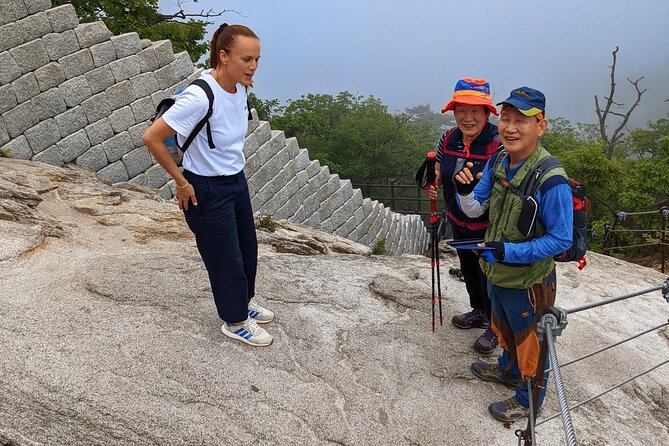
The Summit Course runs with a maximum of 20 travelers, which is a sweet spot for guided hikes. Big groups can feel chaotic on narrow trail stretches. Tiny private hikes can feel too slow or too dependent on one person’s pace. Here, you get enough people for a social vibe, while still having room for safety guidance.
The guides are Koa and Sam, and the experience is associated with Sam Lee as the provider. In the feedback, Koa is praised for working with a little group, staying flexible, and keeping safety first while still making it fun. I like that combination because it means the hike is not just a checklist to reach a viewpoint. It is about handling the trail responsibly while keeping the mood positive.
Here is the practical value: on steep terrain, your biggest risks are rushing and losing focus. A good guide helps you avoid both. When people stay together, they also tend to move more carefully. When the group pace is managed, you are less likely to hit the rope section exhausted, when missteps become more likely.
If you like organized hiking without feeling micromanaged, this format usually fits well.
Same trip, a different corner of the country:
- Seoul: The Best DMZ Tour with Optional Suspension Bridge
★ 4.7 · 4,978 reviews - Signature DMZ Tour: Exclusive Defector Talk & Suspension Bridge
★ 5.0 · 4,459 reviews - Thrilling Korean DMZ 3rd Tunnel Tour from Seoul + Red Bridge Rush
★ 5.0 · 3,097 reviews - Seoul: DMZ Tour & Suspension Bridge (Option English/Spanish)
★ 4.9 · 2,628 reviews
Meeting at Bukhansan UiSeoul, starting 8:00 am, and pacing your day
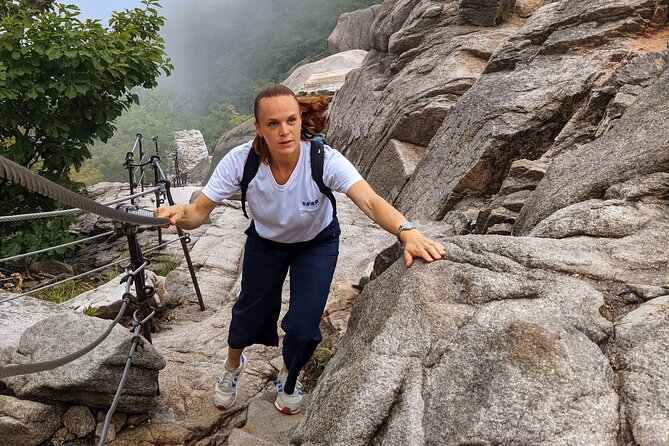
You start at Bukhansan UiSeoul, South Korea, with an 8:00 am start. Because the route is built to finish in roughly 4 hours 30 minutes, you are not stuck on the mountain for the entire afternoon. That makes it a strong option if you want nature time without burning a full day.
Also, the meeting point is described as near public transportation. That matters in Seoul, where getting across town can be a mini-adventure. You are not relying on a car or a complicated last-mile scramble.
Early starts are part of the deal on popular Seoul hikes. You get the cooler air and better footing conditions, especially if the weather turns. In practical terms, you will also be less stressed about crowd flow at narrow sections.
As you hike, keep your pace steady, especially during the big climb segment. Your goal is to preserve energy so the rope-assisted portion feels controlled, not frantic.
Lunch after the summit: optional tofu meal with vegan-friendly choices
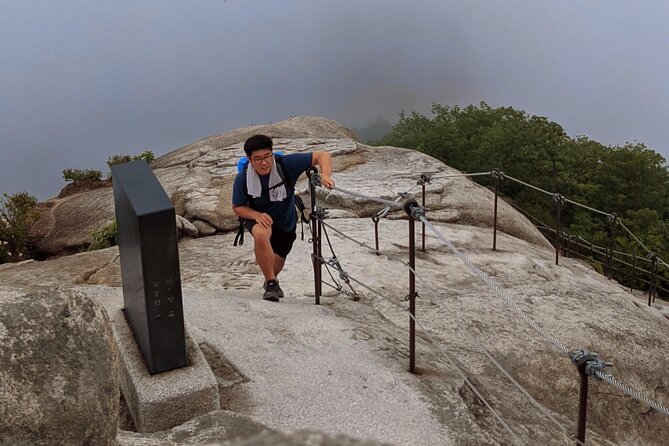
Lunch is optional and not included in the price. The plan is to eat at a spot specializing in tofu dishes, and the guidance is that they make everything from scratch. The menu can include meat too, while still being vegan and vegetarian friendly.
This is a smart inclusion, even if you decide to skip it. After a steep climb, a warm meal feels earned, and tofu is a practical post-hike choice. It is not heavy in the way some meat-heavy meals can feel after exertion, and it gives you an easy way to refuel.
Cost is listed as 9,000 to 15,000 KRW if you choose to eat. If you want maximum value, build your day around this so you are not searching for food right after you finish. If you already have lunch plans, you can treat the meal as a bonus rather than a requirement.
What to bring, and how to think about knees and poles
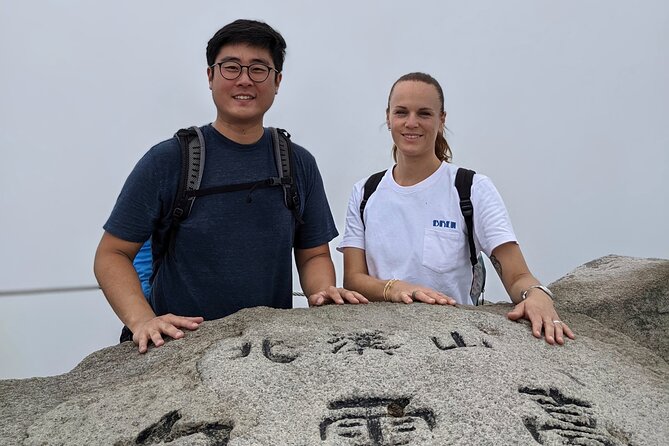
The hike is marked as requiring moderate physical fitness. You’ll be doing a lot of uphill effort with a steep grade, and the plan includes a rope-assisted section. That combination is why knee issues are specifically called out as a no-go.
If you have sensitive knees, you should take this seriously. Even if you manage the ascent, downhill segments can be harder on joints. Since the experience is not recommended for knee issues, I’d treat that as your stop sign, not a suggestion.
About gear: you can rent hiking poles at a cost, but only if you tell the provider in advance. The info says poles are not really necessary unless you have bad knees. If you do have knee worries, consider whether poles might help you control your steps, but also remember the tour is still not recommended for knee issues.
For footwear, the data you have points to steep and rope-assisted terrain. That means you want grip and support. Wear shoes you trust on rocky ground. If you are borrowing or using worn sneakers, this is not the day to test them.
Price and value: $64.89 for time saved and guided safety on a steep mountain
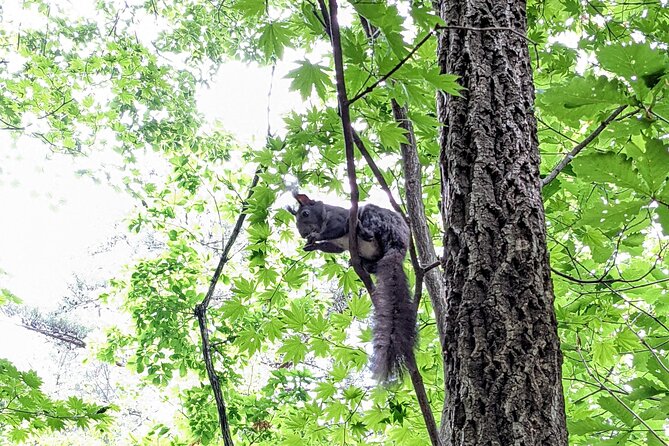
The price is $64.89 per person, and the experience is commonly booked about 14 days in advance on average. On its face, that is not a budget hike. The value comes from what you get for that money: structured route planning to cut the summit time, a guided approach to steep rope-assisted climbing, and a group size cap for safety and pacing.
Let’s be practical. If you try this mountain on your own, you may end up on a longer route, you may misjudge timing, and you might find yourself facing steeper sections later when you are more tired. That is where mistakes happen. The course is designed to avoid that by aiming for about 4 hours to the summit instead of 6.
You also get a mobile ticket, which is a small but real convenience. And you get a clear fit check: moderate fitness required, not recommended for knee issues. That reduces the chance you show up unprepared.
One cost to account for: lunch is optional and paid by individuals. If you add lunch, your spending goes up, but you also get a planned place to eat after the hike.
Overall, this is a fair price for a guided, time-efficient summit hike in one of Seoul’s most popular mountains, especially if you want to focus on safety and avoid trial-and-error routing.
Weather matters on this course, and the cancellation rules are strict
This experience requires good weather. If it is canceled due to poor weather, you are offered either a different date or a full refund. That is the practical part.
The tricky part is that the experience is non-refundable and cannot be changed for any reason. So you should book only when your schedule is solid and you can handle a weather-based reshuffle if conditions are bad. For Seoul hiking, that is always a smart mindset, because rain and slick rock make rope-assisted sections more risky.
Should you book the Bukhansan National Park Summit Course?
Book this tour if you want a guided climb to Seoul’s highest peak (Baek-un-dae, 836 m), and you like the idea of saving time with a route planned for about a 4-hour summit push. I think it’s a great fit if you are moderately fit, comfortable with steep uphill effort, and you appreciate safety structure from guides like Koa and Sam.
Skip it or look for a different option if you have knee issues. This course is explicitly not recommended for that. Also, if the rope-assisted climb and steep angles make you nervous, you should be prepared to take breaks and manage that fear during the steepest segment.
Here’s my final decision checklist: If you can handle a big uphill effort, you have grippy shoes, and you are okay with a half-day schedule starting at 8:00 am, the Summit Course is a strong way to see Bukhansan without turning it into a long, uncertain grind. If not, you will probably enjoy other hiking styles more.
FAQ
How long is the Bukhansan Summit Course?
It’s about 4 hours 30 minutes (approx.).
What time does the tour start?
The start time is 8:00 am.
Where does the hike begin and end?
The tour starts at Bukhansan UiSeoul, South Korea, and ends back at the same meeting point.
How many people are in the group?
The maximum group size is 20 travelers.
Is lunch included in the price?
Lunch is optional and not included. It costs 9,000 to 15,000 KRW, and you’ll eat at a tofu-focused restaurant that is vegan/vegetarian friendly and also has meat.
Can I rent hiking poles?
Yes. Hiking poles can be rented out for a cost, but only if you inform the provider in advance.
What if weather is bad or I need to cancel?
The experience requires good weather. If it’s canceled due to poor weather, you’ll be offered a different date or a full refund. For cancellations by you, it is non-refundable and cannot be changed for any reason.
Recently reviewed in Seoul
- You’re Invited to Our Home in Seoul: The Only Cooking Class!★ 5.0 · 8 reviews
- Your Personal Seoul Photographer!★ 4.1 · 15 reviews
- From Seoul: Yongpyong Ski Day Tour with Transportation★ 4.9 · 40 reviews
- Seoul: Korean & English Language Exchange Global Party★ 5.0 · 28 reviews
- Watching sports match & local food experience in Seoul★ 5.0 · 11 reviews
- WKT Combat Taekwondo & Self-defense One Day Class in Seoul★ 5.0 · 5 reviews
- Unique Native Experience : Han River Picnic, Board game, BBQ★ 5.0 · 3 reviews
- Seoul: Gangneung BTS K-Pop & K-Drama Filming Locations Tour★ 4.6 · 14 reviews
National Parks, compared.
Mt. Seoraksan National Park Autumn Foliage Day Tour
Read our review →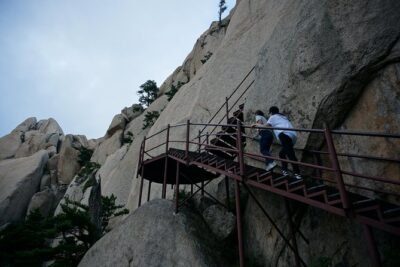
Seoraksan National Park Ulsanbawi Hiking from Seoul
Read our review →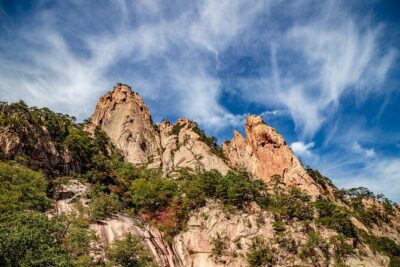
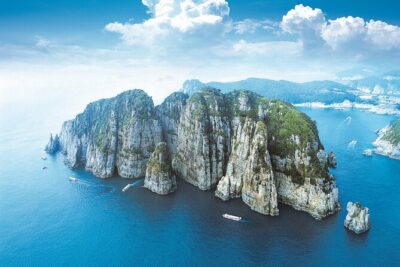
Day trip to beautiful Korean marine national park, Hallyeohaesang
Read our review →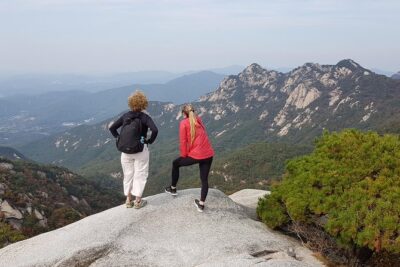
Hike and Explore the Wonder of Bukhansan National Park with hiking professional(including Lunch)
Read our review →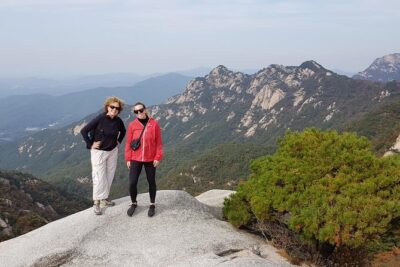
Hike at Mt. Bukhansan National Park with professional Guide(including Lunch)
Read our review →Browse the lists this tour appears in