
Reviewed · DMZ TOURS
365-day DMZ Special Tour including Monday & Public Holiday
The DMZ is close enough to day-trip, but it feels far away. This 365-day special tour pairs wartime landmarks with guided explanations, including a border-area view from Dora Observatory and the chance to explore the 3rd Tunnel on most days. I like that you get pick-up around Seoul plus a steady pace with lots to see, and I also like that the tour swaps in strong alternatives on Mondays and public holidays. One real catch, the schedule is tight, so you will move between stops and you should expect limited time for wandering.
You will book this at a good value point if you are short on time in Seoul. For $59, you get a professional English-speaking guide, set pick-up options, and the 3rd Tunnel admission on the days it runs, while many other stops are free to enter. Just keep in mind the DMZ is a military zone, it can change suddenly, and the plan may adjust if access is restricted.
In This Review
- Key highlights worth planning for
- Getting to the DMZ without fighting Seoul traffic
- Imjingak Pyeonghoa-Nuri Park: the Freedom Bridge starts the story
- Imjingak-ro and the North Korea Experience Hall
- The 3rd Tunnel (Tuesday to Sunday): what you are really entering
- Dorasan Peace Park and Dora Observatory: seeing across the border
- Unification Village and Tongilchon-gil: small places inside a big boundary
- Monday and public holidays: gondola and memorials when the tunnel is closed
- Gloster Hill and the Heroes Suspension Bridge: war memory in concrete form
- What if the DMZ changes access or the weather turns?
- Why this tour feels like good value for $59
- What to bring and how to handle the day
- Should you book this 365-day DMZ Special Tour?
- FAQ
- Which days include the 3rd Tunnel?
- What is the Monday and public holiday itinerary like?
- What’s included in the ticket price?
- Where do you meet and where do you end?
- How long is the tour?
- Is this tour suitable for everyone physically?
- What happens if the DMZ is closed or access changes?
Key highlights worth planning for
- Seoul pick-up from subway stations so you can avoid the logistics headache of getting to the DMZ on your own
- Imjingak Park monuments like the Freedom Bridge and Soldiers Memorial, focused on Korean War separation
- 3rd Infiltration Tunnel visits on Tuesday to Sunday, a physically demanding stop
- Dora Observatory border views with a guided look across toward North Korea from the western front
- A Monday and holiday itinerary option with gondola and observatories when the 3rd Tunnel is closed
- Max 40 people with a guide who keeps timing moving, as many reviewers praise for organization
Getting to the DMZ without fighting Seoul traffic
Start is early. Depending on season, pick-up begins around 6:00 to 7:00 am, and the tour ends around 3:30 pm at City Hall Station in most cases. The DMZ sites are about an hour’s drive from Seoul, but that hour can feel like a different world once you start seeing the landscape change and the military-themed stops begin.
This is one of the best types of tours for first-time DMZ visitors because it handles the hard parts for you. You choose a pick-up point from a small set of Seoul subway locations, you get grouped with a guide, and you move between sites in a controlled, predictable rhythm. You also get a mobile ticket, which is handy if you prefer keeping everything on your phone.
The main drawback is pacing. Even on a good day, this is a “see a lot, learn a lot” format. Reviews repeatedly mention limited time at each stop, and you will feel that in your legs. Think comfortable walking shoes, a water plan, and a mindset of short, meaningful stops rather than slow sightseeing.
More DMZ Tours in Seoul:
- Best DMZ Tour Korea from Seoul (Red Suspension Bridge Optional)
★ 5.0 · 41,422 reviews - DMZ Tour: 3rd Tunnel, Option(Suspension Bridge, Boat) from Seoul
★ 5.0 · 21,373 reviews - DMZ tour south Korea from Seoul (NK experience hall, defector)
★ 5.0 · 20,599 reviews
Imjingak Pyeonghoa-Nuri Park: the Freedom Bridge starts the story
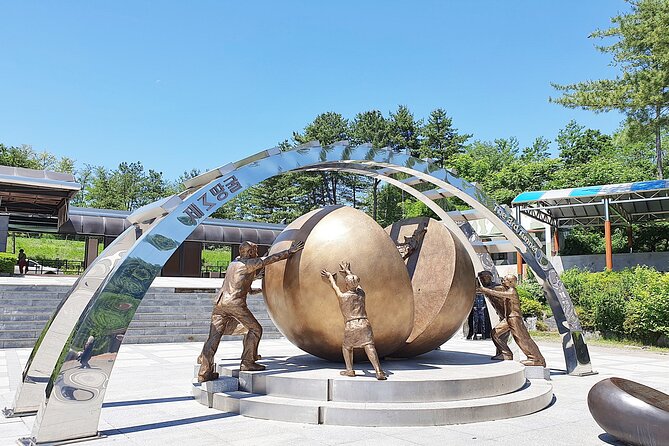
Imjingak Park is where your tour turns from travel sightseeing into something closer to historical witnessing. This stop centers on refugees from North Korea during the Korean War, and you walk among symbolic monuments such as the Freedom Bridge and the Soldiers’ Memorial.
What makes it worth your time is the way it sets the emotional context before you go farther into the DMZ area. You are not just looking at a bridge or a hill name. You are standing where people once passed through hope, fear, and forced separation. A good guide here matters, because the park symbols can feel abstract unless they get explained in plain terms.
How long you have is about one hour, and that is enough to see the main points without feeling like you are rushing through the whole place. Still, it is not a long-stay location. If you expect a relaxed park stroll, you might find yourself wishing for more minutes, especially when photos and quiet moments pile up.
Imjingak-ro and the North Korea Experience Hall
On the Tuesday to Sunday route, you add another stop in the Imjingak area: Imjingak-ro, including the North Korea Experience Hall. The tour frames this as a newer attraction that helps satisfy curiosity in a more educational way.
This is useful for two reasons. First, it helps you understand what you are about to see and hear later in the day, especially around the tunnel and observatory areas. Second, it gives you a structured way to process the information, rather than only learning through outdoor viewpoints and memorial signage.
Time is short, around 30 minutes. So go in with a strategy: if you have limited energy, focus on the parts your guide flags as most important, and let the guide’s explanations connect the dots to the rest of the day.
The 3rd Tunnel (Tuesday to Sunday): what you are really entering
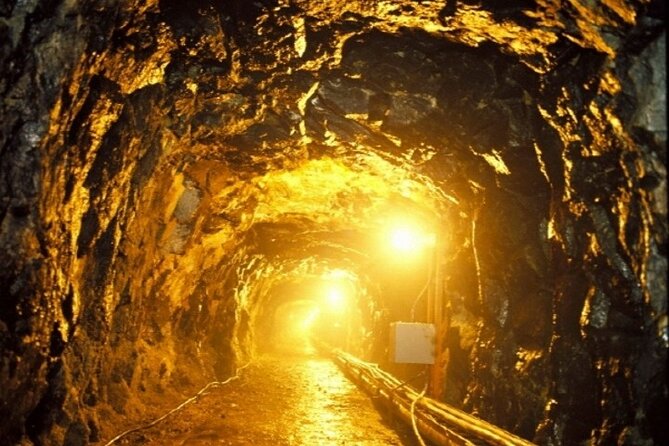
The standout “big ticket” stop on most days is the 3rd Infiltration Tunnel, also called the Third Tunnel in the tour notes. It is discovered in 1978, built for an invasion plan, and it is listed at 1,635 meters in length. You get about 30 minutes for the visit, and this is one of the few places that can feel physically demanding for many people.
The tour explicitly warns that the tunnel visit, along with the Heroes Suspension Bridge on Monday routes, is physically demanding. If you have heart conditions, other serious medical issues, or you are pregnant, this is not the right stop for you. Even if you are healthy, bring a practical attitude. Wear shoes you trust, expect some walking and constrained areas, and don’t treat this like a casual museum.
Why I think it is worth including, even with the time limits, is that tunnels force a different kind of understanding. From viewpoints, you can imagine conflict. From a tunnel visit, you understand the engineering and the intent. It is still just a guided visit, but it makes the war story feel less like a timeline and more like a plan.
A few more Seoul days worth comparing
- Seoul: The Best DMZ Tour with Optional Suspension Bridge
★ 4.7 · 4,978 reviews - Signature DMZ Tour: Exclusive Defector Talk & Suspension Bridge
★ 5.0 · 4,459 reviews - Thrilling Korean DMZ 3rd Tunnel Tour from Seoul + Red Bridge Rush
★ 5.0 · 3,097 reviews - Seoul: DMZ Tour & Suspension Bridge (Option English/Spanish)
★ 4.9 · 2,628 reviews
Dorasan Peace Park and Dora Observatory: seeing across the border
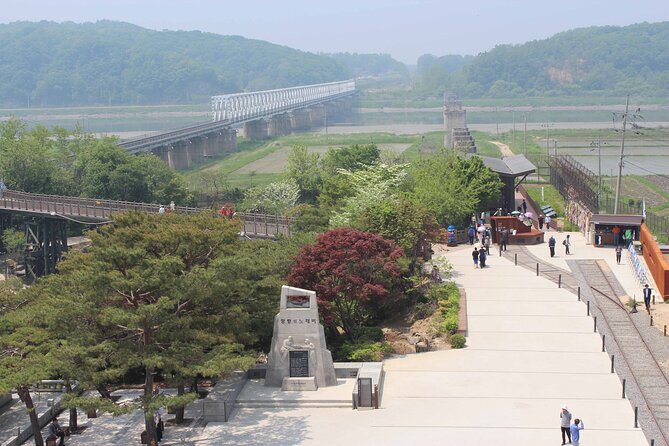
After the tunnel, the tour steers you toward the Dorasan area. On the Tuesday to Sunday route, you stop at Dorasan Peace Park, where you can watch an 8-minute short film about the Korean conflict from the South Korea perspective, followed by a theatre or exhibition hall visit.
This film time is short on purpose, and that is a plus. You are not stuck for an hour while the group waits. You get an orientation, your guide connects it to the next stop, and you keep moving.
Next comes Dora Observatory, about 30 minutes. This is described in the tour as a place to gaze across the border, listed as Dora Observatory in the itinerary and also described as Doha Observatory in the overview. Either way, the point is the same: you get a guided view looking across toward North Korea from a northernmost point on the western front.
What you should expect here is weather dependency. On clear days, the view feels sharp and exciting. On foggy or poor visibility days, your guide will still help you with video or interpretation, and you can still learn, but you may not get dramatic sightlines. If your schedule is flexible, I would rather plan this stop on a day with better weather if you can.
Unification Village and Tongilchon-gil: small places inside a big boundary
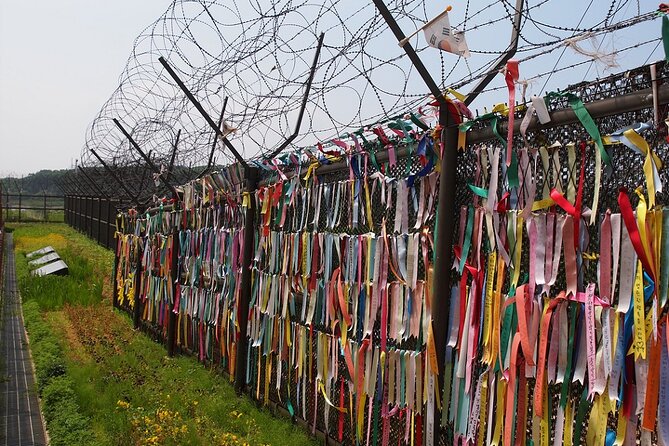
Still on Tuesday to Sunday, you then visit Unification Village and Tongilchon-gil. Tongilchon Village is described as a settlement in the Civilian Control Zone (CCZ) on the western front of the DMZ and noted as not shown on most maps. The tour also mentions local agriculture, including Jangdan soybeans.
These stops are easy to underestimate if you only think of DMZ visits as “big memorials and dramatic views.” But these are where the tour shows another angle: life exists even in controlled spaces, and the division is not only an idea. It shapes daily routines and where people are allowed to go.
Time is limited, so focus on what your guide points out. Ask yourself one question while you are there: what restrictions are shaping this settlement, and how does that compare to the earlier memorial stops? When you connect those dots, the day becomes more coherent.
Monday and public holidays: gondola and memorials when the tunnel is closed
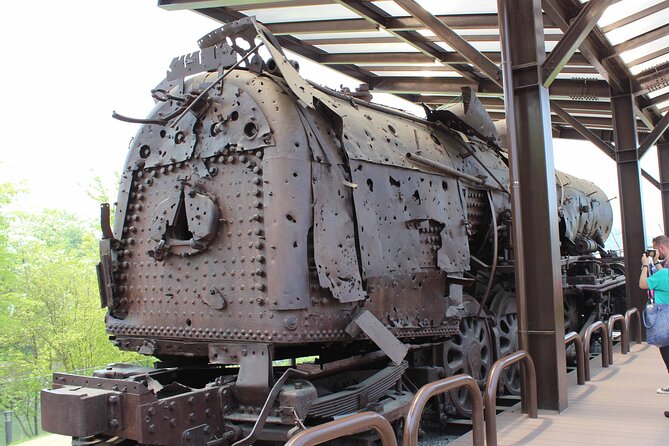
If you can only go on a Monday or a national holiday, you should know this route is built for access limits. The tour lists a Monday and holiday itinerary that swaps out the 3rd Tunnel for other sights.
On Mondays and public holidays, you go to Imjingak Peace Nuri Park first, then take the DMZ Peace Gondola, and then head to an observatory option: Jangsan Natural Observatory or Odusan Unification Observatory. From there, the tour continues to Gloster Hill Memorial Park and the Heroes Suspension Bridge, then drops you back at City Hall Station.
This matters because it changes the “shape” of the day. Instead of entering the story through a tunnel, you experience it through elevation, views, and memorial sites tied to specific battles and personnel. The Heroes Suspension Bridge route is also described as physically demanding, so the same health considerations apply.
One more practical thought: Monday routes can include fewer indoor options than the tunnel day. So if the day is cold, bring layers. If the day is rainy, expect some closures or changes, and plan for less time at each spot.
Gloster Hill and the Heroes Suspension Bridge: war memory in concrete form
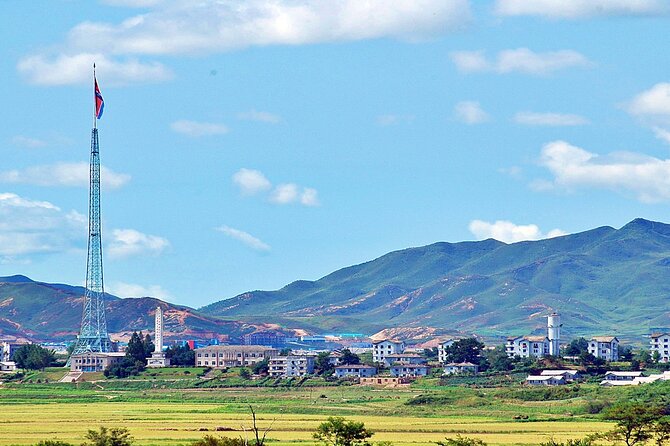
Gloster Hill Memorial Park and the Heroes Suspension Bridge are among the most praised parts of the day, especially on Monday routes. The tour notes that during the Korean War this suspension bridge was Korea’s longest at the time and it became a battlefield. It also mentions the British Army Seolmari Battle Memorial Park at the Seolmari site.
Reviews praise visits here for strong context. You are not just watching a suspension bridge sway from a distance. You are learning about who fought, where, and what those places symbolize now.
Time for these stops depends on the itinerary version, but they are not long. The point is impact, not lingering. If you are the type who reads every sign, you may run behind schedule. In that case, let your guide decide which details matter most, then snap a photo for the rest so you can process later.
What if the DMZ changes access or the weather turns?
The DMZ can close suddenly for security reasons, and the tour notes that it can happen without prior notice. If that happens, the itinerary may be adjusted to visit a similar site, and refunds are not provided for sudden closures.
Weather is another factor. The tour requires good weather. If it is canceled due to poor weather, you should be offered a different date or a full refund. If it is not canceled but visibility and conditions are rough, some stops like Gloster Hill and the Heroes Suspension Bridge may close. In that case, you may go instead to the Odusan Unification Observatory or the War Memorial of Korea.
Translation for your planning brain: pack for uncertainty. Bring a light rain layer or umbrella if you tend to get cold easily. Also keep your day structured, because you cannot control the DMZ, you can only react.
Why this tour feels like good value for $59
At $59 per person, this tour prices itself as an efficient way to get multiple DMZ-area experiences in one day. Here is what you effectively pay for:
- A professional English-speaking guide who keeps the story connected across stops
- Seoul pick-up from select subway stations
- Group logistics, so you do not need to arrange rides between remote areas
- 3rd Tunnel admission included on the days it runs
- Many other stops listed as free to enter
That combination is hard to replicate on your own at a similar cost, especially when you factor in time and the friction of figuring out transport.
The best sign for value is not just the price. It is the consistency of guide praise. You will see guide names like Sookhee, Veronica, Chloe, and Mr Young showing up in standout feedback, with comments about being organized, friendly, funny, and efficient with timing. When the day is intense, good guiding is not a luxury. It is the difference between a confusing list of sights and a coherent story.
What to bring and how to handle the day
Since time at each stop can be tight, you want to make your body ready for movement. The tour notes moderate physical fitness is needed, and it also warns again about tunnel and suspension bridge demands.
I recommend you show up with:
- Comfortable walking shoes for uneven ground and fast transitions
- A light layer, especially if you go early and then spend time outdoors
- Water and basic snacks, because lunch is not included
- A fully charged phone for your mobile ticket and photos
Also, keep your expectations realistic. This is a full-day schedule with short visits. You will learn a lot, but you will not treat every location like a half-day museum. If you want deep reading time, do that in Seoul after the tour when you are rested.
Should you book this 365-day DMZ Special Tour?
If you want a first DMZ experience that is organized, guided, and efficient, I think this is a strong choice. The price is reasonable for what you get, and the day is built around key sites like Freedom Bridge and Imjingak Park, the 3rd Tunnel on most days, and Dora Observatory border views. If Monday or a public holiday is your only option, the tour is still designed to deliver meaningful alternatives, including gondola and memorial stops.
It is not the best fit if you need a slow pace or you have health constraints related to tunnel and suspension bridge terrain. And if your only travel style is long, quiet wandering, you may feel a bit rushed. But if you like guided context, short stop intensity, and learning while you look, this tour fits your style.
FAQ
Which days include the 3rd Tunnel?
The 3rd Tunnel visit is listed for Tuesday to Sunday.
What is the Monday and public holiday itinerary like?
On Mondays and national holidays, the itinerary is listed as Imjingak Peace Nuri Park, DMZ Peace Gondola, Jangsan Natural Observatory or Odusan Unification Observatory, Gloster Hill Memorial Park, Heroes Suspension Bridge, then drop-off at City Hall Station.
What’s included in the ticket price?
The tour includes a professional English-speaking guide, pickup at limited subway stations, and admission for the 3rd Tunnel on the days it is visited. Many other stops are listed as free.
Where do you meet and where do you end?
The start is City Hall Station in Seoul, and the end is City Hall Station. The tour typically ends around 3:30 pm, and if entry at City Hall becomes difficult, it may conclude at Hongik Univ. Station instead.
How long is the tour?
The duration is listed as about 9 hours.
Is this tour suitable for everyone physically?
The tour says travelers should have moderate physical fitness. It also warns that visiting the 3rd Tunnel and Gamaksan Heroes Suspension Bridge is physically demanding and is not recommended for people with heart conditions, other serious medical issues, or pregnant women.
What happens if the DMZ is closed or access changes?
The DMZ is a military zone and may be suddenly closed without prior notice. In that case, the itinerary may be adjusted to visit a similar site, and refunds are not provided.
Recently reviewed in Seoul
- You’re Invited to Our Home in Seoul: The Only Cooking Class!★ 5.0 · 8 reviews
- Your Personal Seoul Photographer!★ 4.1 · 15 reviews
- From Seoul: Yongpyong Ski Day Tour with Transportation★ 4.9 · 40 reviews
- Seoul: Korean & English Language Exchange Global Party★ 5.0 · 28 reviews
- Watching sports match & local food experience in Seoul★ 5.0 · 11 reviews
- WKT Combat Taekwondo & Self-defense One Day Class in Seoul★ 5.0 · 5 reviews
- Unique Native Experience : Han River Picnic, Board game, BBQ★ 5.0 · 3 reviews
- Seoul: Gangneung BTS K-Pop & K-Drama Filming Locations Tour★ 4.6 · 14 reviews
DMZ Tours, compared.
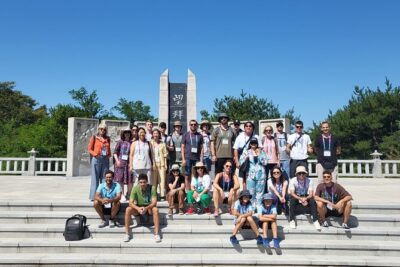
Best DMZ Tour Korea from Seoul (Red Suspension Bridge Optional)
Read our review →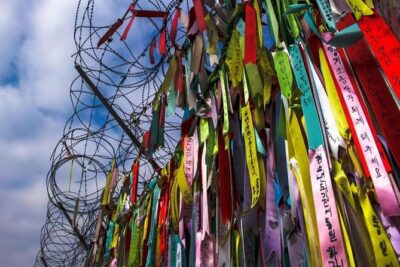
DMZ Tour: 3rd Tunnel, Option(Suspension Bridge, Boat) from Seoul
Read our review →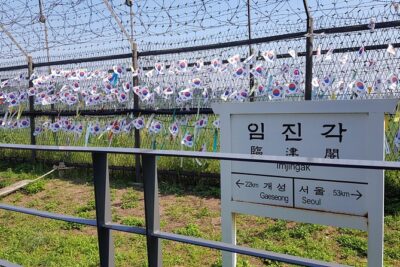
DMZ tour south Korea from Seoul (NK experience hall, defector)
Read our review →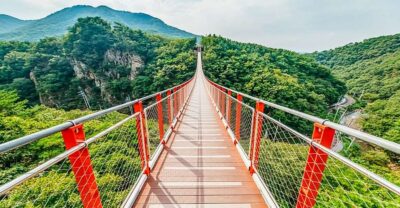
DMZ Insider Tour: 3rd Tunnel, NK Defector Meet & Red Bridge
Read our review →
The Best DMZ Tour with Optional Suspension Bridge
Read our review →
Signature DMZ Tour: Exclusive Defector Talk & Suspension Bridge
Read our review →
Thrilling Korean DMZ 3rd Tunnel Tour from Seoul + Red Bridge Rush
Read our review →
DMZ Tour & Suspension Bridge (Option English/Spanish)
Read our review →Browse the lists this tour appears in