
Reviewed · JEJU ISLAND TOURS
2025 Cherry Blossom East Day Tour in Jeju with UNESCO
Jeju blossoms start early, and so does this tour. I like the way this east Jeju route spotlights king cherry blossoms with the UNESCO crater at Seongsan Ilchulbong, all wrapped into a smooth day with hotel pickup and a mobile ticket.
I also like that several key stops are free to enter, so you spend your time where it counts, not in ticket lines. The main consideration is that lunch is not included, and you still pay separate admissions for Ilchul Land and Seongsan Ilchulbong.
In This Review
- Key things that make this Jeju cherry blossom day tour worth your time
- Why Jeju’s east cherry blossoms feel different
- Price and value: what $82.05 covers, and what you still need
- Pickup, timing, and the pace of a 9-hour loop
- Stop 1: Jeju Jeonnonglo Beojkkochgeoli and Jeon Nong-ro at night
- Stop 2: Noksan-ro Canola Flower Road, plus the 10 km flower stretch
- Stop 3: Seongeup Folk Village, living residents inside the walls
- Stop 4: Ilchul Land and Micheon Cave, a botanical angle on the underground
- Stop 5: Seopjikoji, red volcanic rocks and tidal reveals
- Stop 6: Seongsan Ilchulbong, UNESCO crater views and paid entry
- The guide experience and why it affects your whole day
- Weather matters more than you think
- Who this Jeju east cherry blossom tour is best for
- Should you book this 2025 Cherry Blossom East Day Tour with UNESCO?
- FAQ
- What time does the tour start, and how long is it?
- Is hotel pickup included?
- What’s included in the tour price?
- Do I need to pay any entrance fees during the tour?
- Is lunch included?
- Is this tour weather-dependent?
Key things that make this Jeju cherry blossom day tour worth your time
- King cherry blossom season timing in Jeju’s east, where blooms start earlier than much of Korea
- Hotel pickup in Jeju City plus an air-conditioned vehicle for a long-but-manageable 9-hour loop
- Free entry stops for Jeon Nong-ro and Noksan-ro, plus Seongeup Folk Village
- UNESCO Seongsan Ilchulbong as the big anchor stop, with paid entry on-site
- A mix of flowers and culture, not just photos, including a living village at Seongeup
- No shopping pressure, so your day stays focused on sights
Why Jeju’s east cherry blossoms feel different
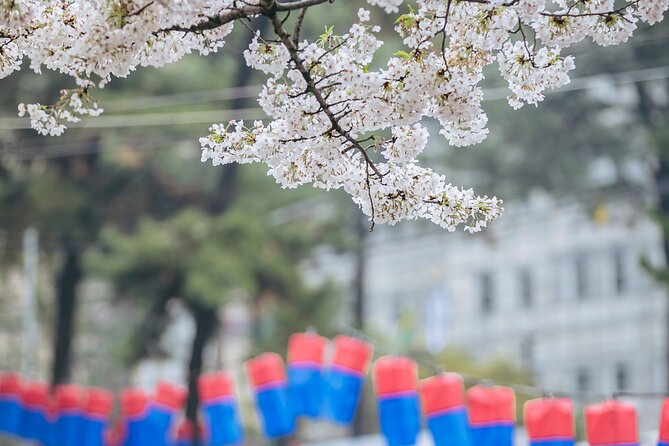
Jeju’s east coast has a reputation for starting the cherry season early, and that matters when you only have one shot at the bloom. This tour is built around Jeju’s king cherry blossoms, which are known for larger petals than the typical cherry look you might picture from Japan or Korea.
The pacing also helps. Instead of cramming one spot for hours, you get a chain of meaningful stops, so you see how the coast and countryside change as you move east. That makes the day feel fuller, even though it’s still a single 9-hour outing.
More Cherry Blossom Tours in Jeju Island:
- Jeju East: Cherry Blossom Early Bird Tour with Hotel Pickup
★ 4.8 · 21 reviews - 2025 JEJU Cherry Blossom West&South Full Day Tour with UNESCO
★ 5.0 · 11 reviews - Small Group West Jeju Cherry Blossom and Strawberry Picking Tour
★ 5.0 · 7 reviews
Price and value: what $82.05 covers, and what you still need
At about $82.05 per person for a 9-hour day, this price can feel fair once you break down what’s included. You get an air-conditioned vehicle, pickup and drop-off for hotels inside Jeju City, a Chinese/English-speaking professional guide, and toll and parking fees. There is also no shopping, which quietly saves you time and stress.
What is not included is just as important for budgeting. Lunch is not included, and two attractions have separate admission fees: Seongsan Ilchulbong (5,000 won) and Ilchul Land (12,000 won). Everything else on the route is listed as free entry, so you are mostly paying for the two larger ticket stops.
One practical point: pickup outside Jeju City costs 70,000 won extra. If your hotel is not in Jeju City, ask early where the pickup boundary is for your specific accommodation.
Pickup, timing, and the pace of a 9-hour loop
The tour starts at 9:00 am and runs about 9 hours. That’s a real full day, but it is also a nice sweet spot if you want the east-coast highlights without switching to two or three separate day trips.
Each main stop is planned for about 1 hour 30 minutes. For photography, that’s enough time to find angles, walk a bit, and still have a calm moment. For nature and village touring, it’s also enough to understand what you’re seeing without feeling like you’re sprinting nonstop.
Group size tops out at 100, so you should expect a normal tour-group rhythm. The good news is the route focuses on outdoor walking and a few key indoor moments, not constant transfers across the island.
Stop 1: Jeju Jeonnonglo Beojkkochgeoli and Jeon Nong-ro at night
Your first flower stop is Jeon Nong-ro Cherry Blossom Street, with the tour time set aside for a slow, photo-friendly wander. This is the kind of place where the bloom is the star, and the street layout makes it easy to keep moving without losing your bearings.
The schedule also hints at something locals care about: the street’s beauty and festival energy carry into the evening. If you prefer nighttime blossoms, you can plan your return so you can get off around Jeonnong-road when you head back, instead of immediately rushing to the next transport connection.
One small drawback to keep in mind: this is still an outdoor stop. If the weather turns chilly, windy, or rainy, you’ll feel it more here than at a museum stop.
More UNESCO Heritage Tours in Jeju Island:
- Jeju: Eastern Jeju UNESCO Spots Day Tour
★ 4.9 · 1,148 reviews - East Jeju Essentials – Seongsan Ilchulbong (UNESCO) & Haenyeo
★ 5.0 · 939 reviews - Jeju: Southern Top UNESCO Spots Bus Tour
★ 4.9 · 648 reviews - Jeju: Eastern UNESCO Sites Tour with Haenyeo Show
★ 4.8 · 217 reviews
Stop 2: Noksan-ro Canola Flower Road, plus the 10 km flower stretch
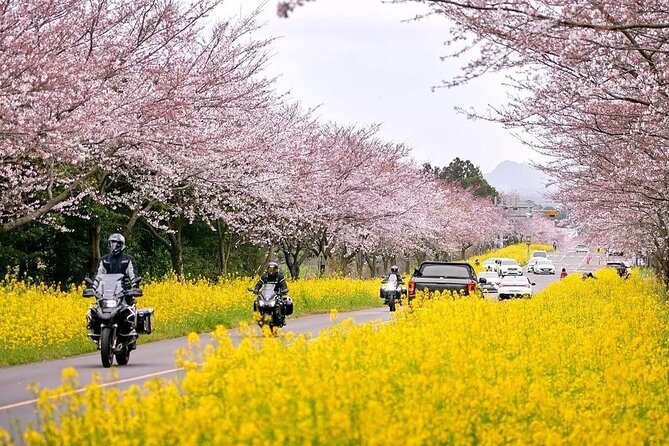
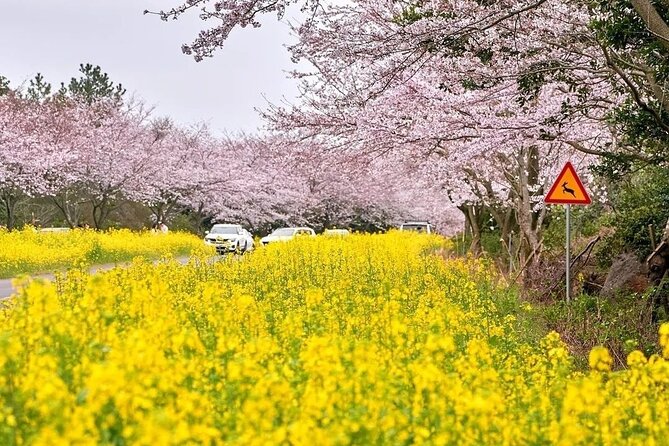
Next is Noksan-ro Canola Flower Road, also tied to Gasilri (Noksaro). This is where the route earns its name as more than a cherry-only day, because you’re looking at a combined visual theme: cherry blossoms with rapeseed flowers.
The tour highlights a flower stretch of over 10 km, so even with a limited time window, you’re walking into a setting that changes as you move. The best approach is to pick one or two anchor viewpoints early, then enjoy the rest as a slow stroll. Don’t try to see every inch of the area in 90 minutes.
If you love color contrast in photos, this is a great stop. Cherry petals give you the soft pink, and the rapeseed flowers add that bright gold tone that makes the blossoms look even more vivid.
Stop 3: Seongeup Folk Village, living residents inside the walls
Then the tour shifts gears to Seongeup Folk Village, and this is one of the stops that helps the day feel grounded in Jeju life. Unlike many “folk villages” that are mostly staged, this one has actual residents living in the village.
It also connects you to how the island was administered. The area served as the Jeonguihyeon administrative office after it was relocated from Goseong-ri, Seongsan-eup during the reign of King Taejong, and it became established here during King Sejong’s reign. The tour notes it remained a key administrative center for over 500 years, with around 110 households in the Jeonguihyeon area and additional houses outside the fortress.
For me, this is where the day becomes more than seasonal scenery. You are seeing everyday continuity, not just a decorative set for visitors. The main thing to plan for is walking. If you’re not used to uneven paths and village lanes, wear shoes that grip.
Stop 4: Ilchul Land and Micheon Cave, a botanical angle on the underground
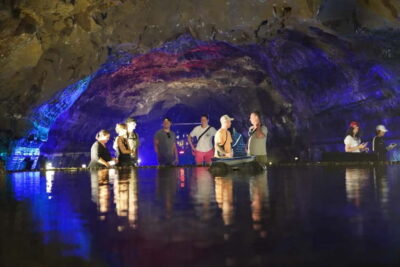
Next comes Ilchul Land, described as a botanical garden tied to the development of east Jeju tourism. The hook here is the connection to Micheon Cave, which is highlighted as the starting point, with the garden built around that underground charm.
This stop is not included in admission, with an on-site fee listed as 12,000 won. Since it’s a pay-to-enter segment, you’ll want to decide what you want from it before you arrive. If you enjoy gardens with a theme, it’s a nice change from flower streets and coastal views.
Because the tour gives you about 1.5 hours here, you can manage both a stroll and some slower looking without feeling rushed. If you are not feeling the garden format that day, you might treat it as a break and focus on one or two sections rather than trying to cover everything.
Stop 5: Seopjikoji, red volcanic rocks and tidal reveals
Seopjikoji is one of the most visually distinctive stops on this east-coast route. It’s a coastal protrusion with views that connect to Seongsan Ilchulbong Peak, and it’s known for several natural features: red volcanic rocks, coastal cliffs with rock formations, and Senbawi Rock standing tall.
The tour also points you toward variety you might not expect in a single stop. You may spot a sandy area called Sinnyang at the foot of the hill, fields of rapeseed across the plateau area, and even mention of Jeju horses grazing in the region.
What makes Seopjikoji especially memorable is the way tides change what you can see. The tour notes that rock formations can be submerged and then revealed again, creating a unique tidal spectacle. That means timing affects your experience, even within the same season.
A practical tip: bring layers. Coastal air can feel very different from what you expect inland, and with outdoor stops stacked back-to-back, being comfortable is the easiest “upgrade” you can make.
Stop 6: Seongsan Ilchulbong, UNESCO crater views and paid entry
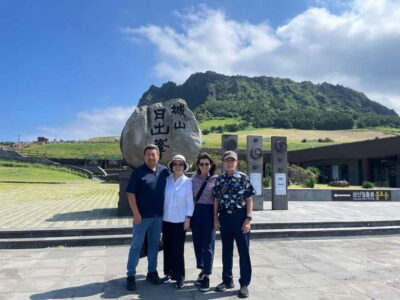
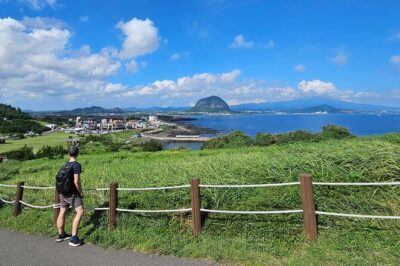
The final major anchor is Seongsan Ilchulbong, a UNESCO World Heritage site. The route frames it around the sunrise peak crater and the volcanic landscape, with the key idea being that this is an iconic Jeju setting you’ll want to understand before you just rush through.
Admission for this stop is listed as 5,000 won, separate from the tour price. With about 1.5 hours allotted, you can walk the main areas, take in the views, and still have time to pause.
Even if you are not there at sunrise, this is still a top-tier nature stop. The crater shape and volcanic context give the scenery structure, so your photos and your memory of the place feel more “defined” than generic viewpoints.
The guide experience and why it affects your whole day
Language can make or break a long day trip, especially when stops are outdoor and you want to ask simple questions on the spot. This tour provides a Chinese/English-speaking professional guide, and the day is designed around their commentary rather than leaving you to guess your way through each site.
One name that comes up for this kind of route is Peter, with people specifically noting his English ability. The useful part for you is not who the guide is, it’s the result: clear explanations help you connect the dots between the flower streets, the living village, and the volcanic geography.
Weather matters more than you think
The tour is explicit about requiring good weather. That’s not just legal wording. With several outdoor stops across the east, rain or strong wind can change how much you can enjoy, and it can also affect safe walking.
The operator’s plan is to offer a different date or a full refund if the tour is canceled due to poor weather. If you’re picking among multiple dates, choose the day you expect steadier conditions, and keep a flexible mindset.
Who this Jeju east cherry blossom tour is best for
This is a strong fit if you want:
- King cherry blossoms and rapeseed flowers in one day
- A structured route across east Jeju, without driving yourself
- A mix of flowers plus culture, including a village with real residents
- Hotel pickup within Jeju City, so you save time at the start and end
It’s also a good choice if you want to travel with a guide who can explain what you’re seeing, rather than treating each stop as a separate self-guided mini-hunt.
If you hate crowds or you prefer long stays at just one or two places, this might feel a bit “stop-and-go.” The schedule works best when you’re happy with variety.
Should you book this 2025 Cherry Blossom East Day Tour with UNESCO?
Book it if you want the best of east Jeju in one organized push: king cherry blossoms, flower streets, a living folk village, and the big UNESCO finale at Seongsan Ilchulbong. The included transport, pickup in Jeju City, and lack of shopping help keep the day efficient.
Skip or rethink it if you are traveling on a tight food budget, because lunch is not included. Also reconsider if you prefer paying no additional admissions, since Ilchul Land and Seongsan Ilchulbong both have separate entry fees.
One more practical note: the tour is widely booked, with an average booking window of about 44 days. If your trip lines up with peak bloom, booking early is the safest way to avoid last-minute date trouble.
FAQ
What time does the tour start, and how long is it?
It starts at 9:00 am and lasts about 9 hours.
Is hotel pickup included?
Yes, pickup is offered for hotels inside Jeju City. If your hotel is outside Jeju City, there is an additional 70,000 won pick-up fee.
What’s included in the tour price?
Included are an air-conditioned vehicle, Jeju City hotel pickup, a Chinese/English-speaking professional guide, toll fees, parking fees, and no shopping. You also get a mobile ticket.
Do I need to pay any entrance fees during the tour?
Yes. Seongsan Ilchulbong (5,000 won) and Ilchul Land (12,000 won) are not included. The other listed stops have free admission.
Is lunch included?
No, lunch is not included.
Is this tour weather-dependent?
Yes. The tour requires good weather. If it’s canceled due to poor weather, you’ll be offered a different date or a full refund.
Recently reviewed in Jeju Island
- Western Jeju Healing UNESCO Small Group Day Tour★ 5.0 · 5 reviews
- Jeju UNESCO Natural Heritage Private Tour by Certified Guide★ 5.0 · 5 reviews
- Small Group 7D Korea package Tour with Seoul Gyeongju Busan Jeju★ 4.5 · 13 reviews
- 8 Days Guided Trip from Seoul to Jeju★ 5.0 · 9 reviews
- Jeju island: Van tour with a guide who the most loves JEJU★ 5.0 · 7 reviews
- Jeju Unesco Eest course Package Private Van Guided Tour★ 5.0 · 17 reviews
- Full Day Jeju Private Customizable highlight Tour★ 5.0 · 5 reviews
- Full-day Customizable Private Jeju Island Tour★ 5.0 · 8 reviews
Jeju Island Tours, compared.

East Jeju Essentials – Seongsan Ilchulbong (UNESCO) & Haenyeo
Read our review →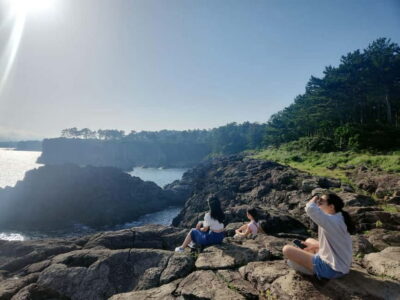
South-West Jeju Essentials: Hallasan & Signature Highlights
Read our review →
Jeju Island English Private & Flexible Tour any number anywhere
Read our review →
Jeju Island: Full-Day East Jeju Bus Tour with Entry Fees
Read our review →Browse the lists this tour appears in