
Reviewed · JEJU ISLAND TOURS
Small Group 7D Korea package Tour with Seoul Gyeongju Busan Jeju
Seven days, five regions, and your legs will notice. This small group package strings together Jeju beaches, Busan markets, Gyeongju UNESCO sites, Seoul palaces, and the DMZ, with an English speaking team and 3-4 star hotels. I especially liked the hands-on cooking class and the Gwangjang Market food tour. The tradeoff is a fast schedule, so you’ll have less downtime than you might expect.
Guides rotate by city, and that changes the feel in a good way. In Seoul, guide Jung mixed palace facts with live current context like politics, k dramas, and k pop, which made the day feel more like understanding a place than ticking off spots. You also get solid logistics help, including airport and train coordination, plus an AC van between major stops.
In This Review
- Key highlights to decide fast
- How the 7-day route saves you planning time
- Jeju Day 1: Woljeongri café street, black sand at Gwangchigi, and Seongsan Ilchulbong
- Jeju Day 2: Hallasan area, basalt rock columns, waterfalls, and ARTE Museum Jeju
- Busan Day 3: Haeundae Dalmaji-gil blossoms, Gamcheon stairs, Jagalchi seafood, and a sea temple
- Gyeongju Day 4: Bulguksa and Seokguram UNESCO plus tomb sites, then KTX to Seoul
- Seoul Day 5: Omie cooking class, Hongdae street life, and optional Nanta
- Seoul Day 6: Gyeongbokgung Palace, Jogyesa, Bukchon, N Seoul Tower, and market time
- DMZ Day 7: Imjingak shuttle setup, Third Tunnel, Dora Observatory, and Gamaksan Bridge hike
- Price and included value for 7 days across Jeju, Busan, Gyeongju, Seoul, and DMZ
- Who should book this Korea small group package
- Should you book this Korea small group package
- FAQ
- How long is the tour and how many nights are included?
- What’s included in the price?
- What group size is this tour?
- Do you get airport pickup and mobile tickets?
- What transport moves you between regions?
- Are meals and food experiences included beyond standard dining?
- Can I request vegetarian meals?
- Is the Nanta show required?
- What do I need for the DMZ visit?
- What is the cancellation policy?
Key highlights to decide fast
- Small group size (max 15) means a calmer pace and easier Q and A without feeling lost.
- Jeju geology day includes Seongsan Ilchulbong, Manjanggul Cave, and black sand, so you get more than just beaches.
- Busan markets plus ocean temple gives you both everyday food life and one of Korea’s most photogenic temple locations.
- Gyeongju UNESCO stops cover Bulguksa, Seokguram, and major tomb sites in a single efficient day.
- Seoul food and culture mix pairs a cooking class and Gwangjang Market with palaces, Jogyesa Temple, and hanok lanes.
- DMZ day has real world constraints, including passport checks and a shuttle bus setup you should plan for.
How the 7-day route saves you planning time
This is built for people who want the big South Korea hits in a short window. You’re not just moving cities, you’re also getting guided entry fees, transport, and key timing handled for you, including domestic flights from Jeju and a KTX bullet train back to Seoul.
The structure is simple: Jeju first for nature and volcanic sights, then Busan for sea plus markets, then Gyeongju for UNESCO-era Korea, then Seoul for palaces and food, and finally the DMZ for the political edge. You’ll still walk, but you won’t be trying to puzzle out connections while jet lagged.
More Jeju Island tours:
- 8 Days Guided Trip from Seoul to Jeju
★ 5.0 · 9 reviews - Jeju: Eastern Jeju UNESCO Spots Day Tour
★ 4.9 · 1,148 reviews - Jeju: Western and Southern Sightseeing Day Tour
★ 4.8 · 972 reviews
Jeju Day 1: Woljeongri café street, black sand at Gwangchigi, and Seongsan Ilchulbong
Jeju opens with Woljeongri Beach and the café street feel nearby. It’s a gentle start, and it’s a good moment to grab your bearings before the island turns dramatic.
Next comes Gwangchigi Beach, known for soft black sand made from basalt. Even if you’re not a geology person, it’s one of those sights that makes you stop and look twice, because it doesn’t match what you expect from a “normal” beach.
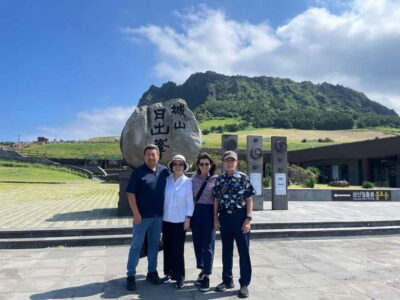
Then you hit Seongsan Ilchulbong, also called Sunrise Peak. Climbing up to the crater gives you views over the coast, and the tuff cone formation is one of Jeju’s signatures. If you like the idea of seeing how nature shaped the island, this stop does a lot of work for one hour.
After that, you’ll pass through the Seongsan Canola Flower Field area depending on season. The itinerary notes cherry blossom timing for late March to early April, and canola bloom for April through September, so the vibe swings with the calendar.
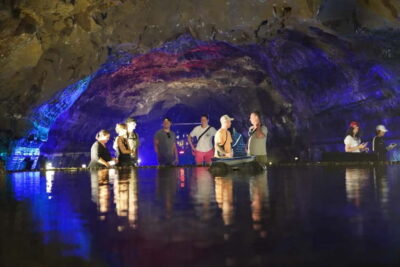
The last chunk of the day goes underground and back in time with Manjanggul Cave, formed by long-ago volcanic action. Then you round it out with Seongeup Folk Village, a quick look at traditional Jeju houses and daily life. The timing is tight, but the mix is smart: coast, volcano, then culture.
Watch your comfort here: caves and uneven paths can be a little slippery, and you’ll want shoes you trust for walking on natural surfaces.
Jeju Day 2: Hallasan area, basalt rock columns, waterfalls, and ARTE Museum Jeju
Day 2 is where Jeju gets more “big wow” in a shorter span. You start at Jeju National University, Ara Campus for seasonal cherry blossoms noted in the early April window.
Then you move into Hallasan National Park area. Hallasan is Korea’s highest mountain at 1,950m, and the itinerary frames it as a dormant volcano made mostly of basalt. This stop is less about summiting and more about getting the mountain atmosphere and understanding why Jeju’s volcanic story matters.
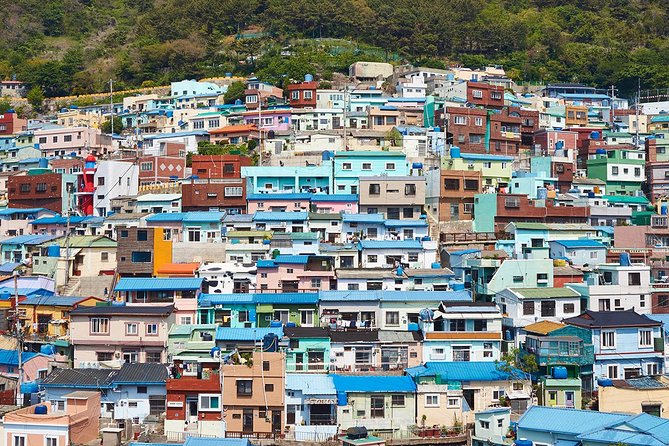
You’ll also see a coast lined with black rock pillars in shapes like cubes and hexagons. The tour explains it in terms of basalt formations and that strong “carved by nature” look, which is exactly what makes Jeju feel different from mainland scenery.
There’s also a quick quirky optical illusion stop, described as objects that appear to roll upward instead of down. It’s not life-changing, but it’s memorable and it adds variety when the day is otherwise heavy on serious sites.
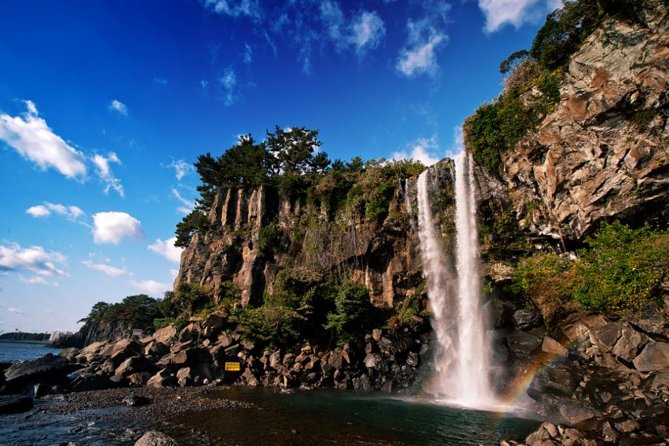
The day keeps rolling with Cheonjiyeon Falls and Jeongbang Waterfall. Cheonjiyeon is tied to a fairy legend in the tour description, and Jeongbang is notable because it flows directly into the ocean. If you like water scenes that look unusual on a map, Jeongbang is the one you’ll talk about later.
To finish, you get ARTE Museum Jeju, an art-and-light museum. It’s a welcome break from outdoor walking and a fun option for photos when the weather is less cooperative.
Busan Day 3: Haeundae Dalmaji-gil blossoms, Gamcheon stairs, Jagalchi seafood, and a sea temple
Busan starts with Haeundae Dalmaji-gil Road, a small lane lined with cherry blossoms and pine trees beyond Haeundae Beach. It’s brief, but it gives you that classic “sea plus soft spring” feeling before you jump into markets.
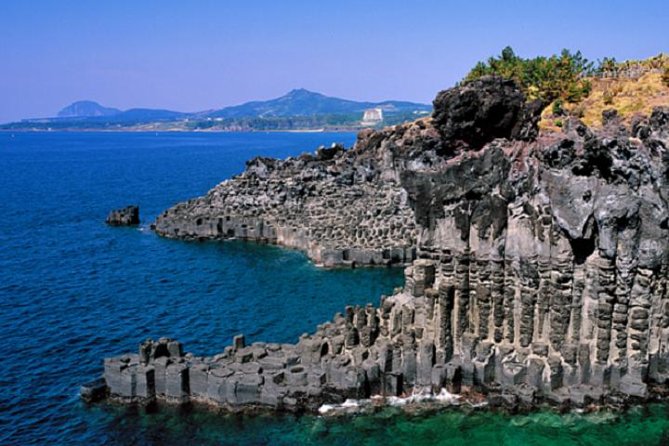
Then you head to Gamcheon Culture Village, famous for houses built on a hillside in staircase fashion. The background here matters. The tour describes it as built by war refugees for settlement, and later revitalized by city planning, so it’s not just an Instagram maze.
Jagalchi Market is next, and this is one of the most direct “you are in Busan” experiences you can get. The focus is on fresh raw fish you can buy and eat right there, and you’ll see the working-market energy up close.
You also stop at BIFF Square, tied to the Busan International Film Festival. The tour notes that it’s also a street food spot, so you can treat it as both a people-watching moment and a chance to try something quick.
Gukje Market follows with the history of postwar refugee stalls. It’s a different vibe from Jagalchi: more browsing for goods and a broader market mix rather than one food specialty.
Then you get Haedong Yonggungsa, described as one of the most beautiful temples in South Korea, right by the sea. If you want your Busan day to include something spiritual and scenic, this is the anchor.
Finally, Haeundae Blue Line Park adds a modern, seaside view element with the option of a train ride noted in the tour description. It’s a nice closer, and it helps break up the walking you’ve done all day.
A few more Seoul days worth comparing
- Best DMZ Tour Korea from Seoul (Red Suspension Bridge Optional)
★ 5.0 · 41,422 reviews - DMZ Tour: 3rd Tunnel, Option(Suspension Bridge, Boat) from Seoul
★ 5.0 · 21,373 reviews - DMZ tour south Korea from Seoul (NK experience hall, defector)
★ 5.0 · 20,599 reviews - Seoul: The Best DMZ Tour with Optional Suspension Bridge
★ 4.7 · 4,978 reviews
Gyeongju Day 4: Bulguksa and Seokguram UNESCO plus tomb sites, then KTX to Seoul
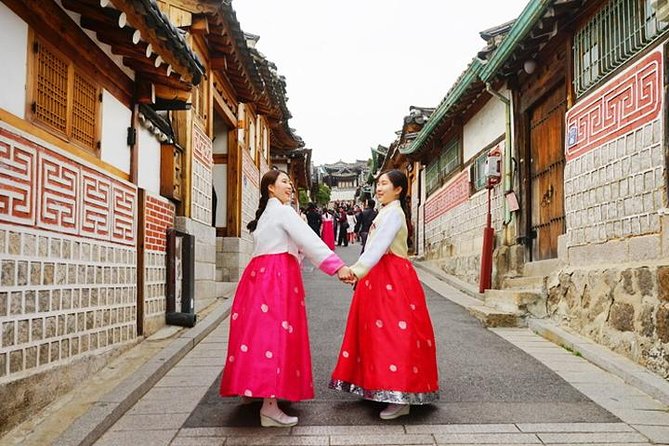
Gyeongju is a compact day with big cultural payoff. You begin with Bulguksa Temple, described as a UNESCO-listed historic jewel of the Silla capital. Even if your Korean history knowledge is basic, the guide framing makes it easier to connect the architecture and the time period.
Next is Seokguram, a stone grotto temple preserved for over 1,200 years thanks to natural ventilation. You get the sense that this isn’t just a “pretty place,” it’s a site that survived because the design protected it.
Then you go to Bomunho Lake Tourism Complex, with cherry blossoms covering the walkway in April. It’s a scenic reset that also keeps the day from being all stones and corridors.
You then hit Daereungwon Tomb Complex, including the giant tomb mounds and the Cheonmachong Tomb, where you can enter. It’s a different type of heritage sight than temples, and it’s one that helps you understand the older power structures of the region.
Gyeongju Gyochon Traditional Village gives you a quick look at nobleman-era style houses. It’s shorter, but the contrast helps after the temple and tomb focus.
You finish with Donggung Palace and Wolji Pond, a night-view spot noted for its lakeside pavilions. It’s built for atmosphere, and even with a limited time window, it’s the kind of ending that feels more like a memory than a checkpoint.
After that, you take the KTX bullet train from Gyeongju Station to Seoul, about 2 hours. The train transfer is where DIY can get stressful, so this is one of those “you pay for convenience” moments.
Seoul Day 5: Omie cooking class, Hongdae street life, and optional Nanta
Seoul day 5 starts with a cooking class at 오미 요리연구소. You cook three Korean dishes noted as bibimbab, traditional pancake, and soup, with menu changing depending on season.
This is one of the most practical inclusions. You won’t just taste Korea, you’ll learn how flavors and textures come together, which makes later street food and restaurant choices feel more intentional. The class is also a good energy reset because it’s hands-on and structured, not constant walking.
After lunch, you head to Hongdae, known for youth street culture and performances. You get about an hour, so think of it as a sampling walk for music, snacks, and street scenes rather than a deep shopping session.
Then you have the option to see Myeongdong NANTA Theater. The show is non-verbal and described as the most popular of its kind in Korea, and you can ask to skip it if you don’t want it. If you do go, ticket prices listed range from S 35 USD to V 55 USD, so it’s not included in the base package.
Myeongdong is a good location for this, because it’s easy to move between shopping and the theater area. You’ll leave the day with a strong mix of food skills and street culture.
Seoul Day 6: Gyeongbokgung Palace, Jogyesa, Bukchon, N Seoul Tower, and market time
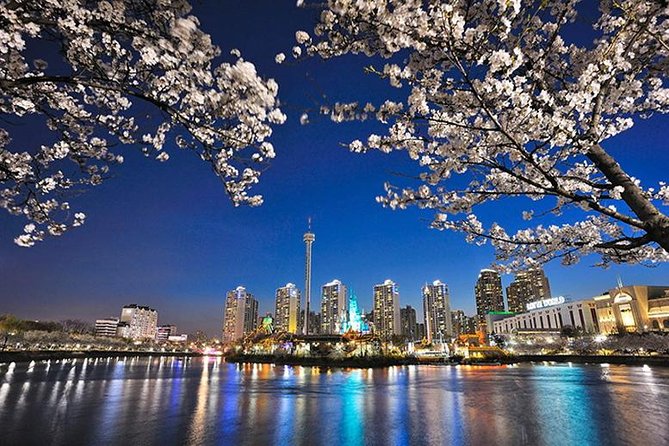
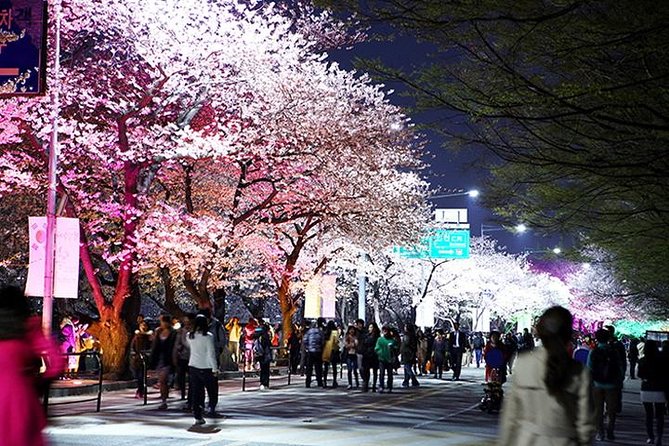
This day leans classic Seoul, with a lot of iconic stops. You begin at Yeouido Park, described as a cherry blossom festival site. Even if it’s not peak bloom, the tour frames it as a seasonal best moment on Han River.
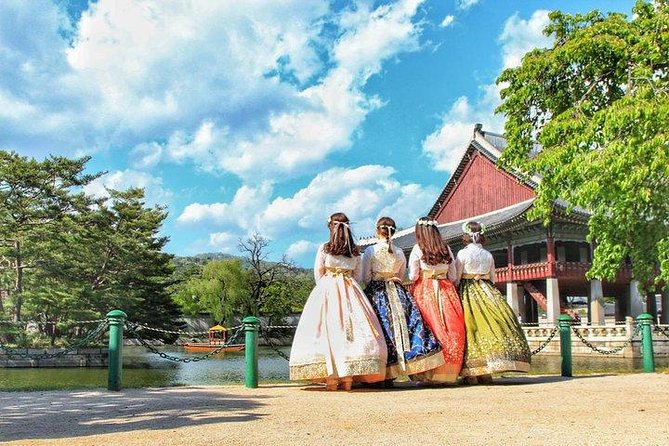
Then comes Gyeongbokgung Palace at Gwanghwamun Square. It’s the first and largest Joseon Dynasty palace built in 1395. If you’ve never walked palace grounds before, this is a great day to see how central space and ceremony were planned.
Jogyesa Temple is next, the head temple of Korean Buddhism. The itinerary notes that important Buddhist lectures, events, and rituals happen year round, and that the garden is worth a look.
You also stroll through Bukchon Hanok Village. This is the maze of traditional hanok homes packed together, and it’s one of those places where time feels faster because the alleyways keep pulling you forward.
After that, it’s food time at Gwangjang Market, specifically positioned as a food tour location. The idea here is smart: you get guided context and then you can sample what you like rather than wandering blindly.
Next you take in N Seoul Tower for 360-degree views over Seoul and Namsan. It’s a viewpoint day, and it’s where you get a sense of the city’s scale after all the walking downtown.
You wrap with Myeongdong shopping street and Insadong. Myeongdong is for shopping and department stores, while Insadong leans art, antiques, tea cafes, traditional sweets, and souvenir stops. It’s not just shopping, it’s a cultural stroll, especially around tea and traditional snack places.
DMZ Day 7: Imjingak shuttle setup, Third Tunnel, Dora Observatory, and Gamaksan Bridge hike
Day 7 is the most serious and most logistically strict part of the trip. You start at Imjingak Pyeonghoa-Nuri Park, where the itinerary explains you get DMZ shuttle bus tickets and board the shuttle bus from there.
Bring your passport. The tour description specifically notes that there is an ID check point since you’re going into the civilian control zone. This is the kind of detail that can make or break the day, so keep your passport accessible.
The first DMZ sight is the Third Tunnel, described as the beginning of the DMZ tour and dug by North Korea after the Korean War. You can enter the tunnel itself, which turns the visit from abstract politics into a physical experience.
Then you go to Dora Observatory, one of the northernmost observatories open to the public where you can see North Korea with your naked eyes. That is the moment most people remember, not because it’s comfortable, but because it’s so direct.
Tongilchonan-gil is next, a small market-like village in the civilian control zone. The itinerary notes a curfew there, so plan to keep your timing tight and follow the guide instructions.
Finally, you get Gamaksan Chulleong Bridge, with a short 10-minute hike noted in the tour description. It’s described as a former battlefield now turned into a nature-and-views stop with a suspension bridge feel.
Price and included value for 7 days across Jeju, Busan, Gyeongju, Seoul, and DMZ
At $1,988 per person, the price looks big on paper. But this package is not just a sightseeing loop. It includes 6 nights in 3-4 star hotels, an English speaking guide, an AC vehicle, entrance fees, domestic flights, and the KTX bullet train, plus a set menu of meals like breakfast and multiple lunches.
Where the value really shows is in the transfers. Domestic flights and KTX planning can eat time and energy, especially if you’re not familiar with airports and station navigation. Here, those connections are handled, so your day doesn’t collapse into line waiting and confusion.
You also get experiences that DIY trips often skip or overpay for: the cooking class and the Gwangjang Market food tour. Even the optional Nanta is a flexible choice rather than a forced add-on, and the tour lets you ask to skip it.
What is not included is personal expenses. That means snacks, drinks, and extra shopping are on you, and some days are not “full board.” You should also budget for optional choices like Nanta seats if you decide to go.
Who should book this Korea small group package
This tour fits best if you want structure. If you like waking up knowing the day’s plan, getting the ticketed entry parts handled, and ending each day with a clear sense of progress, you’ll likely enjoy it.
It also works well if you travel with someone who wants guides to explain context. In the reviews tied to this tour, people highlighted how guides like Harry and Jung mixed history with current conversation, and how some guides like Sang and Clover brought lots of energy and accommodations for different group members.
You might want a different style of trip if you hate busy days. This route is packed, and you’ll be walking through markets, palaces, temples, caves, and viewpoints with limited breathing room between stops. If you love slow travel and long evenings of wandering, plan to add your own free days in Seoul after the tour ends.
Should you book this Korea small group package
If your goal is to see Jeju plus major mainland highlights in only 7 days, I think this is a strong value. The combination of volcanic Jeju stops, Busan markets plus sea temple, Gyeongju UNESCO sites, Seoul palace plus hanok lanes, and then a DMZ day gives you a wide Korea picture without you doing the planning math.
Book it if you want convenience, guided meaning, and food-focused experiences like cooking class and Gwangjang Market. Skip it or consider a longer trip if you want lots of free time, because the schedule is full and the DMZ day has tight, passport-driven rules.
FAQ
How long is the tour and how many nights are included?
The tour runs for about 7 days and includes 6 nights of accommodation at 3-4 star hotels.
What’s included in the price?
The package includes an English speaking tour guide, entrance fees, a domestic flight and a KTX bullet train, AC tour vehicle, 6 nights in 3-4 star hotels, breakfast (4), and lunch (7). It also includes some dinner based on the itinerary.
What group size is this tour?
This experience has a maximum of 15 travelers.
Do you get airport pickup and mobile tickets?
Pickup is offered, and mobile ticket delivery is included.
What transport moves you between regions?
The itinerary includes a domestic flight and a KTX bullet train. You also travel by AC tour vehicle between stops.
Are meals and food experiences included beyond standard dining?
Yes. You have a food tour at Gwangjang Market and a Korean cooking class where you cook three traditional dishes (bibimbab, traditional pancake, and soup).
Can I request vegetarian meals?
Yes. A vegetarian option is available if you advise at the time of booking.
Is the Nanta show required?
No. The Myeongdong Nanta theater show is optional, and you can ask to skip it. Ticket prices listed range from S 35 USD to V 55 USD.
What do I need for the DMZ visit?
You need your passport because there is an ID check point when entering the civilian control zone. You also buy DMZ shuttle bus tickets at Imjingak Pyeonghoa-Nuri Park.
What is the cancellation policy?
The experience is non-refundable and cannot be changed for any reason. It may also be canceled if the minimum number of travelers is not met, with an offer of a different date or a full refund.
Recently reviewed in Seoul
- You’re Invited to Our Home in Seoul: The Only Cooking Class!★ 5.0 · 8 reviews
- Your Personal Seoul Photographer!★ 4.1 · 15 reviews
- From Seoul: Yongpyong Ski Day Tour with Transportation★ 4.9 · 40 reviews
- Seoul: Korean & English Language Exchange Global Party★ 5.0 · 28 reviews
- Watching sports match & local food experience in Seoul★ 5.0 · 11 reviews
- WKT Combat Taekwondo & Self-defense One Day Class in Seoul★ 5.0 · 5 reviews
- Unique Native Experience : Han River Picnic, Board game, BBQ★ 5.0 · 3 reviews
- Seoul: Gangneung BTS K-Pop & K-Drama Filming Locations Tour★ 4.6 · 14 reviews
Jeju Island Tours, compared.
East Jeju Essentials – Seongsan Ilchulbong (UNESCO) & Haenyeo
Read our review →
South-West Jeju Essentials: Hallasan & Signature Highlights
Read our review →
Jeju Island English Private & Flexible Tour any number anywhere
Read our review →
Jeju Island: Full-Day East Jeju Bus Tour with Entry Fees
Read our review →Browse the lists this tour appears in