
Reviewed · PALACE TOURS
Seoul Palace Morning Tour
This morning tour strings together three big themes of Seoul, religion, royalty, and a bit of pageantry. I like the hotel pickup that keeps things easy and the included entrance fees so you spend the morning looking, not paying. The one thing to watch is the built-in ginseng center stop at the end, which some people love and others find too shop-heavy.
If you want a Seoul highlight run in a tight 3 hours, this is a solid way to get your bearings fast. I also like that the flow starts with a working Buddhist temple, then shifts to Joseon Dynasty royal life, then lands at Gwanghwamun for the changing of the guard. If your ideal palace visit is slow and self-guided, you may feel a little rushed in a group format.
In This Review
- Key Highlights You Should Know Before You Go
- A Smooth Morning in Seoul That Packs Real Landmarks
- Hotel Pickup, 9:00 AM Start, and the 3-Hour Reality Check
- Jogyesa Temple: 500-Year Trees and a Main Hall With Color
- The one drawback to accept upfront
- Blue House Pass-By: Seeing Seoul’s Power Without Getting Closer
- Gyeongbok Palace: Joseon Royal Life in Named Spaces
- Why a guided walk helps here
- Korean National Folk Museum at Gyeongbok Palace: Culture You Can Touch
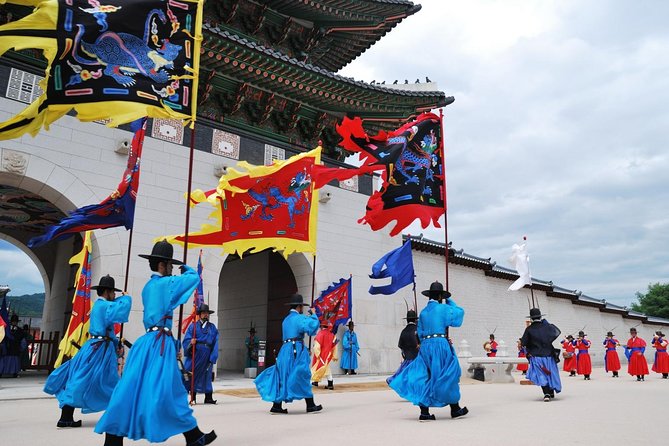
- Gwanghwamun Gate and the Changing of the Guard Ceremony
- The Ginseng Center Stop: Plan for It, Decide Your Role
- Price and Value: Is $40 Worth It for a Palace Morning?
- What I’d Do to Enjoy It More (Even If You Don’t Love Groups)
- Do these
- Don’t fight the schedule
- Who This Tour Fits Best
- A Note on Guides and Communication
- Should You Book the Seoul Palace Morning Tour?
- FAQ
- What time does the Seoul Palace Morning Tour start?
- How long is the tour?
- Is hotel pickup included?
- Where does the tour end?
- Which sites are included in the morning route?
- Are entrance fees included?
- Is lunch included?
- Is a ginseng stop part of the tour?
- What is the cancellation policy?
- How big is the group?
Key Highlights You Should Know Before You Go
- Jogyesa Temple first, where you can see centuries-old trees in front of the main hall and learn why Zen Buddhism is centered here
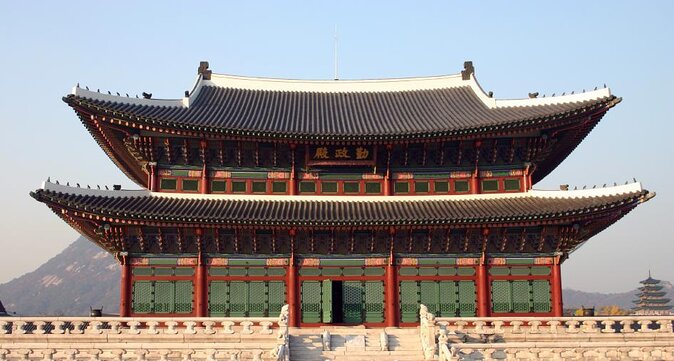
- Gyeongbok Palace big hitters, including the throne hall area, royal living quarters, and formal banquet spaces
- Blue House pass-by, with a clear heads-up that you cannot stop right in front due to security
- Changing of the guard at Gwanghwamun Gate, usually the most memorable moment for people doing this in the morning
- Ginseng center included, so shop-ready or not, plan your mindset for that last stop
- Small group feel for a group tour, capped at 30 travelers with hotel pickup and an air-conditioned vehicle
A Smooth Morning in Seoul That Packs Real Landmarks
This Seoul Palace Morning Tour is built for the first half of your day. You start with hotel pickup, roll out with a guide, hit major sights, and end near City Hall so you can keep moving after the ceremony moment at Gwanghwamun.
What makes it feel practical is the way the morning is structured. You begin at Jogyesa, you transition to Joseon royal power at Gyeongbokgung, then you finish at a place designed for public ceremonial viewing.
And yes, it’s a group tour. That matters because you’ll get less control over pace than on a private plan, but you do get a guide to translate what you’re seeing.
More Palace Tours in Seoul:
- Seoul: Gyeongbok Palace, Bukchon Village, and Gwangjang Tour
★ 4.9 · 2,321 reviews - Best Seoul City Tour (Gyeongbokgung Palace,Insadong,Namsan Tower)
★ 5.0 · 1,647 reviews - Small-Group Royal Palace and Seoul City Tour (hotel pick-up)
★ 5.0 · 1,474 reviews
Hotel Pickup, 9:00 AM Start, and the 3-Hour Reality Check
The tour starts at 9:00 am and runs about 3 hours. Expect a simple group rhythm, because the schedule has multiple stops, plus travel time between them.
Hotel pickup is included, and the ride is in an air-conditioned vehicle, which is a big deal in Seoul when the morning weather swings or when humidity hits. The day ends with drop-off at City Hall, not back at your hotel, which can actually be a plus if you plan to explore further on your own.
The group cap is 30 travelers. That size is usually workable, but it also explains why guides may keep moving to keep everyone together, especially around popular photo points.
Jogyesa Temple: 500-Year Trees and a Main Hall With Color
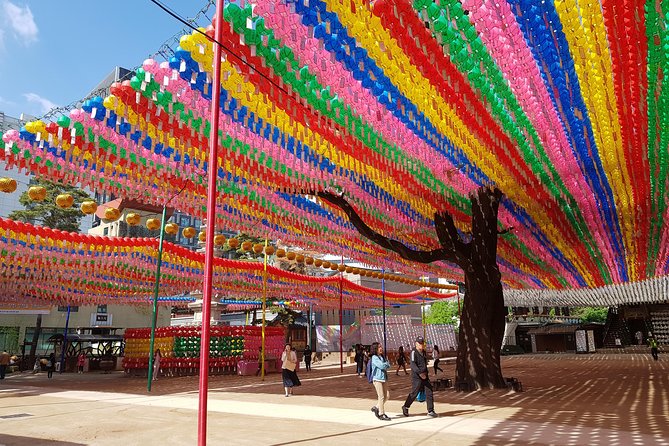
Jogyesa is the opening stop, and it sets the tone. This is described as the center for Zen Buddhism in Korea, and it does a good job of making religion feel living, not just museum-like.
When you arrive, the front approach includes locust trees and baeksong trees in front of the Daeungjeon, the main building of Jogyesa Temple. The trees are said to be about 500 years old, and the baeksong tree is designated as a Natural Monument.
One of the more vivid details here is the Daeungjeon itself. It was built in 1938, and the building is especially beautiful because of the different colors painted on it. Inside, you can see the statue of Seokgamoni.
Then there’s the visual poetry of the temple grounds. In front of the Daeungjeon, you’ll also see a seven-storey stone pagoda that contains Jinsinsari. Even if you know little about the symbolism, your guide can help you notice what you might otherwise walk past.
The one drawback to accept upfront
Because the morning tour is short, you will not get hours at Jogyesa. You’ll see the key elements, but this is not a slow, sit-and-breathe kind of visit.
A few more Seoul days worth comparing
- Best DMZ Tour Korea from Seoul (Red Suspension Bridge Optional)
★ 5.0 · 41,422 reviews - DMZ Tour: 3rd Tunnel, Option(Suspension Bridge, Boat) from Seoul
★ 5.0 · 21,373 reviews - DMZ tour south Korea from Seoul (NK experience hall, defector)
★ 5.0 · 20,599 reviews - Seoul: The Best DMZ Tour with Optional Suspension Bridge
★ 4.7 · 4,978 reviews
Blue House Pass-By: Seeing Seoul’s Power Without Getting Closer
After Jogyesa, the tour goes toward Gyeongbok Palace via the Blue House area. Here’s the key detail you should not miss: since it’s a security area, you cannot stop directly in front of the Blue House.
So what do you get? You’ll see it on the way during transportation, meaning more of a view-from-the-road moment than a guided photo stop with time to linger.
In a sense, this is still valuable. The Blue House is one of those Seoul landmarks that most visitors only hear about. A pass-by keeps the morning moving while still connecting the dots between modern government and the deeper historical layers you’ll see next.
Gyeongbok Palace: Joseon Royal Life in Named Spaces
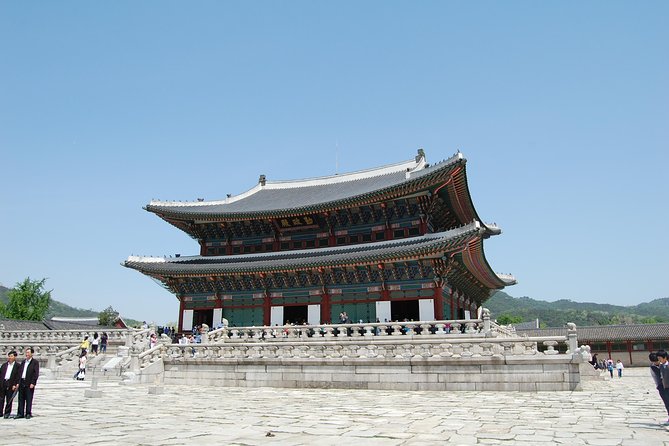
Gyeongbok Palace is the centerpiece of the morning, and it’s the most famous royal residence tied to the Joseon Dynasty. This is where you get the feeling of scale, plus the chance to understand how different spaces matched different roles.
You’ll look around several major named areas, including:
- Geunjeongjeon, the main throne hall area
- Sajeongjeon, the king’s office
- Gangnyeongjeon, the king’s living quarters
- Gyotaejeon, the queen’s living quarters
- Gyeonghoeru, a banquet space where the king held formal events for foreign envoys
That list matters because it turns the palace from a pile of buildings into a system. You’re not just looking at walls. You’re learning which parts were for power, work, private life, and ceremonies.
Why a guided walk helps here
Palace grounds can feel confusing if you only rely on signage. With a guide, you get a thread that links each building to court life, so your photos come with context, not just captions.
It also helps that this tour includes time to take in the palace’s most recognizable spaces rather than treating everything as equal. You’ll come away with a mental map of the place, which makes it easier to return later on your own.
Korean National Folk Museum at Gyeongbok Palace: Culture You Can Touch
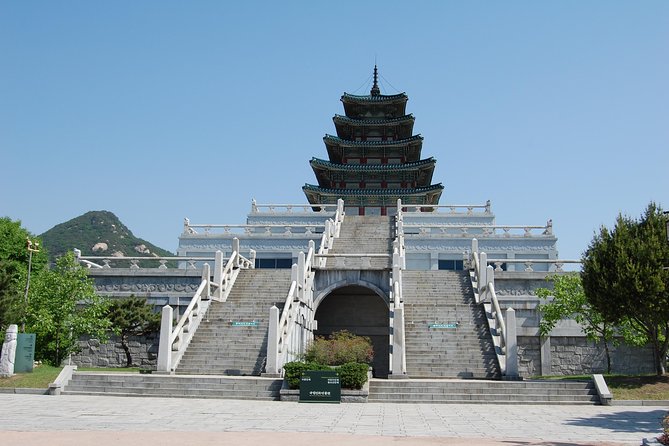
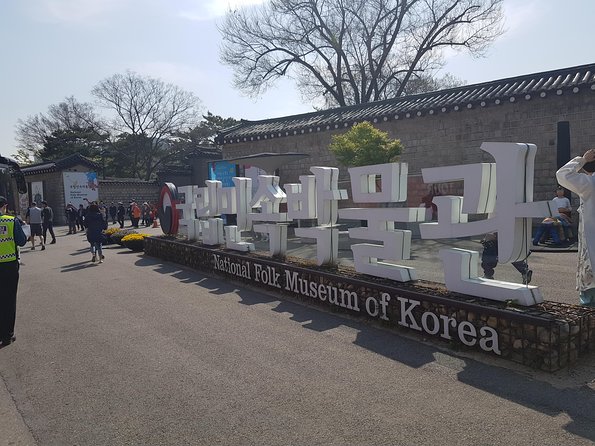
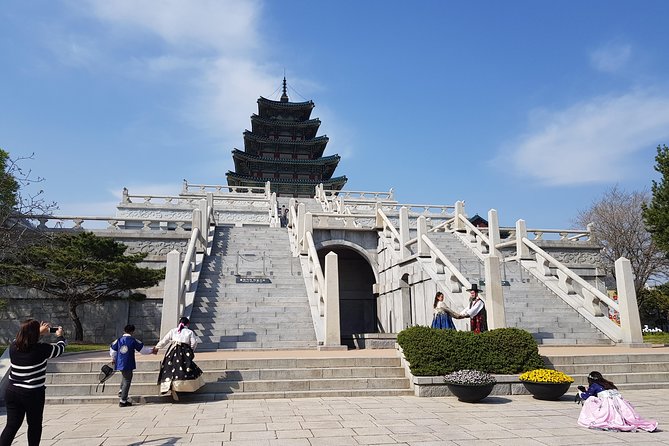
Part of the experience is a stop at the Korean National Folk Museum, located within the Gyeongbok Palace complex. The focus is daily life and culture, with an educational angle meant to help you understand traditional Korean lifestyle.
This stop is a smart change of pace. It gives your brain a rest from outdoor architecture and ceremony, and it helps explain what palace life sat above in everyday terms.
If you like your sightseeing with at least a little context, you’ll likely appreciate it. If you’re only here for outdoor photos and don’t care about exhibits, you might find it adds value or feels like a detour depending on how much time you personally want indoors.
Gwanghwamun Gate and the Changing of the Guard Ceremony
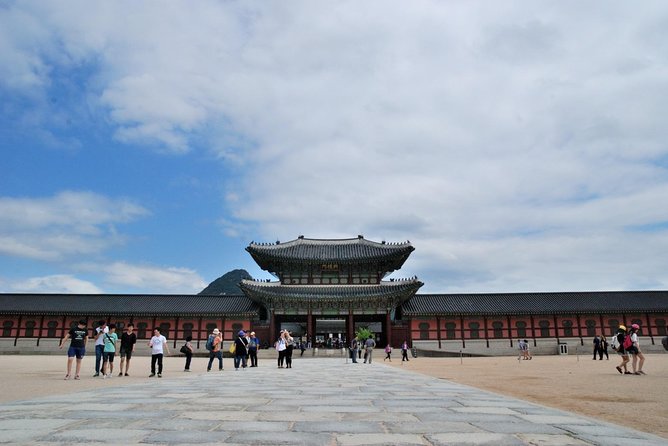
The tour finishes at the Gwanghwamun Gate, described as the south gate of Gyeongbok Palace. This is where you’ll see the changing of the guard ceremony, and it’s frequently the standout moment.
That makes sense. The setting is public-facing and designed for viewing, and the ceremony gives the morning a satisfying peak. If you plan photos, this is where you spend your effort, because the moment has movement, sound, and a clear rhythm.
It’s also the best part to watch with the mindset of experiencing, not over-documenting. You’ll enjoy it more if you give yourself room to look up and listen, not just frame the perfect shot.
The Ginseng Center Stop: Plan for It, Decide Your Role
After the palace area, the tour returns toward Seoul and ends at City Hall after a stop at a ginseng center. The ginseng stop is included, and it’s listed as one of the shopping centers in the program.
Here’s the practical reality. If you’re not into shopping or sales pitches, your time there can feel frustrating compared to how much you want to spend at Gyeongbok Palace and Gwanghwamun.
At the same time, you can treat it as a quick cultural and practical stop. You can also keep your expectations simple: you are going in, you are not required to buy, and you are there to keep the schedule moving.
A good strategy is to decide what you want before you arrive. If you’re shopping for ginseng, you’re set. If you are not, use the time to take a breather and refocus for your next stop after the tour.
Price and Value: Is $40 Worth It for a Palace Morning?
At $40 per person, this tour has good value on paper, mainly because so much is included. You get:
- Hotel pickup
- A professional guide and driver
- An air-conditioned vehicle
- All entrance fees included
That combination matters because Seoul costs add up fast when you start stacking separate tickets, taxis, and timed entry planning. When entrances are included, you spend your energy on sights rather than budgeting every transfer.
The duration is about 3 hours, so you’re not paying for a long day. You’re paying for a focused route that covers major highlights: Jogyesa, Gyeongbok Palace core areas, an exhibit stop, and the ceremony at Gwanghwamun.
The value question comes down to your tolerance for a group pace and a ginseng center stop. If that shopping element will bug you, consider whether you’d rather self-tour the palace and plan your own ceremony timing. If you want everything handled with a guide and pickup, this price can feel fair.
What I’d Do to Enjoy It More (Even If You Don’t Love Groups)
This is where you can make the experience match your style.
Do these
- Arrive with comfortable walking shoes. Palace and temple grounds add up even on a half-day pace.
- Bring a small water bottle if you tend to get thirsty quickly, since lunch is not included.
- For the guard ceremony, treat it as the main event. Plan your photos and watch time around that moment.
Don’t fight the schedule
If you try to out-rush the group, you’ll end up frustrated. Instead, think of this tour as a guided tasting menu. You get the key flavors, then you can go deeper later at the spots that grabbed you.
Who This Tour Fits Best
This Seoul Palace Morning Tour fits especially well if you:
- Want an easy morning plan with pickup and entrance fees included
- Like history told through real places and named spaces
- Travel with family. It’s described as family friendly, and the changing ceremony is a natural attention grabber
- Appreciate a guide who explains what you’re seeing, not just where to stand
If you prefer total freedom, long lingering time in one place, or zero shopping stops, you might enjoy a different setup more. This one is designed to cover a lot quickly.
A Note on Guides and Communication
In the best cases, the guide approach can make the whole morning click. One guide name that shows up clearly in the experience is Chloe, praised for stories and for being helpful with photos. That kind of guide energy matters, because palace names and temple details can feel abstract without someone turning them into human stories.
On the flip side, some people have felt the pace was too fast or that information wasn’t clear enough. If you like asking lots of questions, it helps to plan how you’ll phrase them. Ask one or two good questions early, then enjoy the route.
Should You Book the Seoul Palace Morning Tour?
I’d book it if you want a guided highlights morning that covers Jogyesa, Gyeongbok Palace’s main royal spaces, and the changing of the guard at Gwanghwamun, all with hotel pickup and entrance fees handled. The $40 price makes sense if you would otherwise spend time coordinating entry and transport.
I would hesitate if you dislike shopping interruptions. The tour includes a ginseng center, and some people felt it took more time than they expected. If that would spoil your day, consider building a palace-and-ceremony plan on your own instead.
If you do book, go in with the mindset that this is a smart orientation trip. Use it to learn the palace layout and get ceremony timing down, then return later for deeper wandering at your favorite stops.
FAQ
What time does the Seoul Palace Morning Tour start?
The tour starts at 9:00 am.
How long is the tour?
The duration is about 3 hours.
Is hotel pickup included?
Yes. Hotel pickup is included, and you also ride in an air-conditioned vehicle.
Where does the tour end?
The tour ends at City Hall, Seoul, and hotel drop-off is not included.
Which sites are included in the morning route?
The tour includes Jogyesa Buddhist Temple, a Blue House pass-by, Gyeongbok Palace (including the areas you visit there), the Korean National Folk Museum at Gyeongbok Palace, and the Gwanghwamun Gate changing of the guard ceremony.
Are entrance fees included?
Yes. All entrance fees are included, and there is free admission to the listed local attractions.
Is lunch included?
No. Lunch is not included.
Is a ginseng stop part of the tour?
Yes. There is a stop at an included ginseng center (one of the shopping centers).
What is the cancellation policy?
You can cancel for free up to 24 hours in advance for a full refund.
How big is the group?
The tour has a maximum of 30 travelers.
Recently reviewed in Seoul
- You’re Invited to Our Home in Seoul: The Only Cooking Class!★ 5.0 · 8 reviews
- Your Personal Seoul Photographer!★ 4.1 · 15 reviews
- From Seoul: Yongpyong Ski Day Tour with Transportation★ 4.9 · 40 reviews
- Seoul: Korean & English Language Exchange Global Party★ 5.0 · 28 reviews
- Watching sports match & local food experience in Seoul★ 5.0 · 11 reviews
- WKT Combat Taekwondo & Self-defense One Day Class in Seoul★ 5.0 · 5 reviews
- Unique Native Experience : Han River Picnic, Board game, BBQ★ 5.0 · 3 reviews
- Seoul: Gangneung BTS K-Pop & K-Drama Filming Locations Tour★ 4.6 · 14 reviews
Palace Tours, compared.
Gyeongbok Palace, Bukchon Village, and Gwangjang Tour
Read our review →
Best Seoul City Tour (Gyeongbokgung Palace,Insadong,Namsan Tower)
Read our review →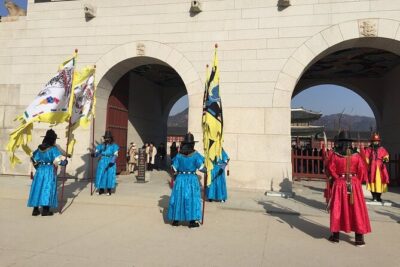
Small-Group Royal Palace and Seoul City Tour (hotel pick-up)
Read our review →
Seoul City Sightseeing Tour Including Gyeongbokgung Palace, N Seoul Tower, and Namsangol Hanok Village
Read our review →Gyeongbok Palace, Bukchon Village, and Gwangjang Tour
Read our review →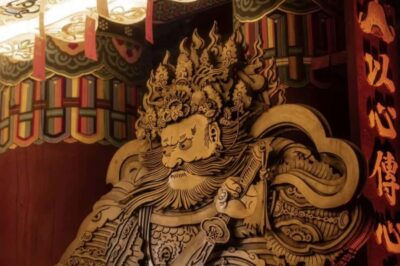
Palace, Temple and Market Guided Foodie Tour at Night
Read our review →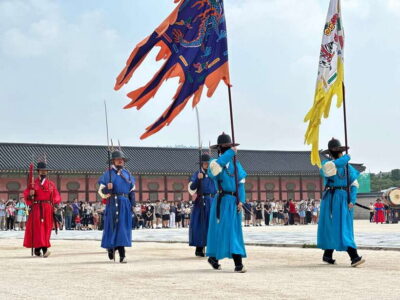
Seoul Highlights: Gyeongbok Palace, Insadong & N Seoul Tower
Read our review →
City Hightlights, Palace Tour, and Optional Hanbok
Read our review →Browse the lists this tour appears in