
Reviewed · PALACE TOURS
Seoul: Deoksugung Palace Night Tour
Night lights make palaces feel new. This Deoksugung Palace Night Tour turns Seoul’s palace time into an easy, guided walk through the Korean Empire era, when the country was trying to modernize after centuries of Joseon rule. I like that it focuses on what you’re looking at as much as what happened, with a guide explaining both history and architecture in English and Chinese. One thing to consider: this is a night outing, so bring a layer and plan for walking in cooler evening weather.
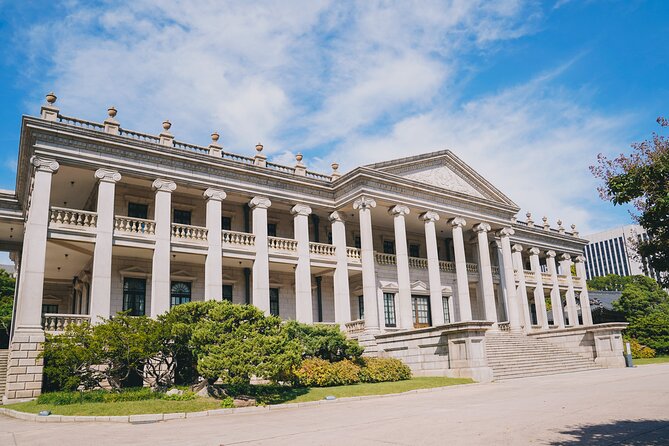
I also love the palace design itself. Deoksugung is unusual because it combines traditional Korean buildings and Western-style architecture in one place, so you get a real visual story of change. Your stops cover major buildings linked to royal power and King Gojong’s life, including Junghwajeon, Seokjojeon, Seokeodang, and Hamnyeongjeon. The possible drawback is that the experience is only about two hours, so if you want to linger and photograph everything for a long time, you’ll need to manage expectations.
In This Review
- Key Points Before You Go
- Deoksugung After Dark: Korean Empire Meets Mixed Architecture
- Easy Start at City Hall: When to Arrive and What to Expect
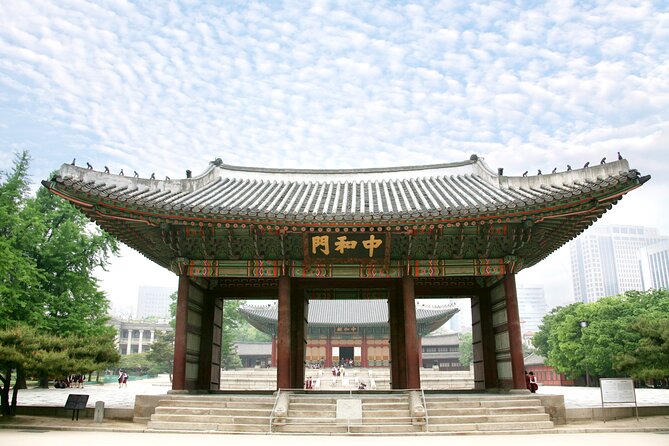
- Junghwajeon: The Throne Hall Stop That Explains Power
- Seokjojeon: Western-Style Building and the Modernization Moment
- Seokeodang: King Gojong’s Most Beloved Building
- Hamnyeongjeon: The King’s Bed-Chamber Stop
- Jungkwanhun: The Cafeteria Stop and a Chance to Regroup
- The Stone Wall Next to Deoksugung: Don’t Miss the Exterior Beauty
- What the Guides Do Well: Storytelling Plus Architecture Clarity
- Price and Value: Is $35 Reasonable for a 2-Hour Night Tour?
- Logistics That Matter (Without Turning This Into a Paperwork Lesson)
- Who Should Book This Night Tour?
- Should You Book Deoksugung Palace Night Tour?
- FAQ
- What time does the Deoksugung Palace Night Tour start?
- How long is the tour?
- Where do I meet the guide?
- Where does the tour end?
- Is there an admission ticket included?
- Do I need to use a mobile ticket?
- What languages are explanations offered in?
- Can I record or film during the tour?
- Is Deoksugung Palace open on Mondays?
- What happens if weather is bad or the group is too small?
Key Points Before You Go
- Night timing gives Deoksugung a quieter mood and different visual character than daytime visits
- Mixed architecture (traditional plus Western-style) helps you understand Korea’s modernization pressure visually
- Stops map to meaning, from Junghwajeon to Hamnyeongjeon, so the tour feels like a guided narrative
- English and Chinese explanations plus a real Q and A window help you ask what you actually care about
- Small group size (up to 20) keeps the pacing comfortable
- Near City Hall and Gwanghwamun Station, so you avoid the big Seoul “where do I start?” scramble
Deoksugung After Dark: Korean Empire Meets Mixed Architecture
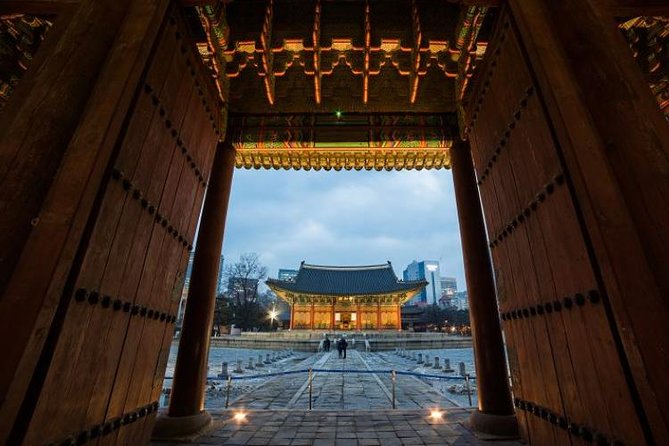
Deoksugung at night has a different vibe. The lights soften edges, and the whole place feels less like a checklist and more like a living setting for history. This tour leans into that. Instead of treating the palace as a daytime attraction, it uses evening time for a calmer visit, with explanations as you move between key buildings.
Here’s what makes Deoksugung worth your attention in the first place: it served as the main palace during a period when Korea’s identity and direction were shifting. The tour frames it around that early modernization era about 100 years ago, when Korea was called the Korean Empire, not Joseon or the label South Korea. That context matters because Deoksugung isn’t just pretty. It’s a record of pressure, adaptation, and the pain tied to later Japanese invasion.
Even better, Deoksugung is the only Seoul palace that brings together traditional and Western-style buildings in the same space. That’s a big deal for your understanding. When you see Seokjojeon alongside the older structures, the story isn’t abstract. The architecture does the talking.
More Palace Tours in Seoul:
- Seoul: Gyeongbok Palace, Bukchon Village, and Gwangjang Tour
★ 4.9 · 2,321 reviews - Best Seoul City Tour (Gyeongbokgung Palace,Insadong,Namsan Tower)
★ 5.0 · 1,647 reviews - Small-Group Royal Palace and Seoul City Tour (hotel pick-up)
★ 5.0 · 1,474 reviews
Easy Start at City Hall: When to Arrive and What to Expect
You meet near City Hall Station, in front of Exit 1 (Line 1 and 2). The guidance is simple: plan to be there around 6:20pm for the group meetup, with the tour starting about 6:30pm. The tour ends around Jeonggwanheon on Sejong-daero, so you’re not walking into the middle of nowhere at the finish.
This location choice is practical. City Hall and Gwanghwamun Station are close by, so you can take public transit without building a complicated plan around the time of day. If you’re spending the evening around central Seoul, this tour fits neatly into your schedule.
One more practical note that helps: this is a small group tour with a maximum of 20 people. That matters because it reduces the feeling of being rushed at each stop. Also, there’s a mobile ticket, which cuts down on last-minute ticket hunting.
Junghwajeon: The Throne Hall Stop That Explains Power
Junghwajeon is the first major building you’ll focus on. The throne hall isn’t just a pretty structure. It’s the centerpiece of royal authority in palace design, so the guide’s job here is to help you connect form to function.
At this stop, you should expect the tour to slow down enough for you to actually look. The guide explains what the building represents and how the palace worked in its historical setting. If you’ve ever wandered a palace and felt like you were staring at walls with no roadmap, this is where the guided structure begins to pay off.
A useful takeaway: in a well-run guided palace tour, you don’t memorize dates for their own sake. You understand why certain rooms and halls exist. Junghwajeon gives you that foundation, so later stops like the king’s living spaces land with more meaning.
Seokjojeon: Western-Style Building and the Modernization Moment
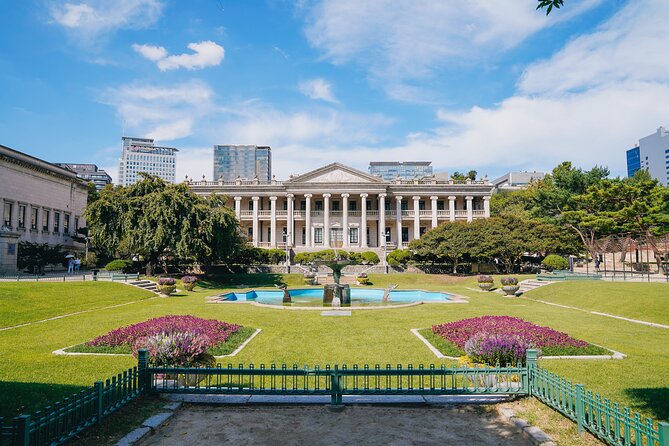
Next comes Seokjojeon, the Western-style building within Deoksugung’s grounds. This is where the tour’s theme really becomes visible. Instead of treating modernization as a chapter in a book, you see it in materials, style, and the way the building contrasts with older palace structures.
The guide explains why that mix happened and what it meant for the period around Korea’s shift into the Korean Empire era. The goal isn’t to turn the palace into a debate club. It’s to help you notice how a society under pressure reflects that pressure in its architecture.
If you’re into photography, night lighting can be your friend here. Western-style buildings often photograph differently than traditional structures, and seeing them under evening illumination helps you spot details faster. Just keep in mind that recording or filming the tour is not allowed, so rely on your own eyes and normal camera use outside any strict restrictions.
A few more Seoul days worth comparing
- Best DMZ Tour Korea from Seoul (Red Suspension Bridge Optional)
★ 5.0 · 41,422 reviews - DMZ Tour: 3rd Tunnel, Option(Suspension Bridge, Boat) from Seoul
★ 5.0 · 21,373 reviews - DMZ tour south Korea from Seoul (NK experience hall, defector)
★ 5.0 · 20,599 reviews - Seoul: The Best DMZ Tour with Optional Suspension Bridge
★ 4.7 · 4,978 reviews
Seokeodang: King Gojong’s Most Beloved Building
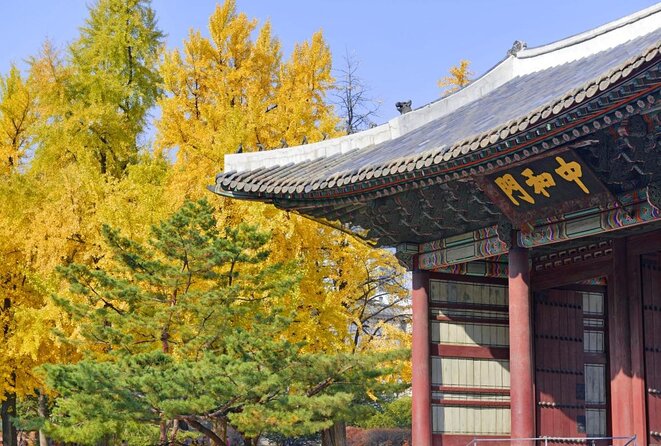
Seokeodang is described as King Gojong’s most beloved building. That detail is more than trivia. It gives you a human entry point into a palace that can otherwise feel distant.
At this stop, the guide typically connects the building to personal royal life and taste, not only official ceremonies. This is the kind of context that makes a palace tour feel like a story instead of a route. You start to understand that rulers weren’t just symbols. They had preferences, routines, and spaces that carried emotional weight.
This is also a good time to ask questions. The tour explicitly encourages you to raise curiosity about what you’re seeing and what it connects to historically. If you want the guide to explain the “why,” Seokeodang is a strong moment to ask.
Hamnyeongjeon: The King’s Bed-Chamber Stop
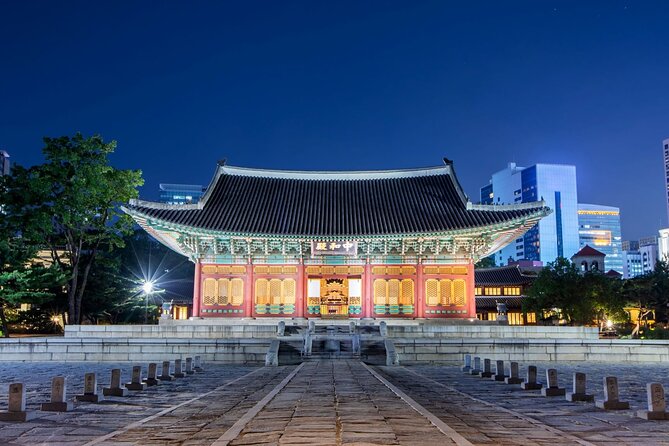
Hamnyeongjeon is the king’s bed-chamber. That’s an unusual stop for some palace visits because it shifts the focus from public rule to private life.
Why it matters: once you see a royal bedroom and think about how the space was used, the palace becomes more understandable. You stop picturing only formal audiences and start thinking about daily life at court.
There’s also a broader educational payoff. The tour frames Deoksugung as part of Korea’s first serious attempt at modernization over roughly 600 years of Joseon rule. Spaces tied to the king’s life are connected to that same period, so the story stays consistent instead of jumping around.
Jungkwanhun: The Cafeteria Stop and a Chance to Regroup
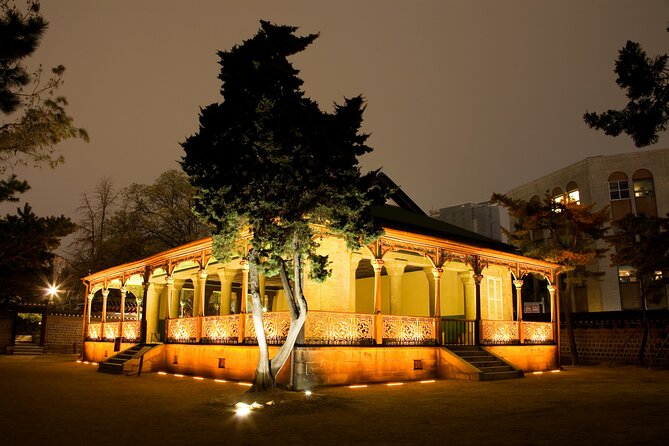
The final stop is Jungkwanhun, identified as a cafeteria. A cafeteria might sound like a random end, but in practice it helps you reset. After several emotionally and intellectually heavy stops, you get a less intense moment to absorb what you’ve just learned.
This is also a smart point for practical questions. If something confused you earlier, you’re more likely to remember the right question now that you’re through the main buildings. The tour format supports that. You’re meant to interact with the guide, not just listen passively.
If you’re planning your own evening afterward, use this moment to think about your next step. The tour ends at Jeonggwanheon, near Sejong-daero, which keeps you in a convenient central area.
The Stone Wall Next to Deoksugung: Don’t Miss the Exterior Beauty
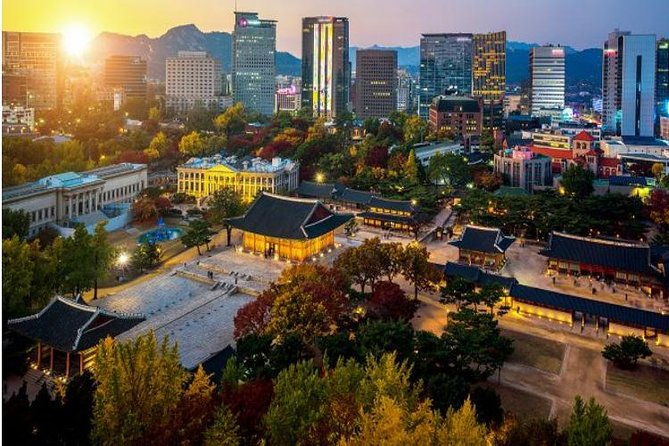
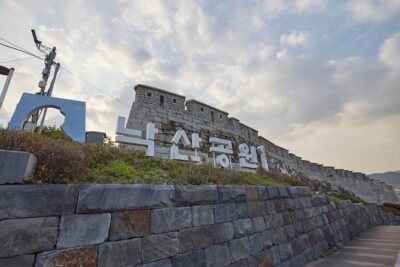
Even if you focus mainly on the main palace buildings, keep your eyes open for the stone wall next to Deoksugung. It’s specifically called out as famous for its beauty, and it’s exactly the kind of detail that self-guided visits often miss.
At night, stone walls can look especially dramatic because the light catches texture and contours. It’s also a good place to pause for a minute, check your bearings, and just take in the setting.
I’d treat it as bonus value. The tour is built around the main buildings, but the stone wall adds atmosphere without costing extra time.
What the Guides Do Well: Storytelling Plus Architecture Clarity
The biggest quality of this tour is the way the guide connects buildings to story. The explanations are in English and Chinese, and the tour includes a Q and A element. That matters because palace tours can be passive. Here, you have a chance to ask about the Korean Empire period, the role of Deoksugung as a main palace, or what the mixed architecture signals.
One booking highlighted that the guide walked through the end of Joseon dynasty and the Korean Empire context while focusing on architecture. Another praised a guide for being punctual and strongly versed in palace history, with lots of story narration that kept everyone interested. Even if your guide’s style differs, the core promise is consistent: you’re not just looking, you’re understanding.
If you like history but hate long lectures, this tour is a nice middle ground. The guide has to keep pace with your walking route, so the story stays tied to what’s in front of you.
Price and Value: Is $35 Reasonable for a 2-Hour Night Tour?
At $35 per person for about two hours, you’re paying for guided interpretation of major palace buildings at a time when Deoksugung tends to feel more peaceful. Admission is listed as free in the tour setup, so your spend is mostly for the guided experience and its explanations.
I think that price works best if you want help reading the palace. Without a guide, Deoksugung can still be beautiful, but the mixed architecture and the Korean Empire context are the kind of things that click faster with someone who can translate the meaning behind what you see.
This tour also caps at 20 people, which tends to improve the feel of a small-group guided visit. If you’re the type who hates crowded group tours, that cap helps.
The only time I’d hesitate is if your main goal is to take your own slow photo walk and you already know the palace story. In that case, you might prefer a self-guided evening. But if you want the architecture and history tied together, this feels like good value.
Logistics That Matter (Without Turning This Into a Paperwork Lesson)
A few details actually affect your experience:
- Monday rule: Deoksugung Palace is closed on Mondays, and the tour operator offers a Gyeongbok Palace alternative on those dates.
- Good weather matters: the experience needs good weather, and if it’s canceled due to poor weather, you’ll get another date or a full refund.
- Minimum group size: if there are fewer than 4 participants, the tour may be canceled.
- No filming or recording: the tour states that recording or filming is not allowed.
- Bring contact info: you’re asked to provide a working Korea contact method so the organizer can reach you if needed.
None of these points ruin the trip. They just help you avoid last-minute surprises.
Who Should Book This Night Tour?
This is a great pick if you want a guided Seoul palace experience that focuses on meaning, not just motion. It’s especially good for:
- People who care about architecture and want the Western-style and traditional contrast explained
- Anyone curious about the Korean Empire period and how it fits into the end of Joseon history
- Visitors who want an easy evening plan near City Hall and Gwanghwamun, with a clear start and finish
- Travelers who prefer a smaller group feel and a Q and A moment with a professional guide
If you’re the type who needs total independence and hates group pacing, you might enjoy self-guided palace wandering more. But if you’re open to structured timing and you want the palace to make sense as you walk, this tour is a strong match.
Should You Book Deoksugung Palace Night Tour?
I’d book it if you want to learn faster than you can on your own, and you like the idea of seeing Deoksugung’s unique mix of traditional and Western-style architecture under evening lights. The route is built around the palace’s major meaning markers, and the guide interaction is clearly part of the value.
Skip it only if you already feel fluent in Deoksugung’s story and you mainly want unstructured time to roam, photograph, and linger. For most people, the $35 guided package makes the palace easier to read, especially at night.
FAQ
What time does the Deoksugung Palace Night Tour start?
The meetup is around 6:20pm in front of Exit 1 of City Hall station, and the tour starts at about 6:30pm.
How long is the tour?
It lasts about 2 hours.
Where do I meet the guide?
Meet in front of Exit 1 of City Hall station (Line 1, 2). The location is also listed with the address 362-1 Taepyeongno 2(i)-ga, Jung District.
Where does the tour end?
The tour ends at Jeonggwanheon99 Sejong-daero, Jung District, Seoul, with the end point at Jeonggwanheon.
Is there an admission ticket included?
The tour notes admission ticket free.
Do I need to use a mobile ticket?
Yes, the tour uses a mobile ticket.
What languages are explanations offered in?
Explanations are offered in English and Chinese.
Can I record or film during the tour?
No. Recording or filming the tour is not allowed.
Is Deoksugung Palace open on Mondays?
No, Deoksugung Palace is closed on Mondays, and you can book a Gyeongbok Palace tour instead.
What happens if weather is bad or the group is too small?
The experience requires good weather. If canceled due to poor weather, you’ll be offered a different date or a full refund. If the number of participants is under 4, the tour will be canceled.
Recently reviewed in Seoul
- Your Personal Seoul Photographer!★ 4.1 · 15 reviews
- You’re Invited to Our Home in Seoul: The Only Cooking Class!★ 5.0 · 8 reviews
- From Seoul: Yongpyong Ski Day Tour with Transportation★ 4.9 · 40 reviews
- Seoul: Korean & English Language Exchange Global Party★ 5.0 · 28 reviews
- Watching sports match & local food experience in Seoul★ 5.0 · 11 reviews
- WKT Combat Taekwondo & Self-defense One Day Class in Seoul★ 5.0 · 5 reviews
- Unique Native Experience : Han River Picnic, Board game, BBQ★ 5.0 · 3 reviews
- Seoul: Gangneung BTS K-Pop & K-Drama Filming Locations Tour★ 4.6 · 14 reviews
Palace Tours, compared.
Gyeongbok Palace, Bukchon Village, and Gwangjang Tour
Read our review →
Best Seoul City Tour (Gyeongbokgung Palace,Insadong,Namsan Tower)
Read our review →
Small-Group Royal Palace and Seoul City Tour (hotel pick-up)
Read our review →
Seoul City Sightseeing Tour Including Gyeongbokgung Palace, N Seoul Tower, and Namsangol Hanok Village
Read our review →Gyeongbok Palace, Bukchon Village, and Gwangjang Tour
Read our review →
Palace, Temple and Market Guided Foodie Tour at Night
Read our review →
Seoul Highlights: Gyeongbok Palace, Insadong & N Seoul Tower
Read our review →
City Hightlights, Palace Tour, and Optional Hanbok
Read our review →Browse the lists this tour appears in