
Reviewed · JEJU ISLAND TOURS
Jeju Island Taxi Join Tour
Jeju by taxi is the easy button. This small-group join tour strings together Jeju’s most famous natural sights without the stress of renting a car.
I like the downtown pickup and drop-off, and I like that admission is handled for the key stops. One thing to keep in mind: not every museum or park on the day is included in the price.
In This Review
- Key points at a glance
- How a Jeju Taxi Join Tour Cuts Through the Island Chaos
- What can trip you up
- Price and Value: What $108 Really Buys on Jeju
- The Day’s Rhythm: 9:00 AM Start and an 8.5-Hour Plan
- Volcano Wonders: Manjanggul Cave and Seongsan Ilchulbong
- Manjanggul Cave, including the famous Stone Turtle
- Seongsan Ilchulbong, also called Sunrise Peak
- Traditional Jeju Without the Museum Hallway: Seongeup Folk Village
- Beaches That Feel Like a Break: Woljeongri and Hyeopjae
- Woljeongri Beach
- Hyeopjae Beach, including the low-tide view
- Forest, Haenyeo, and Maze Park: The Stops That Add Texture
- Bijarim Forest, the single-species Torreyas stand
- Jeju Haenyeo Museum, for the human story
- Maze Land, Miro Park with stones, wind, women
- Seasonal Swaps: Sangumburi and Hallim Park
- Sangumburi Crater, replacing Seopjikoji in Oct and Nov
- Hallim Park and the tulip season idea
- Tea and Seabirds Energy: O’sulloc Tea Museum
- Waterfalls and Basalt Columns: Cheonjeyeon, Jeongbang, Jusangjeollidae
- Cheonjeyeon Falls (The Pond of God)
- Jeongbang Falls, the one that hits the ocean
- Jusangjeollidae basalt columns
- Coasts, Craters, and a Few “If Weather Does Its Thing” Alternatives
- Yongmeori Coast and its dragon-head shape
- Mt. Songaksan, as the fallback option
- Sanbangsan Mountain and Sanbanggulsa Temple
- Temples, Sea Stacks, and Smaller Wins: Oedolgae, Yakchunsa, Saebyeol Oreum
- Oedolgae, a sea stack made by waves
- Yakchunsa Temple
- Saebyeol Oreum
- Practical Advice so You Get the Best Day Possible
- Bring cash for what is not included
- Plan your shoes for real walking
- Understand that crowds can happen fast
- Use the guide for photos and timing
- Expect a few weather-driven changes
- Should You Book This Jeju Island Taxi Join Tour?
Key points at a glance
- Small group, max 13 travelers keeps the day calmer than big bus tours.
- Jeju City downtown pickup and drop-off saves you from long transfers.
- Admission is included for compulsory attractions, but some optional stops are not.
- Route flexibility within boundaries: you pick east, west, or south, and west and south can be mixed.
- Weather and closure swaps are built in for caves, coasts, and cliffs.
How a Jeju Taxi Join Tour Cuts Through the Island Chaos
Jeju is gorgeous, but moving around can be the real workout. This tour solves the hard part: you get transported in an air-conditioned vehicle while still visiting the big-name places. The day is built around a practical rhythm, stop, get your bearings, take photos, then move on.
The small-group size is a big deal. When you are in a group of this size, your guide can actually keep an eye on timing and help with quick questions. In my kind of travel style, that means less time waiting in the wrong place and more time actually seeing things.
My favorite part is that the guide gives context, not just directions. You get history and culture tied to what you are looking at, whether that is volcanic geology, local traditions, or why certain villages were designed the way they were.
More Jeju Island tours:
- Jeju Island English Private & Flexible Tour any number anywhere
★ 5.0 · 561 reviews - Jeju: East Tour with Sunrise Peak, Seongeup & Coastal Views
★ 4.8 · 197 reviews - Jeju English Private Taxi Tour(1day, 2days, 3days & 1 to 12pax)
★ 5.0 · 118 reviews
What can trip you up
The route is not fully “choose anything, anytime.” You select east, west, or south, and then you follow that plan. Also, some stops are listed as admission not included, so you may pay a few things on the spot depending on which attractions make it into your exact day.
Price and Value: What $108 Really Buys on Jeju
At $108 per person, this is priced like a midrange day tour, not a budget shuttle. You are paying for four things you would otherwise have to juggle yourself: transportation, guide time, convenience, and pre-paid entry for the mandatory attractions.
Here is how the value usually works out in practice:
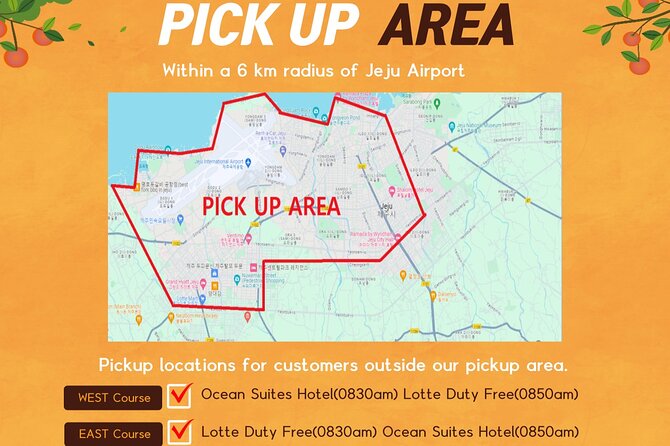
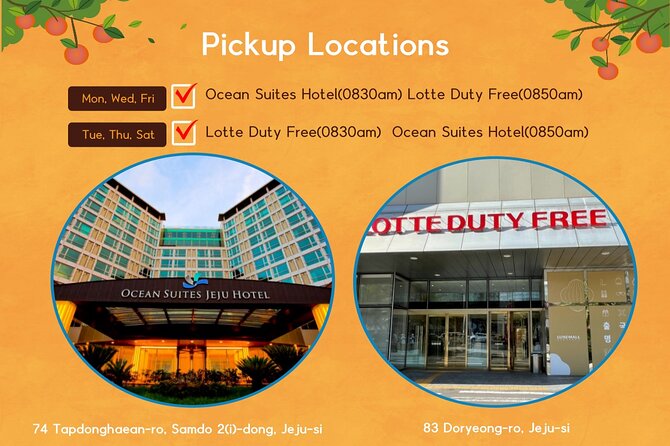
- You get round-trip transfers from Jeju City downtown (not just a meeting point where you figure out the rest).
- You have compulsory attraction entry admission fees included, which reduces guesswork.
- You ride comfortably with a group small enough that the day does not feel like an endless line.
What is not included matters, too. Lunch is not included, and some sites like forest parks, museums, and certain theme stops are marked as not included. If you pick a lot of optional add-ons, your total spend could creep up, so keep some cash aside.
The Day’s Rhythm: 9:00 AM Start and an 8.5-Hour Plan
The tour starts at 9:00 am and runs about 8 hours 30 minutes. That is long enough to hit major highlights, but short enough that you are not dead tired by late afternoon.
Your guide’s job is to keep the flow moving while giving you time to explore at your pace. In particular, photo stops tend to work better than in big groups because you have a little breathing room and someone is watching the schedule.
Two practical timing points from the itinerary design:
- Some sites can close or have access rules based on the calendar or conditions (like coastal entrances at rising tides).
- When that happens, the plan swaps to a stated alternative, so you still get a full sightseeing day instead of getting stranded.
Same trip, a different corner of the country:
- Jeju Island Private Taxi Tour : 2 Full days
★ 5.0 · 106 reviews - Jeju Premium Small Group UNESCO Day Tour – East Course
★ 5.0 · 84 reviews - Jeju Island Private Taxi Tour : UNESCO Day Tour
★ 4.5 · 82 reviews - Private Day Tour in South and West in Jeju Island
★ 5.0 · 80 reviews
Volcano Wonders: Manjanggul Cave and Seongsan Ilchulbong
If you only have one solid day on Jeju, these two stops are the core “how Jeju formed” moments.
Manjanggul Cave, including the famous Stone Turtle
This is a lava tube, formed by volcanic activity, and the tour focuses on its underground scale. The highlight is the Stone Turtle, a rock formation that resembles Jeju Island. This is the kind of stop where you want a moment just to look around slowly, even if you are tempted to rush for photos.
Important consideration: Manjanggul Lava Tube closes on the first Wednesday of every month. The tour notes an alternative course through the Jeju Haenyeo Museum on those days. If you are planning to go specifically for the cave, check the calendar for that closure pattern.
Seongsan Ilchulbong, also called Sunrise Peak
Seongsan Ilchulbong is a tuff cone, shaped by hydrovolcanic eruptions about 5,000 years ago. It is 182 meters high, with a preserved bowl-like crater. The guide also points out how the inner structures were shaped by the sea cliff action.
You also have the chance to catch the Women Diver show connected with this stop. Even if you are not a show person, it is a useful cultural layer, since haenyeo diving is central to Jeju identity.
Traditional Jeju Without the Museum Hallway: Seongeup Folk Village
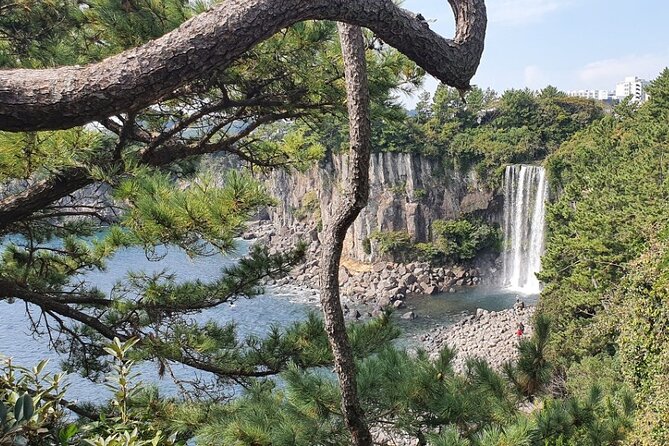
Seongeup Folk Village is presented as preserved-with-purpose. The stone piles around the homes were built to protect roofs from wind, and the village is described as a set of fort-like houses that remained intact from the Joseon Dynasty period.
One good detail here: the folk village stop is optional. You can swap to the Jeju Folk Village Museum instead (the museum time is listed as short, around 30 minutes). That matters if you want a less walking-heavy version of the same theme.
And yes, this stop is not just about buildings. The value is in how the guide frames why these structures existed, especially the story about protection from invasion and how survival needs shaped architecture.
Beaches That Feel Like a Break: Woljeongri and Hyeopjae
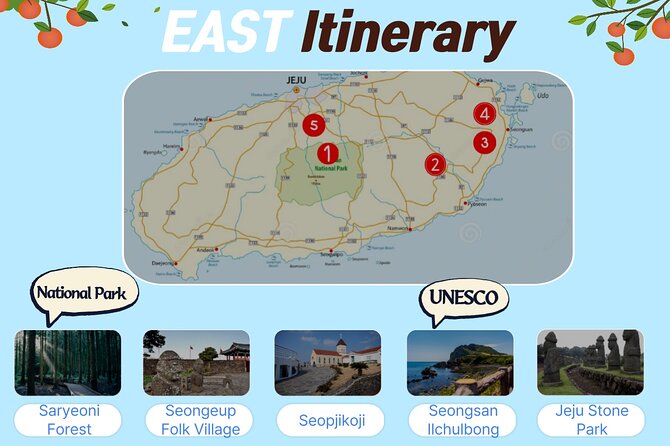
Jeju’s coast works best when you treat beaches as short rest stops, not as your whole afternoon plan.
Woljeongri Beach
Woljeongri is known for tranquil white sand and a calm emerald ocean look, plus nearby cafés lined along the road. The stop time here is short, so I would use it as a reset: stretch your legs, grab a drink, and enjoy the sea view without turning it into a long detour.
Hyeopjae Beach, including the low-tide view
Hyeopjae is described with clear waters and white sand, plus an interesting low-tide effect with Biyangdo Island offshore. It also mentions broken shells and shallow water that can look like you might reach the island on foot, though conditions vary by tide.
If the weather is even decent, this is where you feel the “I am really on Jeju” factor. Bring your light layer if the wind picks up.
Forest, Haenyeo, and Maze Park: The Stops That Add Texture
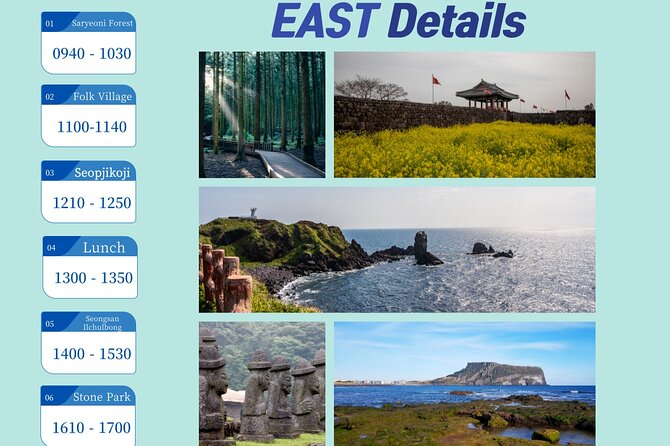
This is where the tour shifts from dramatic geology to everyday Jeju and local personality.
Bijarim Forest, the single-species Torreyas stand
Bijarim Forest (also called the Forest of Torreyas) is described as the world’s largest single-species forest. The tour notes about 2,800 Torreyas that are 500 to 800 years old, blocking the sky with dense canopy. The trees are old enough that you will feel like the time scale is off, in a good way.
Note on cost: this stop is marked admission ticket not included, so you may pay for entry separately.
Jeju Haenyeo Museum, for the human story
The Haenyeo Museum is there to re-evaluate haenyeo culture, and it is built around the idea that haenyeo were major breadwinners through diving and farming. The description also calls out that haenyeo are a symbol of toughness but have been undervalued in society.
If you want a deeper understanding of why Jeju reveres the women divers, this is a strong stop. Like Bijarim, the museum admission is listed as not included, and you should plan for that.
Also, remember the closure swap: if Manjanggul is closed on its first-Wednesday rhythm, the tour notes this museum as the alternative course.
Maze Land, Miro Park with stones, wind, women
Maze Land (Miro Park) connects Jeju’s “stones, wind, and women” theme with a maze gallery and puzzles. It also includes a 3D video on the history of mazes.
Admission is marked not included, so consider whether the extra paid stop fits your interests. If you like interactive places, this is more fun than a typical “stand and look” stop.
Seasonal Swaps: Sangumburi and Hallim Park
Jeju rewards travelers who are flexible with timing. This tour openly includes seasonal changes.
Sangumburi Crater, replacing Seopjikoji in Oct and Nov
In October and November, the plan says Sangumburi crater is used instead of Seopjikoji. It is listed as an admission ticket not included stop.
The practical tip: if you are visiting in those months, you are likely to catch a different version of the “coastal sunrise crater” experience. If you are outside that window, you will likely see Seopjikoji instead in whichever route you choose.
Hallim Park and the tulip season idea
Hallim Park is described as having monthly flower-related events, and it specifically calls out a tulip festival in spring with multiple named tulip varieties. It even mentions the possibility of bibimbap decorated with colorful tulips.
This is listed as not included admission. If flowers are a “yes” for you, plan for extra spend. If they are a “meh,” you might treat this as more of a walk-and-photos kind of stop.
Tea and Seabirds Energy: O’sulloc Tea Museum
O’sulloc Tea Museum is labeled as Korea’s first tea museum, opened in 2001, with an O’sulloc tea stone built in 2013 beside it. The stop time is about an hour, and entry is listed as free.
This is a good “reset” stop between more physically active sightseeing. If you like food culture and want something calmer than caves and cliffs, tea is often the right tone on Jeju.
Waterfalls and Basalt Columns: Cheonjeyeon, Jeongbang, Jusangjeollidae
This part of Jeju is where you get your postcard geology, plus a rare-waterfall moment.
Cheonjeyeon Falls (The Pond of God)
Cheonjeyeon Falls is described as three sections, with water dropping in a pattern that starts from a cave and then cascades into two more waterfalls before reaching the sea. The name relates to the idea of sky connected with land, and the description notes plant life around the falls, including a rare reed called solimnan.
This stop is listed as admission ticket included, which is great because it saves you from paying another fee later.
Jeongbang Falls, the one that hits the ocean
Jeongbang Falls is described as the only waterfall in Asia that falls directly into the ocean. The tour also notes the inscription “Seobulgwacha,” linked to the location passing by.
This stop is admission ticket included and is often a “wait, that is real” moment if you like nature that looks sculpted by time.
Jusangjeollidae basalt columns
Jusangjeollidae are black basalt columns formed when lava erupted into the sea. The columns are grouped in different sizes, which makes it one of those places where photos are easy but getting a good shot can be annoying.
The tour notes it can be crowded and that it takes patience for photos because the platform is busy. If you want your best pictures, aim for a moment when the crowd thins a bit, even if that means taking more time for the same view.
This stop is listed as admission ticket included.
Coasts, Craters, and a Few “If Weather Does Its Thing” Alternatives
Jeju coasts are dramatic, but conditions matter. This tour is built to react.
Yongmeori Coast and its dragon-head shape
Yongmeori Coast is described as a volcanic beach formed by ash from explosions, when hot magma met cold seawater. You go down a narrow path, see a sandstone cliff, and the name comes from a dragon-head shape.
Key practical note: entrance may not be permitted during rising tides or bad weather. If Yongmeori is closed, the tour says Mt. Songaksan becomes the alternative. Yongmeori is admission ticket included, so you at least know that the main coastal stop should be paid for when it is accessible.
Mt. Songaksan, as the fallback option
Songaksan is listed as an alternative and is admission free.
Sanbangsan Mountain and Sanbanggulsa Temple
Sanbangsan is a dome-shaped, craterless volcano reaching 395 meters. The tour description links the mountain name to a natural stone cave formed in the middle. Inside is Sanbanggulsa Temple, with a Buddha statue and a legend about tears of love falling from the cave ceiling.
Admission for Sanbangsan is listed as included, while the stop time is short, so this is more about viewpoints and temple-cave atmosphere than long hiking.
Temples, Sea Stacks, and Smaller Wins: Oedolgae, Yakchunsa, Saebyeol Oreum
These stops tend to feel more personal because they are less “mega attraction” and more “Jeju spirit.”
Oedolgae, a sea stack made by waves
Oedolgae Rock is described as a sea stack about 20 meters high, formed by volcanic eruption and shaped by wave erosion over time. The tour also notes pine trees at the peak regenerating the area.
This stop is admission free, and it works well when you want a quick view with minimal planning.
Yakchunsa Temple
Yakchunsa Temple is described as one of the biggest Buddhist temples in Asia. You can view scenery by climbing to the garden and looking down toward the beach.
This stop is admission free, and the short time listed makes it an easy add if you like temples but do not want a half-day.
Saebyeol Oreum
Saebyeol Oreum is described with volcanic-cone shapes, grassy coverage, and ridges matching the cone’s geometry. The name is connected to the idea of a morning star alignment.
This is listed as admission free and is a great stop if you want something more “Jeju topography” than ticketed attractions.
Practical Advice so You Get the Best Day Possible
Here is how to make this tour feel smooth, even when the island is moving fast.
Bring cash for what is not included
Some stops are marked “admission ticket not included.” Others are free. If you are unsure which ones will happen on your exact day, I recommend budgeting extra and keeping small bills on hand.
Also note the tour includes a compulsory gratuity of 10,000 KRW per person by cash.
Plan your shoes for real walking
Even when stop times are short, places like lava tubes, crater viewpoints, and coastal paths involve uneven ground. Wear shoes you trust, especially around caves and cliffs.
Understand that crowds can happen fast
The itinerary notes that Jusangjeollidae can be crowded, and getting a photo takes patience because the platform is busy. I suggest you treat photo time as “slow down and wait for a clear angle,” not “shoot everything as fast as possible.”
Use the guide for photos and timing
The most enthusiastic part of the day tends to be the guidance itself. This operator has English-capable driver options, and names like Lucas and Mr Koh (Ayaan) come up as examples of guides who help with info and photos. With that support, you spend less time guessing where to stand and more time enjoying each stop.
Expect a few weather-driven changes
Yongmeori can be replaced by Mt. Songaksan if conditions block access. Manjanggul can be replaced if it is closed on its first-Wednesday schedule. If you go in knowing plans can shift, you will feel less frustration and more flexibility.
Should You Book This Jeju Island Taxi Join Tour?
I think this is a smart booking if you meet a few needs:
- You want a guided Jeju day with major sights and a schedule that does not require you to map transit.
- You like the comfort of hotel pickup in Jeju City downtown and a small group pace.
- You prefer having admission handled for the compulsory stops so your day is simpler.
I would skip it or look closely at your preferences if:
- You want full control to combine any coast area you like in one day. The tour plan is route-based, and only certain combinations are mentioned (west and south can be mixed).
- You strongly care about free or included admission every single stop. Some parks and museums are listed as not included, so your final spend depends on what you choose to do.
If you want an efficient Jeju highlights day with comfortable logistics and enough culture to make the geology feel personal, this taxi join tour is a very practical way to do it.
Recently reviewed in Jeju
- Jeju Private Tour Package-South of Jeju(Mt.Hallasan & Waterfalls)★ 5.0 · 5 reviews
- jeju island Jumbo taxi Private tour with Mr.Hong East of jeju★ 5.0 · 19 reviews
- Customized private tour in Jeju island★ 5.0 · 19 reviews
- Private Jeju Geopark Gotjawal and Oreum Trekking Experience★ 5.0 · 3 reviews
- Jeju: Haenyeo Culture Experience with Seafood Tasting★ 5.0 · 4 reviews
- Small group Private Taxi Tour DAY experience in Jeju island★ 5.0 · 25 reviews
- Jeju Premium Small Group UNESCO Day Tour – West Course★ 5.0 · 3 reviews
- UNESCO Jeju Full Day Tour Package By Taxi★ 5.0 · 5 reviews
Jeju Island Tours, compared.
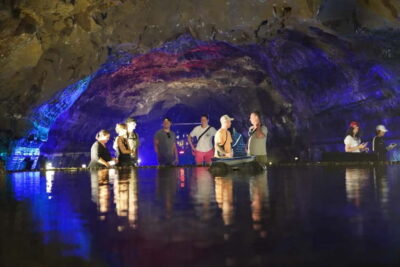
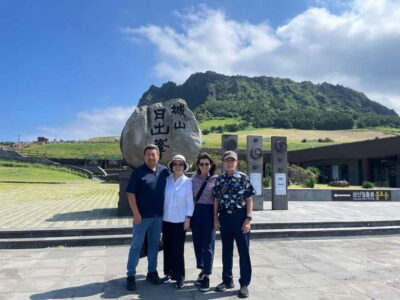

East Jeju Essentials – Seongsan Ilchulbong (UNESCO) & Haenyeo
Read our review →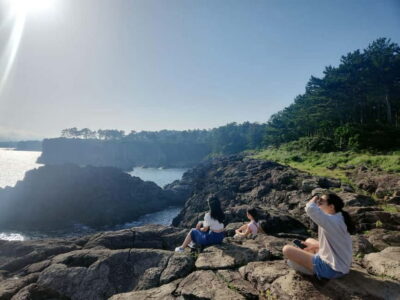
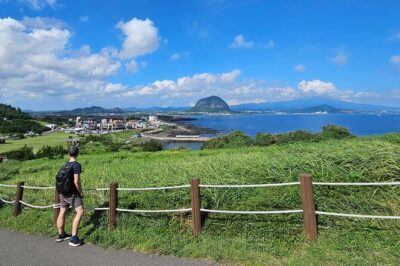
South-West Jeju Essentials: Hallasan & Signature Highlights
Read our review →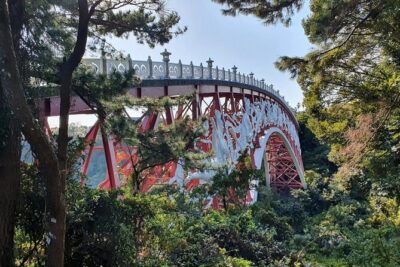
Jeju Island English Private & Flexible Tour any number anywhere
Read our review →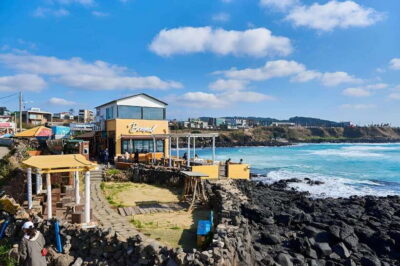
Jeju Island: Full-Day East Jeju Bus Tour with Entry Fees
Read our review →Browse the lists this tour appears in